
How Speed and Sports Science Are Redefining the Modern MMA Heavyweight
As Tom Aspinall and Ciryl Gane prepare for a September title clash, their middleweight-like agility highlights a dramatic shift in how giant athletes train for combat.
By Factlen Editorial Team
- Modern Agility Advocates
- Argue that speed, footwork, and functional conditioning are now the most critical attributes for heavyweight success.
- Tactical Analysts
- Focus on fight IQ and distance management as the true differentiators that neutralize the traditional puncher's chance.
- Traditional Power Purists
- Maintain that raw knockout power remains the ultimate equalizer, as speed only hides flaws until a fighter gets caught.
What's not represented
- · Traditional Boxing Coaches
- · Sports Physiotherapists
Why this matters
The evolution of heavyweight training proves that sports science and functional conditioning are replacing raw size across athletics. For fitness enthusiasts and fans alike, it offers a blueprint for building explosive, usable power rather than just aesthetic muscle.
Key points
- Tom Aspinall and Ciryl Gane have verbally agreed to a heavyweight title unification bout in Paris this September.
- Modern heavyweights are abandoning traditional bodybuilding in favor of explosive, functional strength training.
- The shift allows 250-pound fighters to move with the lateral agility and cardiovascular endurance of much smaller athletes.
- Tactical distance management and off-beat striking are replacing the chaotic brawls that historically defined the division.
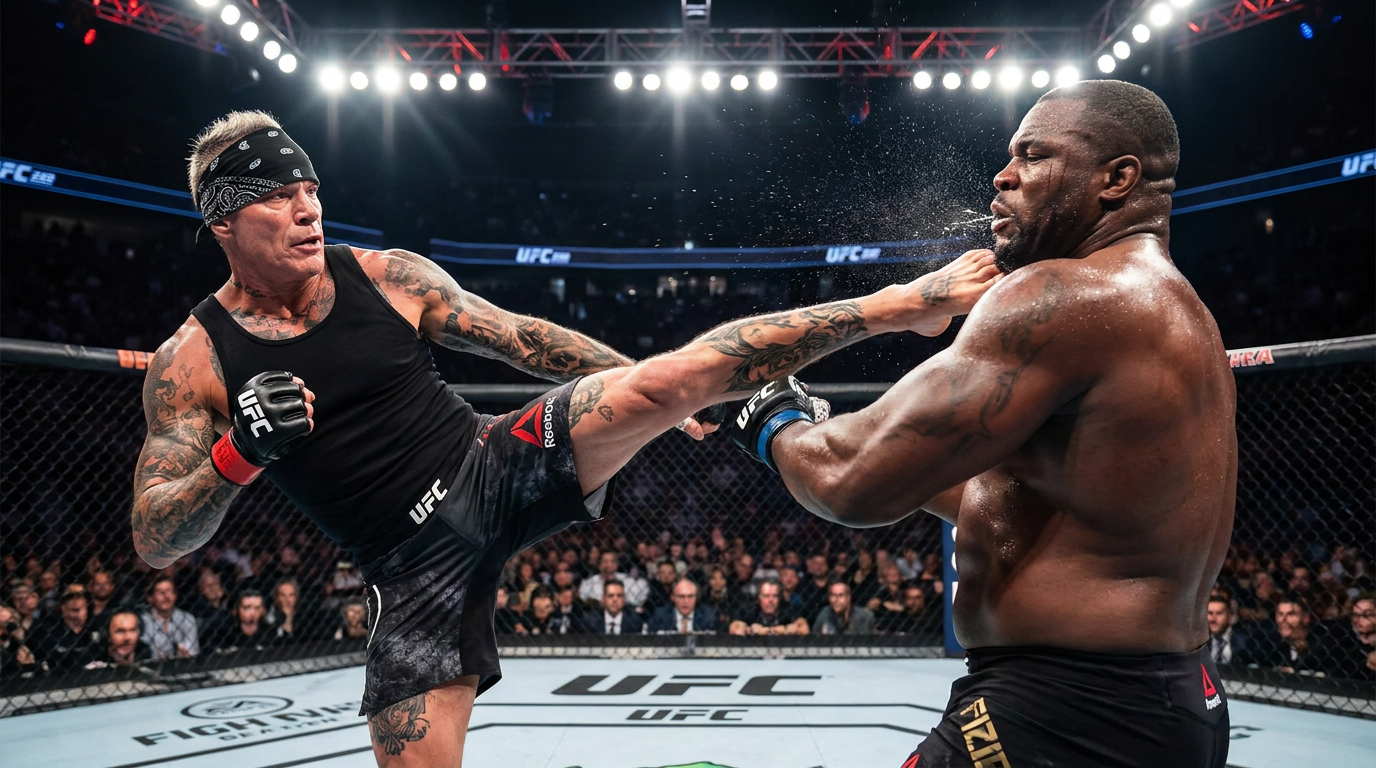
The heavyweight landscape of mixed martial arts is bracing for a monumental collision in Paris this September, as undisputed champion Tom Aspinall and interim titleholder Ciryl Gane have verbally agreed to a unification bout. The matchup materialized rapidly after Gane secured a blistering 97-second technical knockout over Alex Pereira at UFC Freedom 250 in Washington, D.C.[2][6]
Almost immediately following the victory, Gane called for the rematch on his home turf, a challenge Aspinall swiftly accepted via social media, declaring he was already back in the gym and ready to travel to France.[1][6]
But beyond the high-stakes gold on the line, this impending clash represents the absolute pinnacle of a quiet revolution within the sport. For decades, the heavyweight division was defined by a specific archetype: towering, 265-pound brawlers who relied on raw, unadulterated power and a puncher's chance to end the night early. It was an era affectionately known as "swang and bang," where cardiovascular endurance often took a back seat to the ability to land a single, devastating overhand right.
Aspinall and Gane, however, are the vanguard of the "Modern Heavyweight" era. They are massive men who have somehow managed to hijack the biomechanics of much smaller fighters, moving around the octagon with the fluidity, lateral agility, and footwork typically reserved for middleweights. This shift is not merely a genetic anomaly; it is the result of a fundamental reimagining of how giant athletes condition their bodies for combat sports.[5]

The traditional approach to heavyweight strength training often mirrored bodybuilding—slow, grinding repetitions focused on time-under-tension to build maximum muscle mass. But as Aspinall has openly discussed, building bulky, oxygen-hungry muscle is actively detrimental to a fighter who needs to maintain speed over twenty-five minutes. Instead, the modern training philosophy prioritizes explosive, functional power over aesthetic size.[5]
Aspinall's own fight camp regimen is a masterclass in this new methodology. His strength and conditioning sessions are stripped of standard bodybuilding staples, replacing them with dynamic movements designed to simulate the chaotic physical demands of a fight. He utilizes exercises like jump squats, single-arm kettlebell farmer's walks, and banded pull-throughs to build a dominant posterior chain and plyometric power.[3][4]
Aspinall's own fight camp regimen is a masterclass in this new methodology.
Even when the British champion does lift heavy iron, the execution is entirely different. He has been documented performing 100-kilogram barbell high rows and 80-kilogram floor presses from a glute bridge position, but the focus is always on moving the weight with maximum velocity. "I'm lifting the weights as fast as I can for a short amount of reps, and I'm putting it down," Aspinall explained, noting that his entire routine is geared toward cultivating fast-twitch muscle fibers.[3][5]
The logic behind this functional approach is simple but profound: a static barbell does not fight back. Pushing a perfectly balanced weight up and down does little to prepare a fighter for the reality of maneuvering a resisting, 250-pound opponent around a cage. By focusing on explosive bodyweight movements and rapid force generation, fighters build the specific type of strength required for sudden takedowns and lightning-fast striking combinations.[3]

This physiological evolution directly translates to a more sophisticated tactical landscape inside the octagon. Gane, for instance, is widely considered one of the most technical strikers in heavyweight history. Rather than planting his feet and trading heavy blows, the Frenchman utilizes constant lateral movement, feints, and off-beat jabs to frustrate opponents. He rarely throws the looping, telegraphed punches that defined the previous generation.[7]
Elite striking coaches note that this mobility allows modern heavyweights to completely dictate the terms of engagement. By controlling the distance and the tempo of the fight, agile giants like Gane and Aspinall can systematically dismantle opponents without ever exposing themselves to the "roll of the dice" exchanges that make the division so notoriously unpredictable. Their finishes are calculated and precise, rather than the result of chaotic brawls.[7]
Furthermore, the emphasis on functional conditioning has drastically improved the cardiovascular ceiling of the division. Carrying 250 pounds of muscle requires an immense amount of oxygen, and historical heavyweight bouts often devolved into exhausted grappling matches by the third round. The new breed's focus on metabolic conditioning ensures they can maintain high-volume striking and complex footwork deep into the championship rounds.[4]

Of course, the evolution of the sport does not completely erase the danger of the old guard. Traditionalists and power purists correctly point out that speed and footwork can only mitigate risk, not eliminate it entirely. The heavyweight division will always be the land of the one-punch knockout, where a single mistake against a pure power puncher can instantly short-circuit the most brilliant tactical game plan.
There is also an inherent vulnerability in relying so heavily on movement. If an agile heavyweight's footwork is compromised—whether through accumulated leg kicks, an unexpected wrestling exchange, or simple fatigue—they can suddenly find themselves stationary in front of devastating power. The margin for error remains razor-thin when every opponent possesses fight-ending force.
Yet, the consistent success of fighters who prioritize speed and functional strength suggests that the paradigm has permanently shifted. The modern heavyweight must be a complete mixed martial artist, capable of blending wrestling, high-level kickboxing, and elite conditioning, rather than relying on a single dominant trait. When Aspinall and Gane finally meet in Paris this September, the bout will serve as a high-speed chess match played by giants, a definitive showcase of how sports science has transformed the biggest athletes on the planet.[1][2]

How we got here
July 2022
Tom Aspinall suffers a devastating knee injury, prompting a complete overhaul of his functional training and injury prevention routines.
March 2023
Ciryl Gane falls short against Jon Jones, prompting him to refine his grappling defense and distance management.
November 2023
Aspinall captures the interim heavyweight title, showcasing his explosive speed against Sergei Pavlovich.
June 2026
Gane secures a 97-second TKO over Alex Pereira, setting up a September unification bout with Aspinall in Paris.
Viewpoints in depth
Modern Agility Advocates
Speed, footwork, and functional conditioning are now the most critical attributes for heavyweight success.
This camp, which includes modern coaches and sports scientists, argues that the era of the slow, plodding brawler is over. They believe that fighters who train like middleweights—prioritizing fast-twitch muscle development and lateral movement—will consistently outmaneuver and exhaust opponents who rely solely on raw size and power. By avoiding time-under-tension lifting, these athletes keep their oxygen demands low while maximizing their explosive output.
Tactical Analysts
Fight IQ and distance management are the true differentiators in the modern era.
Analysts focus on the chess match inside the octagon. They point out that fighters like Ciryl Gane succeed not just because they are fast, but because they use feints, off-beat jabs, and precise distance control to dictate the tempo. This tactical approach completely neutralizes the 'puncher's chance' of traditional heavyweights, turning chaotic brawls into calculated, one-sided clinics.
Traditional Power Purists
Raw knockout power remains the ultimate equalizer in the heavyweight division.
Despite the shift toward agility, traditionalists argue that speed only hides flaws until a fighter gets caught. They maintain that at 265 pounds, the ability to end a fight with a single, devastating blow is still the most valuable asset. Because the margin for error is so small, it only takes one mistake or a moment of fatigue from a highly technical fighter to suffer a sudden knockout at the hands of a pure power puncher.
What we don't know
- Whether a pure speed-and-agility approach can consistently survive the devastating one-punch power of traditional heavyweight brawlers over a long timeline.
- If Aspinall's management will officially sign off on the September Paris date despite ongoing contract disputes with the UFC.
Key terms
- Time under tension
- A bodybuilding concept referring to the amount of time a muscle is held under strain during a set, used to build mass rather than speed.
- Posterior chain
- The group of muscles on the back of the body, including the glutes and hamstrings, crucial for explosive athletic power.
- Plyometrics
- Exercises involving repeated rapid stretching and contracting of muscles to increase power, such as jump squats.
- Interim champion
- A temporary titleholder crowned when the undisputed champion is unable to defend their belt due to injury or absence.
Frequently asked
Why are modern heavyweights faster than older fighters?
Modern heavyweights prioritize explosive, functional strength training over traditional bodybuilding. This allows them to build fast-twitch muscle fibers without adding bulky, oxygen-draining mass.
What is functional strength training in MMA?
It involves exercises that mimic the physical demands of a fight, such as moving a resisting opponent or generating sudden force, rather than just pushing a static barbell.
When are Tom Aspinall and Ciryl Gane fighting?
The two heavyweights have verbally agreed to a title unification bout in Paris this September, following Gane's recent victory at UFC Freedom 250.
Sources
Source coverage
7 outlets
3 viewpoints surfaced







[1]BBC SportTactical Analysts
Aspinall ready for September return against Gane
Read on BBC Sport →[2]ForbesTactical Analysts
UFC Freedom 250: Pereira v Gane
Read on Forbes →[3]Men's HealthModern Agility Advocates
Tom Aspinall's Fight Camp Workout
Read on Men's Health →[4]BoxLife MagazineModern Agility Advocates
Here's How UFC Champ Tom Aspinall Trains to Stay Fight-Ready Year-Round
Read on BoxLife Magazine →[5]EssentiallySportsModern Agility Advocates
6'5” Tall 'Modern Heavywight' UFC Champion Tom Aspinall Gives Away Weightlifting Techniques
Read on EssentiallySports →[6]MMA InsightTactical Analysts
Tom Aspinall Says He'll Fight Ciryl Gane In September
Read on MMA Insight →[7]UFCTactical Analysts
Standout Striking Coach Sean Madden Helps Break Down Saturday's Heavyweight Title Fight
Read on UFC →


Every angle. Every day.
Get sports stories with full source coverage and perspective breakdowns delivered to your inbox.