
Jewish-Arab Grassroots Movement 'Standing Together' Launches New Political Party Ahead of Israeli Elections
The grassroots movement Standing Together has announced the formation of 'A Place for Us All,' a joint Jewish-Arab political party aimed at mobilizing alienated voters in Israel's upcoming elections. Led by co-directors Alon-Lee Green and Rula Daood, the party pledges equal representation and a platform centered on peace and shared citizenship.
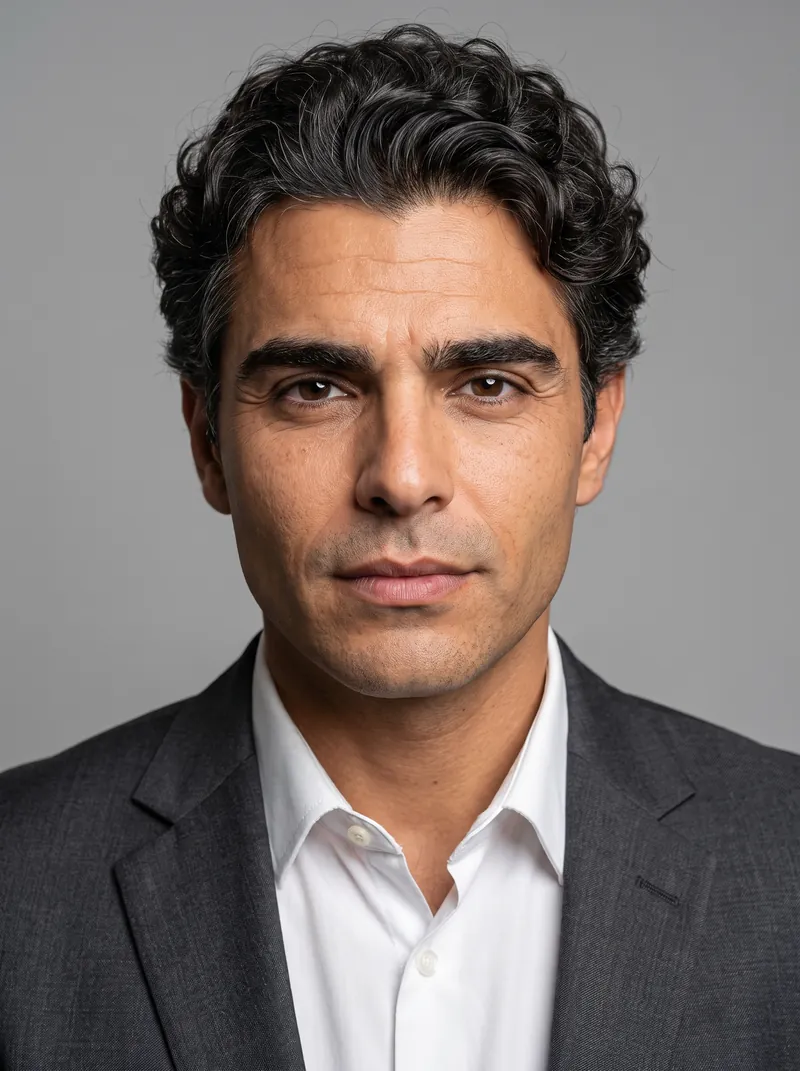
The Israeli political landscape faces a novel disruption as the country's largest Jewish-Arab grassroots movement, Standing Together, officially transitions into electoral politics. On Tuesday, the organization announced the formation of "A Place for Us All," a new joint political party aimed at contesting the upcoming Knesset elections.
Born out of years of street-level organizing and shared activism, the party seeks to mobilize a growing bloc of alienated voters who feel abandoned by both the current right-wing coalition and the traditional opposition. By pledging a platform rooted in what its founders call a "politics of hope," the initiative represents a direct challenge to the deeply entrenched polarization that has defined Israeli politics over the past decade.[1][2]
At the helm of the new party are Alon-Lee Green, a Jewish-Israeli labor organizer, and Rula Daood, a Palestinian-Israeli speech pathologist turned political activist. The duo, who serve as the national co-directors of Standing Together, have gained international prominence for their efforts to forge Jewish-Arab solidarity, earning recognition on the TIME100 Next list for their humanitarian and anti-war advocacy.
Under their leadership, "A Place for Us All" promises a strictly egalitarian structure, guaranteeing equal representation for Jewish and Arab candidates on its electoral slate. Their campaign strategy deliberately pivots away from grandiose, top-down geopolitical declarations, focusing instead on the daily realities, economic struggles, and shared civic infrastructure that impact all citizens.[2][5]
The decision to enter the bruising arena of party politics marks a significant evolution for Standing Together, which was founded in 2015 as a protest movement focused on social justice, minimum wage campaigns, and anti-racism initiatives. For years, the organization maintained that its strength lay in grassroots mobilization outside the Knesset.
However, the devastating events of October 7 and the ensuing protracted war served as a catalyst for structural change. As the conflict escalated, the movement's membership surged from roughly 3,500 to over 7,000 dues-paying members, driven by citizens seeking an alternative to the prevailing atmosphere of violence and national trauma. Organizers realized that street protests alone were insufficient to alter the country's trajectory.[3][5]
The ideological foundation of "A Place for Us All" draws heavily on the concept of shared citizenship—a framework that rejects the binary choice between Jewish and Palestinian national identities in favor of a cooperative civic future. This approach aims to bridge the widening chasm between Israel's Jewish majority and its Arab minority, who make up roughly 20 percent of the population.
Polling data from recent years indicates that a substantial majority of Arab citizens support the participation of an Arab party in the governing coalition, yet mainstream political avenues for such integration have repeatedly collapsed. The new party hopes to fill this void by offering a unified political home that explicitly campaigns on peace, equality, and an end to the occupation.[3]
Despite the enthusiasm surrounding its launch, "A Place for Us All" faces formidable structural and political hurdles. Israel's electoral system requires parties to secure a minimum threshold of 3.25 percent of the national vote to enter the Knesset—a barrier that has historically forced smaller factions into uneasy alliances or doomed them to political irrelevance.
The traditional left-wing and Arab political blocs have suffered severe electoral setbacks in recent cycles, plagued by internal divisions and a broader rightward shift in the Israeli electorate. To succeed, Green and Daood's party must not only consolidate the fractured progressive base but also draw out historically disenfranchised voters who have opted to boycott recent elections.[2][3][4]
The timing of the party's formation is inextricably linked to the volatile state of the Israeli government. Prime Minister Benjamin Netanyahu's coalition has faced sustained domestic pressure over its handling of the war, intelligence failures, and contentious judicial reforms. While the legal deadline for the next general election is not until late 2026, political analysts widely anticipate that the government could collapse earlier, triggering a snap election.
In this precarious environment, "A Place for Us All" is positioning itself as a ready-made alternative for voters exhausted by the status quo, betting that the trauma of the past year has created a unique opening for a paradigm shift in Israeli governance.[1][3][4]
The emergence of a joint Jewish-Arab party has also resonated strongly with international observers and Diaspora Jewish communities, many of whom have expressed growing alarm over Israel's democratic trajectory. Organizations tracking social cohesion have pointed to the movement as a vital counter-narrative to the rise of far-right extremism within the current Israeli cabinet. By demonstrating that Jewish and Palestinian citizens can successfully collaborate on a shared political vision, the party offers a tangible model of coexistence that challenges the pervasive international perception of an intractable, zero-sum conflict.[1][5]
As the campaign apparatus gears up, the immediate challenge for "A Place for Us All" will be translating its vibrant grassroots energy—often characterized by activists wearing the movement's signature purple shirts—into a disciplined get-out-the-vote operation. The party plans to leverage its extensive network of local chapters, university student groups, and bilingual organizing hubs across Israel's mixed cities.
Whether this ground game can overcome the deep-seated skepticism of the Israeli electorate remains an open question, but the launch itself guarantees that the debate over shared citizenship and Jewish-Arab equality will be a central feature of the next election cycle.[2][3][5]
The road ahead is fraught with resistance from both ends of the political spectrum. Right-wing factions have frequently targeted Standing Together's activism, attempting to shut down their humanitarian aid efforts and labeling their anti-war stance as subversive. Conversely, some hardline Palestinian nationalist groups view participation in the Israeli electoral system as a legitimization of the state's policies.
Navigating these crosscurrents requires a delicate balancing act. Yet, the founders of "A Place for Us All" maintain that their very existence—a coalition of Jews and Arabs refusing to view each other as enemies—is the most potent defiance against the politics of division, setting the stage for a historic electoral battle.[1][2][3][5]
Key points
- The grassroots movement Standing Together has launched a new Jewish-Arab political party named 'A Place for Us All.'
- Co-directed by Alon-Lee Green and Rula Daood, the party pledges equal representation for Jewish and Arab candidates.
- The platform focuses on shared citizenship, peace, and daily economic realities rather than top-down geopolitical policies.
- The movement's membership has doubled to over 7,000 since the October 7 attacks, driven by a desire for an alternative to the ongoing conflict.
Unanswered questions
- Whether the new party can successfully clear the 3.25% electoral threshold required to enter the Knesset.
- How traditional left-wing and Arab political factions will respond to the emergence of a new competitor for their voter base.
- The exact timing of the next Israeli general election, which could be triggered early if the current coalition collapses.
How we got here
2015
Standing Together is founded as a grassroots social justice movement in Israel.
2023
The movement leads major protests against judicial reforms and advocates for Jewish-Arab solidarity.
October 2023
Following the outbreak of war, the organization pivots to humanitarian aid and anti-war advocacy, doubling its membership.
June 2026
The movement officially launches 'A Place for Us All' to contest the upcoming Knesset elections.
- Grassroots Organizers
- Argue that a joint Jewish-Arab political framework is the only viable path to long-term peace and equality in Israel.
- Mainstream Political Establishment
- Question whether a grassroots peace movement can overcome deep national polarization and secure the required electoral threshold.
- Diaspora & International Observers
- Emphasize the symbolic importance of the movement as a beacon of democratic resilience and coexistence.
Perspectives this story doesn't cover
- Right-wing Israeli voters who oppose the inclusion of Arab parties in the governing coalition
- Hardline Palestinian nationalist groups who reject participation in the Israeli electoral system
Sources
Source coverage
5 outlets
3 viewpoints surfaced





- [1]The New York TimesGrassroots Organizers
This New Party Wants to Write a New Future for Israel
Read on The New York Times → - [2]HaaretzGrassroots Organizers
Jewish-Arab movement Standing Together launches Knesset run with party built on 'politics of hope'
Read on Haaretz → - [3]The Jewish IndependentMainstream Political Establishment
Israeli Activists Consider Forming Peace-Focused Party
Read on The Jewish Independent → - [4]Al JazeeraMainstream Political Establishment
All the big elections to look out for in 2026
Read on Al Jazeera → - [5]TimeDiaspora & International Observers
TIME100 Next 2024: Alon-Lee Green and Rula Daood
Read on Time →

More in News & Politics
See all →Balkan Politics
Bosnian Serb Nationalists Retain Power as Ethnic Blocs Dominate General Election
5 sources
Campaign Finance
The Individual Donor Limit and the Corporate Source Ban: How Democracies Regulate Campaign Finance
5 sources
Russian Elections
Russia Concludes State Duma Elections with Illegal Voting in Occupied Ukrainian Territories
6 sources
Electoral Math
The D'Hondt Divisor Sequence: How Proportional Representation Systems Allocate Seats Based on Highest Averages
5 sources
Comments
Every angle. Every day.
Get News & Politics stories with full source coverage and perspective breakdowns, free every day.