
Buying a Turnkey Home vs. a Fixer-Upper: A 2026 Cost and Trade-Off Comparison
As renovation costs remain elevated in 2026, the financial math between buying a move-in ready home and a fixer-upper has shifted. We break down the upfront premiums, hidden risks, and long-term trade-offs of both real estate paths.
By Factlen Editorial Team
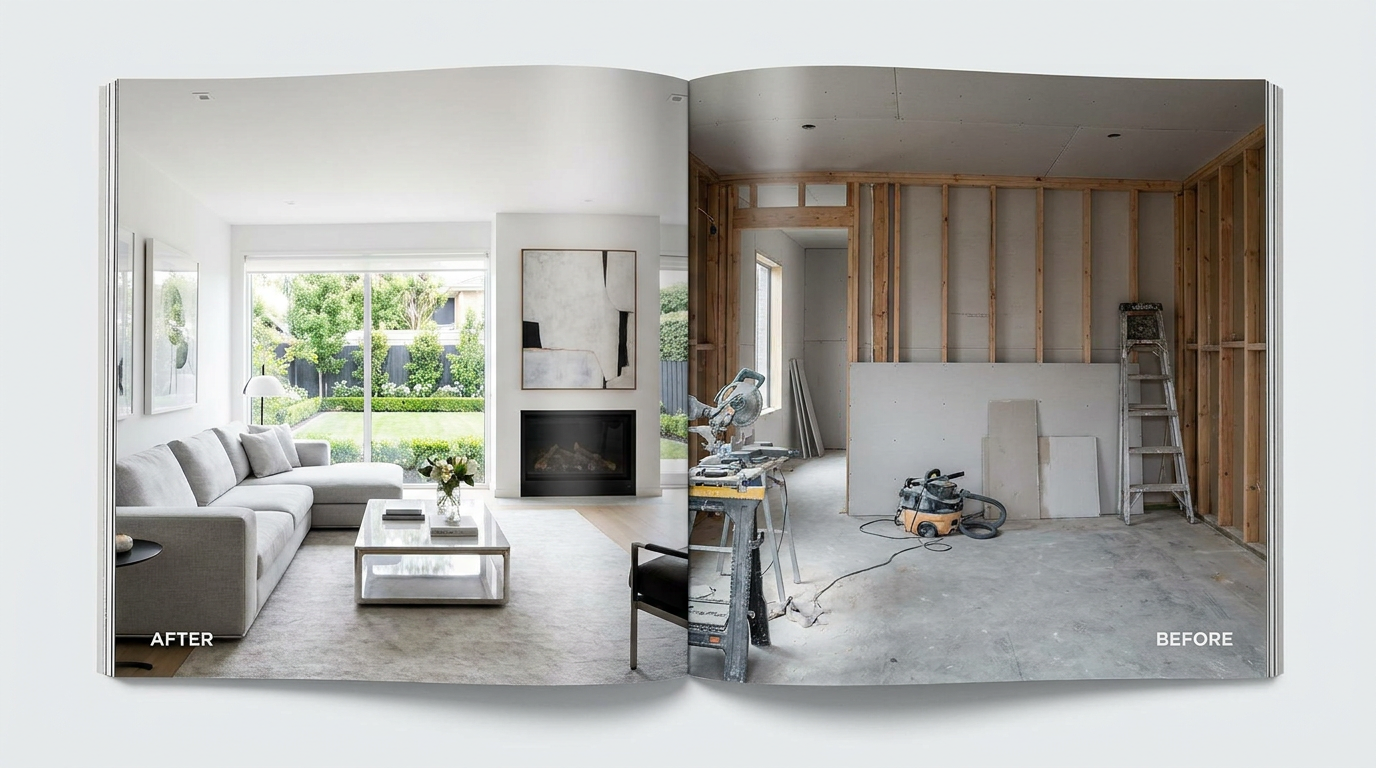
- Turnkey Advocates
- Argues that the upfront premium paid for a move-in ready home is a worthwhile investment for peace of mind and immediate livability.
- Market Pragmatists
- Focuses on the current economic data, noting that high labor and material costs have fundamentally changed the renovation math.
- Value-Add Investors
- Believes that purchasing discounted properties and forcing appreciation through strategic renovations is the best path to real estate wealth.
What's not represented
- · General Contractors
- · Local Zoning Officials
Why this matters
Choosing the wrong type of property can trap buyers in a cycle of unexpected debt or force them to overpay for superficial upgrades. Understanding the true costs of both paths empowers buyers to align their purchase with their actual budget, timeline, and risk tolerance.
Key points
- Turnkey homes currently command a 10 to 20 percent price premium over comparable fixer-uppers in the same neighborhood.
- Fixer-uppers offer a lower entry price, trading at a 7.3 percent discount compared to similar, well-maintained properties.
- High material and labor costs in 2026 mean the average kitchen renovation now approaches $43,000, quickly eating into upfront savings.
- Nearly one in four fixer-upper buyers admit they would choose a move-in ready home if they could start the process over.
- Turnkey properties offer predictable costs and immediate livability, while fixer-uppers provide opportunities for customization and sweat equity.
The 2026 housing market presents a complex landscape for prospective buyers, characterized by elevated interest rates and stubbornly high property values. In this environment, every dollar spent on housing is heavily scrutinized, bringing the classic real estate dilemma into sharp focus: should a buyer invest in a pristine, move-in ready home, or purchase a discounted fixer-upper? Historically, the fixer-upper was the undisputed champion for first-time buyers looking to build wealth, but the economic realities of modern construction have fundamentally altered that equation. With material and labor costs remaining high, the romanticized vision of a weekend DIY renovation is increasingly colliding with the harsh mathematics of contractor invoices and supply chain delays.[7]
To navigate this shifting landscape, the Factlen Editorial Team has synthesized the latest market data to provide a comprehensive, side-by-side trade-off analysis of these two distinct paths. A turnkey home is defined as a property that is fully updated and requires no immediate repairs, allowing buyers to simply unpack their boxes and begin living. A fixer-upper, conversely, is a property that requires significant cosmetic or structural work before it reaches its full market potential or even basic modern livability. Choosing between these two options requires buyers to carefully weigh upfront price premiums against long-term renovation risks, balancing their financial reserves with their personal tolerance for disruption.[7]
Looking at the argument for the fixer-upper, the primary advantage is the substantial upfront cost discount. Buyers are naturally drawn to the lower entry price, which often allows them to break into desirable neighborhoods that might otherwise be entirely unaffordable. The evidence supporting this approach is compelling: a recent Hippo Insurance analysis of national listing data shows that the median listing price for a fixer-upper currently sits at $200,000, which is roughly 54 percent lower than the median for all homes. Furthermore, properties explicitly marketed as fixer-uppers currently trade at a 7.3 percent discount compared to similar, well-maintained properties in the same exact zip codes, providing a clear entry point for budget-conscious buyers.[1]
Against the fixer-upper, however, is the steep and often unpredictable reality of modern renovation costs. While the initial purchase price is undeniably lower, the ongoing capital requirements can quickly erase those upfront savings. The evidence shows that the average kitchen renovation alone now approaches $43,000, according to the American Housing Survey. Furthermore, the Hippo survey reveals that more than 62 percent of fixer-upper owners spend upwards of $6,000 annually on ongoing renovations, and 15 percent spend more than $16,000 every single year just to keep their projects moving forward. These ongoing capital drains often leave buyers "house poor," struggling to fund the very renovations they planned to complete.[1][2]

For the turnkey property, the strongest argument centers on cost predictability and immediate convenience. Buyers pay a higher price at closing, but they effectively cap their near-term housing expenses and eliminate the stress of managing contractors. The evidence from AmeriSave indicates that turnkey homes typically command a 10 to 20 percent premium over comparable fixer-uppers, depending heavily on the quality of the finishes and the local market demand. Zillow data corroborates this trend, noting a persistent "nostalgia tax" where recently remodeled homes sell for 3.7 percent more than expected, as buyers willingly pay a premium to avoid the dust, noise, and uncertainty of living in an active construction zone.[1][2]
Against the turnkey property is the inherent lack of customization and the significant risk of overpaying for superficial, low-quality work. Buyers of move-in ready homes are forced to live with someone else's design choices, and paying top dollar leaves very little room for immediate equity growth. Real estate experts at FastExpert warn that some turnkey properties are actually quick "flips" where profit-driven investors may have cut corners. This means that buyers could easily pay a massive premium for a home that looks beautiful on the surface but still harbors hidden, unpermitted electrical or plumbing issues hidden behind fresh layers of gray paint and new drywall.[4][6]
Against the turnkey property is the inherent lack of customization and the significant risk of overpaying for superficial, low-quality work.
Financing presents another stark contrast between the two real estate options. For the turnkey buyer, the mortgage process is generally straightforward and highly streamlined. Traditional lenders readily approve conventional loans for habitable, updated homes, and the appraisal process rarely hits snags because the property's condition easily justifies the purchase price. Against the fixer-upper, financing can become a major logistical hurdle. Properties deemed uninhabitable or in need of severe structural repair often do not qualify for standard conventional loans. This forces buyers to seek specialized products like FHA 203(k) or Fannie Mae HomeStyle Renovation loans, which require extensive contractor paperwork, stricter underwriting guidelines, and significantly longer closing timelines.[3][5]
The time-to-value metric also heavily favors the move-in ready route. For the turnkey home, buyers can immediately occupy the space or, in the case of real estate investors, place a tenant to begin generating rental income on day one. Against the fixer-upper, buyers face a costly and frustrating holding period. As industry analysts at Apartments.com note, buyers must often pay double carrying costs—covering the mortgage, property taxes, and insurance on the empty fixer-upper while simultaneously paying rent for an alternative place to live—for weeks or months while the property remains an uninhabitable construction zone.[3]

The psychological toll of managing renovations is a critical, yet often unquantified, factor in this comparison. The evidence points to a growing wave of buyer remorse among those who eagerly took on heavy DIY projects. According to the Hippo survey of American homeowners, a staggering 88 percent of fixer-upper owners admit they would do things differently if given the chance to repeat the process. Even more telling is that 23 percent—nearly one in four buyers—state they would abandon the DIY approach entirely and choose a move-in ready home if they could start over, citing the immense stress and unexpected financial strain of managing endless repairs.[1]
Ultimately, the decision requires aligning a property's specific demands with a buyer's actual resources and lifestyle. A turnkey home fits well when a buyer has a firm, inflexible move-in timeline, such as starting a new job in a different city or needing to enroll children in a specific school district before the fall semester. It is also the ideal choice when the buyer lacks the liquid cash reserves necessary for unexpected repairs, prefers highly predictable monthly expenses, and places a premium on convenience, immediate comfort, and weekend leisure over construction management.[7]
Conversely, a turnkey home does not fit well when a buyer is highly particular about interior design and would feel compelled to tear out brand-new, expensive finishes just to match their personal aesthetic. It is also a poor fit in hyper-competitive real estate markets where the premium for a remodeled home exceeds 20 percent, effectively pricing out any chance of natural equity growth over the first few years of ownership. Paying top dollar for a home leaves the buyer entirely dependent on broader market appreciation to build wealth.[7]

A fixer-upper fits well when the buyer has substantial liquid cash reserves that are entirely separate from their down payment and closing costs. It is highly appropriate for buyers who possess genuine DIY skills, have a deep understanding of residential construction, or have established, trusted relationships with reliable local contractors. Furthermore, the fixer-upper strategy works best when the buyer has a highly flexible living situation, allowing them to remain comfortably in their current home or a cheap rental while the heaviest, most disruptive construction takes place at the new property.[7]
Finally, a fixer-upper does not fit well when a buyer is stretching their budget to the absolute limit just to cover the initial down payment. It is a financially dangerous path for those who need immediate housing, lack the experience to manage complex contractor schedules, or are looking at properties with severe structural, foundation, or systemic issues rather than simple cosmetic needs. In 2026, the romanticized vision of the fixer-upper must be carefully weighed against the cold, unforgiving mathematics of modern construction costs and the immense value of peace of mind.[7]
How we got here
Early 2020
The DIY home improvement boom begins as buyers flood the market, snapping up fixer-uppers to customize during pandemic lockdowns.
Mid 2022
Supply chain disruptions and severe labor shortages cause renovation costs to spike, narrowing the profit margins on fixer-upper projects.
Late 2024
Elevated interest rates make specialized renovation loans more expensive, shifting buyer preference toward predictable, move-in ready homes.
Spring 2026
The market premium for turnkey properties solidifies at 10 to 20 percent, as buyers increasingly prioritize convenience over construction management.
Viewpoints in depth
The Turnkey Advocate's View
Argues that the upfront premium paid for a move-in ready home is a worthwhile investment for peace of mind and immediate livability.
Turnkey advocates emphasize that time is money. While the purchase price is undeniably higher, buyers avoid the unpredictable nature of contractor delays, material shortages, and hidden structural issues. By locking in the full cost of the home within a single traditional mortgage, buyers achieve financial predictability. They argue that the stress of living in a construction zone often outweighs any potential 'sweat equity' gained from a fixer-upper, especially for busy professionals or families with young children.
The Value-Add Investor's View
Believes that purchasing discounted properties and forcing appreciation through strategic renovations is the best path to real estate wealth.
Value-add investors view the turnkey premium as a missed opportunity. They argue that buying a move-in ready home means paying retail price for someone else's design choices, leaving no room for immediate equity growth. By purchasing a fixer-upper at a 7 to 10 percent discount, these buyers believe they can control the quality of the renovations and tailor the home to their exact specifications. For this camp, the temporary discomfort of construction is a necessary stepping stone to long-term financial gain.
The Market Pragmatist's View
Focuses on the current economic data, noting that high labor and material costs have fundamentally changed the renovation math.
Market pragmatists take a strictly numbers-based approach, warning that the romanticized era of easy DIY flips is over. They point out that with the average kitchen remodel exceeding $40,000, the initial savings of a fixer-upper are often an illusion. This camp advises buyers to carefully inspect the underlying systems of a home—roof, foundation, HVAC—rather than just cosmetic finishes. They argue that a fixer-upper only makes financial sense in 2026 if the buyer has significant cash reserves and the property is deeply discounted well beyond the cost of repairs.
What we don't know
- Whether the cost of construction materials will stabilize or decrease in the latter half of 2026.
- How local zoning changes might make it easier or harder to secure permits for major fixer-upper renovations in high-demand markets.
Key terms
- Turnkey Property
- A home that is fully updated, repaired, and ready for immediate move-in without requiring any additional work.
- Fixer-Upper
- A property that requires significant cosmetic or structural renovations to reach its full market value or basic livability.
- Sweat Equity
- The increase in a property's value that comes from the owner's unpaid physical labor in renovating and improving the home.
- Carrying Costs
- The ongoing expenses of owning a property, such as mortgage payments, taxes, and insurance, which must be paid even while the home is empty during renovations.
- FHA 203(k) Loan
- A specialized government-backed mortgage that allows buyers to finance both the purchase price of a home and the cost of its necessary renovations into a single loan.
Frequently asked
What is a turnkey home?
A turnkey home is a property that has been fully renovated and updated, requiring no immediate repairs before a buyer can move in and begin living comfortably.
Are fixer-uppers actually cheaper?
While fixer-uppers have a lower upfront purchase price—often listing for 54% less than the market median—the ongoing costs of renovations, materials, and labor can quickly exceed the initial savings.
Can I get a normal mortgage for a fixer-upper?
If the home is habitable, you may qualify for a traditional mortgage. However, homes needing severe structural repairs often require specialized financing, such as an FHA 203(k) or Fannie Mae HomeStyle Renovation loan.
What is the 'nostalgia tax' in real estate?
The 'nostalgia tax' refers to the premium buyers are currently willing to pay for recently remodeled, move-in ready homes to avoid the stress and high costs of managing their own renovations.
Sources
Source coverage
7 outlets
3 viewpoints surfaced






[1]Hippo InsuranceMarket Pragmatists
Fixer-Upper vs. Move-In Ready: 1 in 5 Regret DIY Approach
Read on Hippo Insurance →[2]AmeriSaveTurnkey Advocates
Turnkey Property: What It Means for Home Buyers in 2026
Read on AmeriSave →[3]Apartments.comValue-Add Investors
Should You Buy a Move-In Ready or a Fixer-Upper Rental?
Read on Apartments.com →[4]FastExpertMarket Pragmatists
Are turnkey homes overrated compared to fixer-uppers?
Read on FastExpert →[5]ZoocasaValue-Add Investors
Buying a Fixer-Upper vs a Move-In Ready Home
Read on Zoocasa →[6]Realty BoulevardTurnkey Advocates
Is Paying More for an Updated Home Worth It?
Read on Realty Boulevard →[7]Factlen Editorial TeamMarket Pragmatists
Synthesis by Factlen editorial team
Read on Factlen Editorial Team →


Every angle. Every day.
Get real estate stories with full source coverage and perspective breakdowns delivered to your inbox.