
SpaceX Shatters Records with $85.7 Billion IPO, Reaching $2.1 Trillion Valuation
Elon Musk’s aerospace and AI giant executed the largest initial public offering in history, minting the world's first trillionaire and reshaping the commercial space sector.
By Factlen Editorial Team
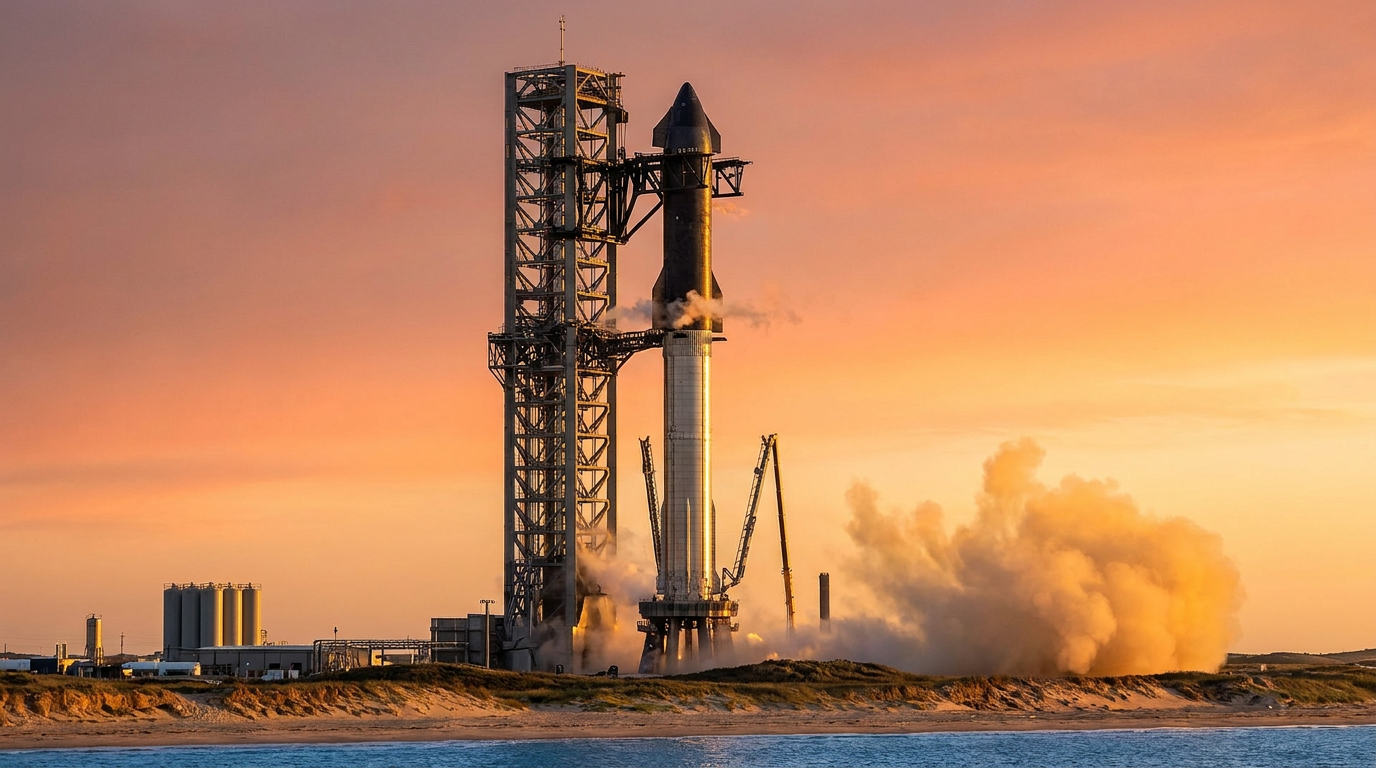
- Bullish Tech Investors
- Focusing on SpaceX's launch dominance and AI integration.
- Value Analysts
- Warning of severe overvaluation and capital risks.
- Retail Shareholders
- Viewing the IPO as a long-awaited opportunity to own a piece of the space economy.
- Competing Space Firms
- Benefiting from the sector's new benchmark and institutional validation.
What's not represented
- · Taxpayers funding government space contracts
- · Environmental groups monitoring launch emissions
Why this matters
The sheer scale of SpaceX's public debut permanently alters the tech and aerospace investment landscape, providing retail investors unprecedented access while setting a massive new benchmark for space economy valuations.
Key points
- SpaceX completed the largest IPO in history, raising $85.7 billion after underwriters exercised their overallotment option.
- The stock surged on its first day of trading, pushing the company's valuation to $2.1 trillion.
- The massive valuation officially made CEO Elon Musk the world's first trillionaire.
- SpaceX allocated an unprecedented 30% of its shares to retail investors, drawing $100 billion in demand.
- Value analysts warned the stock is significantly overvalued, citing the $6.4 billion loss in its AI division.
- The IPO caused a temporary capital rotation out of rival space stocks, though competitors like Rocket Lab quickly rebounded.
The aerospace and technology sectors witnessed a historic milestone this week as SpaceX executed the largest initial public offering in the history of global financial markets. Debuting on the Nasdaq under the ticker symbol SPCX, Elon Musk’s space exploration and artificial intelligence conglomerate initially raised a staggering $75 billion. The momentum did not stop there; shortly after the debut, underwriters exercised their overallotment provision—commonly known as a greenshoe option—to purchase an additional 83.3 million shares. This maneuver injected another $10.7 billion into the offering, bringing the total capital raised to an unprecedented $85.7 billion. The sheer scale of the capital influx shatters previous records, dwarfing the $29 billion raised by Saudi Aramco in 2019 and fundamentally reshaping expectations for mega-cap public listings.[1][7]
The market's reception to the offering was nothing short of euphoric, driving the company's valuation into uncharted territory. Originally priced at $135 per share, the stock opened trading at $150 and quickly surged past the $161 mark during its first days on the open market. This aggressive price action pushed SpaceX’s total market capitalization to an astonishing $2.1 trillion. The valuation reflects immense investor confidence in the company's dual dominance of the orbital launch market and the rapidly expanding satellite internet sector via its Starlink constellation. By crossing the two-trillion-dollar threshold immediately upon its debut, SpaceX has established itself as a foundational pillar of the modern tech economy, instantly becoming a bellwether for both aerospace and advanced technology equities.[2][3]
To contextualize the magnitude of this valuation, SpaceX has instantly vaulted into the upper echelon of the world's most valuable enterprises. At $2.1 trillion, the company now ranks as the seventh-largest publicly traded firm globally. This placement positions the aerospace giant ahead of deeply entrenched legacy corporations and tech heavyweights, including semiconductor leader Broadcom at $1.8 trillion, energy behemoth Saudi Aramco at $1.7 trillion, and Musk’s own electric vehicle manufacturer, Tesla, which sits at $1.4 trillion. The rapid ascension highlights a broader market shift, wherein investors are increasingly willing to assign massive premiums to companies building foundational infrastructure for the next generation of technological advancement, from low-Earth orbit connectivity to deep-space logistics.[2]

The record-breaking public listing also triggered a seismic shift in global wealth rankings, officially minting CEO Elon Musk as the world's first trillionaire. Prior to the IPO, Musk was already the wealthiest individual on the planet, but the public pricing of his massive equity stake in SpaceX propelled his personal fortune to an estimated $1.1 trillion. To put this figure into perspective, Musk's net worth now exceeds the annual gross domestic product of all but roughly twenty nations. While the vast majority of this wealth remains illiquid—tied up in restricted shares of SpaceX, Tesla, and other ventures—the milestone underscores the unprecedented scale of value creation generated by his portfolio of disruptive technology companies over the past two decades.[2][3]
A defining characteristic of the SpaceX IPO was its highly unusual allocation strategy, which deliberately prioritized individual traders over exclusive institutional gatekeepers. In a significant departure from traditional Wall Street practices for mega-cap listings, the company allocated a full 30 percent of its offered shares directly to retail investors. This populist approach generated a massive wave of grassroots enthusiasm, with individual investors placing orders totaling more than $100 billion ahead of the debut. By democratizing access to one of the most highly anticipated tech offerings of the century, SpaceX tapped into a fiercely loyal retail base that has historically supported Musk’s ventures through periods of extreme volatility, ensuring a robust foundation of long-term shareholders.[2]
This populist approach generated a massive wave of grassroots enthusiasm, with individual investors placing orders totaling more than $100 billion ahead of the debut.
Despite the heavy retail allocation, institutional appetite for the aerospace giant proved equally voracious. The IPO order book was reportedly four times oversubscribed, drawing approximately $300 billion in total demand from pension funds, mutual funds, and sovereign wealth vehicles against the initial $75 billion offering. Among the most notable institutional participants was asset management behemoth BlackRock, which placed a massive $5 billion order for SpaceX shares. That single order was nearly equivalent to the entire capital raised by AI chipmaker Cerebras in its own highly publicized IPO earlier in the year. The overwhelming institutional demand signals that traditional finance views SpaceX not merely as a speculative space venture, but as a critical infrastructure asset for the future global economy.[2]

Beyond rockets and satellites, a significant driver of the $2.1 trillion valuation is the company's aggressive pivot into artificial intelligence. Earlier this year, Musk’s standalone AI startup, xAI, was folded directly into the SpaceX corporate structure. Investors are currently exhibiting an insatiable appetite for AI infrastructure plays, and the integration positions SpaceX at the intersection of space logistics and advanced computing. However, this dual mandate comes with staggering costs. The artificial intelligence division reportedly generated a $6.4 billion loss last year, driven primarily by the exorbitant computing expenses required to train and operate next-generation AI models. For bullish investors, these losses are viewed as necessary capital expenditures to secure dominance in a winner-take-all technological arms race.[3]
Not all market observers are convinced that the historic price tag is justified by the underlying financial realities. Traditional value analysts have sounded the alarm, warning that the stock is priced for absolute perfection in an inherently risky industry. Financial research firm Morningstar issued a stark assessment shortly after the debut, declaring the shares "significantly overvalued" and setting a fair value estimate of just $63 per share—less than half of the $135 IPO price. Skeptics argue that while the company's achievements in reusable rocketry are undeniable, the current market capitalization implies a flawless execution of both the Starlink expansion and the highly speculative artificial intelligence ventures, leaving zero margin of safety for public investors.[4]
Elaborating on their bearish stance, Morningstar analysts acknowledged the prodigious cost advantages and deep economic moat generated by SpaceX's core launch and satellite communications businesses. However, they pointed to the newly acquired artificial intelligence division as a massive wildcard. The analysts warned that the AI segment possesses an indeterminate economic moat and poses a material threat of value destruction due to its massive capital requirements and uncertain path to profitability. Furthermore, skeptics caution that the current share price is being artificially supported by a tightly constrained supply of available shares, warning of potential volatility when early investors are eventually permitted to sell.[4]

The gravitational pull of the SpaceX listing also created immediate ripple effects across the broader commercial space sector, sparking a phenomenon analysts dubbed the "halo trade." In the days leading up to the IPO, competing publicly traded space companies experienced sharp selloffs. Firms like Rocket Lab, Firefly Aerospace, and Intuitive Machines saw double-digit percentage declines as portfolio managers liquidated their positions. For months, these smaller firms had served as space proxies for public market investors seeking exposure to the orbital economy. Once the pure-play market leader became available, capital rapidly rotated out of the proxies and directly into SpaceX, causing temporary but severe downward pressure on the rest of the industry.[6][8]
However, the sector-wide selloff proved to be short-lived, as analysts quickly stepped in to highlight the underlying strength of the broader space economy. Rocket Lab shares rebounded sharply, climbing more than 6 percent after KeyBanc Capital Markets upgraded the stock from Sector Weight to Overweight. Analysts argued that the proxy selloff was entirely systematic and unwarranted, noting that Rocket Lab's fundamentals—including a massive $2.2 billion backlog and a 63 percent year-over-year revenue increase—remained pristine. Furthermore, industry experts suggested that SpaceX's $2.1 trillion valuation actually benefits its rivals by establishing a massive pricing benchmark, proving to institutional investors that the commercial space sector can generate world-class returns and leaving plenty of room for a strong secondary launch provider.[5][6]

Looking ahead, market watchers are closely monitoring the supply dynamics that will dictate SpaceX's near-term price action. Currently, the stock's free float represents less than five percent of the company's total outstanding shares, creating a scarcity premium that has helped drive the price upward. This dynamic is expected to shift dramatically in late summer. Following the company's second-quarter earnings report, the first lock-up expiration window will open, potentially releasing over 1.3 billion shares held by private investors and employees into the public market. This impending flood of supply will serve as the ultimate stress test for the stock, determining whether the unprecedented retail and institutional demand can absorb the new shares without collapsing the historic $2.1 trillion valuation.[9]
How we got here
May 20, 2026
The SEC publicly discloses SpaceX's S-1 filing, confirming plans for a public listing.
June 3, 2026
SpaceX announces its target to sell 555.6 million shares at $135 each.
June 11, 2026
The IPO officially prices at $135, raising an initial $75 billion.
June 12, 2026
SpaceX begins trading on the Nasdaq under the ticker SPCX, opening at $150.
June 15, 2026
Underwriters exercise the greenshoe option, adding $10.7 billion to the total raise.
Viewpoints in depth
Bullish Tech Investors
Focusing on SpaceX's launch dominance and AI integration.
Investors driving the $2.1 trillion valuation are looking past near-term cash burn. They argue that SpaceX has effectively monopolized the Western launch market and built an insurmountable lead in satellite internet with Starlink. Furthermore, the recent integration of xAI positions the company at the intersection of the two most capital-intensive trends of the decade: space infrastructure and artificial intelligence.
Value Analysts
Warning of severe overvaluation and capital risks.
Traditional financial analysts, such as those at Morningstar, caution that the IPO is priced for absolute perfection. They point to the $6.4 billion loss generated by the AI division last year and argue that the core launch business, while successful, cannot mathematically support a multi-trillion-dollar market cap. They warn that when the lock-up period expires and insiders begin selling, the stock could face severe downward pressure.
Competing Space Firms
Benefiting from the sector's new benchmark.
Executives and analysts covering rival space companies view the SpaceX IPO as a massive net positive. While the immediate event caused a temporary capital rotation out of smaller firms, the establishment of a $2.1 trillion anchor in the sector forces institutional funds to take the space economy seriously. Companies like Rocket Lab are already seeing upgrades as analysts argue there is plenty of room for a strong secondary player in the launch market.
What we don't know
- How the stock will react when the lock-up period expires and insiders begin selling millions of shares.
- Whether the newly integrated xAI division can achieve profitability after posting a $6.4 billion loss.
- If retail investors will hold their positions through the inevitable volatility of a newly public mega-cap stock.
Key terms
- Initial Public Offering (IPO)
- The process by which a private company offers shares of its stock to the public for the first time.
- Greenshoe Option
- A provision that allows underwriters to sell more shares than originally planned if demand is higher than expected.
- Free Float
- The portion of a company's shares that are freely available to be traded by the public, excluding locked-in shares held by insiders.
- Lock-up Period
- A predetermined window of time after an IPO during which company insiders and early investors are restricted from selling their shares.
- Market Capitalization
- The total dollar value of a company's outstanding shares of stock, calculated by multiplying the current share price by the total number of shares.
Frequently asked
How much money did SpaceX raise in its IPO?
SpaceX raised a total of $85.7 billion. This included an initial $75 billion offering and an additional $10.7 billion after underwriters exercised their overallotment option.
Why did Elon Musk's net worth increase so much?
Musk owns a significant portion of SpaceX. When the company went public at a $2.1 trillion valuation, the market value of his equity surged, pushing his net worth to an estimated $1.1 trillion.
How did the IPO affect other space companies?
Initially, stocks like Rocket Lab dropped as investors sold them to buy SpaceX shares. However, they quickly rebounded as analysts upgraded the sector, noting that SpaceX's success validates the broader space economy.
Is SpaceX stock considered a good value?
Opinions are sharply divided. While retail and tech investors are highly bullish on its growth potential, value analysts like Morningstar consider the stock significantly overvalued, citing high costs and a fair value estimate of just $63.
Sources
Source coverage
9 outlets
4 viewpoints surfaced









[1]MarketWatchBullish Tech Investors
SpaceX’s stock jumps as the company reveals its IPO has raised another $10.7 billion
Read on MarketWatch →[2]ForbesBullish Tech Investors
SpaceX IPO: $1.77 Trillion Valuation, June 12 Listing Could Be Largest in History
Read on Forbes →[3]The GuardianRetail Shareholders
SpaceX going public has made Elon Musk a trillionaire
Read on The Guardian →[4]MorningstarValue Analysts
SpaceX Launches History's Largest IPO. We believe shares are significantly overvalued.
Read on Morningstar →[5]Investing.comBullish Tech Investors
Rocket Lab stock rebounds following SpaceX IPO selloff
Read on Investing.com →[6]TradingViewCompeting Space Firms
Rocket Lab shares climb after KeyBanc upgrade following SpaceX IPO
Read on TradingView →[7]StreetInsiderBullish Tech Investors
SpaceX IPO raises $85.7 billion after underwriters excercise overallotment
Read on StreetInsider →[8]BenzingaCompeting Space Firms
Rocket Lab Stock Dips On SpaceX 'Halo Trade'
Read on Benzinga →[9]SubstackValue Analysts
SpaceX: Thoughts on the first day of trading
Read on Substack →


Every angle. Every day.
Get finance stories with full source coverage and perspective breakdowns delivered to your inbox.