
Community Land Trusts Reach Historic Milestones as Neighborhoods Reclaim Local Real Estate
From New York to Texas, community-led organizations are successfully removing properties from the speculative market to guarantee permanent affordability for residents and local businesses.
By Factlen Editorial Team
- Community Land Trusts & Advocates
- Focuses on removing land from the speculative market to build neighborhood power and prevent displacement.
- Financial & Municipal Partners
- Emphasizes the economic viability of the model through public-private partnerships and targeted grants.
- Local Real Estate Observers
- Highlights the neighborhood-level impact, zoning changes, and the physical transformation of vacant properties into community assets.
What's not represented
- · Traditional real estate developers who might view CLTs as removing valuable land from the open market.
- · Long-time renters who may not qualify for CLT homeownership but are still facing immediate displacement pressures.
Why this matters
As housing and commercial rents soar nationwide, the community land trust model offers a proven, scalable way to permanently shield neighborhoods from gentrification and displacement, allowing working-class families to build wealth.
Key points
- The East New York Community Land Trust is purchasing a $2.3 million commercial building to serve as an affordable hub for local businesses.
- The Fort Worth Community Land Trust recently celebrated its first homeowner and received a $1.1 million grant from JPMorgan Chase.
- Richmond's Maggie Walker Community Land Trust is advancing a pipeline of over 150 permanently affordable homes.
- The CLT model separates land ownership from the physical structure, capping resale prices to ensure permanent affordability for future buyers.
June 2026 is shaping up to be a watershed month for the Community Land Trust (CLT) movement across the United States. In neighborhoods facing intense gentrification and skyrocketing real estate prices, local residents are increasingly pooling resources to buy back their blocks. By removing land from the speculative market, these organizations are ensuring that housing and commercial spaces remain permanently affordable for the people who already live there. From the dense urban corridors of New York City to the sprawling neighborhoods of Fort Worth, Texas, community-led organizations are proving that alternative models of ownership can successfully shield working-class families from displacement while fostering long-term neighborhood stability.[1][6]
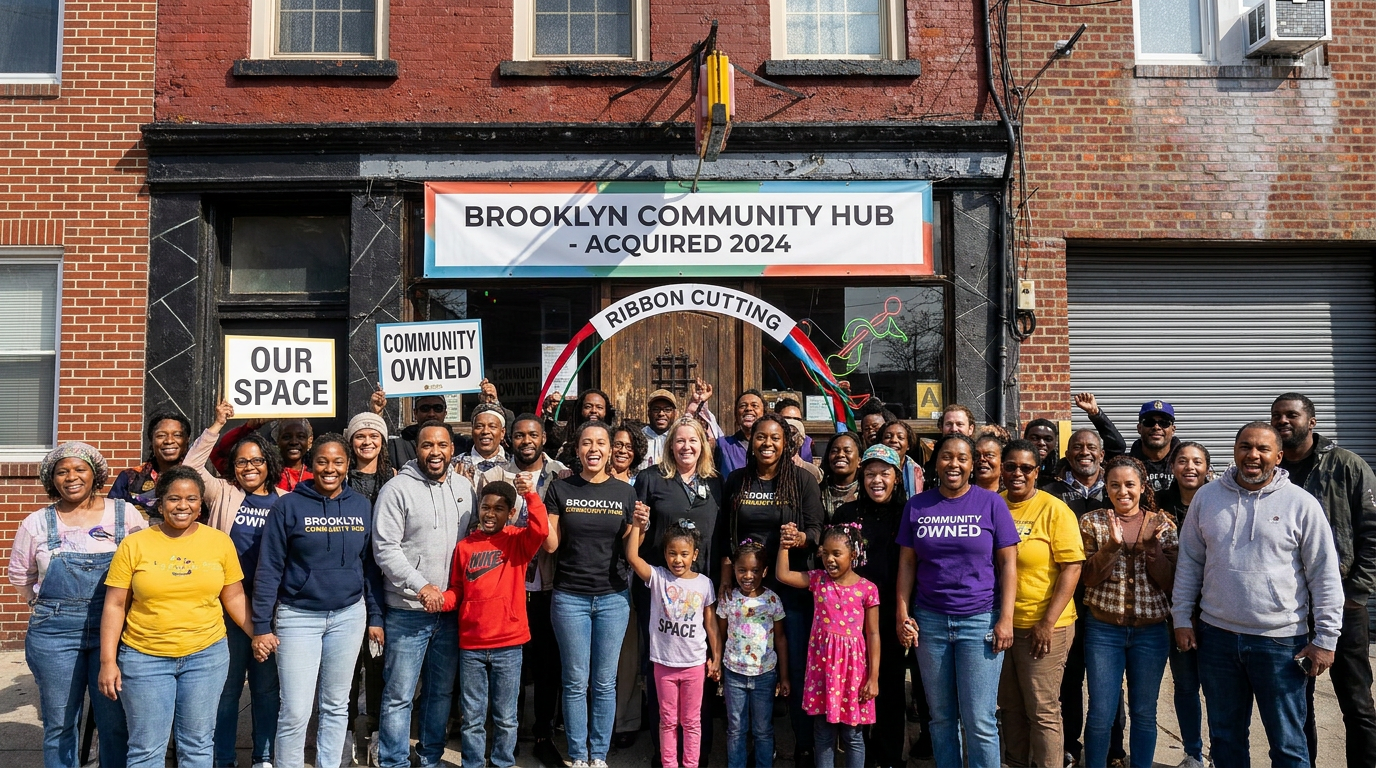
In New York City, the East New York Community Land Trust (ENYCLT) is making history by becoming the first CLT in the city to purchase a commercial property directly off the private market. The organization is acquiring a vacant, two-story brick building for $2.3 million, a significant milestone for a movement that has traditionally focused almost exclusively on residential housing. The space will be transformed into the "East Brooklyn Liberation Center," serving as a permanent headquarters for the nonprofit while providing deeply affordable office space for other local businesses and community organizations that are increasingly being priced out of the borough.[1][2][6]
"Removing land from the speculative market is building power in the neighborhood," explained Boris Santos, the president of ENYCLT, emphasizing that community ownership is the ultimate defense against displacement. The group previously made waves in 2024 when it bought a 20-unit multifamily apartment building, which it is currently converting into a shared-equity housing cooperative to protect its tenants. The new commercial acquisition puts New York City on a growing list of municipalities—including St. Paul, Denver, and Oakland—where land trusts successfully steward mixed-use and commercial properties alongside residential homes. By controlling the commercial spaces, the trust ensures that the essential services, grocery stores, and local nonprofits that residents rely on can survive the economic pressures of a gentrifying neighborhood.[1][6]

The momentum of the community land trust movement is not confined to the coastal cities. In Texas, the Fort Worth Community Land Trust (FWCLT) recently celebrated a major milestone of its own: handing the keys to its first-ever homeowner. Ashley Guinn, a first-generation homeowner, closed on her house in May, breaking a generational cycle of renting that affects millions of American families. "The Fort Worth Community Land Trust program opens doors and helps break the generational curse of not owning a home or having anything to leave your kids," Guinn said during the celebration, highlighting the profound emotional and financial impact of the achievement.[3]
FWCLT is already expanding its footprint rapidly across the city. The trust is advancing the first phase of a new development called Carroll Park, and it recently secured a $1.1 million philanthropic grant from JPMorgan Chase to accelerate its mission. This critical funding is specifically earmarked to support community-based builders and nonprofit developers who are rehabilitating deteriorated housing stock across Fort Worth's established neighborhoods. By equipping smaller, local developers with technical assistance and land acquisition support, the initiative aims to increase the supply of attainable homes while keeping the economic benefits of construction within the community itself.[3]

FWCLT is already expanding its footprint rapidly across the city.
Meanwhile, in Richmond, Virginia, the Maggie Walker Community Land Trust is celebrating its 10th anniversary this spring with a robust pipeline of over 150 permanently affordable homes in various stages of predevelopment and construction. The organization focuses on households earning between 80% and 115% of the area median income, a demographic often referred to as the "missing middle." This ensures that working professionals—such as educators, healthcare workers, and public sector employees—can afford to live in the very communities they serve. "Knowing that our work contributes to long-term stability, wealth-building, and community preservation makes the impact deeply tangible," the organization noted.[4]
The mechanics of a community land trust are uniquely designed to balance individual wealth-building with long-term community preservation. Under the standard CLT model, the nonprofit trust retains ownership of the underlying land, while the resident purchases the physical house at a significantly below-market rate. When the homeowner eventually decides to sell, the resale price is capped by a predetermined formula. This structure allows the seller to walk away with their initial equity and a fair portion of the home's appreciation, while guaranteeing that the property remains affordable for the next low-to-moderate-income buyer, effectively locking in the initial subsidy forever.[4][5]
Municipalities are increasingly recognizing the immense value of this model and adjusting their housing policies to actively support it. In Roseville, Minnesota, a pilot program partnered with Habitat for Humanity to leverage Community Development Block Grants and tax increment financing to help the local CLT acquire properties. The city even targeted its outreach to homeowners with properties assessed under $300,000, encouraging them to sell to the trust so their homes could benefit first-time buyers in the community. The proactive approach helped the trust bypass the highly competitive open real estate market, securing homes that would have otherwise been snapped up by corporate investors.[5]

In New York, legislative support for the movement is also growing at a rapid pace. The Community Opportunity to Purchase Act (COPA), which would give qualified nonprofits an early bid on properties hitting the market, recently reached majority support in the city council. Furthermore, the city's latest comprehensive housing plan explicitly commits to working hand-in-hand with CLTs to help create and preserve 400,000 units of affordable housing over the next decade. Advocates argue that without this kind of institutional and legislative backing, community groups would struggle to compete against well-capitalized private equity firms in the race to acquire land.[6]
As housing affordability remains one of the most pressing and intractable challenges nationwide, the string of successes in mid-2026 proves that alternative, community-driven models can scale effectively. By treating land as a shared community resource rather than a purely speculative asset, neighborhoods are securing their own futures. Whether it is a commercial liberation center in Brooklyn or a first-generation homeowner in Fort Worth, the community land trust model is empowering residents to ensure that the people who built the community can afford to stay in it for generations to come.[1][3][4]
How we got here
November 2021
The City of Roseville approves a partnership with Twin Cities Habitat for Humanity to create a local Community Land Trust.
2024
The East New York Community Land Trust becomes the first in NYC to buy a multifamily apartment building off the private market.
May 2026
The Fort Worth Community Land Trust celebrates its first-ever homeowner and receives a $1.1 million grant from JPMorgan Chase.
June 2026
The East New York Community Land Trust reaches an agreement to purchase its first commercial property to create the East Brooklyn Liberation Center.
Viewpoints in depth
Community Land Trusts & Advocates
Focuses on removing land from the speculative market to build neighborhood power and prevent displacement.
For organizers and advocates, the CLT model is fundamentally about reclaiming power from speculative real estate markets. By separating the cost of land from the cost of the structure, these trusts ensure that public investments in neighborhoods—like new parks or transit lines—don't automatically result in the displacement of long-time residents. Advocates argue that treating land as a shared community asset rather than a commodity is the only sustainable way to protect working-class families and local businesses from the relentless pressures of gentrification.
Financial & Municipal Partners
Emphasizes the economic viability of the model through public-private partnerships and targeted grants.
City governments and financial institutions view CLTs as a highly efficient tool for maximizing the impact of affordable housing subsidies. Because the affordability is permanent, a single initial grant or subsidy serves multiple generations of homeowners, rather than vanishing after a standard 15-year compliance period. Partners like JPMorgan Chase and municipal economic development authorities are increasingly providing the upfront capital and technical assistance needed to help these trusts acquire land, viewing it as a scalable investment in long-term neighborhood stability.
What we don't know
- Whether state and federal governments will introduce larger, standardized funding mechanisms to help CLTs compete with private equity firms on a national scale.
- How quickly the commercial CLT model will spread to other major cities facing similar gentrification pressures.
Key terms
- Community Land Trust (CLT)
- A nonprofit, community-based organization designed to ensure community stewardship of land, primarily to maintain long-term housing affordability.
- Speculative Market
- A real estate market driven by investors buying property with the expectation that its value will increase, often leading to rapid price inflation and gentrification.
- Shared-Equity Housing
- A model where a home is sold at a below-market price, and in exchange, the buyer agrees to limit their profit when they sell, keeping the home affordable for the next buyer.
- Area Median Income (AMI)
- The midpoint of a region's income distribution, used by housing programs to determine eligibility for affordable housing initiatives.
Frequently asked
What is a Community Land Trust (CLT)?
A CLT is a nonprofit organization that buys and holds land permanently to ensure it is used for the benefit of the community, most commonly to provide permanently affordable housing.
How does buying a home on a CLT work?
The buyer purchases the physical house at a below-market price, while the CLT retains ownership of the land underneath it, leasing it to the homeowner for a nominal monthly fee.
Can CLT homeowners build wealth?
Yes. While the resale price of the home is capped to keep it affordable for the next buyer, the homeowner still earns back their down payment, the equity from paying down their mortgage, and a predetermined portion of the home's appreciation.
Are CLTs only for residential housing?
No. While most focus on housing, CLTs like the East New York Community Land Trust are increasingly purchasing commercial properties to provide affordable office and retail space for local businesses and nonprofits.
Sources
Source coverage
6 outlets
3 viewpoints surfaced






[1]Next CityCommunity Land Trusts & Advocates
A Community Land Trust Is Purchasing Commercial Property in NYC for the First Time
Read on Next City →[2]BrownstonerLocal Real Estate Observers
Community Land Trust Plans 'Liberation Center' in East New York Warehouse
Read on Brownstoner →[3]JPMorgan Chase NewsroomFinancial & Municipal Partners
Fort Worth Community Land Trust celebrates first homeowner, expands access to affordable homeownership
Read on JPMorgan Chase Newsroom →[4]Virginia Housing AllianceCommunity Land Trusts & Advocates
May 2026 Member Spotlight: Maggie Walker Community Land Trust
Read on Virginia Housing Alliance →[5]City of RosevilleFinancial & Municipal Partners
Community Land Trust Pilot Program Sees Early Success
Read on City of Roseville →[6]New Economy ProjectCommunity Land Trusts & Advocates
NYC's growing community land trust movement will hit a new milestone
Read on New Economy Project →
Every angle. Every day.
Get community stories with full source coverage and perspective breakdowns delivered to your inbox.