
The Bilingual Brain Uses a Single 'Grammatical Engine' for All Languages, Study Finds
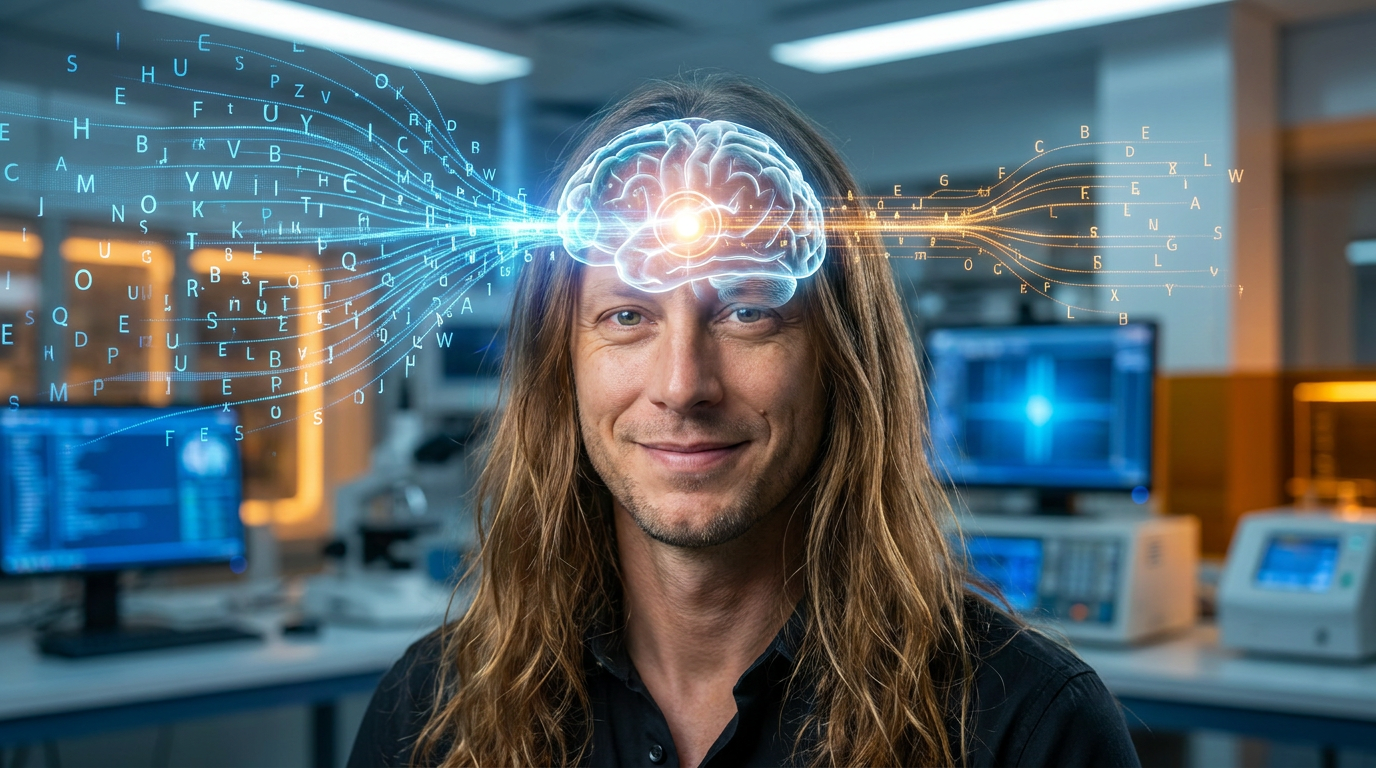
Groundbreaking neuroimaging research reveals that bilingual speakers do not possess separate neural rulebooks for each language. Instead, the brain relies on a single, highly efficient computational loop to process grammar across all spoken tongues.
By Factlen Editorial Team
- Neuroscience Researchers
- Focused on the empirical brain imaging data and the biological reality of a single computational loop.
- Linguistics Theorists
- Interested in what this means for the concept of 'universal grammar' and abstract language structures.
- Language Educators
- Focused on the practical implications for teaching, learning, and understanding bilingual slip-ups.
What's not represented
- · Adult language learners struggling with syntax
- · Speakers of non-Indo-European languages
Why this matters
Understanding that the brain uses a single, shared engine for all languages fundamentally changes how we approach language learning and education. It proves that acquiring a new language doesn't require building new neural infrastructure from scratch, making the process of becoming bilingual—and reaping its powerful neuroprotective benefits—more accessible than previously thought.
Key points
- A new NYU study proves bilingual brains do not use separate grammatical rulebooks for different languages.
- Researchers used MEG scans to track brain activity millisecond-by-millisecond during language tasks.
- The exact same neural template fired whether participants processed English, Spanish, or completely made-up words.
- Bilingual grammatical slip-ups occur because all languages run through this single, shared computational loop.
- This shared engine acts as intense cognitive resistance training, delaying dementia onset by four to five years.
- Because the neural infrastructure is reusable, learning a third language is fundamentally easier than learning a second.
For anyone who speaks more than one language, the occasional grammatical slip-up is a familiar, sometimes frustrating reality. A native Spanish speaker conversing in English might accidentally say "I have 20 years" instead of "I am 20," directly porting the Spanish syntactic structure into their second tongue. For decades, these linguistic mashups led both casual observers and cognitive scientists to a logical assumption: the bilingual brain must house separate, distinct "grammatical engines" for each language. Under this theory, a bilingual individual possessed an English rulebook that governed English speech, and a separate Spanish rulebook that governed Spanish speech. When a slip-up occurred, it was simply the result of these two independent engines momentarily colliding in the brain's processing centers.[4]
However, a groundbreaking new study has fundamentally dismantled this dual-engine myth. Published in the Journal of Neuroscience by a team of researchers at New York University, the study provides definitive biological proof that bilingualism is not powered by separate, language-specific systems. Instead, the human brain relies on a single, shared neural mechanism—a universal grammatical engine—that actively processes the syntax for every language a person speaks. Led by Esti Blanco-Elorrieta and Xuanyi Jessica Chen, the research team demonstrated that the exact same neural computations are deployed regardless of which language is currently rolling off the speaker's tongue.[1][2]
In this Factlen Explainer, we dive deep into the neurobiology of the bilingual brain to understand how a single piece of organic hardware manages multiple complex software systems. The discovery of a shared grammatical engine does more than just explain why we occasionally mix up our verbs and nouns; it offers profound insights into the fundamental nature of human cognition. By mapping the brain's activity down to the millisecond, scientists are uncovering how our minds construct reality through language, and why the neural infrastructure we build to speak one tongue perfectly primes us to learn another.[6]
To understand the magnitude of this discovery, it is essential to look at how the brain processes speech in real-time. Human conversation moves at a blistering pace, requiring the brain to retrieve vocabulary, apply abstract structural rules, and coordinate the physical mechanics of the mouth and vocal cords in fractions of a second. Previously, researchers theorized that managing multiple languages required the brain to physically partition these tasks to avoid catastrophic interference. The NYU study, however, reveals that the brain is far more efficient. Rather than spinning up a brand-new motor for a second language, the brain runs all vocabulary through the exact same computational loop.[2][3]

Capturing this shared computational loop in action required pushing the limits of modern neuroimaging. Standard functional MRI scans are excellent at showing which broad regions of the brain are active, but they are too slow to capture the lightning-fast sequence of grammatical processing. To solve this, the researchers utilized magnetoencephalography, or MEG. This advanced, non-invasive imaging technique maps the exact magnetic fields generated by electrical currents in the brain. By using MEG, the team was able to track the neural firing of Spanish-English bilingual speakers millisecond-by-millisecond as they actively formed words.[2][3]
During the MEG scans, the bilingual participants were subjected to a morphological stress test. They were asked to listen to the singular form of a noun and instantly transform it into its correct grammatical plural form. For example, a participant might hear the English word "boat" and be required to say "boats," or hear the Spanish word "barco" and say "barcos." The researchers carefully monitored the brain's electrical activity during the exact moment the participants applied the grammatical rule to pluralize the noun, looking for any divergence in the neural pathways used for English versus Spanish.[1][2]
The most ingenious part of the experiment, however, involved the use of "pseudowords." If the researchers only used real words like "boats," skeptics could argue that the brain wasn't actually computing grammar at all, but rather just retrieving the pre-memorized plural form of the word from a mental storage locker. To prove that the brain was actively calculating rules on the fly, the team forced the bilingual speakers to pluralize completely fabricated words, such as "paple." Because the participants had never heard these fake words before, they had no choice but to actively apply abstract grammatical rules to complete the task.[1][3]
The empirical tracking data from the MEG scans was unequivocal. Whether the participant was pluralizing an English word, a Spanish word, or a completely made-up pseudoword, the exact same network of brain areas lit up in the exact same sequence. The empirical tracking data unmasked an identical, language-transcendent neural template firing across both tongues. The brain did not route the Spanish words to a Spanish processing center and the English words to an English one; it fed every single word into the same universal computational loop to adjust it to its grammatical context.[1][5]

The empirical tracking data from the MEG scans was unequivocal.
This revelation completely reframes our understanding of bilingual slip-ups. When a bilingual person accidentally applies the grammatical structure of one language to another, it is not a sign of two separate systems colliding or malfunctioning. Instead, it happens precisely because the brain uses a single, shared grammatical engine to power every language. The slip-up is simply the result of the brain's unified system temporarily applying a parameter from one language's rulebook while operating within the shared computational loop. It is an error of extreme efficiency, not an error of neurological confusion.[3]
Beyond explaining everyday linguistic quirks, the NYU findings provide some of the clearest neural evidence to date for the concept of a "universal grammar." For decades, linguists have debated whether human beings possess an innate, biological template for language structure. The fact that the brain implements grammar as a highly reusable computation—a universal language template that can instantly stamp abstract rules onto completely novel words—suggests that human language is built from neural computations that transcend any specific culture or vocabulary. Syntax is not just a learned behavior; it is a fundamental operating system inherent to the human brain.[1][2]
The intense, daily workout required to run multiple languages through this single grammatical engine yields profound cognitive benefits. Because the brain must constantly manage and suppress the vocabulary of the language not currently in use, bilingualism acts as a relentless form of resistance training for the brain's executive control system. This system, located primarily in the prefrontal cortex, is responsible for high-level cognitive functions such as focused attention, working memory, and the ability to ignore irrelevant distractions. By constantly exercising this shared engine, bilingual individuals build denser, more resilient neural networks.[6]
This structural resilience translates into measurable neuroprotective effects that last a lifetime. Extensive neurocognitive research has demonstrated that the enhanced executive control system forged by bilingualism provides a powerful buffer against age-related cognitive decline. In fact, studies have shown that being fluent in two languages can delay the clinical onset of dementia and Alzheimer's disease by an average of four to five years compared to monolingual individuals. The single grammatical engine doesn't just process speech; it actively fortifies the brain against the ravages of time.[6]

The discovery of a shared neural mechanism also carries thrilling implications for language learners. If the brain were required to build a completely new grammatical engine from scratch for every new language acquired, the effort required to become polyglot would be exponentially exhausting. However, because the brain reuses the same underlying mechanism across languages, the foundational infrastructure is already in place. As the researchers noted, if there is one universal mechanism for language, it logically follows that acquiring a third or fourth language should be fundamentally easier than learning a second.[5]
This concept of "reusable infrastructure" explains why seasoned polyglots often report that each subsequent language they learn feels progressively easier to master. Once the brain's single grammatical engine has been trained to accept and process the parameters of a second language, it becomes highly adept at mapping the rules of a third. The neural pathways are already paved, and the computational loop is already optimized for abstract structural transformations. The heavy lifting of building the engine is done; the brain simply needs to feed it new vocabulary.[5][6]

Despite these groundbreaking findings, several compelling mysteries remain at the frontier of bilingual neuroscience. The NYU study specifically examined Spanish and English—two languages that, while distinct, share a distant Indo-European lineage and broadly similar syntactic structures. It remains unknown whether this single-engine mechanism operates identically for languages with radically different syntax, such as English and Japanese, or Arabic and Mandarin. Furthermore, scientists are still investigating how this shared engine adapts in individuals who learn a second language late in adulthood, compared to those who are exposed to multiple languages from infancy.[6]
Ultimately, the discovery of a single neurological grammar engine fundamentally elevates our view of the bilingual brain. It is not a divided landscape, fractured into separate linguistic territories, but rather a highly efficient, unified processor capable of astonishing flexibility. By routing diverse vocabularies and complex structural rules through a single, elegant computational loop, the human brain demonstrates a remarkable capacity for adaptation. It is a biological testament to the idea that, beneath the surface of our many different tongues, we all share the exact same machinery for making sense of the world.[6]
How we got here
1980s-1990s
Early neuroimaging studies begin mapping language centers, sparking debate over whether bilinguals have separate neural networks for each language.
1997
Functional MRI studies reveal that highly proficient, early bilinguals process both languages in overlapping regions of the brain.
2010s
Research confirms that lifelong bilingualism enhances executive function and delays the onset of dementia by several years.
June 2026
NYU researchers publish MEG data in JNeurosci, proving definitively that the brain uses a single, shared computational engine for grammar across languages.
Viewpoints in depth
Neuroscience Researchers
Focused on the empirical brain imaging data and the biological reality of a single computational loop.
For neuroscientists, the NYU study is a triumph of high-resolution imaging. By using MEG to track brain activity down to the millisecond, researchers moved beyond the broad regional mapping of fMRI. They demonstrated that the brain doesn't just store language in the same general area; it routes different languages through the exact same microscopic computational sequence. This proves that grammar is a reusable biological algorithm.
Linguistics Theorists
Interested in what this means for the concept of 'universal grammar' and abstract language structures.
Linguists have long debated whether human beings possess a 'universal grammar'—an innate structural template for language. The discovery that the brain applies the exact same neural firing pattern to English, Spanish, and completely fabricated pseudowords provides powerful biological backing for this theory. It suggests that syntax is not a cultural artifact we memorize, but a fundamental operating system inherent to the human brain.
Language Educators
Focused on the practical implications for teaching, learning, and understanding bilingual slip-ups.
For educators, this research reframes how we view language acquisition and bilingual errors. When a student applies Spanish syntax to an English sentence, it is no longer seen as a 'collision' of two separate systems, but a natural byproduct of a highly efficient, shared engine. Furthermore, it reinforces the pedagogical belief that learning a third language is mechanically easier than learning a second, as the neural infrastructure is already primed for reuse.
What we don't know
- Whether this single-engine mechanism operates identically for languages with radically different syntax structures, such as English and Japanese, or if it only applies to related languages like English and Spanish.
- How the brain's grammatical engine adapts in individuals who learn a second language late in adulthood, compared to those who are bilingual from infancy.
- The exact neural mechanism that allows the shared engine to successfully 'switch' parameters between languages without constant interference.
Key terms
- Magnetoencephalography (MEG)
- A non-invasive brain imaging technique that maps magnetic fields to track neural activity millisecond-by-millisecond.
- Pseudoword
- A completely fabricated word that follows the phonetic rules of a language but has no meaning, used to test active grammar computation.
- Cognate
- Words in different languages that share a similar meaning, spelling, and pronunciation due to common linguistic roots.
- Executive Control System
- The set of cognitive processes in the brain responsible for attention, working memory, and problem-solving, which is strengthened by bilingualism.
- Morphosyntax
- The set of rules governing how words are formed and how they are structured into sentences.
Frequently asked
Why do bilingual people sometimes mix up grammar rules?
Because all languages run through the exact same neural computational loop. A slip-up is just the brain's unified system temporarily applying one language's parameter to another language's vocabulary.
Did the study test people who learned a language later in life?
The NYU study focused on highly proficient Spanish-English bilinguals. However, the findings suggest the underlying grammatical mechanism is universal, though researchers are still studying how age of acquisition affects the engine's efficiency.
Does this mean learning a third language is easier?
Yes. Researchers believe that because the brain's grammatical engine is highly reusable, the neural infrastructure is already in place to adopt new language rules once a second language has been mastered.
What is a pseudoword and why was it used?
A pseudoword is a completely made-up word (like "paple"). Researchers used them to prove the brain actively calculates grammar rules on the fly, rather than just retrieving memorized real words from a mental dictionary.
Sources
Source coverage
6 outlets
3 viewpoints surfaced






[1]Journal of NeuroscienceNeuroscience Researchers
A Shared Neural Mechanism for Abstract Grammatical Computations Across Languages in Bilinguals
Read on Journal of Neuroscience →[2]New York UniversityNeuroscience Researchers
Bilingualism is Driven by a Single Neurological 'Grammar Engine'
Read on New York University →[3]Neuroscience NewsLanguage Educators
Bilingual Brains Use a Single Shared Engine for Grammar
Read on Neuroscience News →[4]The New York TimesLinguistics Theorists
How Does One Brain Speak Two Languages?
Read on The New York Times →[5]Society for NeuroscienceNeuroscience Researchers
A universal brain mechanism for different languages
Read on Society for Neuroscience →[6]Factlen Editorial TeamLanguage Educators
Synthesis by Factlen editorial team
Read on Factlen Editorial Team →

More in health
See all 7 stories →Nutritional Psychiatry
The Evidence for Nutritional Psychiatry: How Food is Becoming a Mainstream Mental Health Intervention
0 sources

Sleep Science
The Brain's Nightly Wash Cycle: How Deep Sleep Clears Cellular Waste
0 sources
Bilingual Brain
How the Bilingual Brain Uses a Single 'Grammar Engine' for Multiple Languages
0 sources
Nutritional Psychiatry
The Emerging Science of Nutritional Psychiatry: How the Gut Microbiome Shapes Mental Health
0 sources

Every angle. Every day.
Get health stories with full source coverage and perspective breakdowns delivered to your inbox.