
The Emerging Science of Nutritional Psychiatry: How the Gut Microbiome Shapes Mental Health
A new wave of research is mapping the 'gut-brain axis,' revealing how the trillions of microbes in the human digestive tract actively regulate mood, anxiety, and cognitive function.
By Factlen Editorial Team

- Microbiome Researchers
- Focus on the biological mechanisms, such as short-chain fatty acids and vagus nerve signaling, driving the search for specific psychobiotic strains.
- Clinical Psychiatrists
- View dietary interventions as a powerful adjunct to traditional therapies, emphasizing that food should complement, not replace, necessary psychiatric medications.
- Public Health Advocates
- Highlight the systemic implications of the gut-brain axis, arguing that access to whole, unprocessed foods is a fundamental mental health issue.
What's not represented
- · Commercial probiotic manufacturers
- · Agricultural and food policy makers
Why this matters
Understanding the gut-brain connection transforms food from mere caloric fuel into a powerful, accessible tool for managing mental health, anxiety, and cognitive resilience.
Key points
- The gut and brain communicate constantly via the vagus nerve, with 80% of signals traveling upward from the digestive tract.
- Roughly 90% of the body's serotonin is produced in the gut, heavily influenced by the microbiome.
- Clinical trials show that dietary improvements can significantly increase remission rates for major depression.
- Fermented foods like kefir and kimchi have been shown to rapidly increase microbiome diversity and lower inflammation.
- Nutritional psychiatry views food not just as caloric fuel, but as a primary tool for regulating emotional and cognitive health.
For decades, the conversation around human nutrition has been largely confined to the neck down. Public health messaging focused heavily on cardiovascular risk, metabolic syndrome, and weight management, treating food primarily as a mechanical fuel source for the body's physical engine.[2]
But over the past ten years, a quiet revolution has reshaped the biological sciences. Researchers have mapped a complex, bidirectional communication network between the digestive tract and the central nervous system, fundamentally altering our understanding of human psychology and emotional regulation.[3]
This emerging field, known as nutritional psychiatry, posits that the brain is not an isolated fortress. Instead, mood, anxiety, and cognitive resilience are intimately regulated by the trillions of bacteria, viruses, and fungi residing in the human gut—a vast ecosystem collectively known as the microbiome.[1][4]
The primary physical bridge of this connection is the vagus nerve, a sprawling neural superhighway that runs from the brainstem directly to the abdomen. Historically, scientists believed this nerve primarily sent top-down commands from the brain to control the mechanics of digestion.[2]
Modern neurogastroenterology has revealed that the exact opposite is true. Up to 80 percent of the nerve fibers in the vagus nerve are afferent, meaning they transmit signals from the gut up to the brain. The digestive system is constantly reporting its chemical environment to the central nervous system.[3][8]

This constant upward chatter helps explain why gastrointestinal distress is so frequently comorbid with anxiety and depression. The enteric nervous system—often dubbed the "second brain"—contains over 100 million neurons, which is more than either the spinal cord or the peripheral nervous system possesses.[2][7]
Beyond physical nerve connections, the microbiome acts as an internal chemical factory. Gut bacteria manufacture a vast array of neuroactive compounds, including dopamine, gamma-aminobutyric acid (GABA), and acetylcholine, all of which are critical for regulating human emotion and focus.[4]
Perhaps the most striking example is serotonin, the neurotransmitter targeted by most standard antidepressant medications. An estimated 90 percent of the body's serotonin is produced not in the brain, but in the digestive tract, synthesized by specialized enterochromaffin cells under the direct influence of gut microbes.[7]

While gut-derived serotonin cannot directly cross the blood-brain barrier, it heavily influences the vagus nerve and regulates intestinal permeability. When the microbiome is imbalanced—a state known as dysbiosis—this local inflammation sends systemic distress signals that the brain interprets as anxiety, brain fog, or profound fatigue.[4][8]
While gut-derived serotonin cannot directly cross the blood-brain barrier, it heavily influences the vagus nerve and regulates intestinal permeability.
The microbes also produce short-chain fatty acids (SCFAs), particularly butyrate, when they ferment dietary fiber. SCFAs are crucial metabolic byproducts that strengthen the blood-brain barrier, reduce neuroinflammation, and actively promote the growth of new brain cells in the hippocampus.[3]
For years, these mechanisms were demonstrated primarily in animal models. However, landmark clinical trials have recently proven that dietary interventions can yield measurable psychiatric benefits in humans, moving the field from mere correlation to actionable causation.[5]
The SMILES trial, published in The Lancet Psychiatry, was a watershed moment for the discipline. It demonstrated that patients with clinical depression who received dietary counseling to adopt a modified Mediterranean diet experienced significantly greater remission rates than those who received only standard social support.[5]

Subsequent meta-analyses have confirmed these findings, showing that adherence to a diverse, plant-rich diet is associated with a 32 percent lower risk of developing depression over time. The data suggests that feeding the microbiome is as critical to mental health maintenance as traditional therapeutic interventions.[1][7]
This realization has led to the conceptualization of "psychobiotics"—live bacterial strains that, when ingested in adequate amounts, confer a specific mental health benefit. Certain strains of Lactobacillus and Bifidobacterium have shown promise in reducing cortisol levels and mitigating physiological stress responses in human trials.[4]
However, researchers caution that the commercial supplement industry has vastly outpaced the rigorous science. The benefits of probiotics are highly strain-specific, and popping a generic, over-the-counter capsule is unlikely to cure severe psychiatric disorders or out-compete a poor overall diet.[1][8]
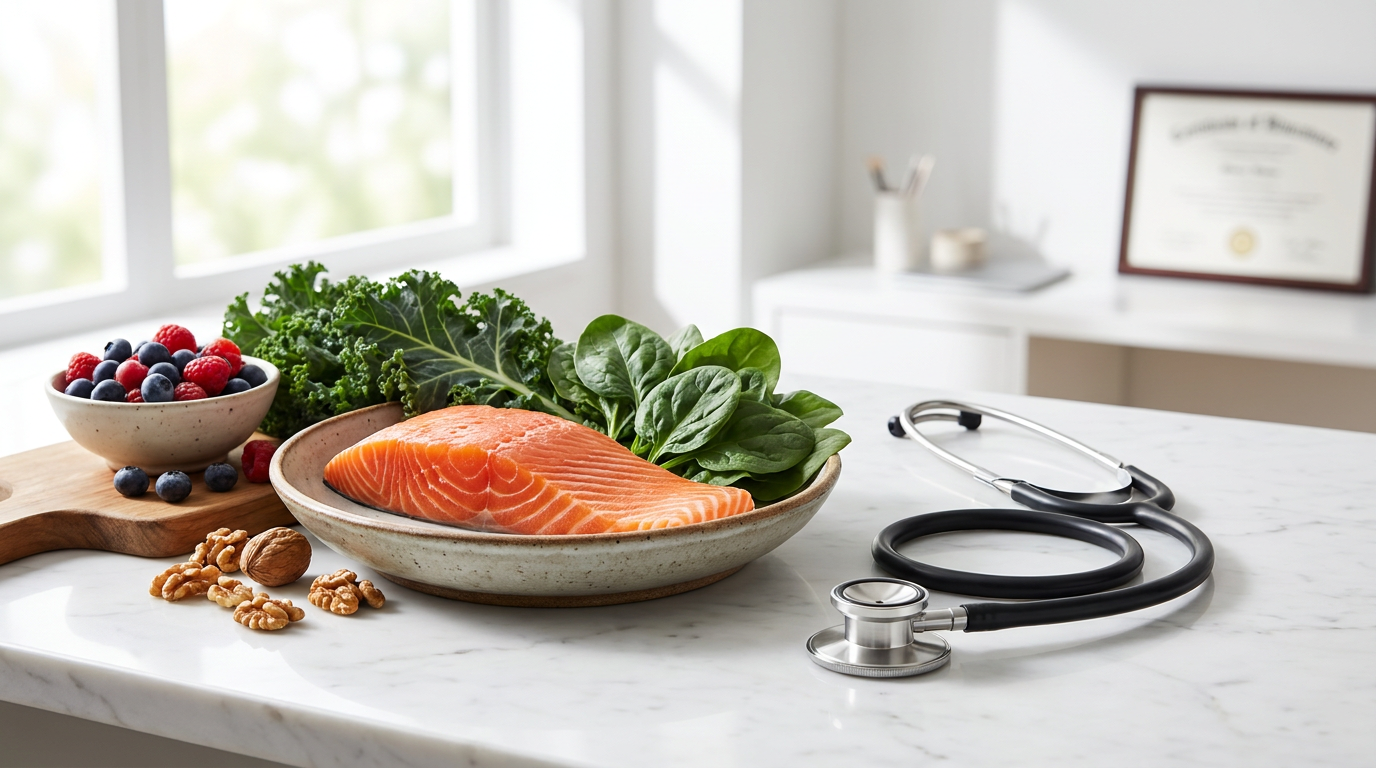
Instead, clinical focus has shifted heavily toward whole-food interventions. A rigorous study by Stanford Medicine found that a diet high in fermented foods—such as kefir, kimchi, and kombucha—steadily increased microbiome diversity and decreased markers of systemic inflammation over a 10-week period.[6]

Interestingly, the Stanford researchers noted that merely increasing dietary fiber did not yield the same rapid immunological benefits as fermented foods. This suggests that the live cultures in fermented products play a unique, active role in retraining the immune system and, by extension, calming the brain.[6]
There is still much we do not know. The microbiome is as unique as a human fingerprint, meaning that a dietary intervention that alleviates anxiety in one individual might have negligible effects on another. Personalized nutrition based on individual microbiome sequencing remains in its infancy.[3][7]
Furthermore, researchers are actively investigating how modern lifestyle factors—including the ubiquitous consumption of ultra-processed foods, artificial emulsifiers, and broad-spectrum antibiotics—disrupt the delicate microbial ecosystem and contribute to rising global rates of mood disorders.[4][5]
How we got here
2004
A landmark study on germ-free mice demonstrates that the absence of gut bacteria fundamentally alters stress responses and brain development.
2013
The term 'psychobiotics' is coined by researchers to describe live organisms that confer mental health benefits when ingested.
2017
The SMILES trial is published, providing the first clinical evidence that dietary intervention can effectively treat major depressive episodes.
2021
Stanford researchers publish data showing that a diet high in fermented foods reliably increases microbiome diversity and lowers systemic inflammation.
Viewpoints in depth
Clinical Psychiatrists' View
Emphasizes integrating nutritional interventions safely alongside established psychiatric care.
For clinical psychiatrists, the gut-brain axis represents an exciting new tool, but one that requires careful contextualization. Practitioners stress that dietary interventions should be viewed as an adjunct therapy rather than a replacement for necessary pharmacological treatments like SSRIs or cognitive behavioral therapy. They point to the SMILES trial as the gold standard, noting that the dietary improvements were administered alongside—not instead of—standard psychiatric care, providing a holistic safety net for vulnerable patients.
Microbiome Researchers' View
Focuses on the precise chemical pathways and metabolic byproducts that link the gut to the brain.
Biological researchers view the gut essentially as an endocrine organ. Their focus is on mapping the exact mechanisms of action—how specific strains of bacteria ferment fiber into short-chain fatty acids, and how those molecules cross the blood-brain barrier to reduce neuroinflammation. This camp is highly optimistic about the future of targeted 'psychobiotics,' but remains deeply skeptical of the current commercial supplement market, arguing that the science of strain-specific benefits is still years away from being reliably bottled.
Public Health Advocates' View
Highlights the societal and systemic barriers to maintaining a healthy gut-brain axis.
Public health experts argue that the science of nutritional psychiatry cannot be separated from food policy. If a diverse, fiber-rich, whole-food diet is essential for mental health, then the ubiquity of ultra-processed foods and the existence of food deserts represent a systemic mental health crisis. This perspective advocates for policy changes—such as subsidies for fresh produce and stricter regulations on food additives—arguing that individual dietary choices are heavily constrained by socioeconomic environments.
What we don't know
- How to reliably predict which specific dietary interventions will work for an individual's unique microbiome fingerprint.
- The exact long-term psychiatric impacts of common food additives and artificial emulsifiers on the gut-brain axis.
- Whether targeted psychobiotic supplements can ever match the efficacy of a diverse, whole-food diet.
Key terms
- Microbiome
- The vast ecosystem of bacteria, viruses, and fungi that live in the human digestive tract and help regulate bodily functions.
- Vagus Nerve
- A major cranial nerve that acts as a bidirectional communication highway between the brain and the digestive system.
- Psychobiotics
- Live bacterial strains (probiotics) that, when ingested in adequate amounts, produce a measurable mental health benefit.
- Short-Chain Fatty Acids (SCFAs)
- Beneficial compounds, such as butyrate, produced when gut bacteria ferment dietary fiber, known to reduce neuroinflammation.
- Enteric Nervous System
- A mesh-like system of neurons that governs the function of the gastrointestinal tract, often referred to as the body's 'second brain.'
Frequently asked
Can I just take a probiotic pill to improve my mood?
While some specific strains (psychobiotics) show promise, researchers warn that generic commercial probiotics are not a cure-all. Clinical evidence strongly favors whole-food dietary changes over isolated supplements.
Does this mean depression is just caused by a bad diet?
No. Depression is a complex, multifaceted condition involving genetics, trauma, and environment. Diet is viewed as a powerful modifying factor and a tool for resilience, not the sole cause or cure.
How quickly can food change the gut microbiome?
The microbiome is highly responsive. Studies show that significant shifts in microbial composition and gene expression can occur within just a few days of drastically changing one's diet.
What are the best foods for the gut-brain axis?
Current research points to a diverse intake of high-fiber plants (which feed the microbes) and fermented foods like kefir, kimchi, and kombucha (which introduce beneficial live cultures).
Sources
Source coverage
8 outlets
3 viewpoints surfaced








[1]Factlen Editorial TeamPublic Health Advocates
Synthesis by Factlen editorial team
Read on Factlen Editorial Team →[2]Harvard Medical SchoolPublic Health Advocates
The gut-brain connection
Read on Harvard Medical School →[3]National Institutes of HealthMicrobiome Researchers
The Gut Microbiome and the Brain
Read on National Institutes of Health →[4]Nature Reviews MicrobiologyMicrobiome Researchers
The microbiota-gut-brain axis
Read on Nature Reviews Microbiology →[5]The Lancet PsychiatryClinical Psychiatrists
A randomised controlled trial of dietary improvement for adults with major depression (the 'SMILES' trial)
Read on The Lancet Psychiatry →[6]Stanford MedicineMicrobiome Researchers
Fermented-food diet increases microbiome diversity, decreases inflammatory proteins, study finds
Read on Stanford Medicine →[7]American Psychological AssociationClinical Psychiatrists
That gut feeling
Read on American Psychological Association →[8]CellMicrobiome Researchers
Gut Microbiota’s Effect on Mental Health: The Gut-Brain Axis
Read on Cell →

More in health
See all 5 stories →Longevity Science
The Evidence on VO2 Max and Muscle Mass as Longevity Predictors
0 sources

Nutritional Psychiatry
The Evidence for Nutritional Psychiatry: How Food is Becoming a Mainstream Mental Health Intervention
0 sources
Sleep Science
The Brain's Nightly Wash Cycle: How Deep Sleep Clears Cellular Waste
0 sources
Every angle. Every day.
Get health stories with full source coverage and perspective breakdowns delivered to your inbox.