
The 2026 E-Bike Buying Guide: Decoding Classes, Batteries, and Motor Torque
As electric bikes replace car commutes globally, navigating the technical jargon of motor torque, battery watt-hours, and legal classifications is essential to finding the right ride.
By Factlen Editorial Team
- Urban Commuters
- Value efficiency, long battery range, and Class 3 speeds to effectively replace daily car trips in city traffic.
- Recreational Trail Riders
- Focus on Class 1 compliance, natural pedal-assist feel, and suspension for off-road and greenway access.
- Cargo & Utility Riders
- Prioritize high-torque motors, Class 2 throttles for starting from a dead stop, and heavy-duty frames for hauling groceries or children.
- Safety & Regulatory Advocates
- Emphasize the critical importance of UL 2849 battery certifications and strict adherence to local trail class laws.
What's not represented
- · Traditional Cyclists
- · Pedestrian Advocates
Why this matters
Electric bikes are transforming urban mobility, saving riders thousands in fuel and parking costs. But buying the wrong model can leave you stranded on a steep hill, banned from your local trail, or stuck with a battery that degrades prematurely.
Key points
- Class 1 e-bikes are pedal-assist only up to 20 mph and are allowed on most trails.
- Class 2 e-bikes feature a throttle for pedalless cruising up to 20 mph.
- Class 3 e-bikes assist up to 28 mph, making them ideal for road commuting but restricted on trails.
- Motor torque (Nm) is a better indicator of hill-climbing power than wattage.
- Battery capacity is best measured in Watt-hours (Wh), calculated by multiplying Volts by Amp-hours.
- UL 2849 certification is now a crucial safety benchmark to prevent battery fires.
Electric bikes have evolved from niche novelties into essential transportation tools. In 2026, they are actively replacing car commutes, shrinking urban congestion, and saving riders thousands of dollars in fuel and parking. But as the micro-mobility market has matured, it has also fractured into a complex landscape of technical specifications. Buying an e-bike today requires decoding a web of legal classifications, battery chemistries, and motor metrics.[7]
The most critical starting point is the three-class system, a legal framework adopted across North America and parts of Europe that dictates where a bike can be ridden. Class 1 e-bikes are defined by pedal-assist-only operation. The motor only engages when the rider is actively pedaling, and it automatically cuts off when the bike reaches 20 mph. Because they mimic the behavior of traditional bicycles, Class 1 models are universally accepted on bike paths, multi-use greenways, and mountain bike trails.[3][6]
Class 2 e-bikes share the same 20 mph speed limit but introduce a crucial differentiator: a throttle. Riders can propel the bike forward without pedaling at all, much like a moped. This feature is highly valued by cargo haulers, riders with mobility limitations, and commuters who need a boost to get moving from a dead stop. However, relying heavily on the throttle drains the battery significantly faster than using pedal assist.[3][6]
Class 3 e-bikes, often referred to as "speed pedelecs," are built for the road. They provide pedal assistance up to 28 mph, making them highly competitive with urban car traffic over short to medium distances. Because of their higher speeds, Class 3 bikes are frequently banned from natural surface trails and multi-use paths, and many jurisdictions require riders to be at least 17 years old and wear a helmet.[3][6]

Once the legal class is chosen, buyers must evaluate the motor. Most consumers fixate on the wattage sticker—such as 500W or 750W—assuming a higher number guarantees a superior ride. However, industry experts warn that wattage merely measures raw electrical consumption. It is a poor predictor of real-world performance, particularly when climbing hills or carrying heavy loads.[4]
The true metric of an e-bike's muscle is torque, measured in Newton-meters (Nm). If wattage is the bike's top speed, torque is its brute strength. Torque is the rotational force that gets a heavy bike off the line at a stoplight and pulls it up a steep incline without stalling. A "750W" motor with low torque will bog down on a hill, whereas a highly efficient "500W" motor with high torque will power right to the top.[4]
For flat urban commutes and casual cruising, 30 to 40 Nm of torque is generally sufficient. But for riders facing moderate inclines, 50 to 60 Nm is considered the sweet spot. Those hauling cargo, riding heavy fat-tire models, or tackling steep off-road terrain should look for high-torque motors pushing 80 Nm or more to ensure the bike doesn't stall under pressure.[4]

For flat urban commutes and casual cruising, 30 to 40 Nm of torque is generally sufficient.
Powering that motor is the battery, which is typically the single most expensive component on the bicycle. To accurately gauge a battery's capacity, buyers need to look past marketing claims about maximum range and focus on Watt-hours (Wh). Watt-hours represent the total energy stored in the bike's "fuel tank" and are the most reliable indicator of how far the bike can travel on a single charge.[1][2]
Calculating Watt-hours is straightforward: multiply the battery's Voltage (V) by its Amp-hours (Ah). For example, a 48V battery with a 10Ah capacity yields 480Wh. For short daily commutes of under 15 miles, a mid-capacity battery between 300 and 500Wh is usually plenty. Riders planning longer adventures or carrying heavy cargo should seek batteries with 600Wh or more to avoid range anxiety.[1][2]
Voltage acts as the electrical pressure pushing power to the motor. While older or light-duty e-bikes often use 24V systems, 36V and 48V have become the modern industry standards. A 48V system delivers stronger acceleration and better hill-climbing performance, making it the preferred choice for demanding rides, while 36V offers a balanced blend of power and efficiency for casual use.[1][2]

Beyond performance, safety standards have drastically shifted in 2026. Following a wave of high-profile lithium-ion battery fires in previous years, rigorous third-party certifications are now mandatory in many regions. In places like California and the European Union, e-bikes and their chargers must meet strict safety benchmarks, most notably the UL 2849 certification.[5]
Buyers are strongly advised to verify this certification before purchasing. A UL 2849 label ensures that the bike's Battery Management System (BMS) has been rigorously tested to actively monitor cell temperatures and prevent overcharging, excessive discharging, and short circuits. Purchasing an uncertified, white-label battery online is now widely considered a severe fire risk.[1][5]
Stopping power is equally critical. Because e-bikes are significantly heavier than traditional bicycles and routinely travel at higher speeds, standard mechanical rim brakes are often insufficient. Hydraulic disc brakes, which use fluid to transfer force from the lever to the caliper, are now considered a non-negotiable safety standard for any high-performance, cargo, or Class 3 e-bike.[4]

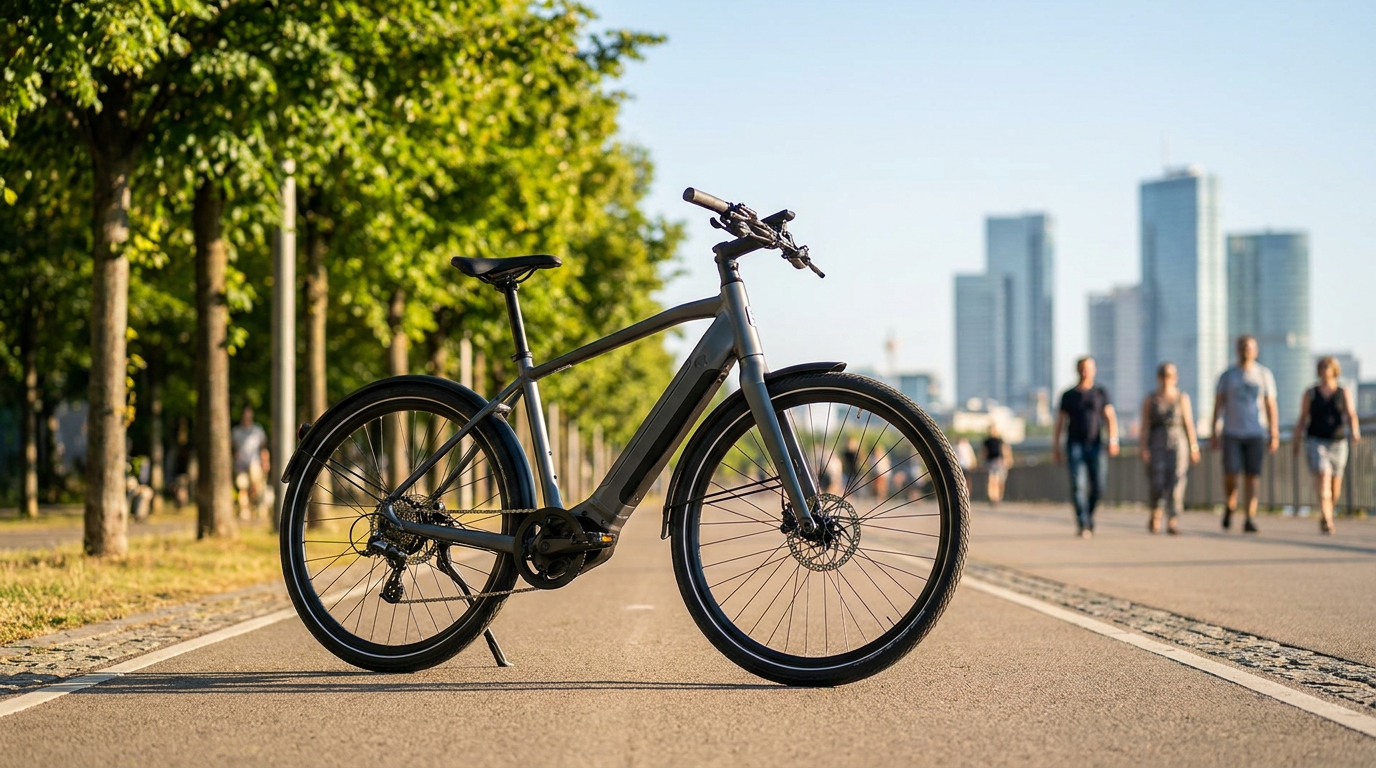
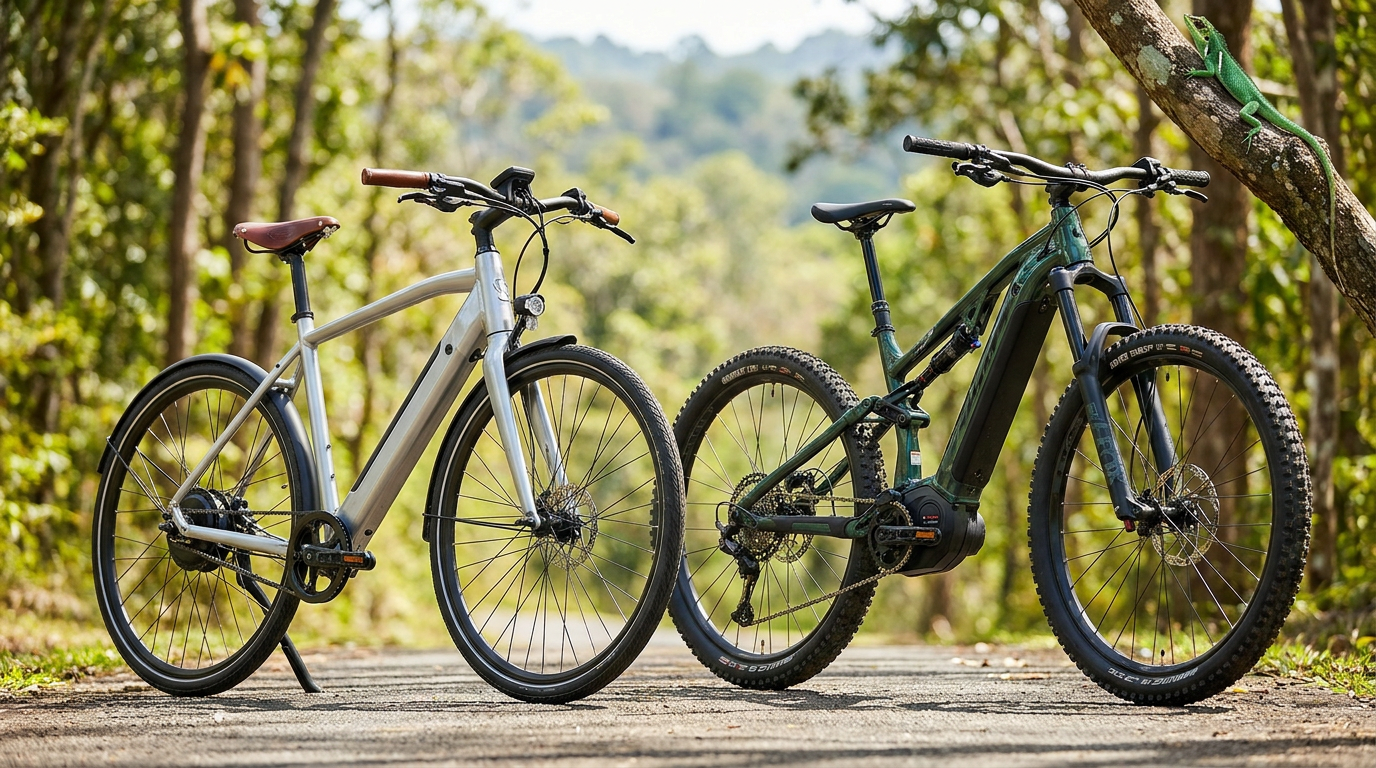
Ultimately, the best e-bike is the one tailored to the rider's specific daily route. A heavy, moped-style bike with wide fat tires might look rugged, but those tires create immense rolling resistance that drains the battery quickly on smooth pavement. Conversely, a sleek commuter bike with narrow tires will maximize range on asphalt but will feel jarring and unstable on a gravel path.[7]
Experts universally recommend taking a test ride at a local dealer whenever possible. A specification sheet cannot convey how natural the pedal assist feels, whether the motor engages smoothly or jerkily, or how the bike handles at slow speeds. Finding the right fit ensures the e-bike becomes a daily joy rather than an expensive garage ornament.[5]
Viewpoints in depth
Urban Commuters
Riders focused on replacing car trips prioritize speed, efficiency, and range.
For the urban commuter, the e-bike is a direct replacement for a car or public transit. This group heavily favors Class 3 "speed pedelecs" that can maintain 28 mph, allowing them to safely keep pace with city traffic and reduce travel times. They prioritize narrow, efficient tires that minimize rolling resistance, integrated lighting for dark winter mornings, and high-capacity batteries (600Wh+) that eliminate the need to charge at the office. For these riders, the bike is a precision tool for urban mobility, and they are willing to sacrifice off-road comfort for on-road speed.
Cargo & Utility Riders
Riders hauling heavy loads require high torque and throttle assistance over top speed.
Utility riders use their e-bikes to haul groceries, transport children, or carry delivery payloads. For this camp, top speed is irrelevant; brute strength is everything. They seek out motors with 80 Nm of torque or higher to ensure the bike doesn't stall on a hill under an extra 100 pounds of weight. Class 2 throttles are highly prized in this category, as getting a fully loaded cargo bike moving from a dead stop using only pedal power can be physically daunting. They also demand robust hydraulic brakes to safely stop the increased mass.
Safety & Regulatory Advocates
Focus on battery fire prevention and strict adherence to trail access laws.
Following a surge in lithium-ion battery fires caused by cheap, uncertified imports, safety advocates and local governments are pushing for strict regulations. This camp argues that UL 2849 certification should be legally mandated for all e-bike sales to ensure Battery Management Systems (BMS) are fail-safe. Additionally, trail managers advocate for clear labeling of e-bike classes, arguing that heavy, throttle-powered Class 2 and fast Class 3 bikes pose a danger to pedestrians and traditional cyclists on shared multi-use paths.
What we don't know
- How pending legislation in various states might further restrict or reclassify high-speed Class 3 e-bikes.
- Whether solid-state battery technology will become commercially viable for e-bikes in the near future, potentially doubling range and eliminating fire risks.
Key terms
- Watt-hour (Wh)
- The total energy capacity of a battery, calculated by multiplying Volts by Amp-hours, which determines the bike's maximum range.
- Torque (Nm)
- The rotational force produced by the motor, crucial for getting a heavy bike moving from a stop and climbing hills.
- Pedal-Assist (PAS)
- A system where the electric motor only provides power when the rider is actively turning the pedals.
- Throttle
- A mechanism, usually on the handlebar, that allows the rider to engage the motor and propel the bike forward without pedaling.
- Battery Management System (BMS)
- The internal electronic brain of a battery pack that monitors cell health and prevents dangerous overcharging and short circuits.
Frequently asked
What is the difference between an e-bike's wattage and torque?
Wattage measures the raw electrical power the motor consumes, which loosely correlates to top speed. Torque, measured in Newton-meters (Nm), is the actual rotational force that provides acceleration and the ability to climb steep hills without stalling.
Do I need a driver's license to ride an e-bike?
In most jurisdictions, Class 1, 2, and 3 e-bikes are legally classified as bicycles and do not require a driver's license, registration, or insurance. However, Class 3 bikes often require the rider to be at least 17 years old.
How do I compare the range of different e-bike batteries?
Look at the Watt-hours (Wh), which represents the total energy capacity. You can calculate this by multiplying the battery's Voltage (V) by its Amp-hours (Ah). A higher Wh number means a longer potential range.
What does UL 2849 certification mean?
UL 2849 is a rigorous safety standard that tests an e-bike's electrical system, battery, and charger to ensure they are protected against overcharging, overheating, and fire risks.
Sources
Source coverage
7 outlets
4 viewpoints surfaced







[1]Battery Energy Storage SystemSafety & Regulatory Advocates
How to Choose the Right Electric Bike Battery: Your Complete Guide
Read on Battery Energy Storage System →[2]EM3EVCargo & Utility Riders
E-Bike Battery Basics: Volts, Amps, and Watts Explained
Read on EM3EV →[3]GyroorUrban Commuters
Understanding Electric Bike Classes: A Guide to Class 1, 2, and 3 Ebikes
Read on Gyroor →[4]Seemoon E-BikesCargo & Utility Riders
2026 E-Bike Buying Guide: Torque vs Watts
Read on Seemoon E-Bikes →[5]Electric Bike AdvisorSafety & Regulatory Advocates
The Beginner's E-Bike Buying Guide (2026 Edition)
Read on Electric Bike Advisor →[6]AventonRecreational Trail Riders
Class 1 vs Class 2 vs Class 3 Ebike
Read on Aventon →[7]Factlen Editorial Team
Synthesis by Factlen editorial team
Read on Factlen Editorial Team →


Every angle. Every day.
Get shopping stories with full source coverage and perspective breakdowns delivered to your inbox.