
Mid-Drive vs. Hub Motor E-Bikes: Which Technology Fits Your Ride?
Choosing between a mid-drive and hub motor is the most critical decision when buying an e-bike, dictating how the bike handles, climbs, and wears over time. This side-by-side analysis breaks down the mechanical trade-offs to help riders match the right technology to their specific commute and terrain.
By Factlen Editorial Team
- Urban Commuters
- Prioritize affordability, low maintenance, and effortless cruising on flat terrain.
- Performance Cyclists
- Demand natural handling, efficient hill climbing, and seamless gear integration.
- E-Bike Mechanics
- Focus on the long-term wear and tear, repairability, and total cost of ownership.
What's not represented
- · Traditional acoustic bicycle purists
- · E-bike battery manufacturers
Why this matters
E-bikes are a major investment, often costing between $1,000 and $5,000. Selecting the wrong motor type can lead to a frustrating riding experience, premature mechanical wear, or overpaying for off-road capabilities you don't actually need.
Key points
- Hub motors sit in the wheel, offering a simple, low-maintenance, and budget-friendly ride ideal for flat city commutes.
- Mid-drive motors are positioned at the pedals, leveraging the bike's mechanical gears to conquer steep hills and rough terrain.
- Mid-drives provide a more natural, balanced riding experience but accelerate wear on the chain and gears due to high torque.
- Hub motors operate independently of the drivetrain, preserving chain life and often allowing for throttle-only operation.
- The choice ultimately depends on geography: hub motors win on flat ground, while mid-drives are essential for steep inclines.
The electric bicycle market has exploded over the past decade, offering riders a sweat-free commute, a greener alternative to driving, and the ability to conquer daunting hills with ease. But beneath the sleek frames and integrated battery packs lies a fundamental engineering divide that dictates exactly how an e-bike performs, feels, and costs over its lifespan. Buyers stepping into a showroom are immediately faced with a critical choice: should the electric motor sit in the center of the bike, or inside the wheel hub? This single mechanical decision—mid-drive versus hub motor—shapes the entire ownership experience, from the initial purchase price to the frequency of maintenance.[8]
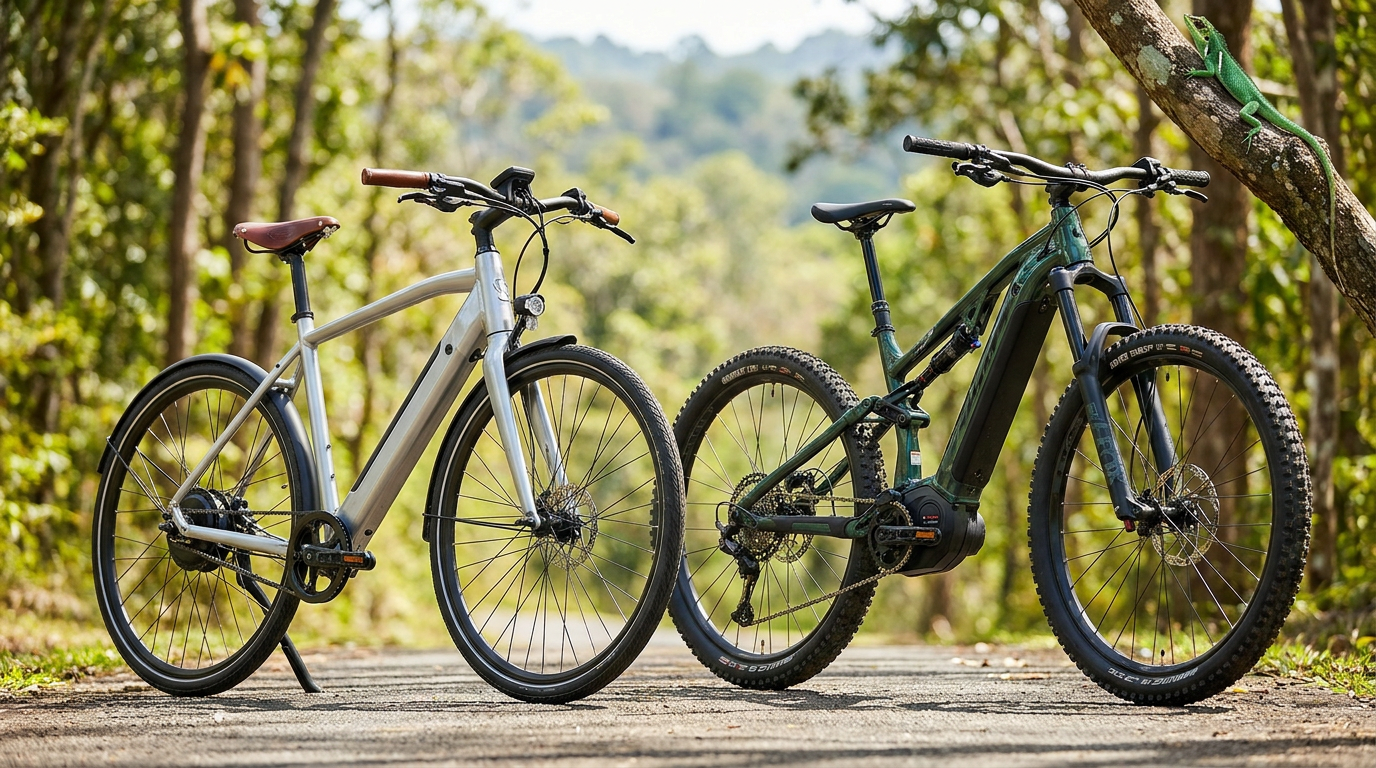
Hub motors represent the older, simpler, and more ubiquitous technology in the electric bicycle industry. Tucked directly into the center of the rear wheel—or occasionally the front wheel—these motors operate entirely independently of the bicycle's standard gears and chain. When activated, either by the rider pedaling or by pressing a thumb throttle, the motor simply spins the wheel forward to generate momentum. Because they bypass the drivetrain entirely, hub motors apply no extra mechanical stress to the chain, cassette, or derailleurs. This isolation makes them remarkably low-maintenance, as the motor itself is a sealed unit that rarely requires internal servicing.[2][3]
The primary argument for the hub motor centers on its straightforward, cost-effective design. They are significantly cheaper to manufacture and install, which is why they absolutely dominate the entry-level and budget e-bike markets. Riders often describe the sensation of a hub motor as feeling like they are being smoothly 'pushed' from behind by an invisible hand. This is especially true on models equipped with basic cadence sensors, which deliver a fixed amount of power based simply on whether the pedals are turning, rather than measuring how hard the rider is actually pushing. For riders who want to relax and let the bike do the work, this effortless propulsion is a major selling point.[4][7]

However, the argument against hub motors highlights their distinct inefficiency on steep inclines. Because a hub motor cannot leverage the bicycle's mechanical gears, it must brute-force its way up hills using raw electrical power. On a severe or sustained grade, a hub motor can bog down, lose efficiency, and drain the battery rapidly as it struggles against gravity. Furthermore, placing a heavy motor inside the rear wheel shifts the bike's center of gravity backward. This rear-heavy weight distribution can make handling feel unbalanced or cumbersome, particularly when navigating tight urban corners, lifting the bike over curbs, or riding on loose, unpaved surfaces.[4][5][7]
Mid-drive motors, by contrast, are positioned at the bike's bottom bracket, directly between the rider's pedals. Instead of spinning the wheel directly, a mid-drive motor turns the front chainring, sending its power through the bicycle's existing chain and rear gears. This mechanical integration is a massive game-changer for performance and efficiency. Just as a driver downshifts a manual transmission car to climb a steep mountain pass, a rider can shift a mid-drive e-bike into a lower gear. This allows the electric motor to spin at its optimal, highly efficient RPM while multiplying its torque to conquer the incline.[1][2]
Mid-drive motors, by contrast, are positioned at the bike's bottom bracket, directly between the rider's pedals.
The case for mid-drive motors focuses heavily on this mechanical synergy. Evidence demonstrates that utilizing the bike's gears makes mid-drive systems vastly superior for climbing steep hills, hauling heavy cargo, or navigating technical off-road trails. Because the motor's weight is centralized and positioned low on the frame, mid-drive bikes boast a natural, balanced center of gravity that closely mimics the nimble handling of a traditional acoustic bicycle. Additionally, mid-drives almost universally employ advanced torque sensors. These sensors measure the exact physical force the rider applies to the pedals and amplify it proportionally, resulting in a smooth, intuitive 'bionic legs' sensation rather than a sudden, jerky jolt of speed.[1][3][5][7]
The argument against mid-drives is rooted in accelerated wear and significantly higher costs. The sophistication of a mid-drive system carries a steeper price tag, both at the initial purchase and in the repair stand. Because the motor's substantial torque—often ranging from 250W to 600W—is channeled directly through the bicycle's standard drivetrain, the physical metal components endure immense stress. Mechanics provide evidence that riders who frequently use high-assist modes on steep climbs will stretch chains and grind down cassette teeth rapidly. Consequently, mid-drive owners may find themselves replacing drivetrain components two or three times as often as they would on a hub-motor bike.[1][3][4][6]

When evaluating the total cost of ownership, buyers must carefully weigh the upfront premium and ongoing maintenance of a mid-drive against the long-term consumable savings of a hub motor. Hub motors win decisively on pure reliability and low day-to-day maintenance, as their sealed units preserve the bike's chain life. In fact, if a chain breaks on a hub-motor bike equipped with a throttle, the rider can simply motor home using electrical power alone—a vital redundancy that is mechanically impossible on a mid-drive system, where a broken chain severs the motor's connection to the wheel.[2][4][5]
Ultimately, the decision between the two technologies hinges entirely on geography and intended riding style. A hub motor fits perfectly when the rider commutes primarily on flat or gently rolling urban streets, prioritizes a lower purchase price, desires a throttle for pedal-free cruising, and wants to minimize ongoing mechanical maintenance. For an estimated 60 to 70 percent of casual city riders and weekend path cruisers, the hub motor delivers the best overall value. It provides a reliable, sweat-free experience without the premium price tag associated with high-end mountain bike technology.[7][8]

Conversely, a mid-drive motor fits perfectly when the rider regularly faces steep, sustained hills, ventures onto unpaved off-road trails, carries heavy cargo, or demands the most natural, bicycle-like pedaling experience available. While it requires a larger upfront financial investment and a commitment to more frequent chain replacements, the mid-drive's superior torque multiplication, centralized balance, and highly efficient battery usage make it the undisputed choice for performance-oriented cycling. For those who view their e-bike as a true sport vehicle or a heavy-duty car replacement, the mid-drive system is well worth the premium.[5][7][8]
How we got here
Early 2000s
Hub motors dominate the early e-bike market due to their simple, bolt-on design.
2014
Brands like Bosch and Yamaha popularize integrated mid-drive motors, shifting the focus to natural pedal feel.
2020
The pandemic e-bike boom accelerates adoption of both technologies across urban and rural markets.
2026
Advanced torque sensors begin bridging the gap, making modern hub motors feel smoother than earlier generations.
Viewpoints in depth
Urban Commuters
Prioritize affordability, low maintenance, and effortless cruising on flat terrain.
For riders navigating city streets or paved paths, the hub motor is often the most logical choice. This camp values the lower upfront cost and the ability to rely on a throttle when tired. Because hub motors bypass the chain, commuters appreciate that they won't be replacing worn cassettes every season, making it a highly economical choice for daily transportation.
Performance Cyclists
Demand natural handling, efficient hill climbing, and seamless gear integration.
Mountain bikers, cargo haulers, and riders in hilly regions strongly favor mid-drive systems. This camp argues that the centralized weight distribution is non-negotiable for off-road stability. By leveraging the bike's mechanical gears, performance cyclists can keep the motor in its optimal RPM range, maximizing battery efficiency and conquering steep grades that would stall a hub motor.
E-Bike Mechanics
Focus on the long-term wear and tear, repairability, and total cost of ownership.
From a maintenance perspective, mechanics note a stark divide. Mid-drive motors channel immense torque through standard bicycle chains, leading to accelerated wear and frequent replacements. Conversely, hub motors are largely sealed, maintenance-free units. However, mechanics also point out that changing a flat rear tire on a hub-motor bike can be significantly more cumbersome due to the heavy motor and wiring harness.
What we don't know
- How quickly solid-state batteries will change the weight distribution math for both motor types.
- Whether emerging internal-gearbox motors will eventually make traditional mid-drive chain wear obsolete.
Key terms
- Torque Sensor
- A device that measures exactly how hard the rider is pedaling and delivers motor assistance proportionally, creating a natural, amplified feel.
- Cadence Sensor
- A basic sensor that detects whether the pedals are turning, delivering a fixed amount of power regardless of the rider's physical effort.
- Drivetrain
- The mechanical system—including the chain, cassette, and derailleurs—that transmits power from the pedals to the rear wheel.
- Bottom Bracket
- The central part of a bicycle frame where the pedal cranks attach, and the location where mid-drive motors are mounted.
Frequently asked
Can I ride a mid-drive e-bike if the battery dies?
Yes. Because the motor is at the pedals, the wheels spin freely without magnetic drag. It will pedal exactly like a traditional bicycle, albeit a heavy one.
Do hub motors have regenerative braking?
Some direct-drive hub motors offer regenerative braking to recharge the battery slightly on descents. However, geared hub motors and mid-drive motors typically do not.
Which motor type is better for riding in the rain?
Both motor types are sealed and highly water-resistant. However, mid-drives offer better traction control on slippery hills because their torque sensors respond instantly to pedal pressure.
Why do mid-drive bikes cost more?
A mid-drive motor must be custom-integrated into the frame's bottom bracket, requiring specialized manufacturing. Hub motors can simply be bolted onto standard bicycle frames, keeping production costs low.
Sources
Source coverage
8 outlets
3 viewpoints surfaced








[1]GogobestPerformance Cyclists
Mid-drive vs Hub Motor Technology: Dissecting Strengths and Weaknesses
Read on Gogobest →[2]Randride BikesE-Bike Mechanics
Analysis of Advantages and Disadvantages of Mid-Drive Motor and Hub Motor in E-bikes
Read on Randride Bikes →[3]Gazelle BikesPerformance Cyclists
Hub Drive vs Mid Drive Motor Overview
Read on Gazelle Bikes →[4]Himiway BikeUrban Commuters
Which is better mid drive or hub motor ebike?
Read on Himiway Bike →[5]EveloUrban Commuters
Choosing between mid-drive and hub drive electric bicycle motors
Read on Evelo →[6]Reddit E-Bike CommunityE-Bike Mechanics
Hub motors vs mid-drive: What I learned after riding both
Read on Reddit E-Bike Community →[7]TenwaysUrban Commuters
Mid drive vs hub motor ebike comparison
Read on Tenways →[8]Factlen Editorial TeamE-Bike Mechanics
Synthesis by Factlen editorial team
Read on Factlen Editorial Team →

Every angle. Every day.
Get shopping stories with full source coverage and perspective breakdowns delivered to your inbox.