
Zero-Knowledge Proofs Cross the 'Production Chasm': How Crypto's Privacy Tech Finally Hit the Mainstream
After years of academic development, zero-knowledge proofs are now being deployed by major institutions to secure digital identities and process financial transactions without exposing personal data.
By Factlen Editorial Team
- Privacy Advocates
- Focus on self-sovereign identity and the protection of consumer data from centralized breaches.
- Institutional Finance
- Focus on regulatory compliance, operational efficiency, and secure cross-border settlement.
- Blockchain Developers
- Focus on network scalability, gas fee reduction, and technical infrastructure milestones.
- Retail Consumers
- Focus on usability, security, and practical applications over speculation.
What's not represented
- · Regulators and Law Enforcement
- · Traditional Credit Bureaus
Why this matters
For everyday users, this breakthrough means you will soon be able to verify your age, identity, or creditworthiness online instantly—without ever handing over your sensitive personal documents to third-party databases that could be hacked.
Key points
- Zero-knowledge proofs (ZKPs) have crossed the 'production chasm,' allowing instant privacy verification on standard smartphones.
- The technology allows users to prove credentials (like age or funds) without revealing the underlying sensitive data.
- Major financial institutions are adopting ZKPs to process secure, private transactions on public blockchains.
- ZK-rollups are simultaneously solving blockchain scalability by batching thousands of transactions into a single, cheap proof.
- Regulatory clarity in 2026 is accelerating corporate adoption, moving crypto from speculative trading to treasury operations.
For years, the fundamental promise of cryptocurrency—a decentralized, trustless financial system—came with a significant catch: radical transparency. Public blockchains required every transaction, wallet balance, and smart contract interaction to be visible to anyone with an internet connection. While this transparency prevented fraud, it made the technology fundamentally incompatible with everyday consumer privacy and corporate confidentiality. In mid-2026, that paradigm is definitively shifting.[8]
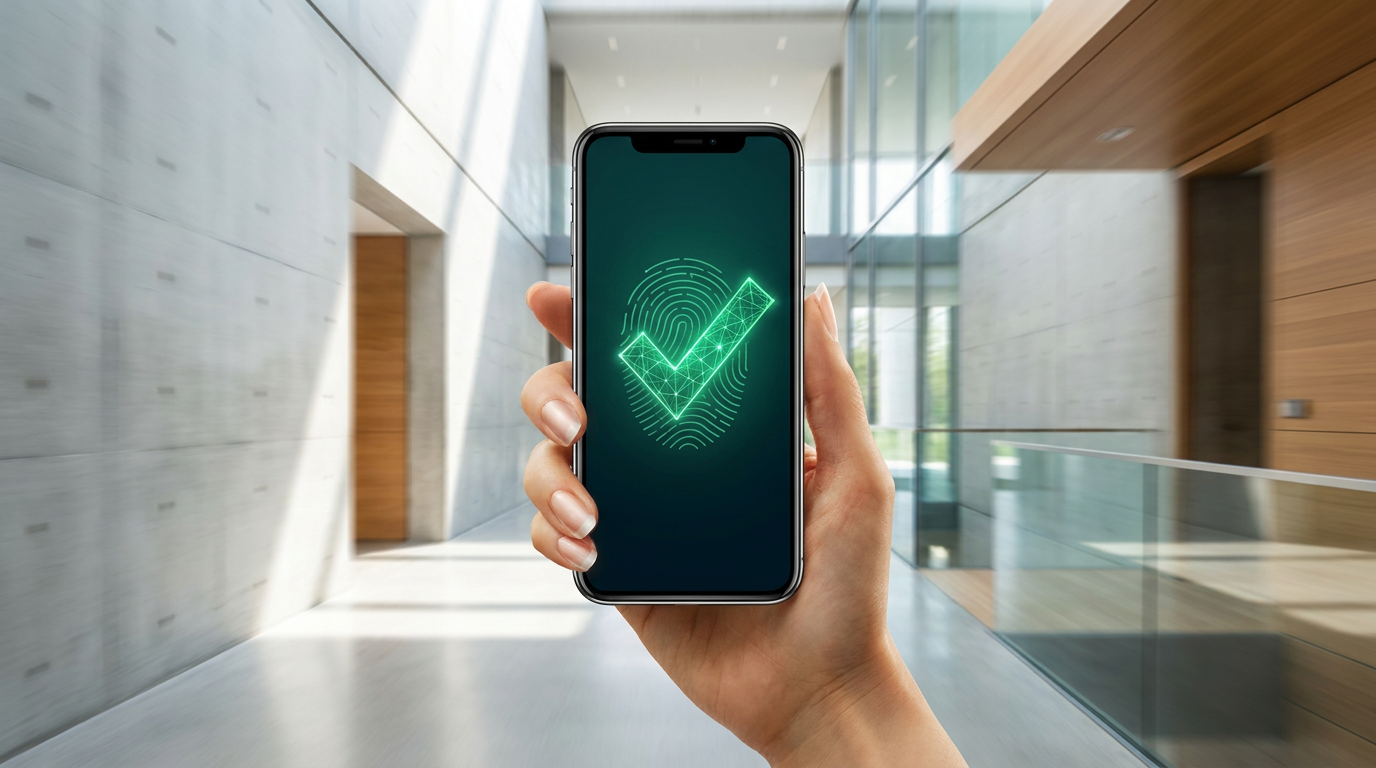
The catalyst for this transformation is the maturation of Zero-Knowledge Proofs (ZKPs). Long considered a cryptographic holy grail, ZKPs allow one party to prove to another that a specific statement is true without revealing any of the underlying data. Imagine being able to prove you are over 18 to a website without revealing your birthdate, your name, or your address. That is the power of zero-knowledge cryptography, and it is finally moving from academic whitepapers into consumer smartphones.[1][8]
Until recently, ZKPs were plagued by what engineers called the "production chasm." The mathematics were sound, but generating the proofs required massive computational power, taking minutes or even hours, and costing dollars per transaction. That gap has officially closed. Recent benchmarks demonstrate that systems like Microsoft's Vega can now generate a zero-knowledge identity proof from a mobile driver's license in just 92 milliseconds on a standard commodity smartphone.[1]
The resulting cryptographic proof is a mere 108 kilobytes—small enough to be transmitted instantly over any cellular network and verified in 23 milliseconds. This leap in efficiency means that privacy-preserving verification no longer requires specialized hardware or expensive cloud computing. It can happen locally on the devices people already carry in their pockets, opening the door to widespread consumer applications.[1][8]

The financial sector is taking immediate notice of these capabilities. Corporate crypto adoption, which industry insiders joked was "just one year away" for the better part of a decade, is now becoming a strategic reality. Major institutions are utilizing ZK proofs to process private transactions that have real balance-sheet impact, allowing them to leverage the speed of blockchain settlement without exposing their proprietary trading data or client information to the public ledger.[1][2]
This shift is moving digital assets out of corporate innovation labs and directly into treasury departments. Cross-border commerce has long been hampered by fragmented correspondent banking systems, foreign exchange spreads, and multi-day settlement delays. By combining the instant settlement of stablecoins with the privacy guarantees of zero-knowledge proofs, multinational corporations are upgrading their operational infrastructure to move capital efficiently across jurisdictions.[2][3]
This shift is moving digital assets out of corporate innovation labs and directly into treasury departments.
Regulatory clarity has provided the necessary green light for this institutional wave. With comprehensive frameworks like the Markets in Crypto-Assets (MiCA) regulation taking effect in Europe and the GENIUS Act advancing in the United States, compliance teams finally have the rulebooks they need. This regulatory certainty is bridging the gap between public blockchains and mainstream financial infrastructure, paving the way for tokenized real-world assets and regulated digital securities.[2][3]
Beyond privacy, ZKPs are also solving blockchain's oldest bottleneck: scalability. Through a mechanism known as ZK-rollups, networks can batch thousands of individual transactions off-chain, process them instantly, and then post a single, mathematically verifiable proof to the main blockchain. This approach drastically reduces network congestion and slashes transaction fees to fractions of a cent, making micro-transactions economically viable for the first time.[5][8]

The Ethereum network, which serves as the foundational layer for much of this activity, is actively evolving to support this rollup-centric future. The network's 2026 roadmap, including the highly anticipated "Glamsterdam" upgrade, focuses heavily on optimizing the base layer to store data and verify proofs more efficiently. Rather than trying to process every transaction itself, Ethereum is transitioning into a highly secure settlement engine for a constellation of faster, privacy-focused Layer-2 networks.[5][7]
As the infrastructure matures, the broader crypto market is shedding its reputation as a fringe experiment dominated by speculative meme coins. Analysts note a clear decoupling, with digital assets increasingly viewed as legitimate components of the global financial system. The focus has shifted from chasing short-term price action to evaluating structural utility, active user bases, and technologies that solve real-world problems.[4][5]
This maturation is reflected in consumer sentiment. Recent data indicates that 30% of Americans now own some form of cryptocurrency, and the demographics are shifting toward long-term utility rather than quick speculation. While volatility remains a factor, the steady growth of stablecoins—which are projected to exceed $500 billion in circulation this year—signals that users are increasingly relying on digital assets for practical payments and wealth preservation.[6][8]

The implications of the zero-knowledge breakthrough extend far beyond finance. As digital identities become increasingly vulnerable to data breaches and AI-driven fraud, ZKPs offer a structural defense. By allowing users to authenticate themselves and authorize transactions without ever transmitting their raw personal data to centralized servers, the technology fundamentally changes the security model of the internet.[1][8]
We are witnessing the quiet installation of a new digital foundation. Just as the adoption of HTTPS encryption in the early 2000s made e-commerce safe for the masses, the mainstream deployment of zero-knowledge proofs in 2026 is making the decentralized web safe, private, and scalable. The technology is finally fading into the background, allowing the benefits of user empowerment and data sovereignty to take center stage.[8]
How we got here
Sept 2022
Ethereum completes 'The Merge,' shifting to a more energy-efficient consensus model and setting the stage for future scaling.
2024-2025
Early ZK-rollup networks launch, but proof generation remains computationally expensive and largely confined to desktop environments.
May 2026
Microsoft publishes benchmarks for 'Vega,' demonstrating instant ZK proof generation on commodity smartphones.
Mid-2026
Major financial institutions begin processing real balance-sheet transactions using zero-knowledge privacy infrastructure.
Viewpoints in depth
Privacy Advocates
Focus on self-sovereign identity and the protection of consumer data from centralized breaches.
For privacy advocates, the mainstreaming of ZKPs represents the realization of a long-held cypherpunk dream. They argue that the current internet model—where users must hand over raw personal data to dozens of different corporations just to participate in modern life—is fundamentally broken and responsible for the epidemic of identity theft. By shifting to a model where users hold their own data and only share mathematical proofs of their credentials, this camp believes we can eliminate the massive honeypots of personal information that hackers target.
Institutional Finance
Focus on regulatory compliance, operational efficiency, and secure cross-border settlement.
Corporate treasury departments and major banks view zero-knowledge technology primarily as an operational upgrade. For years, institutions were hesitant to use public blockchains because broadcasting proprietary trading strategies or supplier payments to a public ledger was a non-starter. ZKPs solve this by allowing banks to prove to regulators that transactions comply with anti-money laundering (AML) laws without exposing the underlying commercial details to competitors. This camp sees 2026 as the year blockchain finally meets enterprise compliance standards.
Blockchain Developers
Focus on network scalability, gas fee reduction, and technical infrastructure milestones.
From an engineering perspective, the excitement around ZKPs is largely about scaling the network to handle global demand. Developers point out that processing every transaction on a main blockchain like Ethereum is inherently slow and expensive. By using ZK-rollups to bundle thousands of transactions off-chain and submit a single proof of their validity, developers argue they can achieve Visa-level transaction speeds while maintaining the security guarantees of a decentralized network.
What we don't know
- How quickly traditional consumer apps and web browsers will integrate native ZKP verification into their platforms.
- Whether regulators will push back against the absolute privacy guarantees of ZKPs if they complicate anti-money laundering enforcement.
- Which specific Layer-2 rollup network will ultimately capture the majority of institutional liquidity.
Key terms
- Zero-Knowledge Proof (ZKP)
- A cryptographic protocol allowing one party to prove they know a specific piece of information without revealing the information itself.
- ZK-Rollup
- A scaling solution that processes thousands of transactions off the main blockchain and submits a single cryptographic proof to verify them all at once.
- Stablecoin
- A digital currency pegged to a stable asset, like the U.S. dollar, designed to minimize price volatility for everyday payments.
- Mainnet
- The fully operational, primary network of a blockchain where real transactions take place and real value is exchanged.
- Smart Contract
- Self-executing code living on a blockchain that automatically carries out the terms of an agreement when specific conditions are met.
Frequently asked
What exactly is a zero-knowledge proof?
It is a cryptographic method that allows you to prove a statement is true (like "I am over 18" or "I have enough funds") without revealing the underlying data (like your birthdate or your exact bank balance).
Why are banks suddenly adopting this in 2026?
The technology has finally become fast and cheap enough for real-world use. Combined with new regulatory clarity, institutions can now use blockchains for instant cross-border payments without exposing their private financial data to the public.
How does this make crypto cheaper to use?
Through "ZK-rollups," networks can bundle thousands of transactions together off-chain, process them instantly, and post a single tiny proof to the main network. This drastically reduces congestion and lowers transaction fees.
Will I need to understand cryptography to use this?
No. Just as you don't need to understand HTTPS encryption to safely shop online, zero-knowledge proofs are being built directly into digital wallets and apps to work invisibly in the background.
Sources
Source coverage
8 outlets
4 viewpoints surfaced







[1]Dev.toPrivacy Advocates
Zero-Knowledge Proofs Cross the Production Chasm
Read on Dev.to →[2]The Global TreasurerInstitutional Finance
Why 2026 Could Be the Breakthrough Year for Corporate Crypto
Read on The Global Treasurer →[3]Grayscale ResearchInstitutional Finance
2026 Digital Asset Outlook: Bridging TradFi and DeFi
Read on Grayscale Research →[4]eToroInstitutional Finance
Crypto-asset market is no longer a fringe experiment
Read on eToro →[5]Binance ResearchBlockchain Developers
2026 Crypto Breakthrough: The Transition to Maturity
Read on Binance Research →[6]Security.orgRetail Consumers
Cryptocurrency Adoption and Security 2026
Read on Security.org →[7]Ethereum FoundationBlockchain Developers
Ethereum Roadmap: Upgrading for Scale and Security
Read on Ethereum Foundation →[8]Factlen Editorial TeamPrivacy Advocates
Synthesis by Factlen editorial team
Read on Factlen Editorial Team →

More in finance
See all 6 stories →Commercial Space
SpaceX's Historic IPO Expands to $85.7 Billion as Underwriters Exercise Option
0 sources

Retirement Planning
Working in Retirement: How the Earnings Test Impacts Your Social Security Benefits
0 sources

Valuation Metrics
The Return of GARP: How to Identify Growth Stocks Trading at Value Prices
0 sources

Stablecoin Adoption
Stablecoins Cross the Threshold: How 2026 Became the Year Crypto Fixed Cross-Border Payments
0 sources

Every angle. Every day.
Get finance stories with full source coverage and perspective breakdowns delivered to your inbox.