
How 2026 Became the Breakout Year for Women's Professional Volleyball in the U.S.
Backed by hundreds of millions in private equity, two rival leagues—LOVB and the newly unified MLV—are fundamentally reshaping the American sports landscape by giving elite volleyball stars a lucrative reason to play at home.
By Factlen Editorial Team
- Grassroots Ecosystem Advocates
- Argue that building from the youth club level up guarantees a sustainable, built-in fanbase.
- Traditional Franchise Proponents
- Believe the classic city-based franchise model is the fastest way to mainstream commercial success.
- Sports Business Analysts
- Monitor the financial viability and potential risks of two competing leagues in the same market.
What's not represented
- · Collegiate coaches managing the transition of players to the pros
- · European club owners losing American talent
Why this matters
For decades, America's best volleyball players were forced to move overseas to earn a living. The sudden influx of domestic capital and national broadcast deals is creating a sustainable ecosystem that allows athletes to stay home, while offering a new blueprint for the commercialization of women's sports.
Key points
- The U.S. is now home to two heavily funded professional women's volleyball leagues: Major League Volleyball (MLV) and League One Volleyball (LOVB).
- MLV, an evolution of the Pro Volleyball Federation, utilizes a traditional city-based franchise model backed by billionaire ownership groups.
- LOVB employs a unique 'community-up' approach, integrating its professional teams directly with a nationwide network of youth volleyball clubs.
- The domestic leagues allow elite American athletes, who previously had to play in Europe or Asia, to earn highly competitive salaries in the U.S.
- Both leagues have secured major national broadcast partnerships, capitalizing on the record-breaking viewership of collegiate volleyball.
For decades, the pipeline for elite American women's volleyball players ended abruptly at the border. After finishing their collegiate careers, top athletes were forced to pack their bags and sign with clubs in Italy, Turkey, Brazil, or Japan just to earn a living wage and compete at the highest level. The United States, despite consistently producing some of the world's best talent and capturing Olympic gold, fundamentally lacked a sustainable domestic professional league. For generations of players, achieving their professional dreams meant spending their prime years thousands of miles away from their families and hometown fans.[7]
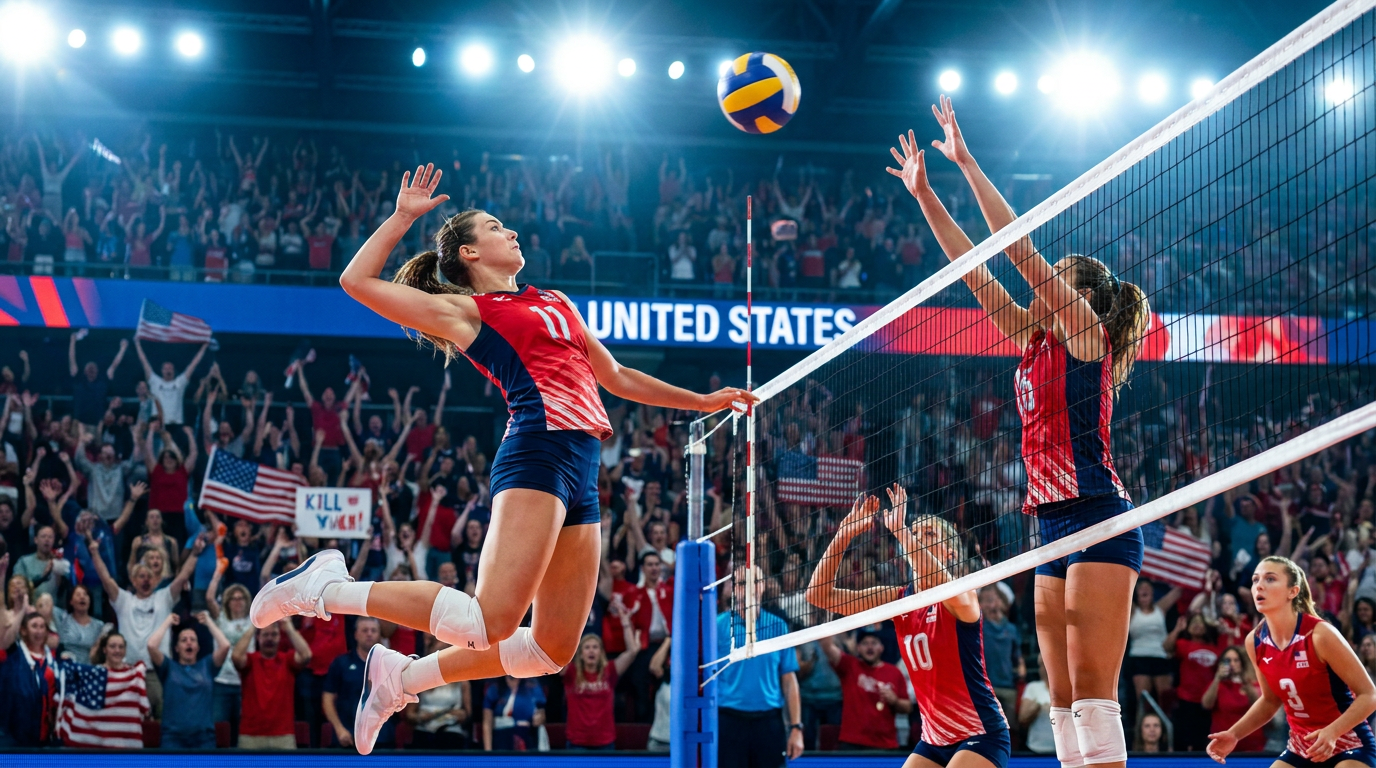
That reality has officially fractured. As of 2026, the United States is home to two heavily funded, fiercely competitive professional women's volleyball leagues, fundamentally altering the domestic sports landscape. The sudden arrival of these leagues has transformed the U.S. from a talent exporter into a premier destination for the sport's biggest stars. Backed by hundreds of millions of dollars in private equity and celebrity investments, the new ecosystem is giving athletes a lucrative reason to stay home.[1][4]
The sudden explosion of capital into the sport follows years of compounding grassroots and collegiate growth. Volleyball is currently the most popular high school team sport for girls in the U.S., creating a massive, highly engaged demographic. On the collegiate side, the sport has shattered viewership records; the 2024 NCAA Championship alone generated a staggering 1.3 billion minutes of viewership. This undeniable groundswell of interest proved to investors that the American public was finally ready to support professional volleyball on a national scale.[2]
Investors have taken notice, pouring unprecedented amounts of money into creating a stateside professional ecosystem. The result is a high-stakes, highly lucrative battle between two distinct business models: the traditional franchise approach of Major League Volleyball (MLV) and the grassroots-integrated model of League One Volleyball (LOVB). Both leagues are armed with massive war chests, star-studded rosters, and national broadcast deals, but they are taking entirely different paths to capture the loyalty of the American volleyball fan. This dual emergence marks one of the most aggressive expansions in the history of women's professional sports.[1][4][6]

Major League Volleyball represents the ambitious evolution of the Pro Volleyball Federation (PVF), which successfully launched its inaugural season in 2024. After proving the concept and drawing impressive crowds, the PVF secured a massive new funding round and merged into the newly branded MLV for the 2026 season. Backed by over $100 million in committed capital, MLV is designed to look and feel exactly like the established major leagues that dominate the American sports calendar, signaling to fans and sponsors that women's volleyball has officially arrived in the big leagues.[1][6]
MLV operates on a classic North American sports framework. Teams are independently owned, tied to specific cities, and play their matches in large, traditional arenas. The league boasts an impressive roster of high-profile founding partners and ownership groups, including Sacramento Kings owner Vivek Ranadivé, international musician Jason Derulo, and the DeVos family, who also own the NBA's Orlando Magic. This influx of billionaire backing provides the league with the financial runway needed to secure top-tier venues and execute national marketing campaigns.[1][6]
The traditional model is already proving its viability in key markets. The Omaha Supernovas, MLV's founding franchise and the defending champions of the former PVF, have become a shining example of the sport's potential. The team recently set a U.S. attendance record for a professional volleyball match, drawing an astonishing 13,486 fans to their 2025 season opener at the CHI Health Center. That level of local engagement proves that, in the right markets, professional volleyball can draw crowds that rival established NBA or NHL franchises.[1]
Heading into the heart of 2026, MLV features a robust lineup of teams in major markets like Atlanta, Columbus, Dallas, Grand Rapids, Indianapolis, Omaha, Orlando, and San Diego. The league is not stopping there; further expansion into Washington D.C. and Northern California is already slated for 2027, with ownership groups actively laying the groundwork in those cities. By planting flags in both traditional Midwestern volleyball hotbeds and massive coastal media markets, MLV is aggressively positioning itself as the premier, undisputed destination for the sport in North America.[3]
The league is not stopping there; further expansion into Washington D.C.
On the other side of the net is League One Volleyball, commonly known as LOVB (pronounced "love"). Founded in 2020, LOVB took a radically different path to the professional ranks. Rather than starting with professional franchises and hoping fans would show up, LOVB spent years quietly building a massive youth club network first. The organization recognized that the millions of young girls playing club volleyball represented an untapped, highly dedicated consumer base that could be leveraged to support a professional tier.[4][8]
LOVB's innovative "community-up" model ties its professional teams directly to its sprawling youth ecosystem. As of 2026, that network includes over 77 club locations across 28 states, serving more than 22,000 youth athletes and employing thousands of coaches. When a LOVB professional team takes the court, they aren't just representing a geographic city; they are representing a massive, interconnected web of local youth clubs whose players already wear the LOVB logo on their practice gear. This creates a powerful synergy between the grassroots participants and the elite professionals they aspire to become.[8]

The strategy is brilliantly designed to create a built-in, fiercely loyal fanbase from day one. Young players in the LOVB club system have a direct pipeline and geographic connection to the professional athletes representing their cities. The professional players frequently interact with the youth clubs, hosting clinics and attending practices, which transforms casual fans into dedicated ticket buyers. It is a masterclass in vertical integration, ensuring that the arenas are packed with the sport's most passionate demographic.[7][8]
LOVB is also armed with a formidable financial war chest, having secured over $100 million in funding from private equity firms and a star-studded list of individual investors. The league's backing includes Olympic skier Lindsey Vonn, NBA superstar Kevin Durant, and tennis legend Billie Jean King. This celebrity investment not only provides crucial operational capital but also lends the league immense cultural cachet, helping it break through the crowded American sports media landscape and attract attention from casual sports fans who might not otherwise tune into a volleyball match.[6]
The league's 2026 season features six highly competitive teams—located in Atlanta, Austin, Houston, Madison, Omaha, and Salt Lake City—with matches broadcast nationally across ESPN platforms. The partnership with ESPN ensures that LOVB matches are accessible to millions of households, providing the kind of premium television exposure that women's volleyball has historically been denied outside of the Olympic Games. By placing matches on ESPN2 and ESPN+, the league is actively conditioning American sports fans to view professional volleyball as a standard fixture of their weekly viewing habits.[4][8]
For the athletes themselves, the arrival of both MLV and LOVB represents a life-changing paradigm shift. Beyond offering competitive salaries that average among the highest in women's professional sports, the leagues are providing crucial infrastructure that was previously unimaginable for domestic volleyball players. Athletes are receiving comprehensive medical support, top-tier training facilities, housing stipends, and childcare assistance, allowing them to focus entirely on their athletic performance without the immense stress of navigating a foreign country, learning a new language, or living out of a suitcase for nine months of the year.[2]
Most importantly, the domestic leagues allow American stars to finally play in front of their families and hometown fans. Olympic medalists and NCAA champions who previously spent their prime years in European leagues are now the faces of franchises in Texas, Wisconsin, and Nebraska. The ability to build a personal brand, engage with local communities, and secure lucrative domestic endorsement deals in the United States is fundamentally changing the financial calculus for the sport's biggest names, making staying home the most attractive option.[4][7]

However, the rapid expansion has sparked a healthy debate among sports business analysts and media executives. Having two well-funded leagues competing in the same country risks fragmenting the talent pool and confusing casual fans who are just beginning to follow the sport. With MLV and LOVB both vying for the exact same elite players, premium broadcast windows, and corporate sponsorships, some experts worry that the market could become oversaturated before professional volleyball has fully cemented its commercial footing in the United States.[7]
Critics point to historical precedents in American sports, such as the early days of professional basketball and football, where rival leagues eventually had to merge to survive. While MLV and LOVB currently operate independently and champion their distinct business models, the financial realities of running a national sports league are incredibly daunting. The competition for market dominance is fierce, leading many industry insiders to speculate whether the two entities will eventually be forced to consolidate their resources to create one undisputed, unified American volleyball superpower.[5][7]
Despite the inherent risks of market saturation, the overarching narrative surrounding the sport remains overwhelmingly positive. The commercialization of women's volleyball perfectly mirrors the recent explosive growth seen across the broader women's sports landscape, including the surging popularity of the WNBA, the NWSL, and the PWHL. Investors are no longer viewing women's sports as a charitable endeavor or a niche market, but rather as a highly lucrative, fundamentally undervalued asset class with massive upside potential and a deeply engaged, rapidly growing consumer base.[5]
As the 2026 seasons for both MLV and LOVB get underway, the ultimate winner is the sport itself. A generation of young girls now has a visible, domestic pathway from their local club gym to a nationally televised professional arena. By finally providing American athletes with the infrastructure, compensation, and respect they have long deserved, the United States has permanently altered the global volleyball landscape. The days of exporting talent are over, ensuring that the future of the sport will be played, celebrated, and monetized on home soil.[2][7]
How we got here
2020
League One Volleyball (LOVB) is founded, initially focusing on acquiring and building a massive network of youth volleyball clubs.
January 2024
The Pro Volleyball Federation (PVF) launches its inaugural season, bringing traditional franchise volleyball to the U.S.
January 2025
LOVB launches its inaugural professional season, featuring Olympic stars playing in front of their youth club networks.
August 2025
PVF announces a massive merger and evolution into Major League Volleyball (MLV), backed by over $100 million in funding.
January 2026
MLV officially launches its unified league, setting up a high-stakes competition with LOVB for the American volleyball market.
Viewpoints in depth
The Traditional Franchise Camp
Advocates for the classic American sports model of independent, city-based teams playing in large arenas.
Supporters of Major League Volleyball's approach argue that women's volleyball is ready for the biggest stages. By adopting the standard North American franchise model—complete with drafts, independent billionaire ownership groups, and large-scale arena leases—they believe the sport can immediately command the same commercial respect as the WNBA or NWSL. They point to record-breaking attendance figures in markets like Omaha as proof that fans want a traditional game-day experience.
The Grassroots Ecosystem Camp
Believes that tying professional teams directly to youth clubs is the most sustainable path to growth.
Proponents of League One Volleyball (LOVB) argue that the traditional top-down sports model is too risky for emerging leagues. Instead, they champion a 'community-up' approach. By acquiring and integrating dozens of massive youth volleyball clubs across the country, LOVB guarantees a built-in, fiercely loyal demographic. When a LOVB pro team plays, the stands are filled with thousands of local youth players who already wear the brand's logo, creating an immediate emotional and financial anchor.
Market Skeptics
Warns that having two competing leagues could dilute the talent pool and confuse the fanbase.
While celebrating the influx of capital, sports business analysts caution that the U.S. market may not be able to sustain two separate, heavily funded women's volleyball leagues simultaneously. Skeptics note that dividing the top American and international talent across MLV and LOVB dilutes the on-court product. Furthermore, competing for broadcast windows and corporate sponsorships could lead to a financial war of attrition, leading many to predict an eventual merger.
What we don't know
- Whether the U.S. market can sustain two competing professional volleyball leagues long-term without a merger.
- How the domestic leagues will impact the dominance and talent pool of established European volleyball leagues.
- Which business model—MLV's traditional franchises or LOVB's grassroots integration—will ultimately prove more profitable.
Key terms
- Major League Volleyball (MLV)
- A professional women's volleyball league launching in 2026, formed from the evolution and merger of the Pro Volleyball Federation, utilizing a traditional city-franchise model.
- League One Volleyball (LOVB)
- A professional women's volleyball league that integrates its pro teams with a nationwide network of youth volleyball clubs to build a grassroots fanbase.
- Community-up model
- A business strategy used by LOVB where professional sports teams are built on top of an existing network of youth sports clubs, ensuring a built-in audience.
Frequently asked
Why did American volleyball players previously play overseas?
Before the launch of PVF, MLV, and LOVB, the United States lacked a fully funded professional indoor volleyball league. To earn a living wage and compete at an elite level, top collegiate players had to sign with established leagues in countries like Italy, Turkey, and Brazil.
What is the difference between MLV and LOVB?
Major League Volleyball (MLV) uses a traditional franchise model with independent owners and city-based teams. League One Volleyball (LOVB) uses a 'community-up' model, tying its professional teams directly to a massive network of youth volleyball clubs.
Where can fans watch the matches?
LOVB has a major broadcast partnership with ESPN, streaming matches across its platforms. MLV matches are broadcast on CBS Sports and other affiliated networks.
Sources
Source coverage
8 outlets
3 viewpoints surfaced








[1]SportsPro MediaTraditional Franchise Proponents
New US$100m women's volleyball league to launch in 2026
Read on SportsPro Media →[2]USA VolleyballTraditional Franchise Proponents
Major League Volleyball Women's Pro League to Launch in January 2026
Read on USA Volleyball →[3]WFAATraditional Franchise Proponents
Professional volleyball is coming to Dallas in 2026
Read on WFAA →[4]ESPN Press RoomGrassroots Ecosystem Advocates
ESPN presents LOVB's 2026 professional volleyball season
Read on ESPN Press Room →[5]ForbesSports Business Analysts
Major League Volleyball Posts Record Year-Three Growth, Expands to Los Angeles
Read on Forbes →[6]VolleyWeekTraditional Franchise Proponents
The DeVos family and Vivek Ranadivé behind new large-scale merger in American professional volleyball
Read on VolleyWeek →[7]The PurbaliteSports Business Analysts
Pro volleyball leagues expand player career options
Read on The Purbalite →[8]League One VolleyballGrassroots Ecosystem Advocates
The newest era of professional volleyball in the United States
Read on League One Volleyball →



Every angle. Every day.
Get sports stories with full source coverage and perspective breakdowns delivered to your inbox.