
Global Repair Café Movement Hits Major Milestones as Communities Embrace the Circular Economy
Grassroots repair hubs across the globe are celebrating record-breaking milestones in 2026, diverting millions of kilograms of waste from landfills while teaching residents how to fix their own electronics, textiles, and appliances.
By Factlen Editorial Team
- Volunteer Fixers
- Focusing on skill-sharing, community connection, and the joy of restoring broken items.
- Environmental Advocates
- Prioritizing measurable waste diversion, carbon reduction, and the transition to a circular economy.
- Global Network Organizers
- Working to scale the grassroots model into a formalized, worldwide infrastructure.
What's not represented
- · Manufacturers of consumer electronics
- · Professional for-profit repair businesses
Why this matters
As the cost of living and e-waste both rise, these volunteer-led spaces offer a free, practical solution that saves money, reduces carbon emissions, and rebuilds lost mechanical skills in local neighborhoods.
Key points
- The global Repair Café movement has grown to over 3,700 active locations worldwide.
- Wales' national network of 130 cafes officially saved over one million kilograms of CO2 emissions.
- Australia's Surf Coast location diverted nearly two tonnes of waste with a 93% repair success rate.
- Cafes in British Columbia recently celebrated fixing their 1,000th items, including a vintage 1950s toaster.
- The initiative focuses on teaching residents how to fix their own items, combating modern throwaway culture.
The humble act of fixing a broken toaster or mending a torn sweater is quietly transforming into a massive global climate movement. In early 2026, the Repair Café network—a grassroots initiative where volunteers help neighbors fix broken household items for free—hit a series of unprecedented milestones across multiple continents.[6]
What began in Amsterdam in 2009 as a single community gathering has blossomed into a formalized international network. The Repair Café International Foundation now supports over 3,700 active locations worldwide, providing starter kits and organizational infrastructure to neighborhoods looking to launch their own hubs.[6]
This year, the collective environmental impact of these local hubs has reached industrial scales. In February 2026, the Welsh Government announced that its national network of over 130 repair cafés had officially saved more than one million kilograms of carbon dioxide emissions.[1]
Welsh officials noted that this milestone is equivalent to driving an average petrol car 11.2 million miles. Backed by a £14 million investment from the government's Circular Economy Fund, the Welsh initiative demonstrates how state support can supercharge volunteer-led climate action, moving the nation further up the waste hierarchy.[1]

Similar victories are playing out in the Southern Hemisphere. The Repair Café Surf Coast in Australia kicked off its 2026 season by celebrating its 3,000th visitor. Operating out of the Aireys Inlet Community Hall, the volunteer-run initiative has become a staple of local sustainability efforts.[3]
Over the past year alone, the Australian crew's 29 regular volunteers diverted nearly two tonnes of waste from local landfills—roughly the weight of a small car. They achieved a remarkable 93% success rate on the items brought through their doors, successfully giving a new lease on life to seven out of every ten items evaluated.[3]
Over the past year alone, the Australian crew's 29 regular volunteers diverted nearly two tonnes of waste from local landfills—roughly the weight of a small car.
In Canada, individual municipal cafes are marking their own historic repair tallies. The South Surrey Repair Café in British Columbia recently celebrated its 20th event by fixing its 1,000th item. The milestone object was a vintage 1950s toaster, which volunteers successfully restored for a first-time attendee.[2]
Nearby, the City of Richmond also crossed the 1,000-repair threshold. City officials reported that 82% of their successful fixes involved clothing and textiles, a major victory in the fight against fast-fashion waste. Local seamstresses and members of the Textile Arts Guild of Richmond have been instrumental in keeping these usable garments in circulation.[5]

Beyond the environmental metrics, organizers emphasize the vital social infrastructure these cafes build. In South Surrey, organizers noted that the events combat the modern throwaway culture by forcing people to slow down and engage with their possessions.[2]
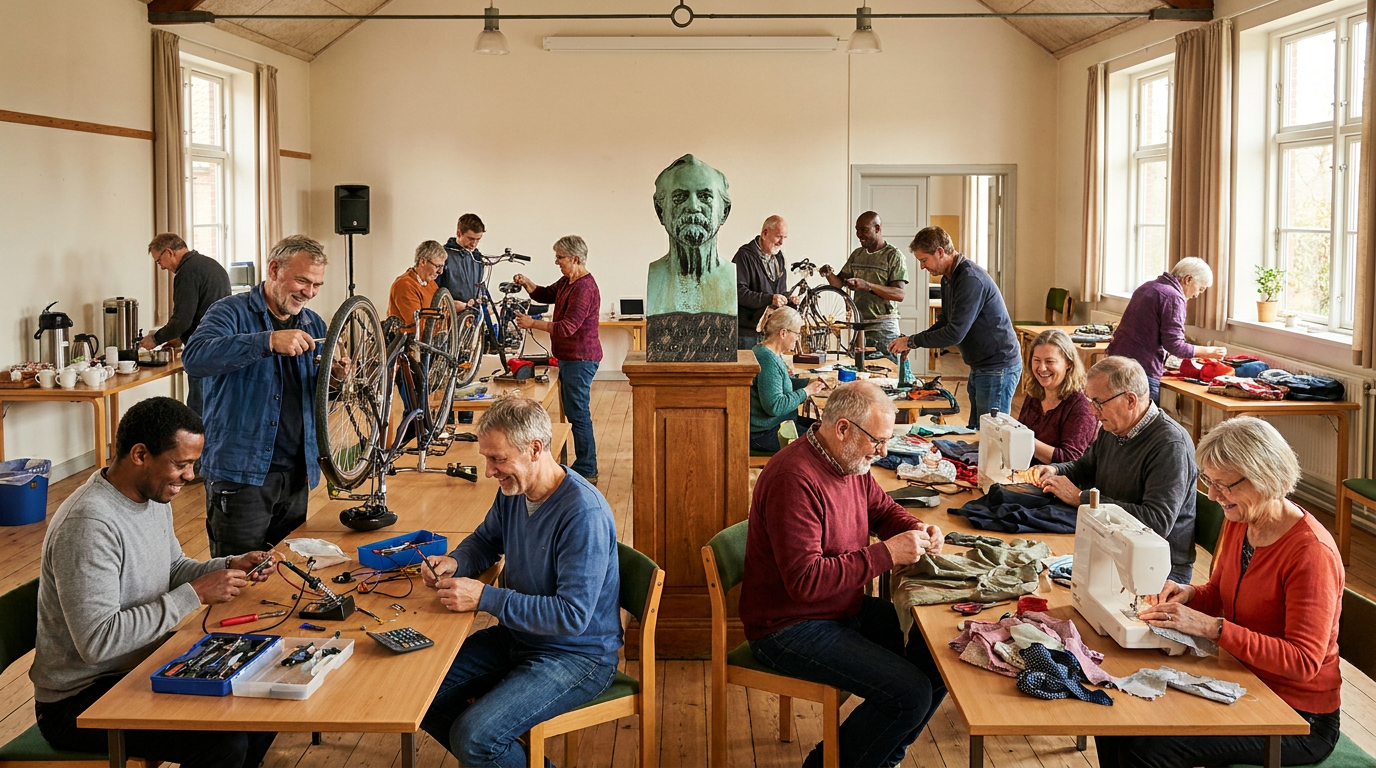
Visitors do not simply drop off their broken goods and leave; they are required to sit with the volunteer fixers and watch the process. This collaborative environment ensures that attendees often learn how to make the repairs themselves, rebuilding mechanical and textile skills that have largely faded from the general public.[2][6]
To capitalize on this growing momentum, regional networks are beginning to consolidate their efforts to reach wider audiences. In March 2026, Greater Manchester hosted 'RepairFest,' an unprecedented gathering that brought together nine different local cafes under the roof of The Monastery's Great Nave.[4]

The massive UK event offered free repairs, live demonstrations, and dedicated networking spaces for residents looking to launch their own neighborhood hubs. By pooling their expertise, the Manchester volunteers were able to tackle a wider array of complex repairs, from bicycles to small electronics.[4]
As the movement expands, it is increasingly tackling more sophisticated technological challenges. Organizers are now launching specialized 'Linux Repair Cafés' designed to save older computers from becoming e-waste when major software providers drop support for aging operating systems.[6]
By blending environmental activism with practical neighborhood mutual aid, the Repair Café movement is proving that effective climate solutions do not always require high-tech innovation. Sometimes, the most powerful tool for a sustainable future is simply a screwdriver, a sewing needle, and a willing neighbor.[1][6]
How we got here
2009
Martine Postma organizes the very first Repair Café in Amsterdam, Netherlands.
2010
The Repair Café International Foundation is established to provide professional support to local groups worldwide.
2017
The Repair Cafe Surf Coast launches in Australia, joining the rapidly expanding global network.
2019
The South Surrey Repair Café hosts its inaugural event on Earth Day in British Columbia.
Feb 2026
The Welsh Government announces its national network has saved over one million kilograms of CO2 emissions.
Mar 2026
Greater Manchester hosts 'RepairFest', bringing together nine local cafes for a massive collaborative event.
Viewpoints in depth
Volunteer Fixers
Focusing on skill-sharing, community connection, and the joy of restoring broken items.
For the volunteers operating the screwdrivers and sewing machines, the movement is primarily about human connection and skill-sharing. They argue that modern consumer culture has intentionally deskilled the public, making people reliant on buying new products rather than maintaining what they own. By requiring visitors to sit and watch the repair process, fixers aim to demystify technology and empower neighbors to take ownership of their possessions, fostering a sense of local resilience that goes beyond simply saving money.
Environmental Advocates
Prioritizing measurable waste diversion, carbon reduction, and the transition to a circular economy.
Climate advocates and municipal waste managers view Repair Cafés as a critical, highly efficient tool for landfill diversion. They point to the hard data—such as Wales' one million kilograms of saved CO2—as proof that grassroots repair initiatives can operate at an industrial scale. This camp advocates for increased government funding to support these volunteer hubs, arguing that municipal investments in repair infrastructure yield massive returns in reduced waste management costs and lower carbon footprints.
Global Network Organizers
Working to scale the grassroots model into a formalized, worldwide infrastructure.
The organizers behind the international foundation are focused on scaling the model without losing its neighborhood charm. They provide the legal, logistical, and promotional frameworks that allow a group of well-meaning neighbors to quickly establish a functional, safe, and effective repair hub. Their long-term goal is to shift global consumer expectations, lobbying manufacturers to design products that are inherently easier to repair while ensuring that every town has a local hub equipped to fix them.
What we don't know
- Whether major electronics manufacturers will eventually support or oppose the right-to-repair movement championed by these cafes.
- How the transition to highly integrated, unrepairable smart devices will affect the success rate of future repair events.
Key terms
- Circular Economy
- An economic system aimed at eliminating waste and the continual use of resources by reusing, repairing, refurbishing, and recycling existing materials and products.
- E-waste
- Electronic products that have become unwanted, non-working, or obsolete, and have essentially reached the end of their useful life.
- Waste Hierarchy
- A framework used to evaluate processes that protect the environment alongside resource and energy consumption, prioritizing prevention, reuse, and repair over recycling and disposal.
- Planned Obsolescence
- A policy of designing a product with an artificially limited useful life, so it will become obsolete and require replacement after a certain period.
Frequently asked
What is a Repair Café?
A Repair Café is a free community meeting place where volunteer experts help residents fix broken household items, such as electronics, clothing, and bicycles, to prevent them from being thrown away.
Do I have to pay for the repairs?
No, the repairs are offered free of charge by volunteers. However, visitors are often encouraged to provide a voluntary donation to help cover the costs of running the event and purchasing shared tools.
Can I just drop off my broken item and leave?
Generally, no. Repair Cafés are designed as collaborative learning environments. Visitors are expected to stay with their item, watch the repair process, and learn how to fix it themselves.
How many Repair Cafés exist worldwide?
As of 2026, the Repair Café International Foundation supports over 3,700 active locations across more than 40 countries.
Sources
Source coverage
6 outlets
3 viewpoints surfaced






[1]Welsh GovernmentEnvironmental Advocates
Repair Cafe Wales saves over one million kilograms of carbon dioxide emissions
Read on Welsh Government →[2]Peace Arch NewsVolunteer Fixers
South Surrey Repair Café celebrates 2 milestones at Earth Day event
Read on Peace Arch News →[3]Times News GroupVolunteer Fixers
Repair Cafe Surf Coast opens doors for 2026
Read on Times News Group →[4]Manchester Friends of the EarthGlobal Network Organizers
RepairFest 2026
Read on Manchester Friends of the Earth →[5]City of RichmondEnvironmental Advocates
Reuse & Repair Cafés Hit Milestone
Read on City of Richmond →[6]Repair Café International FoundationGlobal Network Organizers
About Repair Café - Repairing for a Sustainable Future
Read on Repair Café International Foundation →
Every angle. Every day.
Get community stories with full source coverage and perspective breakdowns delivered to your inbox.