
Small Modular Reactors Move from Blueprint to Construction in 2026
Advanced nuclear technology is transitioning from theory to reality as TerraPower breaks ground on the first utility-scale SMR in the U.S., driven by surging energy demands from AI data centers.
By Factlen Editorial Team
- Nuclear Industry & Developers
- Focuses on the technological milestones, rapid commercialization, and the shift from theory to concrete construction of advanced reactors.
- Tech Sector & Data Centers
- Views small modular reactors as the essential, carbon-free baseload solution to power the exponential energy demands of AI infrastructure.
- Energy Economists & Analysts
- Highlights the financial realities, noting that while long-term costs may drop, first-of-a-kind projects face high price tags and supply chain bottlenecks.
- Policymakers & Regulators
- Emphasizes national energy security, streamlined permitting, and public-private partnerships to maintain industrial competitiveness in the global energy transition.
What's not represented
- · Local communities hosting new reactor sites
- · Renewable energy advocates prioritizing wind/solar over nuclear
Why this matters
As artificial intelligence and heavy industry demand unprecedented amounts of 24/7 clean power, Small Modular Reactors offer a scalable, carbon-free solution that could stabilize global energy grids without the massive delays of traditional nuclear plants.
Key points
- TerraPower has officially begun construction on the Natrium plant in Wyoming, marking the first utility-scale advanced nuclear plant in the U.S.
- The U.S. Nuclear Regulatory Commission approved the project's construction permit in a streamlined 18 months, a historic acceleration for the agency.
- Tech giants, including Meta, Amazon, and Microsoft, are heavily investing in SMRs to secure 24/7 carbon-free power for energy-intensive AI data centers.
- The European Commission launched a strategy to deploy SMRs by the early 2030s, projecting up to 53 gigawatts of capacity by 2050.
- While long-term costs are expected to drop through factory standardization, early demonstration units face high initial price tags and supply chain bottlenecks.
The global energy landscape is undergoing a profound shift in 2026. As artificial intelligence data centers scale exponentially and heavy industries push to electrify, the demand for massive amounts of uninterrupted, carbon-free power has never been higher. This surge has exposed the inherent limitations of intermittent renewable sources like wind and solar, which cannot guarantee the 24/7 baseload generation required by modern digital infrastructure.[6]
The solution gaining unprecedented momentum is the Small Modular Reactor (SMR). For decades, the nuclear industry was defined by sprawling, multi-billion-dollar gigawatt plants that frequently suffered from crippling delays and cost overruns. SMRs represent a fundamental rethink of nuclear engineering, pivoting from bespoke mega-projects to standardized manufacturing.[5]
By definition, SMRs are advanced nuclear fission reactors with a capacity ranging from 50 to 300 megawatts—roughly one-third the size of a traditional plant. Their defining feature is modularity. Instead of being constructed entirely on-site, the reactor components are manufactured in centralized factories, shipped by truck or rail, and assembled at the destination. This approach is designed to achieve economies of scale, slash construction timelines, and drastically lower the upfront capital risk that has historically deterred nuclear investment.[5][7]

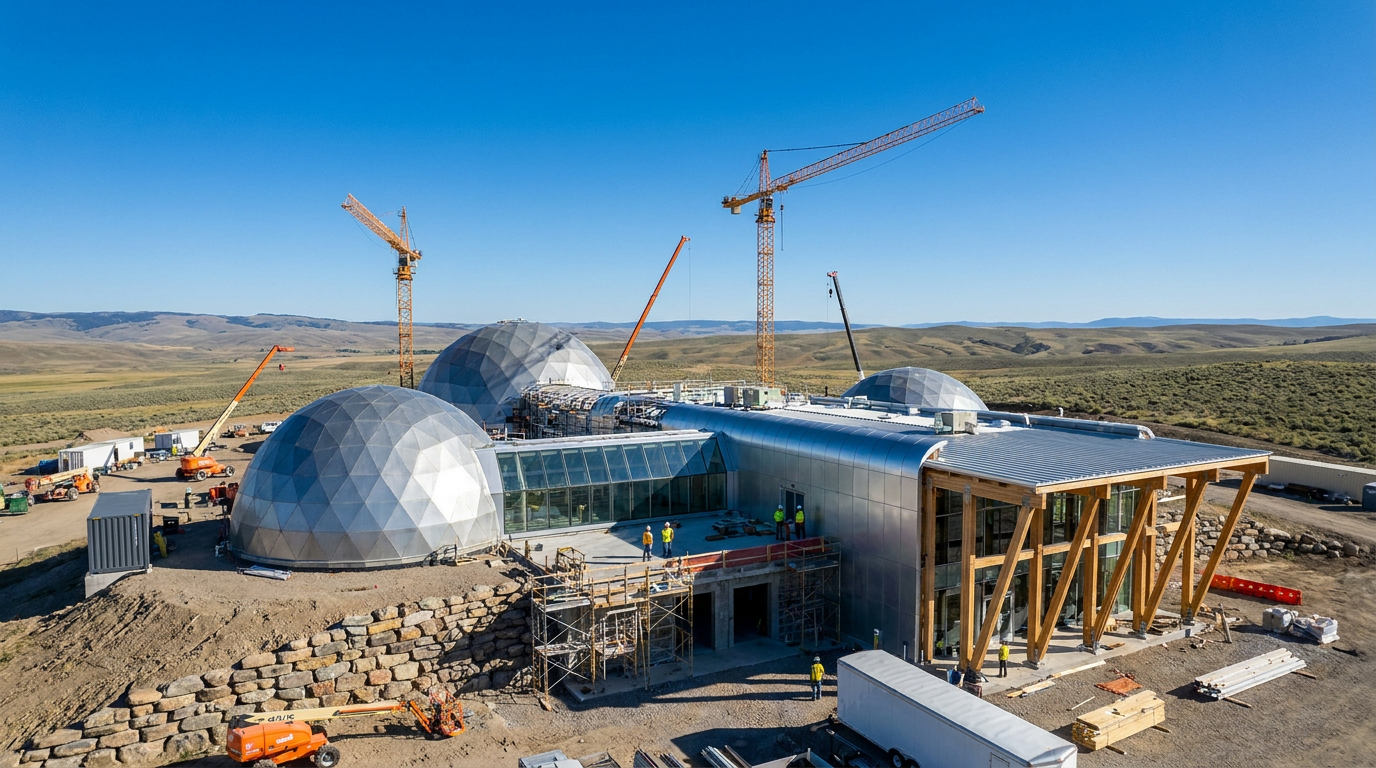
The theoretical promise of SMRs crossed a historic threshold in April 2026. TerraPower, the advanced nuclear innovation company co-founded by Bill Gates, officially broke ground on its flagship Natrium power plant in Kemmerer, Wyoming. The milestone marks the start of construction on what is slated to become the first utility-scale advanced nuclear power plant in the United States.[1][2]
The Kemmerer Unit 1 project is a 345-megawatt sodium-cooled fast reactor. Strategically located near a retiring coal plant, the facility will leverage the region's existing transmission grid infrastructure and transition the local energy workforce into the next-generation nuclear sector. The project is being developed through a public-private partnership under the U.S. Department of Energy’s Advanced Reactor Demonstration Program.[1][8]
What sets the Natrium design apart from traditional light-water reactors is its integrated molten-salt energy storage system. This thermal storage capability allows the plant to temporarily boost its electrical output to 500 megawatts when grid demand peaks—enough to power approximately 400,000 homes. By decoupling the reactor's steady thermal output from the grid's fluctuating electrical needs, the plant can seamlessly complement variable wind and solar generation.[1][8]
The project also represents a watershed moment for nuclear regulation. The U.S. Nuclear Regulatory Commission (NRC) approved TerraPower's construction permit in just 18 months following a streamlined mandatory hearing process. This rapid turnaround stands in stark contrast to the five-to-seven-year review periods that have historically paralyzed new nuclear development, signaling a modernized regulatory posture toward advanced reactor designs.[1][6]
Beyond the Wyoming plains, the most aggressive driving force behind the SMR boom is the technology sector. The computational demands of generative AI have fundamentally altered the power requirements of data centers. Modern AI-focused facilities now require upwards of 80 megawatts of power, more than double the consumption of standard data centers, placing immense strain on regional grids.[6]
Beyond the Wyoming plains, the most aggressive driving force behind the SMR boom is the technology sector.
To secure their energy future, tech giants are bypassing traditional utilities and investing directly in nuclear technology. TerraPower is rapidly commercializing its Natrium blueprint, having signed a landmark agreement with Meta to deliver up to eight Natrium plants by 2035. Amazon and Microsoft have similarly secured massive nuclear power purchase agreements to fuel their expanding infrastructure.[1][8]

The appeal of SMRs for technology companies lies in their unmatched reliability. Nuclear energy delivers a capacity factor exceeding 95 percent, compared to the 25 to 35 percent typical of solar and wind. Furthermore, SMRs require a fraction of the land—roughly 50 acres—allowing them to be co-located directly with data center campuses to bypass decade-long grid interconnection delays.[6]
The momentum is not confined to the United States. In March 2026, the European Commission unveiled a comprehensive strategy to accelerate the development and deployment of SMRs and Advanced Modular Reactors (AMRs) across the continent. The strategy aims to bring Europe's first modular reactors online by the early 2030s to bolster energy security and industrial competitiveness.[4]
The European Commission projects that total SMR capacity within the EU could reach between 17 and 53 gigawatts by 2050. Beyond electricity generation, the EU strategy emphasizes the versatility of SMRs in providing low-carbon district heating, industrial heat for chemical manufacturing, and the energy required for clean hydrogen production.[4]
Despite the palpable optimism, energy economists and industry analysts urge a measured perspective. The SMR sector is currently navigating the "first-of-a-kind" (FOAK) phase. As with any nascent technology, the initial demonstration units carry high price tags and carry inherent execution risks as supply chains and construction methodologies are tested in the real world.[7]
Financial models project that FOAK SMRs will likely produce electricity at a Levelized Cost of Energy (LCOE) between $90 and $160 per megawatt-hour. While this is significantly higher than the current cost of utility-scale wind and solar, it remains competitive when evaluated as firm, dispatchable clean power that does not require expensive battery backups.[7]

The ultimate economic promise of SMRs hinges entirely on achieving "nth-of-a-kind" (NOAK) standardisation. If developers can successfully transition to continuous factory production and deploy identical reactor modules at scale, analysts project that costs could plummet to between $50 and $90 per megawatt-hour, fundamentally altering the economics of global decarbonization.[7]
A critical bottleneck threatening this timeline is the nuclear fuel supply chain. Many advanced SMR designs, including the Natrium reactor, rely on High-Assay Low-Enriched Uranium (HALEU) metallic fuel. Currently, domestic production capacity for HALEU is severely limited, prompting urgent federal investments to build a secure, localized fuel fabrication infrastructure.[6][8]

Human capital presents another formidable hurdle. Scaling up a new nuclear industry requires thousands of specialized professionals, from nuclear engineers and regulatory experts to precision welders and construction managers. Preparing this workforce is a primary focus for developers and policymakers over the next several years.[5][6]
As 2026 unfolds, Small Modular Reactors have definitively transitioned from theoretical blueprints to poured concrete. While they will not single-handedly solve the decarbonization challenges of the 2020s, the physical and regulatory foundations being laid today position advanced nuclear as an indispensable cornerstone of the mid-century clean energy grid.[7]
How we got here
March 2024
TerraPower submits its construction permit application to the U.S. Nuclear Regulatory Commission.
June 2024
Non-nuclear site preparation and construction begins at the Kemmerer, Wyoming site.
March 2026
The European Commission unveils a comprehensive strategy to deploy SMRs across the EU by the early 2030s.
April 2026
TerraPower officially begins nuclear construction on the Natrium plant after receiving rapid NRC approval.
2030 (Projected)
The Kemmerer Unit 1 Natrium plant is expected to be completed and operational.
Viewpoints in depth
Nuclear Industry & Developers
Focus on rapid commercialization, factory-built scalability, and meeting industrial energy demands.
Advanced reactor developers view 2026 as the long-awaited inflection point where decades of research finally meet commercial reality. Companies like TerraPower argue that the modular, factory-built approach fundamentally solves the cost-overrun crisis that plagued traditional gigawatt-scale nuclear plants. By standardizing components and utilizing advanced coolants like sodium or molten salt, developers believe they can deliver inherently safer, highly dispatchable power that perfectly complements intermittent renewables.
Tech Sector & Data Centers
Views SMRs as the essential, carbon-free baseload solution to power AI infrastructure.
For technology giants like Meta, Amazon, and Microsoft, the transition to advanced nuclear is a matter of existential infrastructure security. Generative AI has pushed data center power requirements to unprecedented levels, often exceeding 80 megawatts per facility. Tech companies argue that wind and solar, with their 25 to 35 percent capacity factors, simply cannot guarantee the 24/7 uptime required for high-performance computing. SMRs, with their small geographic footprint and ability to operate independently of congested regional grids, are seen as the only viable path to achieving net-zero emissions without throttling AI development.
Energy Economists & Analysts
Highlights the financial realities, high initial costs, and supply chain bottlenecks.
While acknowledging the engineering breakthroughs, energy economists maintain a cautious outlook on the immediate financial viability of SMRs. Analysts point out that 'first-of-a-kind' (FOAK) reactors currently face Levelized Costs of Energy (LCOE) between $90 and $160 per megawatt-hour—substantially higher than mature renewable technologies. Economists warn that the industry must prove it can successfully transition to 'nth-of-a-kind' (NOAK) mass production to bring costs down. Furthermore, they highlight severe supply chain vulnerabilities, particularly the lack of domestic High-Assay Low-Enriched Uranium (HALEU) enrichment capacity, which could delay broad commercialization until the mid-2030s.
Policymakers & Regulators
Emphasizes national energy security, streamlined permitting, and industrial competitiveness.
Government bodies, including the U.S. Department of Energy and the European Commission, view SMRs through the lens of geopolitics and industrial strategy. Policymakers argue that establishing a robust domestic advanced nuclear supply chain is critical to maintaining energy independence and global technological leadership. To accelerate deployment, regulatory agencies like the NRC have overhauled their review processes, cutting approval times from several years to just 18 months. For these officials, public-private partnerships and cost-sharing grants are necessary investments to ensure Western nations do not cede the next generation of nuclear technology to international competitors.
What we don't know
- Whether developers can successfully transition from building expensive 'first-of-a-kind' demonstration units to cost-effective, factory-produced fleets.
- How quickly the domestic supply chain for High-Assay Low-Enriched Uranium (HALEU) fuel can scale to meet the demands of dozens of planned reactors.
- The exact timeline for when SMRs will become economically competitive with natural gas and mature renewable energy sources on a Levelized Cost of Energy basis.
Key terms
- Small Modular Reactor (SMR)
- An advanced nuclear reactor with a capacity of 50 to 300 megawatts, designed to be manufactured in a factory and assembled on-site.
- Capacity Factor
- The ratio of the actual electrical energy produced by a power plant over a given period to the maximum possible electrical energy it could have produced.
- High-Assay Low-Enriched Uranium (HALEU)
- A specialized nuclear fuel enriched to between 5% and 20% uranium-235, required by many next-generation advanced reactors.
- First-of-a-Kind (FOAK)
- The initial, pioneering unit of a new technology, which typically carries higher costs and engineering risks before mass production begins.
- Levelized Cost of Energy (LCOE)
- A metric used to compare the lifetime costs of generating electricity across different technologies, expressed in dollars per megawatt-hour.
Frequently asked
How is an SMR different from a traditional nuclear plant?
SMRs are much smaller (50-300 megawatts) and are designed to have their components mass-produced in factories rather than custom-built on-site, which reduces construction time and financial risk.
Why are tech companies investing in nuclear power?
AI data centers require massive amounts of 24/7 electricity. Tech companies are turning to SMRs because they provide reliable, carbon-free baseload power that intermittent renewables like wind and solar cannot guarantee.
Is the TerraPower Natrium reactor safe?
Yes, the Natrium design uses liquid sodium as a coolant instead of water, which allows the reactor to operate at lower pressures and includes passive safety systems that safely shut down the reactor without human intervention or external power.
When will SMRs be widely available?
While the first demonstration units like TerraPower's are expected to come online around 2030, widespread commercial deployment and mass production are projected for the mid-to-late 2030s.
Sources
Source coverage
8 outlets
4 viewpoints surfaced








[1]World Nuclear NewsNuclear Industry & Developers
TerraPower starts construction of 'first US utility-scale advanced nuclear plant'
Read on World Nuclear News →[2]Nuclear NewsNuclear Industry & Developers
TerraPower begins construction on Natrium power plant in Kemmerer
Read on Nuclear News →[3]NucNetPolicymakers & Regulators
TerraPower Announces Official Start Of Construction For Natrium Nuclear Plant In Wyoming
Read on NucNet →[4]European CommissionPolicymakers & Regulators
Commission unveils strategy to bring Europe's first SMRs online by the early 2030s
Read on European Commission →[5]ASMEPolicymakers & Regulators
What Nuclear Energy Technologies Are Actually Advancing in 2026?
Read on ASME →[6]iRecruit InsightsTech Sector & Data Centers
SMR Data Centers: How Small Modular Reactors Power AI Infrastructure (2026)
Read on iRecruit Insights →[7]Energy Solutions IntelligenceEnergy Economists & Analysts
Small Modular Reactors 2026: Hype, Costs & the Real Nuclear Future
Read on Energy Solutions Intelligence →[8]Balkan Green Energy NewsNuclear Industry & Developers
TerraPower starts building 345 MW nuclear plant in US using advanced Natrium technology
Read on Balkan Green Energy News →
Every angle. Every day.
Get energy stories with full source coverage and perspective breakdowns delivered to your inbox.