
Amazon Rainforest Can Survive 2.5°C Warming if Deforestation Halts, New Models Show
Fresh climate modeling reveals the Amazon rainforest is more resilient to rising global temperatures than previously thought, provided regional deforestation is aggressively curtailed. The findings shift the scientific consensus away from an inevitable "tipping point" and place the biome's survival squarely in the hands of global conservation policy.
By Factlen Editorial Team
- Earth System Scientists
- Focus on the biophysical models, emphasizing that while the forest is resilient to heat, uncertainties around CO2 fertilization and ocean currents remain high.
- Conservation Policymakers
- Argue that the new data proves the efficacy of strict environmental enforcement and demands immediate global funding to maintain zero-deforestation targets.
- Factlen Synthesis
- Provides the overarching analytical frame connecting the raw climate data to actionable geopolitical consequences.
What's not represented
- · Indigenous Communities
- · Regional Agribusiness Operators
Why this matters
The Amazon regulates global weather patterns and stores decades' worth of human carbon emissions. If the forest collapses into a savanna, it would trigger catastrophic global warming acceleration; this new evidence proves that preventing that collapse is still physically and politically possible.
Key points
- New models show the Amazon can survive up to 2.5°C of global warming if deforestation is completely halted.
- Previous models compounded the effects of heat and logging; new data isolates them, showing canopy destruction is the primary threat.
- An intact canopy creates a microclimate that buffers the forest understory against extreme atmospheric heat.
- Brazilian deforestation has dropped 42% over the last three years, providing real-world conditions for forest recovery.
- The forest's long-term resilience still depends heavily on the uncertain limits of CO2 fertilization and Atlantic Ocean currents.
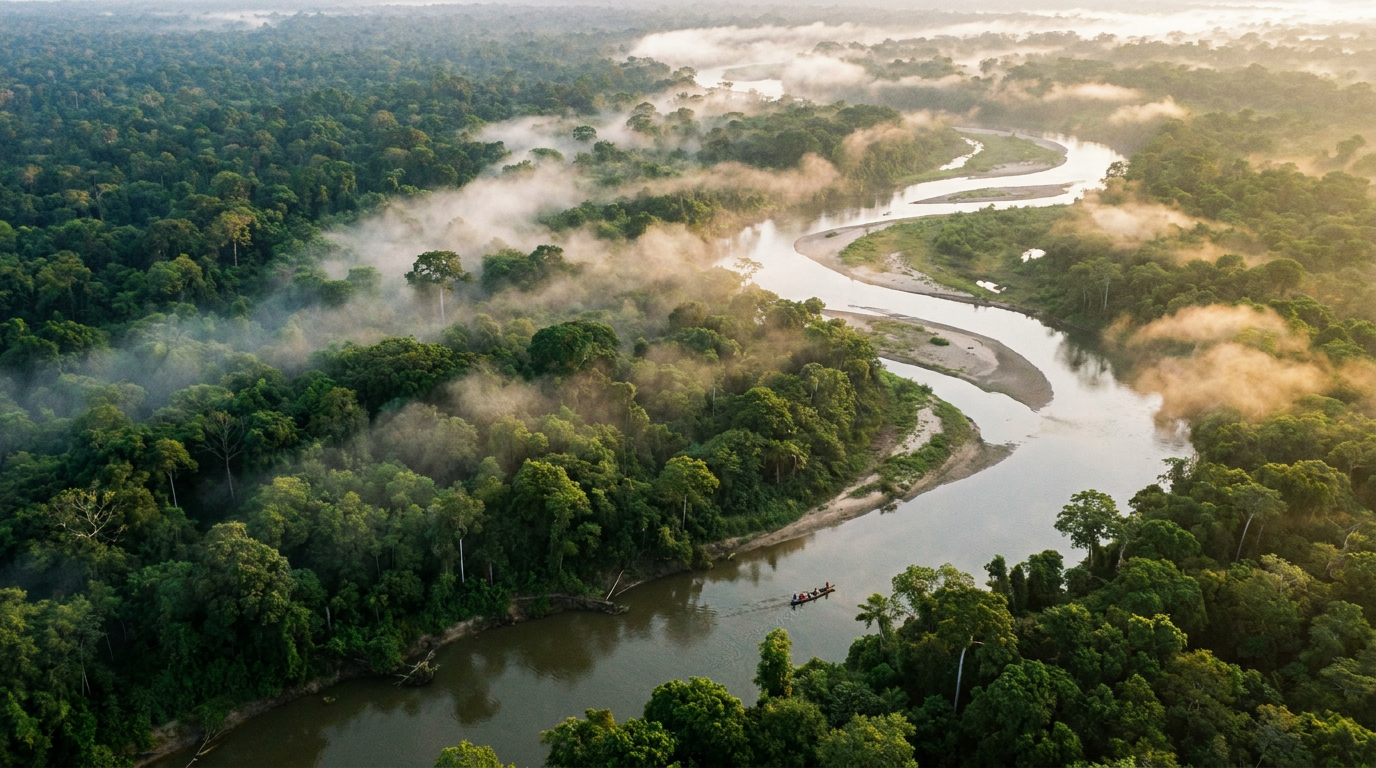
For years, the prevailing scientific consensus warned that the Amazon rainforest was hurtling toward an inevitable, irreversible tipping point. Researchers feared that a combination of global warming and regional logging would soon trigger a runaway feedback loop, transforming the lush biome into a dry, degraded savanna. However, a comprehensive new synthesis of Earth system models is fundamentally revising that timeline, offering a rigorous but conditional path to survival.[1][2][6]
The core finding of the updated models is that the forest possesses a much higher thermal tolerance than previously calculated. The data indicates that the Amazon can withstand global temperature increases of up to 2.5°C above pre-industrial levels without collapsing. But this resilience comes with a strict, non-negotiable caveat: regional deforestation must be entirely halted.[1][2]
To understand this dynamic, it is necessary to examine the mechanism of the forest's hydrological cycle. The Amazon essentially generates its own weather. Through a process called evapotranspiration, billions of trees pump deep soil moisture into the atmosphere, creating "flying rivers" of vapor that condense into rain. This self-sustaining cycle is what keeps the interior of the continent humid even during dry seasons.[2][6]

Historically, climate models treated global temperature rise and local deforestation as a single, compounded threat. Global warming increases the frequency of severe droughts, while clear-cutting removes the very trees that generate the buffering rainfall. Combined, these forces rapidly push the ecosystem toward a dry savanna state, leading to the dire predictions of the early 2020s.[2][4]
The breakthrough in the latest high-resolution modeling is the ability to decouple these two variables. By isolating the effects of heat from the effects of land clearance, researchers discovered that temperature alone is significantly less lethal than the combination of temperature and logging. An intact, unbroken canopy is remarkably efficient at maintaining a cool, humid microclimate that shields the understory from extreme atmospheric heat.[2][6]
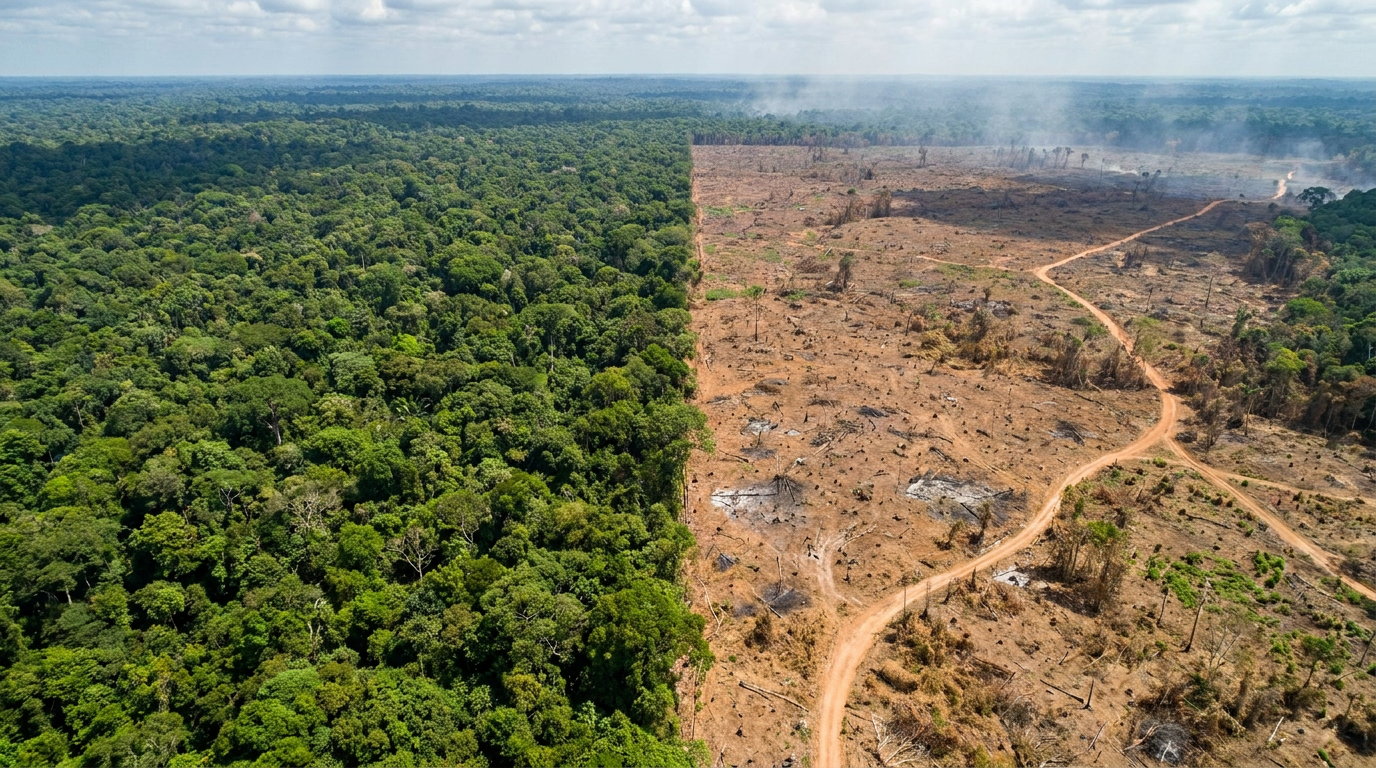
Conversely, when the canopy is fractured by logging roads, agricultural expansion, or mining, the protective microclimate evaporates. The exposed understory dries out rapidly, becoming highly susceptible to wildfires. The models demonstrate that it is this physical fracturing of the forest, rather than ambient heat alone, that acts as the primary catalyst for ecological collapse.[1][2]
This scientific revelation coincides with a dramatic shift in regional environmental policy. According to data from Brazil's National Institute for Space Research (INPE), deforestation rates in the Brazilian Amazon have plummeted by 42% over the past three years, reaching their lowest levels in over a decade. This decline provides the real-world conditions necessary to test the models' predictions.[3][5]

This scientific revelation coincides with a dramatic shift in regional environmental policy.
Aggressive enforcement against illegal logging and wildcat mining has allowed previously degraded forest edges to begin a slow process of recovery. Satellite monitoring confirms that in areas where the canopy has been allowed to close, local humidity levels are stabilizing, reinforcing the models' assertion that an intact forest can defend itself against broader climate shifts.[3][5][6]
However, the evidence pack carries transparent, quantified uncertainty. The projected resilience of the Amazon relies heavily on a phenomenon known as carbon dioxide fertilization. As atmospheric CO2 levels rise, trees are able to photosynthesize more efficiently, using less water in the process. The models assume this fertilization effect will continue to offset the stress of higher temperatures.[2][4]
Earth system scientists caution that this CO2 fertilization effect is not infinite. If soil nutrients, particularly phosphorus, become the limiting factor for plant growth, the forest's ability to buffer against heat could plateau and eventually collapse, regardless of how strictly deforestation is controlled. This remains one of the largest variables in long-term climate forecasting.[2][6]

Another critical variable is the behavior of the Atlantic Ocean. The Amazon's hydrological cycle is primed by moisture transported from the tropical Atlantic, which is then blocked by the Andes mountains and recycled across the basin. If sea surface temperatures in the Atlantic rise too rapidly, it could permanently shift the Intertropical Convergence Zone.[2][4]
A shift in this vital rain belt would alter precipitation patterns across South America faster than the forest ecosystem could adapt. The World Meteorological Organization notes that while the forest can survive ambient heat, it cannot survive a permanent, structural deficit in incoming oceanic moisture.[4][6]
Beyond the biophysics, the economic reality on the ground remains complex. Agribusiness, particularly cattle ranching and soy cultivation, continues to be the primary driver of land clearance. While Brazil has successfully cracked down on illegal operations, neighboring nations sharing the biome, such as Bolivia and Peru, are experiencing localized spikes in forest loss.[1][5]

This cross-border dynamic underscores the necessity of the "concerted action" called for by researchers. Saving the biome cannot be achieved by one nation alone; it requires a pan-Amazonian commitment to zero-deforestation, backed by international financial mechanisms that make standing forests more economically valuable than cleared land.[1][6]
Ultimately, the new evidence shifts the narrative surrounding the Amazon from fatalism to actionable policy. The forest's fate is not locked into an unstoppable climate feedback loop. Human intervention—specifically the immediate cessation of canopy destruction—remains the decisive variable in determining whether the Amazon survives the 21st century.[1][2][6]
How we got here
Early 2000s
Initial climate models propose that 20% to 25% deforestation would trigger an irreversible tipping point.
2019–2022
Deforestation rates in the Amazon spike, raising global alarm that the tipping point is imminent.
2023
Brazil implements aggressive new anti-deforestation enforcement policies and cracks down on illegal mining.
2025
INPE reports the lowest deforestation rates in the Brazilian Amazon in over a decade.
June 2026
New Earth system models confirm the forest's thermal resilience is higher than expected, provided the canopy remains intact.
Viewpoints in depth
Earth System Scientists
Focus on the biophysical mechanisms and the remaining uncertainties in the climate models.
Researchers in this camp emphasize the mechanics of the forest's survival. They point to the decoupling of ambient heat from canopy destruction as a major breakthrough in Earth system modeling. However, they remain highly cautious about the long-term limits of CO2 fertilization. If the soil runs out of essential nutrients like phosphorus, the trees will lose their enhanced ability to process water and withstand heat. Furthermore, they warn that a sudden shift in Atlantic Ocean currents could deprive the basin of the initial moisture needed to kickstart its internal rain-making engine, rendering local conservation efforts moot.
Conservation Policymakers
View the data as a mandate for aggressive enforcement and international funding.
For environmental ministers and global conservation groups, the new models are a vindication of strict enforcement policies. They argue that the 42% drop in Brazilian deforestation proves that the political will to save the forest exists and can be executed. This camp uses the data to pivot away from climate fatalism, arguing that because the tipping point is tied directly to human land use rather than unstoppable global warming, the solution is entirely within human control. They are currently leveraging this evidence to demand increased funding from wealthy nations to subsidize the economic cost of keeping the forest standing.
What we don't know
- Whether the CO2 fertilization effect will plateau due to a lack of soil nutrients like phosphorus.
- How rapidly rising Atlantic sea surface temperatures might permanently alter the moisture transport into the Amazon basin.
- If neighboring countries sharing the Amazon biome will successfully match Brazil's recent reductions in deforestation.
Key terms
- Tipping Point
- A critical threshold in a climate system where a small change pushes the system into a completely new, often irreversible, state.
- Evapotranspiration
- The combined process by which water is transferred from the land to the atmosphere by evaporation from the soil and transpiration from plant leaves.
- CO2 Fertilization
- The enhancement of plant growth and water-use efficiency caused by increased concentrations of carbon dioxide in the atmosphere.
- Savannization
- The ecological degradation process where a dense, humid tropical forest dries out and transitions into an open, grassy savanna.
- Intertropical Convergence Zone
- A belt of low pressure near the equator where the trade winds meet, responsible for driving major tropical rainfall patterns.
Frequently asked
What is the Amazon tipping point?
It is a theoretical threshold where the forest loses its ability to generate its own rainfall, causing it to rapidly die back and transition into a dry savanna.
Can the Amazon survive 2°C of global warming?
Yes. Recent high-resolution models suggest the forest can withstand up to 2.5°C of warming, but only if regional deforestation is completely halted.
Is deforestation currently increasing or decreasing?
Overall deforestation in the Brazilian Amazon has decreased by roughly 42% since 2023, though localized clearing continues in neighboring countries like Bolivia and Peru.
What are 'flying rivers'?
They are massive streams of water vapor pumped into the atmosphere by trees through evapotranspiration, which then condense to create rain across the South American continent.
Sources
Source coverage
6 outlets
3 viewpoints surfaced





[1]NatureEarth System Scientists
The Amazon can be saved — with concerted action inside and outside Brazil
Read on Nature →Critical transitions and resilience in the Amazon forest system
Read on Nature →[3]INPEConservation Policymakers
PRODES Amazon Deforestation Monitoring 2025-2026
Read on INPE →[4]World Meteorological OrganizationEarth System Scientists
State of the Global Climate 2026: Tropical Forest Resilience
Read on World Meteorological Organization →[5]ReutersConservation Policymakers
Brazil's Amazon deforestation drops to lowest level in decade
Read on Reuters →[6]Factlen Editorial TeamFactlen Synthesis
Synthesis by Factlen editorial team
Read on Factlen Editorial Team →


Every angle. Every day.
Get science stories with full source coverage and perspective breakdowns delivered to your inbox.