
How Underwater Wings Are Solving the Electric Boat Problem
By borrowing technology from the aerospace industry, a new generation of hydrofoiling vessels is overcoming the massive energy demands of water resistance to make high-speed electric boating a reality.
By Factlen Editorial Team
- Marine Technologists
- Engineers and designers focused on maximizing efficiency through aerospace principles.
- Pragmatic Operators
- Commercial ferry operators and analysts focused on reliability, maintenance, and route realities.
- Environmental Advocates
- Conservationists prioritizing the reduction of emissions, wake erosion, and noise pollution.
What's not represented
- · Traditional boat manufacturers
- · Recreational shallow-water fishermen
Why this matters
Water resistance has long made electrifying boats nearly impossible, forcing the maritime industry to rely on heavily polluting diesel engines. By solving this physics problem, hydrofoils are unlocking zero-emission, high-speed water transport that could revolutionize coastal commuting and marine conservation.
Key points
- Water is 800 times denser than air, making traditional electric boats highly inefficient due to massive drag.
- Hydrofoils act as underwater wings, lifting the boat's hull out of the water and reducing drag by up to 90 percent.
- This massive efficiency gain allows standard electric batteries to provide high speeds and long ranges.
- Onboard flight controllers adjust the foils 100 times per second to ensure a perfectly stable, smooth ride over waves.
- The technology produces zero emissions, operates silently, and leaves almost no wake, protecting fragile shorelines.
- While upfront costs are high and debris poses a risk, commercial ferry operators are rapidly adopting the technology.
For years, the maritime industry has watched the automotive world transition to battery power with a mixture of envy and frustration. While electric cars have become commonplace on highways, electrifying the waterways has proven to be a much more stubborn physics problem. The primary culprit is water itself, which is roughly 800 times denser than air. Pushing a traditional boat hull through that incredibly dense medium requires a staggering amount of energy. In fact, a conventional planing-hull powerboat consumes approximately 15 times more fuel per mile than an average family car. This massive energy requirement meant that early attempts at electric boating were severely limited in both speed and range, leaving the industry searching for a technological breakthrough.[3][8]
This intense energy demand created a vicious cycle for early electric boat designers. To achieve a usable range that could compete with gasoline engines, naval architects had to install massive, heavy lithium-ion battery packs. But adding thousands of pounds of battery weight pushes the hull deeper into the water, which subsequently increases the hydrodynamic drag. Overcoming that extra drag requires even more power from the motors, which drains the heavy battery faster. For a long time, this weight-to-drag ratio meant the only viable electric boats were slow-moving cruisers restricted to speeds of around 5 to 8 knots. High-speed, long-range electric boating seemed mathematically impossible under traditional hull designs.[8]
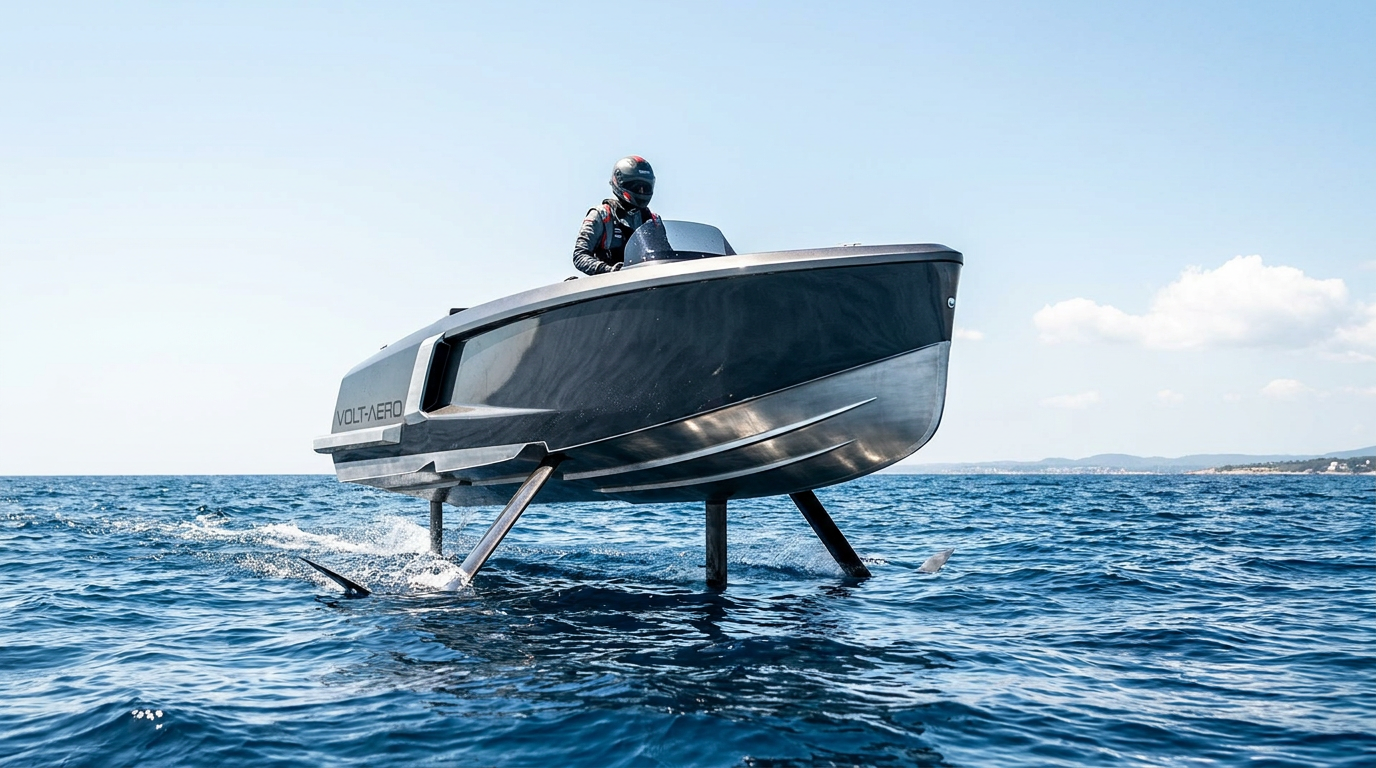
The solution to this physics trap didn't come from building better batteries, but from borrowing a fundamental concept from the aerospace industry: hydrofoils. Hydrofoils are essentially underwater wings attached to vertical struts beneath the boat's hull. As the vessel accelerates, water rushes over the curved shape of the foils, generating upward lift in the exact same aerodynamic way an airplane wing generates lift in the air. By treating the water as a fluid dynamic medium to fly through rather than a surface to plow over, engineers realized they could bypass the traditional limitations of marine architecture entirely.[1][2][8]
Once the boat reaches a specific takeoff speed—usually around 15 to 18 knots—this upward lift becomes strong enough to raise the entire hull completely out of the water. The vessel effectively begins to fly above the surface, supported only by the submerged wings and the propeller unit. By removing the bulky hull from the water, hydrofoiling eliminates the vast majority of the friction and wave-making resistance that plague traditional boats. The results of this elevation are transformative: overall hydrodynamic drag plummets by 80 to 90 percent, instantly solving the energy crisis that held electric boats back.[1][2][4]

This massive reduction in drag completely rewrites the mathematical equations of electric boating. Because the boat is no longer plowing through the water, it requires a mere fraction of the energy to maintain high cruising speeds. Suddenly, a standard electric vehicle battery pack is sufficient to provide both impressive speed and highly practical range. For example, the Navier N30, an American-built electric hydrofoil, uses twin 90-kilowatt motors to achieve a remarkable range of 75 nautical miles at a cruising speed of 20 knots—metrics that were previously unthinkable for a battery-powered vessel of its size.[4][6]
But making a boat fly is only half the challenge; keeping it stable in unpredictable marine environments is where modern technology steps in. Early mechanical hydrofoils, which have existed in various forms for decades, were notoriously difficult to control in choppy water, often crashing back down into the waves if the angle of attack was slightly off. Today's electric hydrofoils rely on sophisticated 'flight controllers' that act as the vessel's digital brain, ensuring that the transition from floating to flying is seamless and safe for everyday passengers.[3][8]
These onboard computers continuously ingest data from an array of ultrasonic sensors, gyroscopes, and accelerometers positioned around the vessel. The software analyzes the boat's pitch, roll, and the approaching wave conditions in real-time, automatically adjusting the angle of the underwater foils up to 100 times per second. This constant micro-adjustment—similar to the advanced avionics used to stabilize modern fighter jets or commercial drones—keeps the boat perfectly level, absorbing the impact of swells and chop before they can jostle the hull or the passengers inside.[1][3]
These onboard computers continuously ingest data from an array of ultrasonic sensors, gyroscopes, and accelerometers positioned around the vessel.
The resulting ride experience is fundamentally different from traditional boating. Because the hull is suspended above the surface, it doesn't slam into oncoming waves or bounce over wakes. Passengers experience a smooth, gliding sensation that owners frequently describe as a 'magic carpet ride.' Furthermore, without a roaring combustion engine or the loud, percussive sound of water crashing against a fiberglass hull, the operation is nearly silent. Passengers can hold conversations at normal indoor volumes even while the vessel is cruising at 30 knots, fundamentally changing the sensory experience of being on the water.[3][6]

Several pioneering companies are currently racing to commercialize this technology at scale. In Sweden, Candela has become a prominent market leader with its C-8 leisure boat and its larger P-12 commercial passenger ferry. The company has already begun serial production and recently secured a massive order to deploy a fleet of 20 hydrofoiling ferries in Norway. This deployment will mark the largest electric ferry fleet in the world, signaling that hydrofoil technology is ready to transition from a niche luxury product to a foundational piece of public transit infrastructure.[1][3]
In the United States, San Francisco-based Navier is pushing the boundaries of marine engineering with its N30 platform, which features aerospace-grade carbon fiber construction and advanced semi-autonomous docking features designed to make boating more accessible. Meanwhile, in New Zealand—a country with a rich history of hydrofoiling innovation thanks to its America's Cup sailing pedigree—a startup named Vessev has launched the VS-9. This all-electric hydrofoil is designed specifically for commercial tourism and harbor transport, utilizing lightweight composites to maximize efficiency and passenger capacity.[2][4][7]
The environmental benefits of these vessels extend far beyond the simple elimination of carbon emissions and exhaust fumes. One of the most destructive aspects of high-speed coastal boating is the massive wake generated by a traditional hull displacing water. Large wakes erode fragile shorelines, damage moored boats and docks, and disturb sensitive marine ecosystems like coral reefs and coastal wetlands. Because hydrofoils slice cleanly through the water rather than pushing it aside, they produce almost zero wake, leaving the water surface virtually undisturbed behind them.[3][8]
This wake-free operation is proving to be a massive operational advantage for commercial ferry operators. In many urban waterways and dense archipelagos, traditional ferries are legally restricted to slow speeds to prevent their wakes from causing damage. Because hydrofoiling ferries like the Candela P-12 generate negligible wake, they are frequently granted exemptions from these strict speed limits. This allows electric ferries to operate at full cruising speeds through restricted zones, effectively cutting commuter travel times in half while simultaneously reducing the environmental impact on the surrounding waterways.[1][8]

Despite the rapid technological advancements, the electric hydrofoil sector still faces significant practical hurdles. The most pressing operational risk is submerged debris. In waterways littered with floating logs, deadheads, or heavy kelp—such as the coastal waters of the Pacific Northwest—striking a solid object at 30 knots can severely damage the carbon-fiber foils. While modern systems are designed to sheer off safely or retract upon impact, a major strike forces the boat into an abrupt, uncomfortable landing and requires expensive repairs, making the technology less suitable for highly congested or debris-heavy rivers.[5]
Cost also remains a formidable barrier to widespread consumer adoption. The aerospace-grade carbon fiber required to keep the boats light enough to fly, combined with the complex sensor arrays and high-capacity marine batteries, pushes the price of these vessels well into the luxury tier. While commercial operators can offset the high initial purchase price through massive, long-term savings on diesel fuel and engine maintenance, the upfront capital expenditure is steep, keeping recreational electric hydrofoils out of reach for the average weekend boater for the time being.[3][4][8]
Because of these operational and financial challenges, some marine architects argue that hydrofoils aren't the only solution for electrifying the water. Electric catamarans are emerging as a highly practical alternative for certain commercial routes. By spreading the boat's displacement across two narrow hulls, catamarans significantly reduce wave-making drag compared to a traditional monohull, though not as drastically as a hydrofoil. While they may not offer the same top-end speed or 'flying' efficiency, catamarans are far less vulnerable to debris strikes and don't rely on complex flight-control software, making them a highly dependable middle ground for rougher waters or budget-conscious operators.[5]

Nevertheless, the successful deployment of electric hydrofoils marks a definitive paradigm shift in maritime engineering. By creatively solving the fundamental physics problem of water resistance, these vessels have proven that high-speed, long-range electric boating is not only possible, but commercially viable today. As battery densities continue to improve, manufacturing scales up, and costs inevitably come down, the sight of boats silently flying above the waves is poised to become a standard, sustainable feature of harbors and coastlines worldwide.[8]
How we got here
19th Century
Early mechanical hydrofoil concepts are first developed and tested.
2013
Modern hydrofoiling gains global attention during the America's Cup sailing race in New Zealand.
2018
Candela introduces its first electric hydrofoil boats, proving the concept for consumer leisure craft.
2023
The Candela P-12 is introduced as the world's first all-electric hydrofoiling commercial passenger ferry.
2025
Major deployments begin, including a 20-vessel electric ferry fleet ordered for Norwegian fjords.
Viewpoints in depth
Marine Technologists
Engineers and designers focused on maximizing efficiency through aerospace principles.
This camp views the water primarily as a physics problem to be solved. They argue that because water is 800 times denser than air, trying to push a traditional hull through it with battery power is fundamentally flawed. By applying aerospace engineering—specifically hydrofoils and advanced flight-control software—they believe they have permanently cracked the code for sustainable maritime transport, pointing to 90 percent drag reductions as proof that flying over the water is the only logical future.
Pragmatic Operators
Commercial ferry operators and analysts focused on reliability, maintenance, and route realities.
While impressed by the efficiency of hydrofoils, this group emphasizes the harsh realities of daily commercial service. They point out that high-speed foils are highly vulnerable to submerged debris, logs, and kelp, which can cause sudden drops and expensive damage. For these operators, the ultimate goal is dependable service, not just top speed. Consequently, many advocate for electric catamarans as a safer middle ground—sacrificing some efficiency for a robust, debris-resistant hull that doesn't rely on complex avionics to stay afloat.
Environmental Advocates
Conservationists prioritizing the reduction of emissions, wake erosion, and noise pollution.
For environmental groups, the appeal of electric hydrofoils extends far beyond the elimination of diesel exhaust. They highlight the secondary, often-ignored impacts of traditional boating: massive wakes that erode fragile coastal shorelines and loud underwater engine noise that disrupts marine life communication. Because hydrofoils slice silently through the water and leave virtually no wake, this camp views them as a holistic environmental solution that protects the entire aquatic ecosystem, not just the atmosphere.
What we don't know
- How well the delicate carbon-fiber foils and complex sensors will hold up to decades of harsh saltwater corrosion.
- Whether the high manufacturing costs can be brought down enough to make electric hydrofoils accessible to average recreational boaters.
- How marine insurance markets will price the risk of high-speed debris strikes for commercial hydrofoil fleets.
Key terms
- Hydrofoil
- An underwater wing that generates lift to raise a boat's hull out of the water, drastically reducing drag.
- Planing Hull
- A traditional boat design that uses speed to push the front of the hull up, though the rear remains submerged and creates significant friction.
- Flight Controller
- The onboard computer system that continuously adjusts the angle of the hydrofoils to maintain stability over waves.
- Wetted Area
- The portion of a boat's hull that is in direct contact with the water, which determines the amount of friction and drag the motors must overcome.
- Catamaran
- A boat featuring two parallel hulls of equal size, which reduces drag compared to a single wide hull but remains in the water at all times.
Frequently asked
What happens if an electric hydrofoil hits a log?
Sensors can detect some hazards, but striking a large log at speed can damage the foil and cause the boat to drop back into the water. Some models feature breakaway or retracting foils to minimize structural damage.
Can hydrofoils operate in shallow water?
Yes. Most modern electric hydrofoils feature retractable foils that can be raised, allowing the boat to operate like a traditional vessel in shallow marinas or when beaching.
Do electric hydrofoil boats cause sea sickness?
They actually reduce it. Because the hull flies above the waves rather than rolling over them, the ride is significantly smoother and more stable, which helps prevent motion sickness.
How long does it take to charge an electric boat?
Using DC fast chargers, commercial hydrofoils can charge from 10% to 80% in under 30 minutes. Standard marina hookups typically require an overnight charge.
Sources
Source coverage
8 outlets
3 viewpoints surfaced








[1]CandelaMarine Technologists
Candela: Hydrofoiling Electric Boats and Ferries
Read on Candela →[2]NavierMarine Technologists
Navier — The Boat of the Future
Read on Navier →[3]CNETEnvironmental Advocates
'Flying' on the Water: Testing Candela's Electric Hydrofoil Power Boat
Read on CNET →[4]New AtlasMarine Technologists
Semi-autonomous long-range electric hydrofoil plots course to the future
Read on New Atlas →[5]CleanTechnicaPragmatic Operators
Electric Hydrofoils Are Intriguing. Electric Catamarans Are Scaling
Read on CleanTechnica →[6]Megayacht NewsPragmatic Operators
Navier N30, the Electric Hydrofoiling Boat Aiming to Be Your Next Tender
Read on Megayacht News →[7]UL ProspectorMarine Technologists
Lightweight Composites Help Vessev Launch its All-Electric Hydrofoil Boats
Read on UL Prospector →[8]Factlen Editorial TeamEnvironmental Advocates
Synthesis by Factlen editorial team
Read on Factlen Editorial Team →
Every angle. Every day.
Get automotive stories with full source coverage and perspective breakdowns delivered to your inbox.