
How Synthetic Fuels Are Saving the Supercar's Combustion Engine
A legislative loophole and high-tech chemistry are giving automakers like Porsche and Lamborghini a carbon-neutral way to keep the internal combustion engine alive.
By Factlen Editorial Team
- Supercar Manufacturers
- Automakers fighting to preserve the emotional appeal of combustion engines.
- Environmental Regulators
- Policymakers balancing strict climate targets with industrial heritage.
- EV Advocates & Skeptics
- Critics who view e-fuels as an inefficient distraction from full electrification.
- Classic Car Enthusiasts
- Owners who view e-fuels as the ultimate savior for vintage vehicles.
What's not represented
- · Mainstream Commuters
- · Renewable Energy Grid Operators
Why this matters
The European Union's 2035 ban on combustion engines threatened to kill the traditional supercar, but a high-tech loophole for synthetic fuels has emerged. This breakthrough means the roaring V8s and V12s that define automotive passion will survive the electric revolution, offering a carbon-neutral way to keep both modern exotics and classic cars on the road.
Key points
- The EU's 2035 combustion engine ban includes an exemption for cars running exclusively on carbon-neutral synthetic fuels.
- E-fuels are made by combining green hydrogen with carbon dioxide captured directly from the atmosphere.
- Porsche is already producing synthetic fuel at an industrial scale using wind power at its Haru Oni plant in Chile.
- Lamborghini's new Temerario supercar features a V8 engine specifically designed to run on e-fuels.
- While carbon-neutral, e-fuels remain extremely expensive to produce and still emit localized tailpipe pollutants.
- Synthetic fuels offer a way to keep classic cars and high-emotion supercars on the road without electric conversions.
The visceral appeal of the supercar is inherently mechanical. It is the howl of a naturally aspirated V12 echoing off a canyon wall, the tactile vibration of a high-revving V8, and the smell of high-octane exhaust. For decades, these sensory experiences have defined automotive passion. But as the global automotive industry pivots aggressively toward battery-electric vehicles to combat climate change, the traditional supercar has faced an existential threat. The heavy batteries required for EVs fundamentally alter the lightweight, agile dynamics that define the genre, and the silent delivery of electric torque, while brutally fast, lacks the emotional crescendo of a combustion engine.[4]
The death knell for the internal combustion engine seemed to ring loudest in Europe. The European Union passed landmark legislation mandating that all new cars and vans sold from 2035 onward must produce zero tailpipe emissions. For legacy automakers, this meant a hard pivot to electric vehicles. But for boutique manufacturers like Ferrari, Lamborghini, and Aston Martin—brands whose entire identities are intertwined with the theater of combustion—the 2035 deadline represented a cultural and engineering crisis.[2][3]
However, a crucial legislative loophole has emerged, offering a lifeline to the combustion engine. Following intense lobbying from Germany and Italy—nations with deep automotive heritage—the EU agreed to modify its 2035 ban. The revised legislation includes a special exemption for vehicles that run exclusively on carbon-neutral synthetic fuels, commonly known as e-fuels. This carve-out means that as long as a car is powered by a fuel that does not add net carbon to the atmosphere, it can legally be sold and driven long after the fossil-fuel era ends.[3][6]
What exactly is a synthetic fuel? Unlike conventional gasoline or diesel, which are refined from crude oil extracted from the earth, e-fuels are manufactured in a highly controlled, lab-like industrial process. They are designed to be "drop-in" replacements, meaning they share the exact chemical properties of high-octane pump gas. They will not dissolve rubber lines, they do not require complex engine modifications, and they can be pumped using existing gas station infrastructure.[5]

The mechanism behind e-fuels is a marvel of modern chemistry, beginning with renewable energy. To be truly carbon-neutral, the production process must be powered entirely by clean sources like wind or solar. This electricity is used to power massive electrolysis machines, which split water molecules into oxygen and green hydrogen.[5]
Simultaneously, direct air capture technology acts like a giant mechanical forest, pulling ambient carbon dioxide directly out of the atmosphere. The green hydrogen and the captured carbon dioxide are then combined in a synthesis reactor to create e-methanol. Through further refinement, this methanol is converted into synthetic gasoline.[5]
The environmental math is elegant: when the synthetic fuel is burned in a supercar's engine, it releases carbon dioxide out of the tailpipe. However, because that exact amount of CO2 was previously extracted from the atmosphere to create the fuel, the net addition of greenhouse gases is zero. The cycle is closed, allowing the engine to roar without warming the planet.[5][7]
The environmental math is elegant: when the synthetic fuel is burned in a supercar's engine, it releases carbon dioxide out of the tailpipe.
The synthetic fuel revolution is no longer just theoretical; it is happening right now at an industrial scale. Porsche has positioned itself at the absolute forefront of this movement. In late 2022, the German automaker, in partnership with HIF Global, opened the Haru Oni pilot plant in Punta Arenas, Chile.[5][7]

The location in Patagonia was not chosen by accident. It is one of the windiest places on Earth, providing the relentless, abundant renewable energy required to power the highly energy-intensive electrolysis process. Porsche has already demonstrated the viability of the fuel by filling a 911 with synthetic gas made from water and air, proving that the technology works seamlessly in the real world.[1][5]
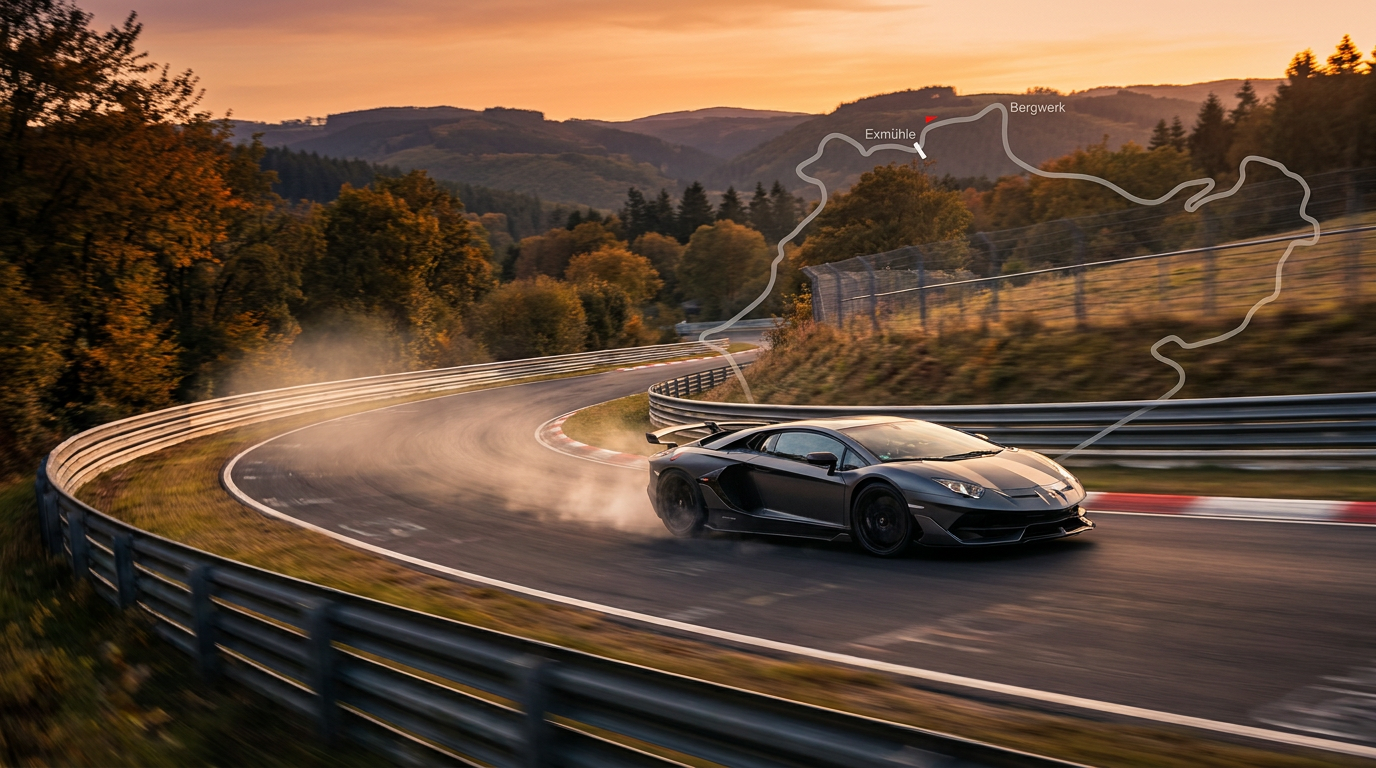
Lamborghini is also betting heavily on this carbon-neutral future. The Italian marque recently unveiled the Temerario, a plug-in hybrid supercar featuring an all-new, twin-turbocharged 4.0-liter V8 engine capable of screaming to 10,000 rpm. Crucially, Lamborghini designed this engine to run optimally on both conventional gasoline and synthetic e-fuels.[4]
Lamborghini's Chief Technical Officer, Rouven Mohr, has been remarkably candid about the brand's strategy. While acknowledging that electric vehicles are excellent for daily transportation, he argues they lack the emotional resonance required for a true supercar. Mohr has publicly stated that synthetic fuel could be the ultimate "savior of the combustion engine," allowing the brand to preserve its mechanical soul while meeting strict environmental targets.[4][7]
Beyond the Volkswagen Group, which owns both Porsche and Lamborghini, the broader exotic car industry is taking notice. Ferrari, Bentley, and Bugatti are all actively exploring synthetic fuel applications. Even mainstream manufacturers like Toyota, Mazda, and Subaru are collaborating on research to see if e-fuels can keep combustion engines viable for enthusiasts in the broader market.[1][7]
The appeal of e-fuels extends far beyond new supercars; it is a silver bullet for the classic car market. Porsche estimates that roughly 70 percent of all the cars it has ever built are still on the road today. Synthetic fuels ensure that vintage 911s, classic Ferraris, and historic muscle cars will not become static museum pieces when fossil fuels are phased out. They can continue to be driven and enjoyed without requiring irreversible, soul-sapping electric powertrain conversions.[5][6]

Despite the immense promise, the road ahead for synthetic fuels is fraught with significant hurdles. The most glaring issue is cost. Currently, producing e-fuel is an incredibly expensive endeavor, with estimates placing the cost at roughly $10 to $12 per liter. While supercar owners may not blink at paying a premium to keep their V12s running, this price point makes it entirely unfeasible for the average commuter.[1][5]
Furthermore, the production of e-fuels is highly energy-intensive. Critics argue that using renewable electricity to create hydrogen, synthesize fuel, and then burn it in an inefficient combustion engine wastes massive amounts of energy compared to simply putting that electricity directly into an EV battery. Scaling up production to meet even a fraction of global fuel demand would require a staggering build-out of wind and solar infrastructure.[5]
Finally, while e-fuels are carbon-neutral, they are not entirely pollution-free. Burning synthetic gasoline still produces localized tailpipe emissions, including nitrogen oxides and fine particulates, which affect urban air quality. For this reason, environmental groups remain skeptical, viewing e-fuels as a distraction from the necessary transition to full electrification.[5]

Ultimately, synthetic fuels are unlikely to replace batteries for the masses. The future of the daily commute is undeniably electric. But for the rarefied world of supercars, motorsports, and classic car preservation, e-fuels offer a technological miracle. They provide a viable, carbon-neutral pathway to keep the visceral, mechanical soul of the automobile alive for generations to come.
How we got here
July 2022
The EU advances a proposal to ban the sale of new internal combustion engine vehicles by 2035.
October 2022
Boutique supercar manufacturers are granted temporary exemptions from interim emissions targets.
December 2022
Porsche officially opens the Haru Oni synthetic fuel pilot plant in Punta Arenas, Chile.
March 2023
Following pressure from Germany, the EU officially drafts an exemption allowing e-fuel powered cars after 2035.
August 2024
Lamborghini unveils the Temerario, featuring a new V8 specifically engineered to run on synthetic fuels.
Viewpoints in depth
Supercar Manufacturers
Automakers fighting to preserve the emotional appeal of combustion engines.
Brands like Porsche, Lamborghini, and Ferrari argue that the soul of a supercar lies in its mechanical complexity, sound, and vibration. They view synthetic fuels as a necessary technological bridge that allows them to meet strict climate goals without sacrificing the visceral driving experience that their customers demand. For these manufacturers, e-fuels are not a rejection of environmental responsibility, but a parallel solution tailored for low-volume, high-emotion vehicles.
Environmental Regulators
Policymakers balancing strict climate targets with industrial heritage.
The European Union's primary goal is to achieve total climate neutrality by 2050, which necessitated the 2035 ban on new fossil-fuel vehicles. However, regulators recognized the economic and cultural importance of the European supercar industry. By carving out a specific exemption for carbon-neutral e-fuels, they managed to keep Germany and Italy on board with the broader climate legislation, ensuring that the transition to zero-emission daily transport remains on track while allowing a highly regulated niche for combustion to survive.
EV Advocates & Skeptics
Critics who view e-fuels as an inefficient distraction.
Proponents of pure electrification point out the massive energy inefficiency of synthetic fuels. They argue that using clean electricity to create hydrogen, synthesize a liquid fuel, and then burn it in an engine that loses most of its energy to heat is a profound waste of resources. Furthermore, they emphasize that while e-fuels are carbon-neutral, they still emit localized air pollutants like nitrogen oxides, making them unsuitable for widespread urban use.
What we don't know
- Whether the cost of synthetic fuel will ever drop low enough to be viable for anything other than ultra-luxury vehicles.
- How regulators will enforce the requirement that exempted vehicles run 'exclusively' on e-fuels rather than standard gasoline.
- If the massive renewable energy infrastructure required to scale e-fuel production can be built fast enough to meet demand.
Key terms
- Synthetic Fuel (e-fuel)
- A drop-in replacement for gasoline manufactured by combining green hydrogen with captured atmospheric carbon dioxide.
- Electrolysis
- An industrial process that uses electricity to split water molecules into hydrogen and oxygen.
- Direct Air Capture (DAC)
- Technology that extracts carbon dioxide directly from the ambient atmosphere to be used in chemical synthesis.
- Carbon-neutral
- A state where the carbon emissions produced by burning a fuel are exactly offset by the carbon removed from the atmosphere to create it.
Frequently asked
Will synthetic fuels be available at regular gas stations?
Eventually, yes, but initially they will likely be restricted to specialized pumps, motorsport events, and direct delivery for high-end clients due to limited supply and high costs.
Can I put e-fuel in my current gas-powered car?
Yes. Synthetic fuels are designed as 'drop-in' replacements with the exact same chemical properties as standard gasoline, meaning they require no engine modifications.
Why not just make all cars electric?
While EVs are highly efficient for daily commuting, their heavy batteries compromise the lightweight, high-emotion dynamics that define supercars. E-fuels offer a carbon-neutral alternative for these niche vehicles.
Sources
Source coverage
7 outlets
4 viewpoints surfaced







[1]Motor1EV Advocates & Skeptics
Lamborghini thinks synthetic fuel can save the V8
Read on Motor1 →[2]ForbesEnvironmental Regulators
Europe's Tough 2035 CO2 Laws Give Supercar Makers A Free Pass
Read on Forbes →[3]CarExpertEnvironmental Regulators
Europe details petrol/diesel ban from 2035, with low-volume supercar exemption
Read on CarExpert →[4]Driven Car GuideSupercar Manufacturers
EVs lack emotion, says Lamborghini CTO backing synthetic fuels
Read on Driven Car Guide →[5]Supercar DriverSupercar Manufacturers
Porsche: saving the internal combustion engine one flat six at a time
Read on Supercar Driver →[6]CarsalesEnvironmental Regulators
Europe looks to allow e-fuel in new cars after 2035
Read on Carsales →[7]F1rst MotorsSupercar Manufacturers
Lamborghini thinks synthetic fuel can save the V8
Read on F1rst Motors →
Every angle. Every day.
Get automotive stories with full source coverage and perspective breakdowns delivered to your inbox.