
Chess Injury Report: Firouzja Plays Through Ankle Sprain to Stun Carlsen; Aronian Sidelined
Alireza Firouzja secured his first classical victory over Magnus Carlsen while playing with a heavily protected ankle, headlining a wave of health updates across the global chess circuit.
By Ryder James
- Active Competitors
- Focuses on the immediate impact of injuries on tournament standings, stamina, and match preparation.
- Tournament Organizers
- Prioritizes logistical accommodations, broadcast continuity, and player safety protocols.
- Chess Analysts
- Examines how physical and mental ailments affect over-the-board calculation and objective move quality.
Fast facts
- Alireza Firouzja defeated Magnus Carlsen in classical chess for the first time while playing with a sprained ankle.
- Firouzja had previously withdrawn from the Super Chess Classic Romania after attempting to play from his hotel bed.
- Levon Aronian is sidelined for four to seven weeks while recovering from a severe case of pneumonia.
- Former World Champion Ding Liren has successfully returned to classical chess after a mental health hiatus.
How we got here
April 2026
Former World Champion Ding Liren returns to classical chess after a prolonged mental health hiatus.
Mid-May 2026
Alireza Firouzja sprains his ankle falling off a stage in Bucharest and withdraws from the Super Chess Classic.
May 20, 2026
Levon Aronian announces a four-to-seven-week absence from the Grand Chess Tour due to pneumonia.
May 26, 2026
Firouzja plays through pain in Oslo to defeat Magnus Carlsen in the opening round of Norway Chess.
The physical toll of professional chess is rarely discussed with the same urgency as contact sports, but late May 2026 has brought player health and injury reports to the forefront of the global circuit. While grandmasters do not suffer from torn ligaments on a pitch, the grueling travel schedules, intense psychological pressure, and sheer physical endurance required to sit at a board for six hours frequently lead to debilitating health crises. This month, the elite chess world has been upended by a wave of medical absences, dramatic withdrawals, and heroic returns, underscoring the hidden physical demands of the game. The most captivating storyline has emerged from the Norway Chess tournament in Oslo, where a severe physical injury set the stage for one of the most stunning upsets of the year.[1][2]
The drama began in mid-May during the Super Chess Classic Romania in Bucharest, the second leg of the 2026 Grand Chess Tour. Alireza Firouzja, the 22-year-old French-Iranian grandmaster and one of the brightest young talents in the game, suffered a bizarre and severe ankle sprain after accidentally falling off a stage at the playing venue. The injury immediately compromised his ability to compete in the grueling classical format, where players must frequently walk around the playing hall to relieve tension and maintain blood flow during marathon games. Unable to put any weight on his foot, Firouzja found himself facing a difficult decision about his continued participation in the prestigious round-robin event.
In a remarkable display of determination, Firouzja initially refused to withdraw from the Bucharest tournament. Tournament organizers and medical staff arranged for him to play his official tournament games directly from his hotel bed. Lying sideways and heavily medicated for the pain, Firouzja managed to salvage a draw against Uzbek grandmaster Javokhir Sindarov. However, the physical discomfort and the awkward playing angle severely degraded his calculation abilities. During a postponed game played on the tournament's rest day, he succumbed to a defeat against American grandmaster Fabiano Caruana, realizing that competing at the highest level while entirely immobilized was an unsustainable strategy.
Recognizing the severity of the sprain and the risk of further aggravating the injury, Firouzja officially withdrew from the Super Chess Classic Romania just hours before the sixth round. His departure forced organizers to award forfeit victories to his remaining opponents, including German prodigy Vincent Keymer. At the time of his withdrawal, the chess community widely assumed that Firouzja would be sidelined for several weeks, placing his participation in the highly anticipated Norway Chess tournament—scheduled to begin just days later in Oslo—in serious jeopardy.[1]
Defying medical expectations, Firouzja obtained an MRI and secured a doctor's approval to travel. He endured what he described as a highly uncomfortable three-hour flight from Bucharest to Oslo, arriving just in time for the opening round of Norway Chess. When he entered the playing hall at the Deichman Bjørvika library, he was wearing a heavy protective medical boot and walked with a pronounced limp. Tournament arbiters provided a specialized chair so he could keep his injured leg elevated throughout the match. Waiting for him across the board was none other than World No. 1 and defending Norway Chess champion Magnus Carlsen.[1][2]
Defying medical expectations, Firouzja obtained an MRI and secured a doctor's approval to travel.
Despite the visible pain and his admission that playing in such a compromised posture caused him to lose energy much faster than usual, Firouzja launched a ferocious attack against the Norwegian icon. The classical time control in Oslo is notoriously brutal, featuring no time increment until move 41, which frequently induces severe time scrambles. Firouzja leaned into this dynamic, playing rapidly and creating immense complications on the board that forced Carlsen to burn through his clock. With his leg propped up on the adjacent chair, the young challenger maintained a stoic posture, refusing to let his physical discomfort translate into passive play.[2]
The relentless board pressure ultimately broke Carlsen's defenses. Deep in a time scramble and facing a barrage of unpleasant choices, the World No. 1 committed a catastrophic blunder on move 33, playing his king to g8 (33...Kg8??). Firouzja immediately capitalized, consolidating his material advantage and forcing Carlsen's resignation just five moves later. The result marked Firouzja's first-ever classical victory over Carlsen. Following the match, a gracious Carlsen acknowledged the sheer willpower of his opponent, noting that Firouzja provided a "ton of pressure" that caused him to fail the ultimate test, regardless of the physical ailments plaguing the French-Iranian star.[1]
While Firouzja's heroic return captured the headlines in Oslo, the Grand Chess Tour has been managing another significant medical absence. Veteran grandmaster Levon Aronian was forced to abruptly withdraw from the same Super Chess Classic Romania event due to a severe respiratory illness. Medical examinations confirmed that Aronian had contracted pneumonia, a condition that makes the deep concentration and stamina required for classical chess virtually impossible. His sudden departure prompted organizers to call up Dutch grandmaster Jorden van Foreest as a full tour replacement.
In a public statement addressing his health, Aronian reassured fans that he was receiving excellent medical care and that the pneumonia was under control. However, he emphasized that the illness and its complications were "not a joke," noting that doctors have mandated a strict recovery period. Aronian expects to be completely sidelined from professional chess for four to seven weeks to ensure his lungs fully heal. The Grand Chess Tour has confirmed that once he is medically cleared, Aronian will return to the circuit later in the season as a wildcard participant in the rapid and blitz events.
The recent spate of physical injuries and illnesses mirrors the equally critical conversation surrounding mental health in elite chess. Earlier this spring, the chess world received a highly uplifting update when former World Champion Ding Liren successfully returned to classical competition at the Chinese Team Chess Championship. Ding had taken a prolonged hiatus from classical over-the-board play following the loss of his world title to India's Gukesh Dommaraju in December 2024, stepping away to focus entirely on his well-being.[3]
Ding has been remarkably transparent about his struggles, openly discussing his battles with exhaustion, insomnia, and depression during his reign as World Champion. By stepping away from the intense spotlight and seeking professional psychological support, Ding prioritized his long-term health over immediate competitive results. His return to the board in April 2026, where he secured a victory in his very first classical game back, was celebrated across the global chess community as a triumph of personal recovery and resilience.[3]
Together, the medical updates surrounding Firouzja, Aronian, and Ding highlight a shifting culture within professional chess. Players and organizers are increasingly recognizing that the brain cannot function at a world-class level if the body or mind is failing. Whether it is playing through the acute pain of a sprained ankle to defeat the greatest player of a generation, or having the wisdom to step away to heal from pneumonia or depression, the modern grandmaster must navigate a physical and psychological gauntlet that extends far beyond the sixty-four squares.[2]
Sources
Source coverage
3 outlets
3 viewpoints surfaced



- [1]Chess.comActive Competitors
Norway Chess 2026 R1: Firouzja Stuns Carlsen, Gukesh Escapes
Read on Chess.com → - [2]The GuardianActive Competitors
Uruguay slump to shock early World Cup exit after Baena strike sends Spain through
Read on The Guardian → - [3]The Straits TimesChess Analysts
World chess champion Ding Liren opens up on mental struggles
Read on The Straits Times →
Comments
More in sports
See all →Preview
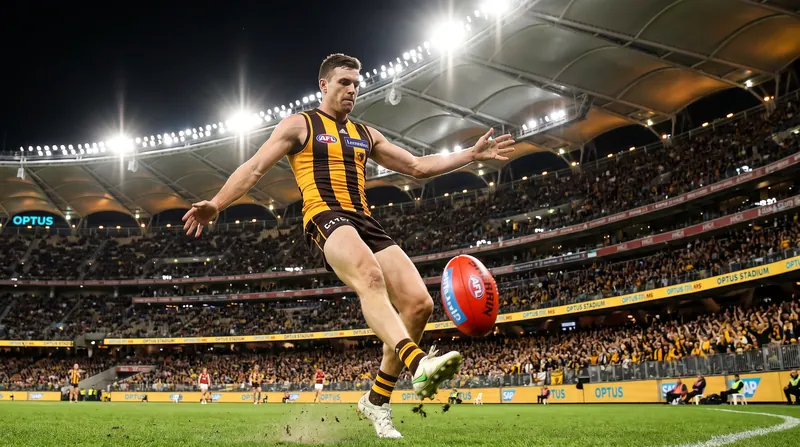
Hawthorn Chases Top-Four Finish and Percentage Boost in High-Stakes Clash Against West Coast
7 sources
Preview
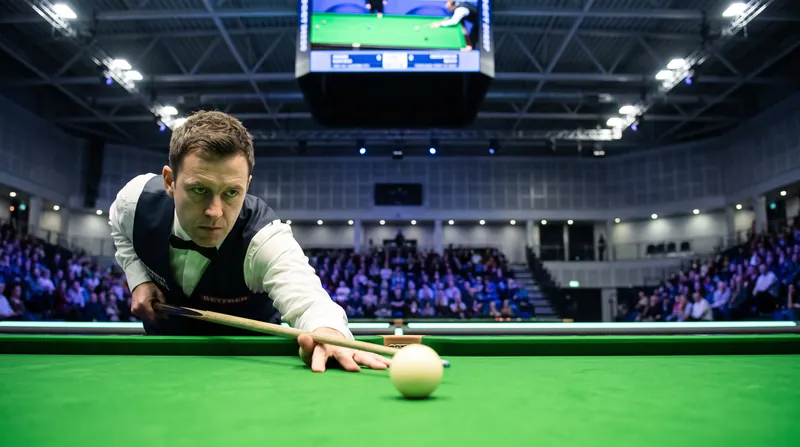
2026 Wuhan Open Preview: Xiao Guodong Chases Hat-Trick as World No. 1 Race Heats Up
6 sources
Recap
James Wade Ends Five-Year Televised Title Drought with Australian Darts Masters Victory
2 sources
Storyline
Jonny Lynch's First-Half Hat-Trick Powers Ireland Past Malaysia in Historic World Cup Run
6 sources

Every angle. Every day.
Get sports stories with full source coverage and perspective breakdowns delivered to your inbox.