
Prebunking: How 'Psychological Vaccines' Are Inoculating the Internet Against Misinformation
Researchers are successfully using short, gamified videos to expose the underlying tactics of online manipulation, building cognitive resilience before falsehoods can spread.
By Factlen Editorial Team
- Cognitive Psychologists
- Focus on building scalable, long-term mental resilience against manipulation.
- Traditional Fact-Checkers
- Emphasize the ongoing necessity of correcting specific, concrete falsehoods.
- Platform Architects
- Prioritize frictionless, scalable solutions that integrate into existing ad feeds.
What's not represented
- · Everyday social media users who feel overwhelmed by the volume of conflicting information
- · Bad actors and propagandists who continuously adapt their tactics to bypass prebunking efforts
Why this matters
As synthetic media and AI-generated content make it harder to verify facts in real-time, teaching internet users how to spot the structural tactics of manipulation offers a scalable, long-term defense for our digital information ecosystem.
Key points
- Prebunking exposes users to weakened doses of misinformation tactics to build cognitive resilience.
- The strategy focuses on the structural playbook of manipulation, not specific political facts.
- A 2026 meta-analysis confirmed prebunking improves discernment without making users uniformly cynical.
- Short video interventions on social media can provide protective effects lasting up to five months.
- Experts view prebunking as a scalable complement to traditional, retroactive fact-checking.
The internet is locked in a perpetual game of whack-a-mole. Every day, thousands of fact-checkers, journalists, and platform moderators scramble to debunk false claims, manipulated images, and misleading narratives. But by the time a high-profile lie is thoroughly fact-checked and flagged, it has often already circled the globe, settling firmly into the belief systems of millions.[6]
This retroactive approach suffers from a well-documented psychological hurdle known as the "continued influence effect." Even when people are presented with undeniable, concrete evidence that a story is false, the original misinformation often continues to shape their worldview and decision-making. Once a compelling narrative takes root in the human brain, uprooting it is notoriously difficult.[4][7]
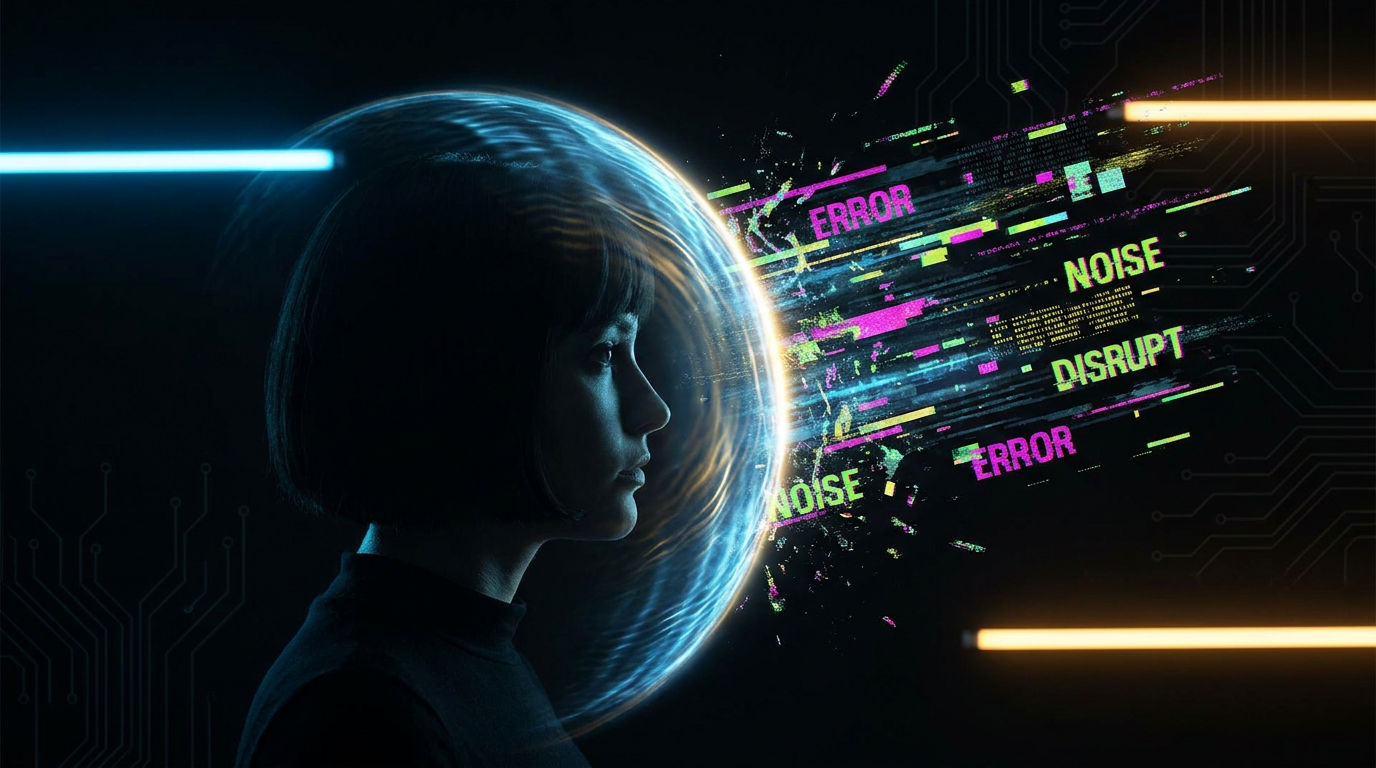
In response, cognitive psychologists and technology platforms are shifting their focus from the cure to the prevention. Enter "prebunking"—a strategy deeply rooted in psychological inoculation theory. Instead of waiting for falsehoods to spread and attempting to correct them after the fact, researchers are preemptively exposing internet users to the underlying tactics of manipulation, effectively vaccinating their minds against future deception.[3][6]
The mechanism borrows directly from the logic of immunology. Just as a traditional medical vaccine exposes the body to a severely weakened dose of a virus to trigger the production of physical antibodies, psychological inoculation exposes the mind to a weakened dose of a misinformation tactic. By explaining exactly how the trick works in a low-stakes environment, the brain develops "cognitive antibodies."[3][6]

Crucially, prebunking does not focus on the specific facts of a controversial political or scientific issue. Instead, it targets the "misinformation playbook"—the structural techniques universally used by propagandists, scammers, and engagement-baiters. These core tactics include emotional manipulation, scapegoating, false dichotomies, and ad hominem attacks.[3]
By remaining completely "source agnostic" and avoiding politically charged facts, prebunking bypasses the defensive biases that often cause audiences to reject traditional fact-checks. A user might be shown a short, humorous video illustrating a false dichotomy using a pop-culture reference, like a scene from a popular movie. Once they understand the structural flaw of the argument in a neutral context, they become significantly better at spotting that exact same flaw in real-world political or health content.[3]
A user might be shown a short, humorous video illustrating a false dichotomy using a pop-culture reference, like a scene from a popular movie.
The empirical evidence supporting this preventative approach has matured rapidly over the last few years. In early 2026, a major meta-analysis published in Current Opinion in Psychology re-analyzed 33 separate inoculation experiments involving over 37,000 participants. The results provided robust, large-scale confirmation of the strategy's efficacy.[1]
The meta-analysis, utilizing Signal Detection Theory, found that both gamified and video-based prebunking interventions consistently improved users' ability to discriminate between reliable and unreliable news. Importantly, it proved that the "vaccine" did not simply make participants uniformly cynical; it enhanced their actual discernment without decreasing their baseline trust in credible, evidence-based reporting.[1]
Transitioning these laboratory successes into the chaotic, fast-paced environment of social media feeds has been the next major frontier for researchers. A landmark 2026 study conducted by teams at Cambridge and Harvard tested this transition by deploying a 19-second prebunking video as an Instagram Story ad to over 375,000 users in the United Kingdom.[2]
The results demonstrated that psychological inoculation can scale seamlessly on commercial platforms. Users who viewed the short video explaining emotional manipulation were 21 percentage points better at identifying manipulative news headlines compared to a control group. Remarkably, researchers found that these protective cognitive effects persisted for up to five months after just a single viewing.[2]

Technology companies are already integrating these academic findings into active defense strategies. Google's Jigsaw unit, for example, has rolled out large-scale prebunking ad campaigns across Eastern Europe—including Poland, Slovakia, and the Czech Republic—specifically designed to build public resilience against emerging anti-refugee disinformation narratives before they can gain widespread traction.[3]
While prebunking is highly effective at scale, researchers emphasize that it is not a complete replacement for traditional fact-checking. A study led by the European Commission's Joint Research Centre found that while prebunking provides broad, long-lasting resilience against manipulation tactics, direct debunking remains slightly more effective at neutralizing specific, concrete false claims—provided the audience already trusts the source of the correction.[4][5]

Ultimately, the consensus among cognitive scientists is that a healthy information ecosystem requires both strategies working in tandem. Prebunking serves as the broad-spectrum public health intervention, raising the baseline immunity of the general population, while debunking acts as the targeted therapeutic for specific viral outbreaks. As the internet braces for increasingly sophisticated synthetic media, these cognitive antibodies may prove to be our most scalable and vital defense.[6][7]
How we got here
1960s
Psychologist William McGuire first proposes 'inoculation theory' to explain how people can build resistance to persuasion.
2010s
Researchers begin applying inoculation theory to the modern internet, testing whether it can combat digital misinformation.
2022
Google's Jigsaw unit launches large-scale prebunking ad campaigns in Eastern Europe to counter anti-refugee disinformation.
Early 2026
A major meta-analysis of 37,000 participants confirms that video-based prebunking consistently improves users' ability to spot unreliable news.
Viewpoints in depth
Cognitive Psychologists
Focus on building scalable, long-term mental resilience against manipulation.
Researchers in this camp argue that the human brain is inherently vulnerable to emotional manipulation and cognitive shortcuts. They view the misinformation crisis primarily as a public health issue rather than a purely technological one. By treating manipulation tactics like a virus, they believe we can achieve 'herd immunity' through widespread, low-friction educational interventions that teach critical thinking at scale without triggering partisan defensiveness.
Traditional Fact-Checkers
Emphasize the ongoing necessity of correcting specific, concrete falsehoods.
While strongly supportive of prebunking, fact-checking organizations caution that structural inoculation cannot replace the hard work of verifying specific claims. They note that prebunking teaches users how they are being manipulated, but it doesn't always provide the factual baseline needed to understand complex issues like climate science or election integrity. They advocate for a hybrid model where prebunking handles the volume, and fact-checking handles the specifics.
Platform Architects
Prioritize frictionless, scalable solutions that integrate into existing ad feeds.
For social media companies, the appeal of prebunking lies in its scalability and source-agnostic nature. Because prebunking videos don't take a stance on controversial political facts, they bypass the accusations of partisan censorship that often plague direct content moderation efforts. Platforms view these short 'inoculation ads' as a way to improve ecosystem health without having to individually adjudicate millions of daily posts.
What we don't know
- How frequently users need 'booster shots' of prebunking content to maintain long-term cognitive immunity.
- Whether prebunking interventions can successfully penetrate deeply entrenched, highly isolated online echo chambers.
Key terms
- Prebunking
- A preemptive strategy that warns people about misinformation tactics before they encounter them, building cognitive resistance.
- Psychological Inoculation
- A theory suggesting that exposing people to a weakened form of a persuasive argument builds their defense against future, stronger manipulative attacks.
- Continued Influence Effect
- A cognitive bias where people continue to rely on misinformation even after it has been credibly and clearly debunked.
- False Dichotomy
- A manipulative tactic that artificially forces a choice between two extreme options, ignoring nuance or middle ground.
- Signal Detection Theory
- A framework used by psychologists to measure a person's ability to differentiate between true signals (facts) and background noise (manipulation).
Frequently asked
Does prebunking make people distrust all news?
No. Large-scale meta-analyses show that psychological inoculation improves the ability to spot manipulation without decreasing trust in credible, evidence-based reporting.
How long does the 'vaccine' last?
Studies indicate that a single short prebunking video can improve manipulation discernment for up to five months, though researchers suggest periodic 'booster' exposures may be helpful.
Is prebunking better than fact-checking?
They serve different purposes. Prebunking is better for broad, scalable prevention against manipulation tactics, while fact-checking (debunking) is slightly more effective at correcting specific, concrete false claims.
Sources
Source coverage
7 outlets
3 viewpoints surfaced







[1]Current Opinion in PsychologyCognitive Psychologists
A Signal Detection Theory Meta-Analysis of Psychological Inoculation Against Misinformation
Read on Current Opinion in Psychology →[2]Harvard Kennedy School Misinformation ReviewCognitive Psychologists
Boosting psychological defences against misleading content online
Read on Harvard Kennedy School Misinformation Review →[3]University of CambridgeCognitive Psychologists
Psychological inoculation against misinformation
Read on University of Cambridge →[4]European CommissionTraditional Fact-Checkers
Misinformation and disinformation: both prebunking and debunking work for fighting it
Read on European Commission →[5]University of Western AustraliaTraditional Fact-Checkers
A comparison of prebunking and debunking interventions for implied versus explicit misinformation
Read on University of Western Australia →[6]Factlen Editorial TeamPlatform Architects
Synthesis by Factlen editorial team
Read on Factlen Editorial Team →[7]National Institutes of HealthCognitive Psychologists
Long-Term Effectiveness of Inoculation Against Misinformation
Read on National Institutes of Health →
Every angle. Every day.
Get meta stories with full source coverage and perspective breakdowns delivered to your inbox.