
How Hydration Testing is Ending the Dangerous Era of Extreme Weight Cutting in MMA
Combat sports are slowly moving away from life-threatening dehydration tactics thanks to strict urine specific gravity testing that forces athletes to fight at their natural weight.
By Factlen Editorial Team
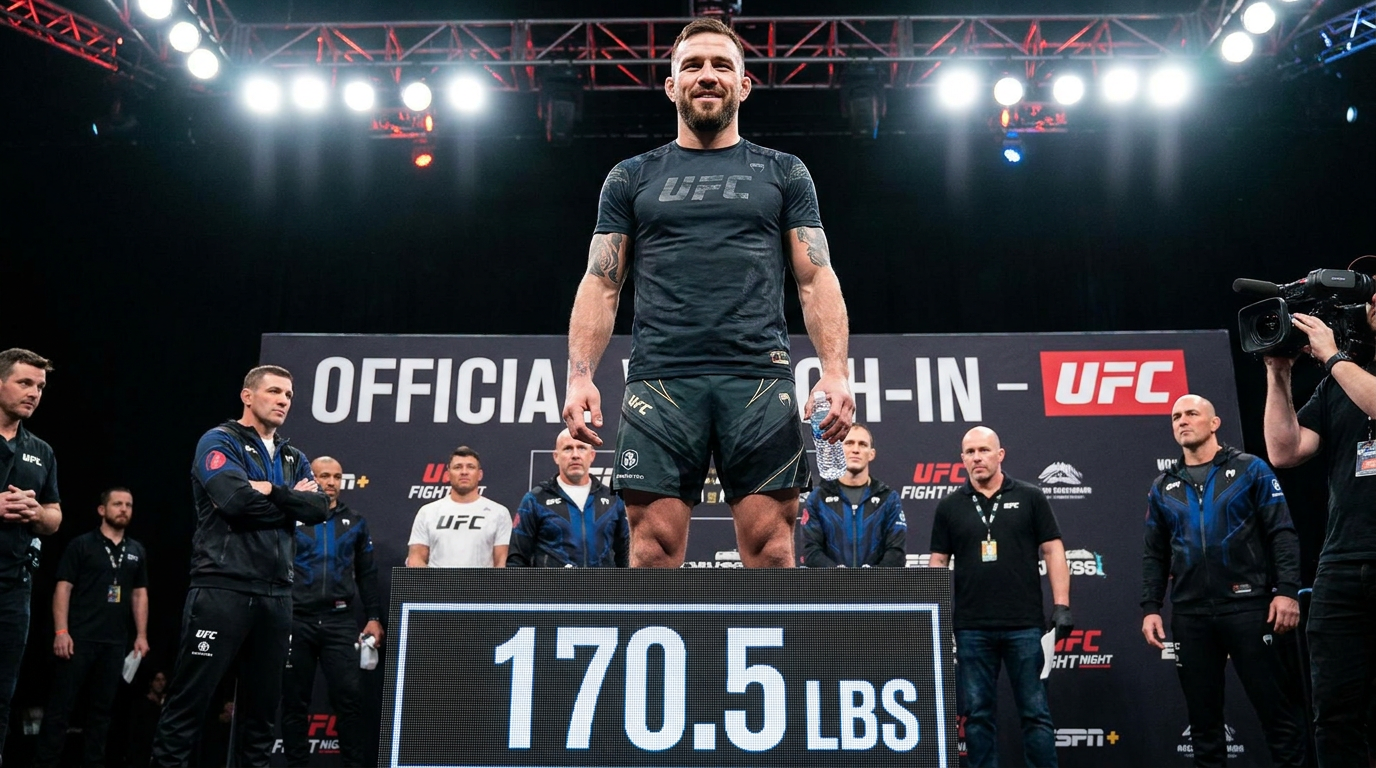
- Fighter Safety Advocates
- Argue that eliminating severe dehydration is essential to prevent brain trauma and organ failure.
- Promotional Executives
- Emphasize that hydrated fighters deliver higher-paced, more exciting bouts with higher finish rates.
- System Skeptics
- Point out that fighters still exploit loopholes like distilled water loading to game the hydration tests.
What's not represented
- · Athletes who naturally fall between established weight classes
- · Nutritionists specializing in combat sports weight management
Why this matters
For decades, combat sports athletes have risked organ failure and brain trauma just to make weight before a fight. The shift toward mandatory hydration testing is revolutionizing fighter safety, proving that athletes can compete healthier, hit harder, and deliver better performances without starving themselves of water.
Key points
- Extreme weight cutting via dehydration has historically caused severe organ damage and brain trauma in combat sports.
- Following a tragic death in 2015, ONE Championship instituted mandatory hydration testing to force fighters to compete at their natural weight.
- Athletes must pass a urine specific gravity (USG) test of 1.025 or lower before they are permitted to weigh in.
- Hydrated fighters are less susceptible to concussions and maintain higher cardiovascular endurance during bouts.
- Skeptics note that some fighters still game the system by consuming distilled water to temporarily dilute their urine.
In the demanding world of combat sports, the most grueling battle often happens long before the first punch is thrown. It is a battle against the scale, driven by the deeply ingrained culture of extreme weight cutting. For decades, mixed martial artists and boxers have sought a size advantage by competing in weight classes far below their natural walking weight. To achieve this, they subject their bodies to severe, rapid dehydration in the days leading up to a bout. Fighters wrap themselves in thermal suits, sit in boiling saunas, and spit into bottles to drain every possible ounce of water from their systems. It is a grueling, dangerous tradition that leaves athletes physically depleted and highly vulnerable to injury just 24 hours before engaging in professional combat.[2][7]
The physiological toll of this extreme dehydration is staggering. When a fighter severely depletes their body of fluids, acute and potentially life-threatening risks arise. The human brain is largely composed of water and suspended in cerebrospinal fluid; severe dehydration causes the brain to literally shrink. This increases the space between the brain and the skull, significantly raising the risk of severe concussions or traumatic brain injury from a strike. Beyond neurological dangers, extreme water loss leads to reduced kidney function, heart arrhythmias, and a drastic decrease in muscle strength and endurance. A fighter enters the ring not only physically weakened but with impaired cognitive function and slowed reaction times.[1][6]
For years, the combat sports industry accepted these extreme physiological risks as the unavoidable cost of doing business, but a devastating tragedy in late 2015 forced a global reckoning. Yang Jian Bing, a highly touted 21-year-old flyweight prospect from China, collapsed while cutting weight for a ONE Championship bout. He suffered a severe dehydration-induced heart attack and passed away, sending shockwaves through the mixed martial arts community. The devastating loss served as an undeniable wake-up call, highlighting the urgent need for safer practices and proving that the traditional model of weight cutting was fundamentally broken.[2][4]

In an unprecedented move for a major combat sports organization, ONE Championship immediately overhauled its entire regulatory framework to prevent future tragedies. The promotion banned dehydration-based weight cutting entirely, introducing a rigorous new system designed to force athletes to compete at their natural walking weight. The cornerstone of this new era was the implementation of mandatory hydration testing. Rather than simply measuring an athlete's mass on a scale, the organization began measuring the concentration of their bodily fluids to ensure they were safely hydrated before they were ever allowed to weigh in.[2][3]
The science behind this life-saving protocol relies on a clinical metric known as Urine Specific Gravity (USG). A USG test measures the concentration of dissolved particles—such as essential electrolytes and metabolic waste products—in the urine compared to pure water. A low specific gravity indicates dilute urine, meaning the athlete is well-hydrated and their kidneys are functioning normally. Conversely, a high specific gravity indicates concentrated urine, which is a clear clinical sign of severe dehydration. By utilizing a medical refractometer, officials can instantly determine whether a fighter has been dangerously restricting their fluid intake.[1][6]
The science behind this life-saving protocol relies on a clinical metric known as Urine Specific Gravity (USG).
To enforce this standard, ONE Championship established a strict physiological threshold: fighters must register a urine specific gravity of 1.025 or lower to pass the test. If an athlete's sample exceeds this limit, they are deemed dangerously dehydrated and are strictly prohibited from stepping onto the official scale. The testing is not a one-off event; athletes are monitored continuously throughout fight week. They must submit urine samples upon arrival, in the days leading up to the bout, and crucially, they must pass the hydration test and make their contracted weight simultaneously.[1][3]

This simultaneous compliance is the linchpin of the system. In traditional promotions, a fighter can weigh in severely dehydrated, step off the scale, and immediately begin intravenously or orally pumping fluids back into their body. Under the hydration protocol, an athlete cannot be dehydrated to make weight. If they fail the hydration test, they cannot weigh in. If they pass hydration but miss weight, they are given a brief window to try again, but they must remain hydrated. If they cannot make the weight while fully hydrated, the bout must be renegotiated at a catchweight, and the offending fighter surrenders a significant percentage of their purse.[1][5]
The shift away from extreme dehydration has yielded profound benefits for athlete safety and performance. By preserving the cerebrospinal fluid that cushions the brain, fighters are significantly less susceptible to catastrophic knockout trauma. Furthermore, their cardiovascular systems are not strained by the thick, viscous blood that accompanies severe dehydration. ONE Championship Vice President Rich Franklin has publicly attributed the promotion's exceptionally high finish rate—often hovering around 70 percent—directly to these hydration policies. When two athletes enter the cage fully hydrated, they possess the endurance to maintain a relentless pace for three or five rounds without suffering the sudden, precipitous cardiovascular collapse common in traditional weight cutters.[5][7]

However, the system is not entirely without flaws, and opportunistic athletes have inevitably sought ways to game the new regulations. Skeptics and industry analysts point out that some fighters still attempt to cut weight by utilizing strategic fluid manipulation. The most common loophole involves the consumption of distilled water shortly before the USG test. Because distilled water lacks electrolytes, it rapidly dilutes the blood concentration. The kidneys respond by aggressively flushing out dilute urine, allowing a fighter who is actually in a state of systemic dehydration to temporarily produce a urine sample that passes the 1.025 specific gravity threshold.[3][4]
Fighters employing this tactic meticulously time their water intake, creating a brief physiological window where their urine appears sufficiently hydrated even if their muscle tissue and brain remain depleted. Additionally, some athletes engage in long-term water loading—consuming massive amounts of water weeks in advance to suppress an antidiuretic hormone, then suddenly cutting off intake so the body continues to flush fluids. While these tactics allow some degree of weight manipulation to persist, medical experts note that the sheer volume of weight a fighter can cut using these loopholes is drastically lower than the 15 to 20 pounds routinely shed in traditional saunas.[3][4]
Despite these challenges, the implementation of hydration testing represents the most significant leap forward in combat sports safety in a generation. The culture is undeniably shifting. Fighters are increasingly recognizing that the perceived size advantage of cutting massive amounts of weight is often negated by the severe performance detriments of entering the cage depleted. Other regulatory bodies, including the California State Athletic Commission, have begun taking notes, implementing fight-day weight checks to ensure athletes do not regain an unsafe percentage of their body weight after weigh-ins. As the science of human performance evolves, the era of near-death weight cuts is slowly drawing to a close, replaced by a model that finally prioritizes the long-term health of the athletes who put their lives on the line.[2][4][7]
How we got here
Dec 2015
Flyweight fighter Yang Jian Bing tragically passes away due to complications from severe dehydration during a weight cut.
Dec 2015
ONE Championship announces a sweeping ban on dehydration-based weight cutting in response to the tragedy.
Jan 2016
The promotion officially implements its revolutionary Urine Specific Gravity (USG) hydration testing protocol.
Sep 2022
ONE Vice President Rich Franklin publicly attributes the organization's 70% finish rate to the cardiovascular benefits of fighting fully hydrated.
Jun 2026
Hydration testing remains a central focus as global athletic commissions continue to explore reforms to combat extreme weight cutting.
Viewpoints in depth
Fighter Safety Advocates
Argue that eliminating severe dehydration is essential to prevent brain trauma and organ failure.
Medical professionals and safety advocates view hydration testing as a non-negotiable evolution for combat sports. They emphasize that the brain is suspended in cerebrospinal fluid, which depletes during extreme weight cuts, drastically increasing the risk of traumatic brain injury from strikes. By forcing athletes to fight at their natural weight, this camp argues the sport can eliminate the entirely preventable organ failures and cardiac events that have historically plagued fight week.
Promotional Executives
Emphasize that hydrated fighters deliver higher-paced, more exciting bouts with higher finish rates.
For promoters, the shift away from weight cutting isn't just about safety—it's about the product. Executives note that fighters who don't spend the 48 hours before a bout starving themselves of water enter the cage with vastly superior cardiovascular endurance. This leads to fewer canceled bouts, fewer athletes gassing out in the second round, and a significantly higher rate of spectacular finishes, which ultimately drives better viewership and fan engagement.
System Skeptics
Point out that fighters still exploit loopholes like distilled water loading to game the hydration tests.
Critics of the current hydration protocols argue that the system creates a false sense of security. They point out that athletes have learned to manipulate Urine Specific Gravity (USG) tests by consuming distilled water, which lacks electrolytes and prompts the kidneys to flush dilute urine even when the body is systemically dehydrated. This camp believes that until continuous biological monitoring or strict fight-day weight limits are universally enforced, fighters will continue to find dangerous workarounds to gain a size advantage.
What we don't know
- Whether major Western promotions like the UFC will ever adopt mandatory hydration testing.
- How effectively new testing technologies can close the distilled-water loophole.
- The exact long-term neurological differences between fighters who cut water weight and those who fight hydrated.
Key terms
- Weight Cutting
- The rapid reduction of body weight prior to a sporting event, typically achieved through extreme fluid loss.
- Dehydration
- A dangerous physiological state where the body loses more fluids than it takes in, impairing organ function and cognitive ability.
- Urine Specific Gravity (USG)
- A medical metric that compares the density of urine to the density of pure water to determine hydration levels.
- Refractometer
- A medical instrument used to measure the concentration of dissolved particles in a liquid, commonly used for USG testing.
- Catchweight
- A negotiated weight limit for a bout that does not strictly adhere to the traditional, established weight classes.
Frequently asked
What is weight cutting in combat sports?
Weight cutting is the practice of rapidly shedding body weight, primarily through severe dehydration, in the days immediately preceding a fight to qualify for a lower weight class.
How does a hydration test work?
A hydration test measures the concentration of particles in an athlete's urine using a refractometer. If the urine is too concentrated, it indicates the athlete is dehydrated and they fail the test.
What is the USG limit for fighters?
In promotions like ONE Championship, fighters must register a Urine Specific Gravity (USG) of 1.025 or lower to prove they are safely hydrated.
Can fighters cheat the hydration test?
Yes, some fighters attempt to game the system by drinking distilled water shortly before the test, which temporarily dilutes their urine without fully rehydrating their body.
Sources
Source coverage
7 outlets
3 viewpoints surfaced







[1]Evidence Based FitnessFighter Safety Advocates
ONE championship's hydration test
Read on Evidence Based Fitness →[2]VICE SportsPromotional Executives
ONE Championship MMA to Ban Dehydration and Make Weight-Cutting More Humane
Read on VICE Sports →[3]GroundedMMASystem Skeptics
ONE Championship Weight-Cutting Rules (Simply Explained)
Read on GroundedMMA →[4]TheWrestlingFallacySystem Skeptics
Weight Cutting and Hydration Tests in MMA: A double edged sword?
Read on TheWrestlingFallacy →[5]SportskeedaPromotional Executives
Rich Franklin explains why ONE Championship's weight and hydration tests lead to exciting fights
Read on Sportskeeda →[6]National Institutes of HealthFighter Safety Advocates
Urine Specific Gravity
Read on National Institutes of Health →[7]Factlen Editorial TeamFighter Safety Advocates
Synthesis by Factlen editorial team
Read on Factlen Editorial Team →
More in sports
See all 9 stories →Pro Volleyball Boom
How 2026 Became the Breakout Year for Women's Professional Volleyball in the U.S.
0 sources
Ski Mountaineering
What Is Skimo? The Grueling New Sport Making Its Olympic Debut in 2026
0 sources
Sports Analytics
From Stopwatches to Neural Networks: How AI and Computer Vision Rewrote Sports Analytics
0 sources

Pro Volleyball
How Women's Volleyball Became America's Fastest-Growing Professional Sport
0 sources
Every angle. Every day.
Get sports stories with full source coverage and perspective breakdowns delivered to your inbox.