
How the Gut Microbiome is Reshaping Mental Health Treatment
The emerging field of nutritional psychiatry is proving that dietary interventions and targeted 'psychobiotics' can directly alter neurochemistry, offering a powerful new adjunct for treating depression and anxiety.
By Factlen Editorial Team
- Clinical Integration Advocates
- Argue that dietary interventions should be standard, evidence-based adjuncts to traditional mental health treatments.
- Microbiome Researchers
- Focus on the precise biological mechanisms, advocating for targeted, strain-specific therapies and rigorous human trials.
- Industry & Synthesis Voices
- Focus on translating preclinical microbiome research into accessible consumer health formats while synthesizing the broader clinical landscape.
What's not represented
- · Patients with severe treatment-resistant depression
- · Health insurance providers evaluating coverage for dietary counseling
Why this matters
For decades, mental health treatment focused almost exclusively on the brain. Understanding that the gut microbiome actively produces mood-regulating neurotransmitters empowers patients to use daily dietary choices as a tangible, side-effect-free tool to build psychological resilience.
Key points
- The gut and brain communicate bidirectionally through the microbiota-gut-brain axis.
- The gut microbiome produces key neurotransmitters, including the vast majority of the body's serotonin.
- The SMILES trial proved that dietary interventions can significantly improve clinical depression symptoms.
- Psychobiotics are emerging as targeted bacterial strains designed to confer specific mental health benefits.
- Major hospitals are beginning to integrate nutritional psychiatry into standard mental health care.
For decades, modern medicine treated the human brain and the digestive system as entirely separate domains. Psychiatrists managed neurochemistry and mood disorders, while gastroenterologists handled the mechanics of the gut. The idea that a patient's diet could directly treat clinical depression was largely dismissed as alternative medicine, lacking the rigorous empirical backing required by mainstream psychiatry.
But a quiet revolution has dismantled that anatomical wall. The rapidly emerging field of nutritional psychiatry is fundamentally reshaping how researchers and clinicians approach mental health. Driven by a wave of new data, the medical consensus is shifting toward a profound realization: the human gut and brain are in constant, bidirectional communication, and food is the primary language they speak.
This paradigm shift moved from speculative theory to hard clinical evidence with the publication of the landmark SMILES trial. Conducted by researchers in Australia, it was the first randomized controlled trial designed specifically to test dietary improvement as a medical treatment for major depressive episodes.[1]
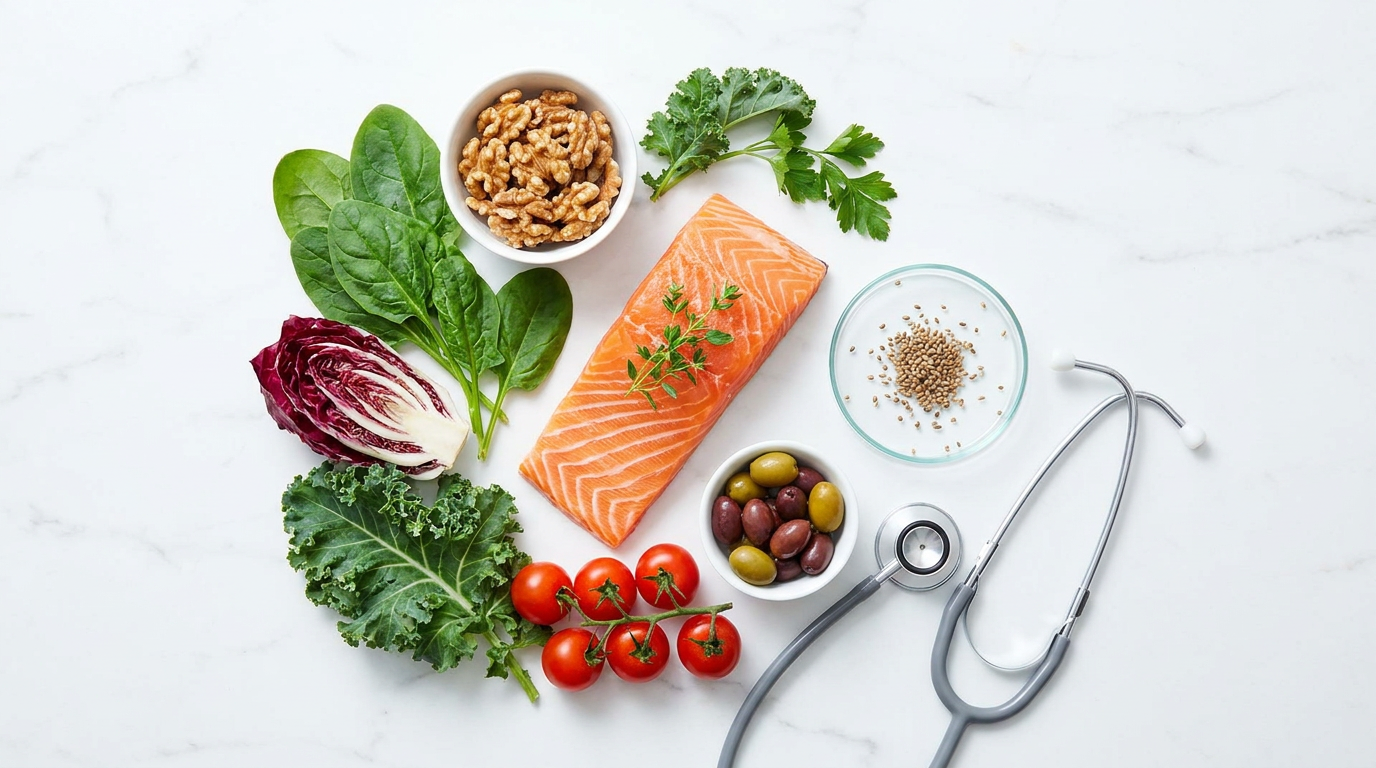
The trial's design was rigorous. Patients suffering from moderate to severe depression were divided into two groups. One group received traditional social support, while the other received clinical dietary counseling to adopt a modified Mediterranean diet—rich in whole grains, legumes, fresh vegetables, olive oil, and lean fish, while strictly limiting processed foods and refined sugars.[1]
After 12 weeks, the results were stark. The dietary intervention group demonstrated a 2.8-fold greater improvement in depression symptoms compared to the control group. Even more remarkably, 32% of the patients in the nutrition group achieved full clinical remission from their depression, compared to just 8% in the social support group.[1]

These findings proved that food is not merely caloric fuel; it is biological information that actively alters neurochemistry. To understand exactly how a plate of lentils and salmon can alleviate psychiatric symptoms, researchers point to the microbiota-gut-brain axis—a complex, multi-lane communication network connecting our intestines to our minds.[3]
This network operates through several distinct pathways. The most direct route is the vagus nerve, a massive neural superhighway that runs straight from the digestive tract to the base of the brain. It acts as a real-time surveillance system, transmitting signals about the gut's microbial environment directly to the central nervous system.[3]
Furthermore, the gut microbiome functions essentially as a localized endocrine organ. It is responsible for producing the vast majority of the body's serotonin—the neurotransmitter targeted by common antidepressants—along with other critical neurochemicals like dopamine and gamma-aminobutyric acid (GABA), which regulate anxiety and emotional stability.[2][3]
Furthermore, the gut microbiome functions essentially as a localized endocrine organ.
When beneficial gut bacteria ferment dietary fiber, they produce metabolites known as short-chain fatty acids (SCFAs). These potent molecules cross the intestinal barrier, enter the bloodstream, and help maintain the integrity of the blood-brain barrier while actively suppressing neuroinflammation, which is increasingly recognized as a primary driver of depressive disorders.[2][3]

Recognizing these precise mechanisms has given rise to a new class of targeted interventions known as "psychobiotics." Unlike standard probiotics meant for general digestive health, psychobiotics are specific strains of live bacteria—such as Lactobacillus rhamnosus and Bifidobacterium longum—that have been clinically identified for their ability to confer specific mental health benefits.[2][5]
Recent clinical reviews published in 2025 and 2026 have demonstrated that precision psychobiotics can modulate the hypothalamic-pituitary-adrenal (HPA) axis. By interacting with this system, these targeted bacteria can effectively blunt the body's physiological response to acute stress and reduce systemic cortisol levels.[2]
The clinical application of these discoveries is already underway at top-tier medical institutions. Dr. Uma Naidoo, a Harvard-trained psychiatrist and professional chef, pioneered this integration by founding the first hospital-based clinical service in Nutritional Psychiatry at Massachusetts General Hospital.[4]
Her work, alongside a growing cohort of specialized practitioners, integrates dietary protocols directly into standard psychiatric care. Rather than replacing life-saving medications or psychotherapy, nutritional interventions are utilized as powerful, side-effect-free adjuncts that build a biological foundation for neurological resilience.[4][6]

Despite the immense promise, the field is currently navigating the delicate boundary between scientific hope and commercial hype. The supplement industry has rapidly co-opted the term "psychobiotic," often marketing generic probiotic blends to consumers without the rigorous clinical backing required to prove efficacy.[5][6]
Researchers caution that the effects of psychobiotics are highly strain-specific and dose-dependent. A bacterial strain that successfully reduces anxiety in a murine model may not survive the harsh acidity of the human stomach, or it may fail to produce the same neuroactive metabolites in a human host.[2]
Moreover, many early human trials have been conducted on healthy populations with low baseline stress. This makes it difficult to extrapolate the efficacy of these interventions for patients suffering from severe, treatment-resistant psychiatric conditions like schizophrenia or bipolar disorder.[2]
Standardization remains a significant hurdle across the discipline. There is currently no universal consensus on optimal dosing, delivery methods, or the long-term durability of psychobiotic treatments, prompting urgent calls for larger, multi-year clinical trials to establish standardized clinical guidelines.[2][3]

Ultimately, the future of nutritional psychiatry lies in precision medicine. As microbiome sequencing becomes faster and more accessible, clinicians envision a near future where psychiatric treatment begins with a comprehensive stool analysis, allowing for dietary prescriptions tailored to an individual's unique microbial ecosystem.[3][6]
Until that level of personalization arrives, the foundational advice remains robustly supported by the data: a diet rich in diverse plant fibers, fermented foods, and omega-3 fatty acids is one of the most accessible, effective, and empowering tools available for protecting and enhancing mental health.[3][6]
How we got here
Early 2000s
Initial animal studies begin demonstrating that altering gut bacteria changes behavior and stress responses in mice.
2017
The SMILES trial is published, providing the first randomized controlled evidence that dietary intervention can treat clinical depression in humans.
2020
The first dedicated hospital-based Nutritional Psychiatry clinics begin opening at major institutions like Massachusetts General Hospital.
2026
Clinical focus shifts toward precision 'psychobiotics,' isolating specific bacterial strains to target anxiety, ADHD, and depression.
Viewpoints in depth
Clinical Integration Advocates
Argue that dietary interventions should be standard, evidence-based adjuncts to traditional mental health treatments.
Psychiatrists and clinical researchers in this camp view the historical separation of the brain and the body as a flaw in modern medicine. Pointing to landmark studies like the SMILES trial, they argue that prescribing antidepressants without addressing a patient's diet ignores a foundational pillar of neurochemistry. They advocate for nutritional counseling to become a standard, insurance-covered component of psychiatric care, emphasizing that food is a powerful, side-effect-free tool that empowers patients to take an active role in their mental health recovery.
Microbiome Researchers
Focus on the precise biological mechanisms, advocating for targeted, strain-specific therapies and rigorous human trials.
Scientists focused on the microbiota-gut-brain axis are excited by the potential of psychobiotics but urge caution against broad generalizations. They emphasize that the effects of gut bacteria are highly strain-specific—meaning a generic probiotic off a supermarket shelf is unlikely to treat anxiety. This camp is focused on mapping exactly how specific microbes produce neurotransmitters and short-chain fatty acids, arguing that the future of the field relies on large-scale, rigorous human trials to establish standardized dosing and delivery methods before making sweeping clinical claims.
Industry & Synthesis Voices
Focus on translating preclinical microbiome research into accessible consumer health formats while synthesizing the broader clinical landscape.
This perspective bridges the gap between the laboratory and the consumer market. Industry innovators are actively working to formulate psychobiotic strains into accessible formats like functional foods, gummies, and targeted supplements. While acknowledging the need for ongoing clinical validation, they argue that the safety profile of probiotics allows for rapid consumer access to these innovations, providing immediate, proactive options for individuals looking to support their cognitive health and stress resilience outside of a formal psychiatric setting.
What we don't know
- The exact dosages and bacterial strains required to treat specific psychiatric conditions in humans.
- How effectively psychobiotics can survive the human digestive tract to produce reliable clinical outcomes.
- The long-term durability of dietary interventions for preventing depression relapse over multiple years.
Key terms
- Psychobiotics
- Specific strains of live bacteria (probiotics) or prebiotics that confer mental health benefits by interacting with the gut microbiome.
- Microbiota-Gut-Brain Axis
- The bidirectional biochemical signaling network that connects the gastrointestinal tract and the central nervous system.
- Short-Chain Fatty Acids (SCFAs)
- Metabolites produced by gut bacteria during the fermentation of dietary fiber, known to reduce neuroinflammation.
- Vagus Nerve
- The primary neural highway connecting the gut and the brain, transmitting signals in both directions.
Frequently asked
Can changing my diet cure clinical depression?
Diet is not considered a standalone cure for clinical depression. However, clinical trials show it is a highly effective adjunctive treatment that can significantly improve symptoms and increase remission rates when used alongside therapy and medication.
What foods best support the gut-brain axis?
A modified Mediterranean diet is most consistently linked to improved mental health. This includes high amounts of dietary fiber, fermented foods, omega-3 fatty acids from fish, and lean proteins, while minimizing ultra-processed foods.
Are over-the-counter probiotics considered psychobiotics?
Not necessarily. Psychobiotics refer to specific bacterial strains clinically proven to affect mental health and neurochemistry, whereas general over-the-counter probiotics may only target basic digestive health.
Sources
Source coverage
6 outlets
3 viewpoints surfaced






[1]BMC MedicineClinical Integration Advocates
A randomised controlled trial of dietary improvement for adults with major depression (the 'SMILES' trial)
Read on BMC Medicine →[2]Frontiers in MicrobiologyMicrobiome Researchers
Psychobiotics and the Gut-Brain Axis: A 2026 Review of Clinical Efficacy
Read on Frontiers in Microbiology →[3]Annual Review of Food Science and TechnologyMicrobiome Researchers
From fork to feelings: How foods shape mental health via the microbiota-gut-brain axis
Read on Annual Review of Food Science and Technology →[4]Harvard Medical SchoolClinical Integration Advocates
Nutritional Psychiatry: Your Brain on Food
Read on Harvard Medical School →[5]Nutrition InsightIndustry & Synthesis Voices
Psychobiotics emerge as targeted innovations in the mental health field
Read on Nutrition Insight →[6]Factlen Editorial TeamIndustry & Synthesis Voices
Synthesis by Factlen editorial team
Read on Factlen Editorial Team →



Every angle. Every day.
Get health stories with full source coverage and perspective breakdowns delivered to your inbox.