
The 2026 Guide to Buying an AI Smartphone: On-Device vs. Cloud Features Explained
As artificial intelligence becomes the core engine of modern smartphones, buyers must navigate the crucial differences between on-device processing and cloud-based features.
By Factlen Editorial Team
- Privacy Advocates
- Focuses on the security benefits of keeping personal data entirely on the local device.
- Performance Enthusiasts
- Prioritizes raw computational power and the seamless integration of hybrid AI models.
- Practical Consumers
- Evaluates AI features based on real-world utility, battery life, and cost-effectiveness.
What's not represented
- · App Developers adapting software for fragmented NPU hardware
- · Environmental Advocates concerned about the e-waste of rapid AI upgrade cycles
Why this matters
As artificial intelligence fundamentally changes how smartphones operate, understanding the difference between on-device and cloud processing is essential for protecting your privacy and ensuring your next device actually meets your needs. Buying the wrong architecture could mean paying a premium for features that drain your battery or expose your personal data.
Key points
- Modern smartphones use Neural Processing Units (NPUs) to run AI tasks directly on the device.
- On-device AI offers significant advantages in speed, privacy, and offline capability compared to cloud processing.
- Cloud AI remains necessary for highly complex reasoning and resource-intensive generative tasks.
- The best 2026 smartphones utilize a hybrid architecture, routing simple tasks locally and complex tasks to the cloud.
- Consumers should evaluate AI phones based on practical utility rather than marketing hype.
The smartphone shopping experience in 2026 is dominated by two letters: AI. Walk into any carrier store, and virtually every flagship device is aggressively marketed as an "AI phone." But beyond the glossy advertisements and repetitive buzzwords, the actual technology powering these devices has fundamentally changed. The era of the smartphone as a passive portal to the internet is ending, replaced by devices that act as proactive, intelligent companions capable of anticipating user needs. For consumers looking to upgrade, the most critical decision is no longer just about screen size, battery capacity, or camera megapixels. Instead, buyers must understand how and where a phone's artificial intelligence actually operates, as this underlying architecture dictates everything from daily performance to data security.[4][7]
To make an informed purchase, buyers must first understand the architectural divide defining modern mobile technology: the difference between cloud AI and on-device AI. For years, smartphone intelligence was entirely cloud-dependent. When a user asked a voice assistant a question or requested a language translation, the device recorded the audio, transmitted it to a remote server, waited for the server to process the data, and then downloaded the response. This client-server model allowed phones to access massive computing power without needing heavy internal hardware. However, it came with inherent flaws: it was noticeably slow, it required a constant and stable internet connection, and it meant deeply personal data was constantly leaving the device to sit on corporate servers.[1][6]
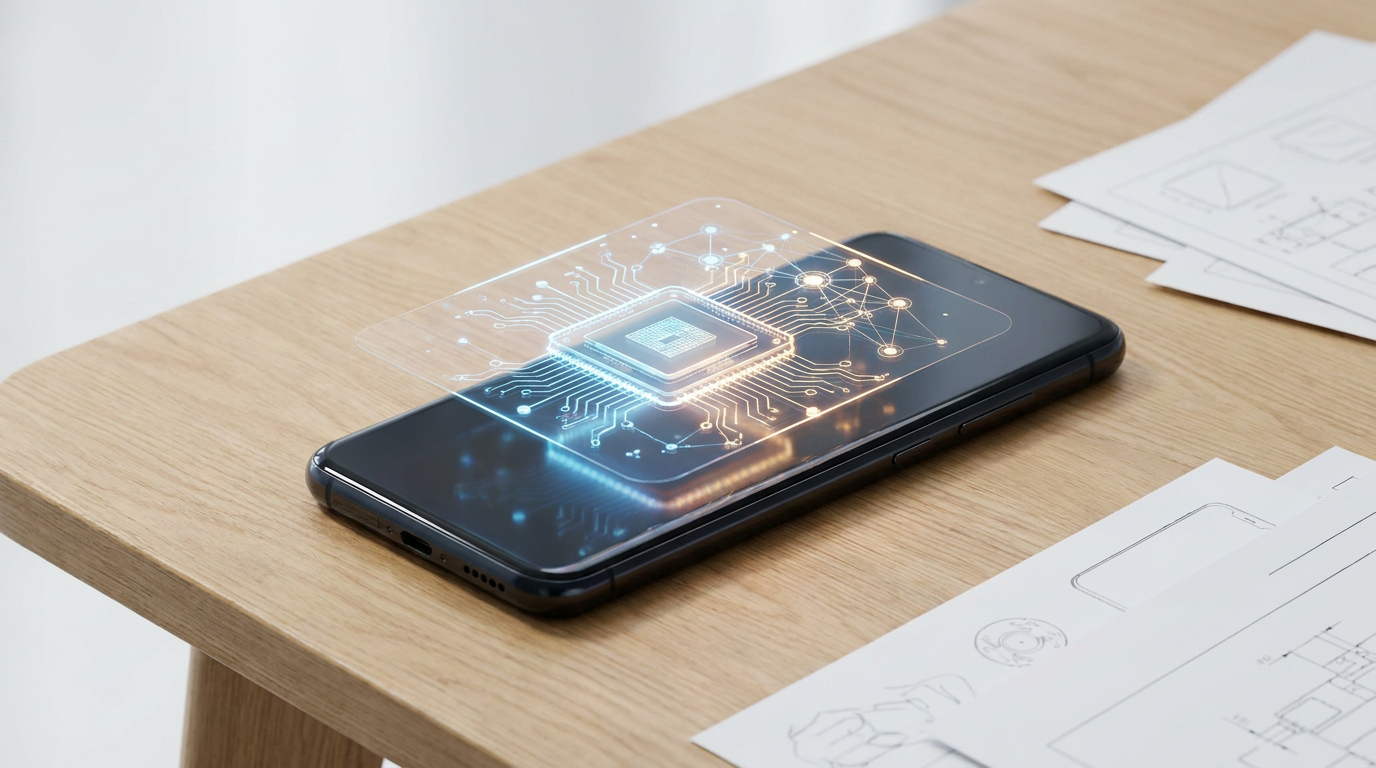
In 2026, the mobile industry has aggressively pivoted toward on-device AI. This approach executes machine learning models directly on the local hardware of the smartphone itself. Instead of sending requests to a distant data center, the phone processes the information internally. This monumental shift is made possible by the integration of dedicated hardware known as a Neural Processing Unit, or NPU. While a phone's Central Processing Unit (CPU) acts as a general-purpose manager and the Graphics Processing Unit (GPU) handles visual rendering, the NPU is a specialized chip designed exclusively to accelerate artificial intelligence tasks. By handling complex matrix math with remarkable efficiency, the NPU allows the phone to "think" locally without draining the battery.[3][5]

The presence of a robust NPU is what separates a true AI-powered smartphone from a conventional device that merely relies on cloud applications. When AI tasks run on dedicated silicon rather than general CPU cores, the phone can remain highly responsive while executing complex background processes. This hardware evolution allows modern smartphones to run localized language models—typically ranging from one billion to seven billion parameters—directly in the user's hand. While these models are significantly smaller than massive cloud systems, they are highly optimized for everyday mobile tasks. They can summarize text, draft emails, and analyze documents locally, transforming the device into a self-contained intelligence hub.[4][5]
The most immediate and noticeable benefit of on-device AI is sheer speed. Because the data never has to travel thousands of miles to a server and back, the latency is virtually eliminated. Features respond instantly, making the technology feel like a natural extension of the user. This enables real-time applications that were previously impossible or frustratingly slow. For example, premium 2026 smartphones offer live call translation, where a user can speak in their native language and the recipient hears the translated audio with zero delay. Similarly, computational photography happens in real-time, allowing the camera to adjust lighting, skin tones, and background blur the exact moment the shutter is pressed.[1][2]
The most immediate and noticeable benefit of on-device AI is sheer speed.
Beyond speed, on-device AI introduces a paradigm shift in digital privacy. Cloud-based processing inherently requires users to surrender their data—whether it is a voice recording, a photograph, or a private text message—to a third-party server. For professionals handling confidential information, or everyday users concerned about corporate data harvesting, this is a significant vulnerability. Edge AI, as local processing is sometimes called, solves this fundamental issue by keeping sensitive information entirely on the device. Face recognition, health data analysis, financial document scanning, and voice dictation can all function securely without ever connecting to the internet, ensuring that personal data remains strictly in the user's control.[3][6]
This offline capability is a game-changer for reliability and consistent performance. A smartphone relying exclusively on cloud AI becomes significantly less intelligent the moment it loses cellular service or connects to a congested network. In contrast, a device equipped with robust on-device AI maintains its core functionalities in airplane mode, deep inside a subway tunnel, or in remote travel destinations. Users can still summarize local documents, use voice commands to set alarms, transcribe offline meetings, and translate foreign languages without needing a Wi-Fi or 5G connection. This independence transforms the phone from a dependent terminal into a truly self-sufficient tool.[1][3]
However, the push for on-device processing does not mean cloud AI is obsolete. There is a distinct and necessary trade-off between the two architectures. On-device models prioritize speed, privacy, and independence, but they are constrained by the physical limitations of a smartphone's battery, thermal capacity, and memory footprint. They simply cannot match the raw computational depth of cloud servers, which utilize massive arrays of data-center GPUs. For highly complex reasoning, generating high-resolution video from text prompts, or querying vast external databases for up-to-the-minute information, the cloud remains an indispensable resource that local hardware cannot replicate.[1][6]

Consequently, the most capable smartphones in 2026 utilize a sophisticated hybrid AI architecture. This approach intelligently routes tasks based on their specific requirements and privacy implications. Simple, real-time, and privacy-sensitive tasks—like biometric unlocking, predictive text, and live transcription—are handled locally by the NPU. Meanwhile, resource-intensive requests—like generating a complex travel itinerary from multiple web sources or rendering sophisticated digital art—are seamlessly offloaded to the cloud. This hybrid model operates invisibly to the user, offering the best of both worlds by balancing immediate local responsiveness with boundless remote computational power.[1][6]
For consumers, evaluating these features requires looking past the aggressive marketing hype. Industry analysts caution against buying a phone simply because it has "AI" printed prominently on the box. Many heavily advertised features can still feel repetitive, gimmicky, or limited in daily use. Instead, buyers should assess which specific AI tools align with their actual daily routines. A business professional might prioritize on-device call summarization and secure document analysis, while a content creator might value real-time video enhancement and generative photo editing. If a user primarily uses their phone for basic messaging and web browsing, a premium AI flagship may be an unnecessary expense.[2][4]
Battery life is another crucial factor in the purchasing decision that is often overlooked in AI discussions. While NPUs are designed to be highly efficient, running machine learning models locally still demands significant electrical power. Heavy AI use, such as extended sessions of on-device image generation or live translation, can stress the system and generate noticeable heat. The best AI smartphones in 2026 pair their advanced processors with large batteries—often 5,000 mAh or more—and utilize AI-driven power management software to optimize energy consumption. This ensures that the device can sustain all-day performance despite the increased computational load.[4][7]

Pricing ultimately reflects this technological leap. Premium AI smartphones in 2026 typically range from $800 to over $1,500, driven largely by the cost of advanced memory and specialized silicon required for local processing. However, the technology is rapidly democratizing across the market. Mid-range devices are increasingly incorporating capable NPUs, offering flagship-level AI features at a fraction of the cost. As the industry moves forward, the presence of localized artificial intelligence will transition from a premium luxury to a standard expectation, fundamentally redefining what it means to own and operate a smartphone.[4][7]
How we got here
Pre-2024
Smartphone AI primarily relies on cloud servers for tasks like voice assistants, requiring constant internet connectivity.
2024-2025
Manufacturers begin integrating dedicated NPUs into flagship processors, introducing basic on-device features.
Early 2026
Hybrid AI becomes the industry standard, seamlessly blending local privacy with cloud computing power.
Mid 2026
Advanced on-device models reaching 7 billion parameters become capable of running entirely offline on premium smartphones.
Viewpoints in depth
Privacy Advocates
Focuses on the security benefits of keeping personal data entirely on the local device.
For privacy advocates, the shift toward on-device AI is the most significant security upgrade in modern mobile history. They argue that the traditional cloud model—where voice recordings, photos, and personal queries are transmitted to remote servers—creates unacceptable vulnerabilities. By processing sensitive tasks locally via an NPU, users retain complete ownership of their data. This camp emphasizes that true privacy means data never leaves the device, making on-device AI essential for professionals handling confidential information.
Performance Enthusiasts
Prioritizes raw computational power and the seamless integration of hybrid AI models.
Performance enthusiasts view the smartphone as a dynamic computing engine. They focus on the benchmarks of NPUs and the tangible speed benefits of zero-latency processing. However, this camp also acknowledges the limitations of mobile hardware, arguing that the best devices must seamlessly blend local processing with cloud computing. For these users, the ideal smartphone intelligently offloads heavy generative tasks to the cloud while keeping real-time interactions local, maximizing both speed and capability.
Practical Consumers
Evaluates AI features based on real-world utility, battery life, and cost-effectiveness.
Practical consumers are skeptical of the pervasive 'AI' marketing hype. They evaluate smartphones based on tangible benefits: does the AI actually save time, improve photos, or extend battery life? This viewpoint warns against paying premium prices for features that are rarely used or still feel experimental. They prioritize devices that offer meaningful tools—like reliable spam detection and offline translation—while maintaining strong battery endurance and overall value.
What we don't know
- How quickly mid-range and budget smartphones will adopt high-performance NPUs capable of running large local models.
- The long-term impact of continuous on-device AI processing on battery degradation over multiple years.
- How future software updates might expand or limit the offline capabilities of current 2026 hardware.
Key terms
- Neural Processing Unit (NPU)
- A specialized hardware chip designed specifically to accelerate artificial intelligence and machine learning tasks efficiently.
- On-Device AI
- Artificial intelligence processing that occurs entirely on the local hardware of a device, without requiring an internet connection.
- Cloud AI
- Artificial intelligence processing that relies on remote servers and data centers to perform complex computations.
- Hybrid AI
- An architecture that combines both on-device and cloud processing, routing tasks based on their complexity and privacy requirements.
- Parameters
- The variables within an AI model that determine its complexity and capability; larger numbers generally indicate more powerful reasoning.
Frequently asked
Do I need an internet connection to use AI features?
It depends on the feature. On-device AI tasks, like live translation and basic photo editing, work completely offline. However, complex tasks like generating high-resolution images or querying vast databases still require the cloud.
Will an AI phone drain my battery faster?
While heavy AI processing uses power, modern NPUs are highly efficient. Additionally, AI is often used to manage background apps and optimize power consumption, meaning overall battery life remains comparable to standard phones.
Is my data safe when using smartphone AI?
Features that use on-device AI are highly secure because the data never leaves your phone. However, if a feature relies on cloud processing, your data is transmitted to a remote server, which introduces standard internet privacy considerations.
Can older phones use these new AI features?
Some basic AI features can be accessed via third-party apps on older phones. However, the fastest and most secure features require the dedicated NPU hardware found in newer devices.
Sources
Source coverage
7 outlets
3 viewpoints surfaced







[1]LAGENIO SmartphonePractical Consumers
On-device AI vs Cloud AI: Which One Is Better in 2026?
Read on LAGENIO Smartphone →[2]Mobile VersePractical Consumers
AI Features Smartphones 2026: Top 5 You'll Actually Use
Read on Mobile Verse →[3]F22 LabsPrivacy Advocates
What Is On-Device AI? A Complete Guide for 2026
Read on F22 Labs →[4]Tech in DeepPerformance Enthusiasts
AI-Powered Smartphones 2026: Your Complete Guide to Choosing the Best High-End Phone
Read on Tech in Deep →[5]MediumPerformance Enthusiasts
Nobody Talks About the NPU. Maybe They Should
Read on Medium →[6]The Couchbase BlogPrivacy Advocates
On-Device AI: Benefits, Use Cases, and Challenges
Read on The Couchbase Blog →[7]The Cornea ImpressionPractical Consumers
AI Smartphones 2026: What Makes a Phone Truly AI-Powered
Read on The Cornea Impression →
More in shopping
See all 6 stories →Powertrain Choice
Comparing the True Costs and Lifestyle Fit of EVs and Plug-in Hybrids in 2026
0 sources

Used EV Market
The 2026 Guide to Buying a Used EV: Battery Health, Adapters, and Finding the Best Value
0 sources

Sleep Tech
Do Sleep Trackers Actually Work? The Clinical Evidence on Oura, Apple Watch, and Whoop
0 sources

Display Tech
OLED vs. Mini-LED: The 2026 Display Technology Comparison
0 sources

Every angle. Every day.
Get shopping stories with full source coverage and perspective breakdowns delivered to your inbox.