
Do Sleep Trackers Actually Work? The Clinical Evidence on Oura, Apple Watch, and Whoop
Consumer sleep wearables have become ubiquitous, but clinical trials reveal a stark divide between what they measure well and where they fall short. Here is what the latest polysomnography comparisons say about the accuracy of the Oura Ring, Apple Watch, and Whoop.
By Factlen Editorial Team
- Clinical Sleep Specialists
- Medical professionals who rely on polysomnography and warn against over-interpreting consumer wearable data.
- Wearable Manufacturers
- Companies emphasizing the value of continuous, longitudinal data over single-night lab tests.
- Quantified-Self Consumers
- Users who leverage wearable data to optimize their daily habits, athletic recovery, and overall wellness.
What's not represented
- · Individuals with diagnosed sleep disorders like apnea
Why this matters
Millions of people use sleep scores to make decisions about their health, training, and daily routines. Understanding the scientific accuracy—and limitations—of these devices prevents unnecessary anxiety and helps users focus on the metrics that actually improve their well-being.
Key points
- Premium consumer sleep trackers are highly accurate at detecting when you fall asleep and wake up.
- No consumer device can match the precision of clinical polysomnography for exact four-stage sleep classification.
- The Oura Ring currently leads in overall sleep staging accuracy, while Whoop excels in deep sleep and recovery metrics.
- The Apple Watch is excellent at detecting wakefulness but tends to underestimate deep sleep duration.
- Physicians warn that obsessing over imperfect daily sleep scores can cause anxiety that actively degrades sleep quality.
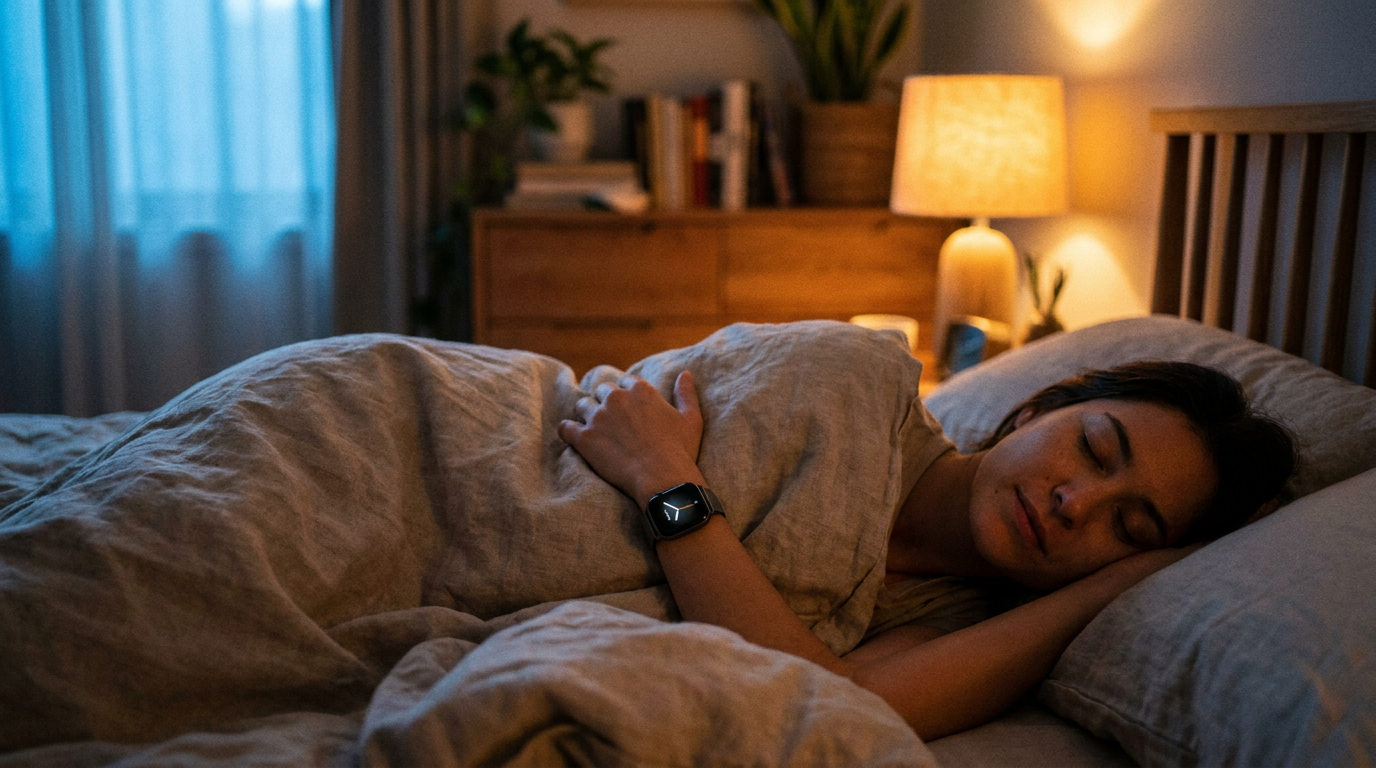
Every morning, millions of people wake up and immediately check their wrists or fingers to find out how they slept. The consumer sleep tracking industry has transformed a biological necessity into a quantifiable metric, assigning daily scores that dictate whether users feel rested or exhausted. Devices like the Oura Ring, Apple Watch, and Whoop band promise to decode the mysteries of the night, offering granular breakdowns of light, deep, and REM sleep. But as the popularity of these wearables surges, a critical question remains: are the numbers on the screen actually accurate?[4][5]
To answer that, researchers compare consumer devices against the undisputed gold standard of sleep science: polysomnography, or PSG. Conducted in clinical sleep laboratories, a PSG assessment involves attaching electrodes to a patient's scalp, face, and body to measure brain waves, eye movements, muscle tone, and respiratory effort. It is a comprehensive, multi-sensor observation of human physiology. Consumer wearables, by contrast, must estimate sleep stages from the outside in, relying primarily on wrist or finger movements and optical heart rate sensors.[1][4]
Modern trackers utilize a combination of actigraphy—which detects motion via accelerometers—and photoplethysmography (PPG), a technology that uses light to measure heart rate and heart rate variability. Some advanced models also incorporate skin temperature sensors and blood oxygen monitors. By feeding these peripheral signals into proprietary machine-learning algorithms, the devices attempt to reverse-engineer what the brain is doing. While the technology has improved dramatically over the past decade, it still fundamentally relies on proxy measurements rather than direct neurological data.[4][5]

When it comes to the most basic question—are you asleep or awake?—the evidence shows that top-tier consumer devices perform exceptionally well. A recent comprehensive study conducted at Brigham and Women's Hospital, published in the journal Sensors, evaluated the Oura Ring Gen 3, Apple Watch Series 8, and Fitbit Sense 2 against clinical PSG. The researchers found that all three devices achieved a sensitivity of 95 percent or higher for detecting sleep versus wakefulness. If you simply want to know what time you fell asleep and what time you woke up, today's premium wearables are highly reliable tools.[1][3]
However, the accuracy begins to fracture when evaluating total sleep time and sleep efficiency. Because wearables rely heavily on movement and heart rate, they often struggle to accurately log brief, micro-awakenings that occur naturally throughout the night. As a result, devices tend to slightly overestimate total sleep time and underestimate the time spent awake after initially falling asleep. For the average user, a discrepancy of ten to fifteen minutes may be negligible, but for individuals suffering from insomnia or fragmented sleep, these miscalculations can paint an overly optimistic picture of their rest.[1][4]
However, the accuracy begins to fracture when evaluating total sleep time and sleep efficiency.
The most significant divergence between marketing claims and clinical reality occurs in four-stage sleep classification: the division of the night into wake, light sleep, deep sleep, and REM sleep. Because consumer devices cannot read the distinct brainwave frequencies that define these stages, their algorithms must make educated guesses based on heart rate variability and temperature fluctuations. The Brigham study revealed that while the devices show moderate to substantial agreement with PSG, their precision varies wildly depending on the specific stage and the brand of the tracker.[1][2]
Among the devices tested, the Oura Ring Generation 3 consistently demonstrated the highest accuracy for sleep staging. In the Brigham trial, the smart ring achieved a sensitivity of 76.0 to 79.5 percent across the various sleep stages, with precision scores mirroring those figures. The researchers noted that the Oura Ring's estimates for light, deep, and REM sleep were not statistically different from the PSG results on a macro level. This performance has cemented the device's reputation as the current leader in consumer sleep staging, though independent researchers frequently note that Oura Inc. funded several of these validation studies.[1][3]
The Apple Watch, which dominates the broader smartwatch market, presents a more mixed clinical profile. While independent studies confirm it is excellent at detecting awake time, its sleep staging algorithms show distinct biases. In head-to-head PSG comparisons, the Apple Watch significantly underestimated deep sleep—missing an average of 43 minutes per night—while overestimating light sleep by roughly 45 minutes. For users who obsess over maximizing their deep sleep metrics, the Apple Watch's algorithmic pessimism can cause unnecessary alarm, even when their actual sleep architecture is perfectly healthy.[1][2][3]

The Whoop 4.0 band, heavily marketed toward endurance athletes and fitness enthusiasts, occupies its own distinct niche in the clinical literature. Independent evaluations, including a 2025 study published in Sleep Advances, found that Whoop excels in deep sleep detection, achieving a 69.6 percent sensitivity that outpaced several wrist-based competitors. The device also demonstrated exceptional accuracy in measuring nocturnal resting heart rate and heart rate variability, metrics that are crucial for calculating athletic recovery. However, it occasionally lagged behind the Apple Watch in accurately logging brief periods of wakefulness.[2][3][5]
The proliferation of this imperfect data has led to a new clinical phenomenon that sleep physicians call "orthosomnia"—an unhealthy obsession with achieving perfect sleep metrics. Doctors report a rising number of patients arriving at clinics complaining of poor sleep, not because they feel tired during the day, but because their wearable device gave them a low recovery score or indicated a lack of REM sleep. When consumers treat algorithmic estimates as medical diagnoses, the resulting anxiety can paradoxically elevate cortisol levels and degrade the very sleep they are trying to optimize.[4]
Sleep scientists emphasize that the true value of consumer wearables lies in longitudinal tracking rather than nightly precision. Because a specific device's algorithmic biases tend to remain consistent over time, the trackers are highly effective at identifying personal trends. If an Oura Ring or Whoop band indicates a sudden drop in heart rate variability or a spike in resting heart rate, it is a reliable indicator of physiological strain, whether from overtraining, alcohol consumption, or an impending illness. The absolute numbers matter less than the deviation from the user's established baseline.[3][5]

Ultimately, the evidence suggests that consumers should view sleep trackers as behavioral compasses rather than clinical thermometers. They are excellent tools for testing how lifestyle variables—like an afternoon coffee, a late dinner, or a cold bedroom—affect overall restfulness. By focusing on total sleep duration, maintaining consistent bedtimes, and prioritizing how they actually feel upon waking, users can harness the motivational power of wearable technology without falling victim to its clinical limitations.[4][6]
How we got here
1970s
Actigraphy is first used in clinical settings to measure sleep-wake cycles via wrist movement.
2015
The first generation of optical heart rate sensors brings basic sleep staging to consumer wristbands.
2021
Oura Ring Generation 3 launches, introducing advanced temperature sensing and improved staging algorithms.
2024-2025
Major independent clinical trials validate that premium wearables achieve >95% accuracy for sleep vs. wake detection.
Viewpoints in depth
Clinical Sleep Specialists
Medical professionals who rely on polysomnography and warn against over-interpreting consumer wearable data.
Sleep physicians emphasize that consumer wearables are not medical devices and cannot replace polysomnography for diagnosing sleep disorders. They warn against 'orthosomnia,' a condition where users become so fixated on achieving perfect algorithmic sleep scores that the resulting anxiety actively degrades their rest. Clinicians advise patients to trust their subjective feelings of restfulness over arbitrary digital metrics.
Wearable Manufacturers
Companies emphasizing the value of continuous, longitudinal data over single-night lab tests.
Device manufacturers argue that while their products may not match the exact precision of a clinical sleep lab, they offer something a one-night PSG test cannot: continuous, longitudinal tracking. By measuring sleep patterns, heart rate variability, and temperature over months and years, these devices establish a personalized baseline. Manufacturers contend that this long-term data is far more useful for identifying lifestyle impacts and early signs of illness than a single, highly accurate snapshot.
Quantified-Self Consumers
Users who leverage wearable data to optimize their daily habits, athletic recovery, and overall wellness.
For fitness enthusiasts and biohackers, sleep trackers serve as behavioral accountability tools. This camp values the devices for their ability to highlight the negative impacts of late-night meals, alcohol consumption, or overtraining. Even if the exact percentage of REM sleep is slightly off, these users find immense value in the directional accuracy of the data, using it to make informed, daily adjustments to their routines.
What we don't know
- How upcoming non-invasive neuro-wearables (measuring actual brain waves) will disrupt the current optical-sensor market.
- The exact proprietary algorithms companies use to translate heart rate variability into specific sleep stages.
- Long-term psychological impacts of daily algorithmic sleep scoring on the general population.
Key terms
- Polysomnography (PSG)
- The clinical gold standard for sleep studies, measuring brain waves, blood oxygen, heart rate, and breathing.
- Actigraphy
- The use of motion sensors (accelerometers) to track physical movement and estimate sleep-wake cycles.
- Photoplethysmography (PPG)
- An optical technology that uses light to measure changes in blood volume, determining heart rate and variability.
- Orthosomnia
- An unhealthy obsession with achieving perfect sleep metrics, often triggered by wearable tracker data.
Frequently asked
Can a sleep tracker diagnose sleep apnea?
No. Consumer wearables cannot diagnose sleep apnea or other sleep disorders; they can only flag potential breathing irregularities that require clinical evaluation.
Which device is most accurate for deep sleep?
Independent studies suggest the Whoop 4.0 and Oura Ring Gen 3 offer the highest sensitivity for deep sleep detection among consumer wearables.
Why does my Apple Watch show so little deep sleep?
Clinical comparisons show the Apple Watch's algorithm tends to underestimate deep sleep by an average of 43 minutes per night, often misclassifying it as light sleep.
Should I worry if my sleep score is low but I feel fine?
Sleep physicians advise trusting your body over the device. If you feel rested and alert, a low algorithmic sleep score is likely a measurement artifact rather than a health issue.
Sources
Source coverage
6 outlets
3 viewpoints surfaced





[1]Sensors JournalClinical Sleep Specialists
Accuracy of Three Commercial Wearable Devices for Sleep Tracking in Healthy Adults
Read on Sensors Journal →[2]Sleep AdvancesWearable Manufacturers
Performance of six consumer sleep trackers in comparison with polysomnography in healthy adults
Read on Sleep Advances →[3]Kygo HealthQuantified-Self Consumers
What's the Most Accurate Wearable Data? A 2024-2025 Study Breakdown by Device
Read on Kygo Health →[4]Sleep Health SolutionsClinical Sleep Specialists
Do Sleep Apps & Trackers Work?
Read on Sleep Health Solutions →[5]ThirdzyQuantified-Self Consumers
Best Sleep Trackers: Whoop Band vs. Apple Watch vs. Oura Ring
Read on Thirdzy →[6]Factlen Editorial TeamWearable Manufacturers
Synthesis by Factlen editorial team
Read on Factlen Editorial Team →

Every angle. Every day.
Get shopping stories with full source coverage and perspective breakdowns delivered to your inbox.