
The Solid-State Battery Breakthrough: How Luxury EVs Are Rewriting the Rules of Range
After years of lab development, solid-state batteries are finally hitting the road in 2026, promising 700-mile ranges, 15-minute charge times, and fireproof safety. Here is how the technology works and why luxury automakers are racing to commercialize it.
By Factlen Editorial Team
- Early-Adopting Automakers
- Argue that solid-state technology is a necessary paradigm shift to unlock the next level of EV performance and safety.
- Current-Chemistry Defenders
- Believe that highly optimized lithium-ion batteries are sufficient for current consumer needs and that solid-state is an unnecessary expense.
- Manufacturing Analysts
- Focus on the immense supply chain and engineering hurdles required to bring solid-state costs down for the mass market.
What's not represented
- · Lithium mining industry representatives
- · Mass-market EV consumers
Why this matters
If successful at scale, solid-state batteries will eliminate range anxiety, make electric vehicles safer, and drastically reduce charging times, removing the final major hurdles to mass EV adoption.
Key points
- Solid-state batteries replace flammable liquid electrolytes with solid ceramics or polymers.
- The technology allows for pure lithium metal anodes, vastly increasing energy density.
- Mercedes-Benz recently drove a solid-state prototype 748 miles on a single charge.
- Stellantis and Factorial have begun real-world road testing in North America.
- High manufacturing costs mean the technology will debut in luxury vehicles first.
For years, the electric vehicle industry has chased a singular "holy grail" of energy storage: the solid-state battery. Promised as the technology that would finally make range anxiety obsolete and charging as fast as pumping gas, it has largely remained confined to laboratory experiments and optimistic press releases. But in 2026, the narrative has definitively shifted from theoretical chemistry to real-world asphalt.
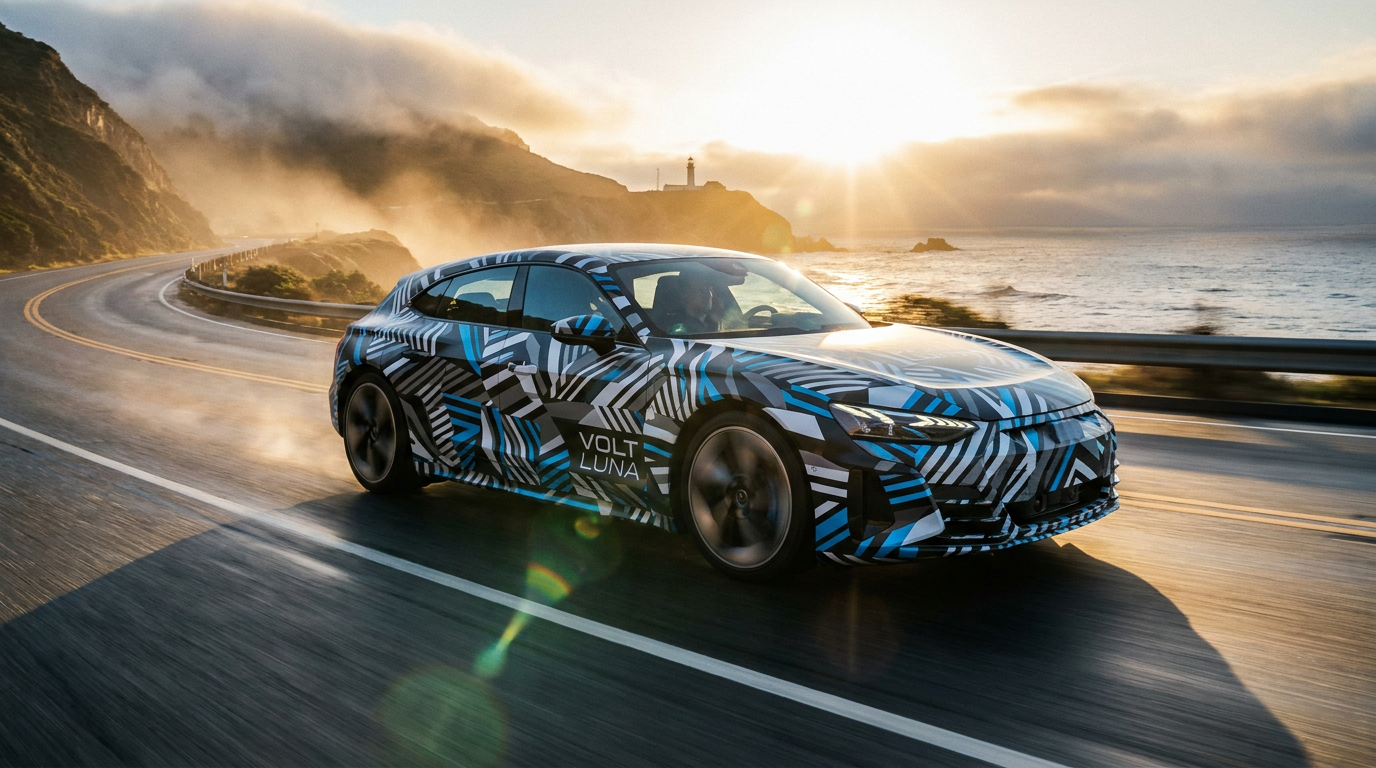
The transition is being spearheaded by the world's largest luxury and legacy automakers, who are now putting physical prototypes on public roads. In June 2026, Stellantis and Massachusetts-based Factorial Energy began road-testing a Dodge Charger Daytona development vehicle equipped with advanced solid-state cells across North America. This marks the first time the technology has been integrated into a fully operational test fleet on the continent, signaling a critical leap toward commercial viability.[1][5]
Across the Atlantic, Mercedes-Benz has already demonstrated the staggering potential of the technology. Partnering with Factorial, the German automaker equipped an EQS sedan prototype with a solid-state pack and drove it 748.8 miles from Stuttgart, Germany, to Malmö, Sweden, on a single charge. The vehicle arrived with an estimated 85 miles of range still remaining, effectively doubling the endurance of a standard luxury EV without increasing the physical footprint of the battery pack.[2]
To understand why this breakthrough is so transformative, one must look at the limitations of the lithium-ion batteries that power virtually every electric vehicle on the road today. Conventional batteries rely on a liquid organic solvent as the electrolyte—the medium through which lithium ions travel between the cathode and the anode during charging and discharging.[3]
While effective, this liquid electrolyte presents significant engineering compromises. It is inherently flammable, which necessitates heavy, complex cooling systems and protective armor to prevent thermal runaway in the event of a crash. Furthermore, liquid electrolytes limit how fast a battery can safely accept a charge without overheating or degrading the internal chemistry.[3]
A solid-state battery fundamentally rewrites this architecture by replacing the volatile liquid solvent with a solid material, typically a specialized ceramic, glass, or polymer composite. This solid separator still allows lithium ions to pass through freely, but it acts as an impenetrable, fireproof barrier between the positive and negative electrodes.[3]

The immediate benefit of this solid architecture is a dramatic increase in intrinsic safety. Because there is no flammable liquid to ignite, the risk of catastrophic battery fires is virtually eliminated. This allows automotive engineers to strip away hundreds of pounds of heavy protective casing and thermal management hardware, making the overall vehicle lighter and more efficient.[3]
The immediate benefit of this solid architecture is a dramatic increase in intrinsic safety.
But the true game-changer lies in what the solid separator allows engineers to do with the battery's anode. In traditional lithium-ion cells, the anode is made of graphite, a bulky material necessary to safely absorb lithium ions. If pure lithium metal were used with a liquid electrolyte, it would form microscopic, needle-like structures called dendrites that pierce the separator and cause short circuits.[3]
The physical toughness of a solid-state separator suppresses dendrite growth, finally unlocking the use of a pure lithium metal anode. This single substitution radically increases the battery's energy density—the amount of power it can store per kilogram. While today's best lithium-ion cells hover around 200 to 250 watt-hours per kilogram (Wh/kg), the solid-state cells currently entering road tests are achieving 350 to 400 Wh/kg, with a clear pathway to 500 Wh/kg.[3][5]
For the consumer, this density translates directly into unprecedented performance metrics. Automakers project that solid-state vehicles will routinely exceed 600 miles of range. Just as importantly, the thermal stability of the solid materials allows for ultra-fast charging rates that would destroy a traditional battery. Factorial's cells, for instance, have demonstrated the ability to charge from 15 percent to 90 percent in just 18 minutes.[5]

The technology also solves one of the most persistent headaches for EV owners in northern climates: cold-weather range degradation. Liquid electrolytes become sluggish in freezing temperatures, severely limiting power output and range. Solid-state batteries are remarkably resilient to thermal extremes. In early 2026, China's Dongfeng Motor tested its solid-state prototypes in the brutal -30°C (-22°F) winter of Mohe, retaining over 74 percent of their charge capacity and maintaining operational integrity.[4]
Despite these overwhelming advantages, the road to mass-market adoption remains steep. Manufacturing solid-state cells requires entirely new production techniques, and the materials are currently vastly more expensive than the mature supply chains of lithium-ion technology. The cells also face a mechanical challenge known as "breathing"—they physically expand and contract during the charge cycle, requiring specialized pack designs to maintain constant pressure on the solid layers without fracturing them.[3]

Because of these high initial costs, the technology is debuting exclusively in the luxury and high-performance sectors, where premium pricing can absorb the research and development premiums. Brands like Mercedes-Benz, BMW, and Toyota's Lexus division are leading the charge, viewing solid-state performance as the ultimate luxury differentiator for the late 2020s. Toyota has committed to launching its first commercial solid-state vehicles by 2027 or 2028, initially targeting its high-end lineup.[7]
Interestingly, not every luxury automaker is rushing to abandon liquid electrolytes. Porsche, despite its performance pedigree, has expressed skepticism about the immediate necessity of the technology. During the development of the 2026 Cayenne Electric, Porsche executives noted that highly optimized traditional battery chemistries—utilizing silicon anodes and 800-volt architectures—already deliver over 400 miles of range and 16-minute charge times, making the massive investment in solid-state unnecessary for their current product cycle.[6]

Nevertheless, the broader automotive industry views solid-state as an inevitable destination rather than a mere option. As pilot production lines in Germany, the United States, and China begin to scale up, economies of scale will gradually push the technology down-market. While the average commuter may not drive a solid-state vehicle until 2030, the prototypes quietly logging miles on highways today prove that the next great leap in electric mobility is no longer just a theory.[7]
How we got here
Early 2020s
Automakers and startups invest billions into lab-scale solid-state battery research.
September 2025
Mercedes-Benz drives an EQS prototype 748 miles on a single charge using solid-state cells.
Early 2026
Dongfeng Motor successfully tests solid-state prototypes in -30°C conditions in China.
June 2026
Stellantis begins real-world road testing of solid-state Dodge Charger Daytona prototypes in North America.
2027–2028
Targeted commercial launch window for the first luxury vehicles equipped with solid-state batteries.
Viewpoints in depth
Early-Adopting Automakers
Argue that solid-state technology is a necessary paradigm shift to unlock the next level of EV performance and safety.
Manufacturers like Mercedes-Benz, Stellantis, and Toyota view solid-state batteries as the definitive solution to the EV industry's biggest hurdles: range anxiety, charging times, and thermal safety. By investing heavily in startups like Factorial and Solid Power, these legacy brands aim to leapfrog current market leaders by offering vehicles that can travel over 600 miles and recharge in under 20 minutes. They argue that the initial high costs are a standard technology curve that will inevitably drop as production scales.
Current-Chemistry Defenders
Believe that highly optimized lithium-ion batteries are sufficient for current consumer needs and that solid-state is an unnecessary expense.
Some performance brands, notably Porsche, argue that the industry is chasing a solution to a problem that has already been solved. They point out that modern 800-volt architectures paired with silicon-anode lithium-ion batteries already deliver exceptional range and 15-minute charging times. From this perspective, the massive capital required to retool factories for solid-state manufacturing isn't justified by the incremental benefits it will offer the average driver in the near term.
Manufacturing Analysts
Focus on the immense supply chain and engineering hurdles required to bring solid-state costs down for the mass market.
Industry analysts and battery engineers caution against over-hyping the immediate impact of solid-state technology. While the chemistry works flawlessly in prototypes, manufacturing these cells at a scale of millions requires entirely new, highly sensitive production environments. Furthermore, managing the physical expansion and contraction of the solid cells over thousands of charge cycles remains a complex engineering challenge that will keep the technology confined to high-priced luxury vehicles well into the 2030s.
What we don't know
- Exactly how quickly manufacturing costs will drop to make solid-state batteries viable for mass-market vehicles.
- The long-term degradation rates of solid-state cells after a decade of real-world consumer use.
- Whether the global supply chain for raw lithium can scale fast enough to meet the increased demand generated by pure lithium metal anodes.
Key terms
- Electrolyte
- The medium inside a battery that allows ions to travel back and forth between the positive and negative electrodes during charging and discharging.
- Anode
- The negative electrode of a battery; in solid-state cells, this can be made of pure lithium metal rather than bulky graphite.
- Dendrites
- Microscopic, needle-like metallic structures that can grow inside a battery and cause short circuits, a problem solid-state separators prevent.
- Energy Density
- A measure of how much power a battery can store relative to its weight, typically expressed in watt-hours per kilogram (Wh/kg).
- Thermal Runaway
- A dangerous chain reaction where a battery cell overheats and catches fire, a risk that solid-state technology largely eliminates.
Frequently asked
What is a solid-state battery?
A battery that replaces the liquid electrolyte found in traditional lithium-ion cells with a solid material, such as a ceramic or polymer, allowing for greater energy density and safety.
Why are solid-state batteries safer?
They eliminate the flammable liquid organic solvents used in current batteries, drastically reducing the risk of thermal runaway and battery fires.
When will solid-state batteries be available to buy?
Luxury automakers like Toyota and Mercedes-Benz are targeting initial commercial launches between 2027 and 2028, with mass-market availability expected closer to 2030.
Why are luxury cars getting them first?
The new manufacturing processes and materials required for solid-state cells are currently very expensive, meaning only premium vehicles can absorb the initial costs.
Sources
Source coverage
7 outlets
3 viewpoints surfaced







[1]ElectrekEarly-Adopting Automakers
Solid-state EV batteries are now being tested on the road in North America for the first time
Read on Electrek →[2]CarscoopsEarly-Adopting Automakers
Mercedes Needed A Solid-State Battery To Match Lucid's EV Range Record
Read on Carscoops →[3]Car and DriverManufacturing Analysts
What Are Solid-State Batteries, and Why Do They Matter for Electric Vehicles?
Read on Car and Driver →[4]CarNewsChinaManufacturing Analysts
Dongfeng Motor's solid-state batteries scheduled for mass production in H2 2026
Read on CarNewsChina →[5]Just-AutoEarly-Adopting Automakers
Stellantis and Factorial start real-world testing for solid-state battery pack
Read on Just-Auto →[6]CarsGuideCurrent-Chemistry Defenders
Solid-state batteries 'unnecessary': Porsche exec says current tech is good enough for now
Read on CarsGuide →[7]Inferential InvestorEarly-Adopting Automakers
The Solid State Battery Revolution: Winners and Losers of 2026-2030
Read on Inferential Investor →
Every angle. Every day.
Get automotive stories with full source coverage and perspective breakdowns delivered to your inbox.