
How 'Regenerative Gastronomy' is Transforming the Future of Food Tourism
Travelers are increasingly seeking out restaurants and farm stays that actively restore local ecosystems, moving beyond basic sustainability to carbon-negative, zero-waste dining.
By Factlen Editorial Team
- Culinary Innovators
- Chefs and restaurateurs focused on zero-waste kitchens, hyper-local sourcing, and telling the story of a bioregion through food.
- Agroecological Advocates
- Farmers and producers emphasizing soil health, carbon sequestration, biodiversity, and the need for fair compensation.
- Destination Managers
- Tourism boards viewing regenerative gastronomy as a tool to build economic resilience, keep tourist dollars local, and promote off-season travel.
- Conscious Travelers
- Visitors seeking immersive, educational experiences where their vacation spending actively contributes to environmental restoration.
What's not represented
- · Conventional agricultural workers transitioning to new methods
- · Local residents priced out of high-end agritourism regions
Why this matters
As global tourism rebounds, the environmental footprint of travel and dining has come under intense scrutiny. Regenerative gastronomy offers a blueprint for how local economies can thrive while actively healing their landscapes, turning vacation spending into a tool for ecological restoration.
Key points
- Regenerative gastronomy moves beyond sustainability by actively restoring local ecosystems and soil health.
- Restaurants are increasingly sourcing from regenerative farms that use no-till methods and sequester carbon.
- Coastal tourism is embracing 'blue foods' like seaweed and bivalves that naturally filter ocean water.
- Destination managers use regenerative food networks to keep tourist spending within the local economy.
- Zero-waste kitchens employ fermentation and composting to achieve full circularity in food production.
The era of flying ingredients across the globe to secure a Michelin star is quietly fading. In its place, a new culinary philosophy is taking root across the travel industry: regenerative gastronomy. For decades, the gold standard for eco-conscious dining was "sustainability"—a noble effort to minimize harm, reduce carbon footprints, and maintain the environmental status quo. But as climate pressures mount and travelers seek deeper connections to the places they visit, simply doing no harm is no longer considered enough. The new frontier is active restoration.[6][8]
Regenerative food tourism transforms the act of eating into an ecological intervention. It is a movement where restaurants, farm stays, and destination managers collaborate to leave the local environment measurably healthier than before. This shift is driven by a growing recognition that agriculture and hospitality, historically resource-heavy industries, can be re-engineered to heal ecosystems. The World Food Travel Association and the UN Tourism World Forum have both recently highlighted this transition, positioning regenerative practices as the future of global culinary travel.[3][4][7]
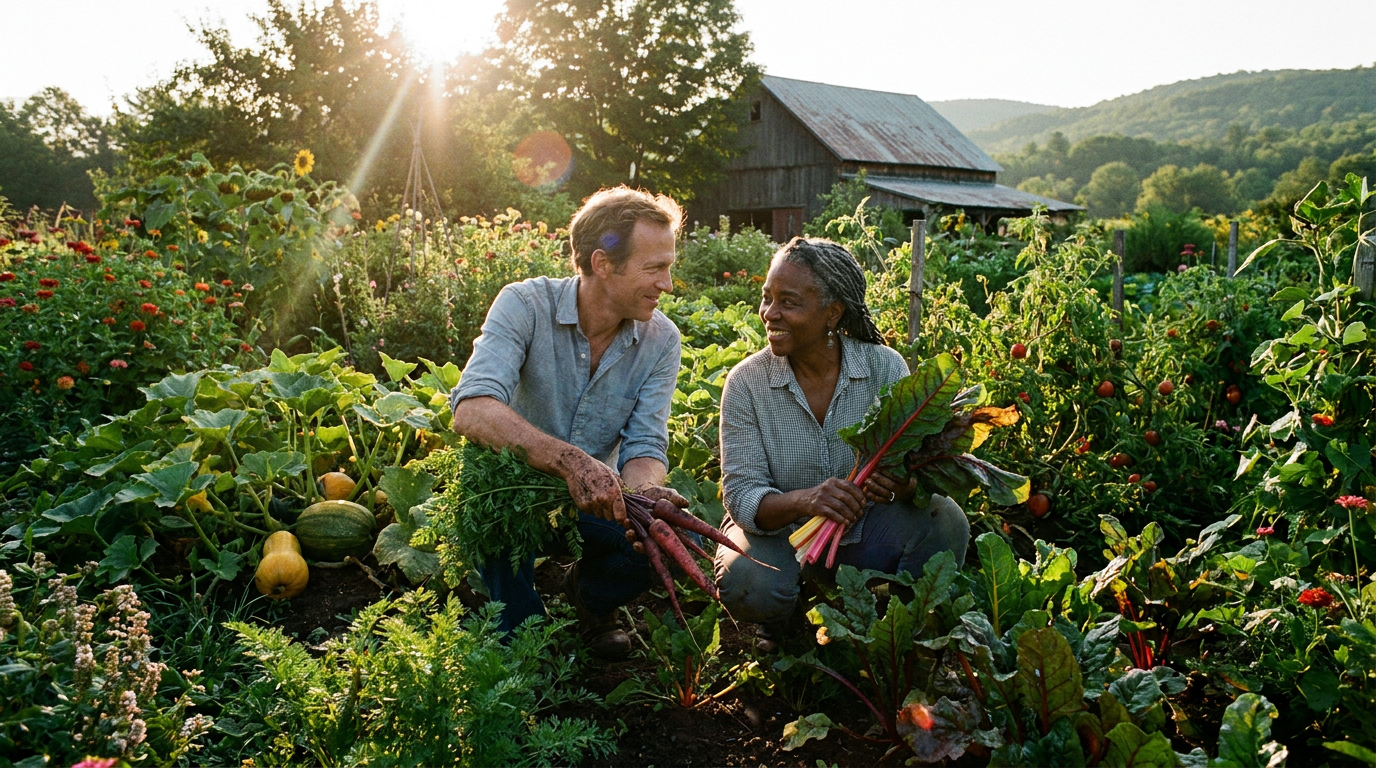
At the heart of this trend is regenerative agriculture, a holistic farming approach that rebuilds soil organic matter and restores degraded soil biodiversity. Unlike conventional farming, which depletes the earth, or organic farming, which merely avoids synthetic chemicals, regenerative agriculture actively sequesters carbon. Techniques include minimizing soil disturbance through no-till farming, keeping soils covered year-round, and integrating livestock to provide natural fertilization. When restaurants source directly from these farms—or operate their own—they effectively serve meals that are carbon-negative.[1][5][8]

The traveler’s experience is fundamentally altered in this new paradigm. Guests are no longer passive consumers sitting in dining rooms; they are invited into the ecosystem. At properties like Craveiral Farmhouse in southern Portugal, visitors walk through permaculture gardens and orchards that supply 70% of the restaurant's ingredients. They witness firsthand how food scraps are composted and returned to the earth, closing the loop in what industry experts call "circular gastronomy."[2][7][8]
This hands-on approach is spreading globally. In Medellín, Colombia, restaurants like Ritwal – Mesa Mística are redefining haute cuisine by blending local ancestral techniques with strict zero-waste policies. The focus has shifted away from imitating Parisian or New York menus; instead, chefs are using hyper-local ingredients to tell the story of their specific bioregion. By doing so, they preserve indigenous culinary heritage and provide an authentic, immersive experience that modern travelers increasingly demand.[3][4]
In Medellín, Colombia, restaurants like Ritwal – Mesa Mística are redefining haute cuisine by blending local ancestral techniques with strict zero-waste policies.
The scale of these operations is expanding beyond boutique farm stays. The Atlas Restaurant Group, which operates dozens of venues, now runs a five-acre regenerative farm utilizing no-till and crop rotation methods. This single farm produces roughly 50,000 pounds of seasonal produce annually, proving that regenerative sourcing can be scaled to supply high-end, high-volume hospitality environments. The pandemic accelerated this shift, as supply chain disruptions forced chefs to look closer to home and reevaluate their reliance on imported goods.[6][8]
The regenerative movement is not limited to the soil; it is also transforming coastal tourism through the promotion of "blue foods." In coastal destinations, menus are increasingly featuring ingredients like seaweed, mussels, and oysters. These species act as natural water filters and capture significant amounts of carbon as they grow. By elevating these ingredients from humble local staples to the centerpieces of tasting menus, chefs are supporting marine ecosystems rather than depleting vulnerable fish stocks.[1][8]

Regional governments and tourism boards are actively investing in this blue food revolution. In the Baltic Sea region, a transnational initiative is currently developing off-season regenerative blue food tourism. By mobilizing local fishers, chefs, and guides in Denmark, Estonia, and Lithuania, the project aims to revitalize traditional coastal communities while alleviating the environmental strain of peak-season summer tourism. It is a strategic move that links ecological recovery with economic resilience.[4][8]
The economic mechanics of regenerative food tourism are highly efficient. Destination Management Organizations (DMOs) are acting as facilitators, connecting local farmers directly with hotels and tour operators. When a restaurant commits to regenerative sourcing, it drastically shortens the supply chain. The money spent by tourists stays within the immediate community, supporting small-scale agriculture and protecting heirloom crop varieties from being crowded out by industrial monocultures.[4][7]

Inside the kitchen, regenerative gastronomy requires a radical rethinking of waste. The concept of circularity means that nothing is truly discarded. Chefs are employing ancient preservation techniques—fermentation, pickling, and curing—to extend the life of seasonal gluts and eliminate food waste. Even the physical dining environment is adapting; some avant-garde restaurants are now serving dishes on ceramics crafted from crushed oyster and scallop shells, integrating the circular economy into the art de la table.[1][2][8]
Despite its rapid growth, the regenerative travel sector faces distinct challenges. Transitioning a conventional farm to regenerative practices requires significant upfront investment and a multi-year commitment before soil health is fully restored. Furthermore, as the term "regenerative" gains marketing cachet, there is a looming risk of greenwashing. Travelers and industry watchdogs are increasingly demanding transparency, pushing for clear metrics—such as carbon footprint indicators printed directly on menus—to verify environmental claims.[1][5]

Yet, the momentum is undeniable. Regenerative culinary travel offers a rare, optimistic counter-narrative to the climate crisis. It proves that human consumption does not have to be inherently destructive. By choosing where and how they eat, travelers are funding agricultural experimentation, supporting rural economies, and participating in the restoration of the planet. It is a profound evolution of hospitality, where the ultimate luxury is leaving a destination healthier, more resilient, and more vibrant than it was before.[6][7][8]
How we got here
2018
The first certified zero-waste restaurants begin opening in major culinary capitals.
2020-2022
Pandemic disruptions highlight the fragility of global food supply chains, accelerating hyper-local sourcing.
Nov 2024
The UN Tourism World Forum emphasizes regenerative practices as a driver of rural development.
2026
Regenerative gastronomy emerges as a dominant global travel trend, shifting focus to carbon-negative dining.
Viewpoints in depth
Culinary Innovators
Chefs view regenerative practices as a way to elevate flavor while eliminating waste.
For modern chefs, regenerative gastronomy is both an ethical imperative and a creative challenge. By committing to zero-waste kitchens, culinary innovators are reviving ancient preservation techniques like fermentation, curing, and pickling. They argue that hyper-local, regeneratively farmed ingredients offer superior flavor profiles compared to industrially farmed produce. For this camp, the goal is to tell the authentic story of a bioregion through food, proving that high-end dining can actively heal the environment rather than deplete it.
Agroecological Advocates
Farmers emphasize the critical need to rebuild soil health and biodiversity.
Producers and agricultural advocates focus on the mechanics of the soil. They point out that decades of industrial farming have stripped the earth of its natural nutrients and carbon-storing capabilities. By partnering with the hospitality industry, regenerative farmers secure the financial stability needed to implement long-term restorative practices like cover cropping and agroforestry. They stress that true regenerative travel must prioritize fair compensation for the people actively working the land.
Destination Managers
Tourism boards see regenerative food networks as a tool for economic resilience.
For Destination Management Organizations (DMOs), regenerative gastronomy is a powerful economic engine. By shortening supply chains and connecting local producers directly with hotels and restaurants, DMOs ensure that tourist dollars circulate within the community. Furthermore, initiatives like off-season blue food tourism help distribute visitor traffic more evenly throughout the year, alleviating the strain of peak-season overcrowding and providing steady income for rural and coastal communities.
What we don't know
- How effectively the hospitality industry can scale regenerative practices without diluting the standards into 'greenwashing'.
- Whether the higher costs associated with regenerative farming will prevent these dining experiences from becoming accessible to budget travelers.
Key terms
- Regenerative Agriculture
- Farming practices that actively restore soil health, enhance biodiversity, and sequester carbon, rather than just sustaining current levels.
- Blue Foods
- Aquatic foods like seaweed and bivalves that naturally filter water and capture carbon while providing nutrition.
- Circular Gastronomy
- A food system model where waste is eliminated through composting, fermentation, and upcycling, keeping resources in continuous use.
- Permaculture
- An approach to land management that mimics natural ecosystems to create self-sufficient and sustainable agricultural environments.
Frequently asked
What is the difference between sustainable and regenerative dining?
Sustainable dining aims to do no harm and maintain the environmental status quo. Regenerative dining goes further by actively restoring ecosystems, rebuilding soil health, and sequestering carbon.
How does regenerative food tourism help local communities?
It shortens supply chains by sourcing directly from local farmers and fishers, ensuring that tourist spending stays within the community rather than flowing to multinational food distributors.
What are 'blue foods' in the context of regenerative travel?
Blue foods refer to aquatic species like seaweed, oysters, and mussels that naturally filter ocean water and capture carbon as they grow, making them highly beneficial to marine ecosystems.
Are regenerative dining experiences only available at luxury resorts?
While luxury lodges helped pioneer the trend, regenerative practices are rapidly expanding to local farm stays, community-based cooking schools, and urban zero-waste restaurants.
Sources
Source coverage
8 outlets
4 viewpoints surfaced








[1]Tornos NewsConscious Travelers
Food trends 2026: the new gastronomy trends
Read on Tornos News →[2]Regenerative TravelCulinary Innovators
6 Regenerative Hotels Pioneering Plant-Based and Farm-to-Fork Menus
Read on Regenerative Travel →[3]Travel2LatamCulinary Innovators
Gastronomy that tells stories
Read on Travel2Latam →[4]GDS.earthDestination Managers
Regenerative food tourism shows how destinations can link sustainability with great cuisine
Read on GDS.earth →[5]EcobnbAgroecological Advocates
What is regenerative farming travel
Read on Ecobnb →[6]360infoDestination Managers
Regenerative tourism is the next step in sustainable travel
Read on 360info →[7]EvendoAgroecological Advocates
Regenerative culinary travel
Read on Evendo →[8]Factlen Editorial TeamConscious Travelers
Synthesis by Factlen editorial team
Read on Factlen Editorial Team →
Every angle. Every day.
Get travel stories with full source coverage and perspective breakdowns delivered to your inbox.