
Imagination Library Surpasses 314 Million Books as Landmark Study Proves Early Literacy Impact
The philanthropic literacy program has reached a new global milestone, backed by a massive international study showing its profound effect on early childhood development.
By Factlen Editorial Team
- Early Education Researchers
- Focuses on the empirical evidence that early access to books closes developmental gaps before formal schooling begins.
- Community Partners
- Emphasizes how the program acts as a catalyst for local engagement, bringing families together at libraries and community centers.
- Philanthropic Observers
- Highlights the unique, highly scalable logistical model of the charity compared to typical celebrity initiatives.
What's not represented
- · Families in non-participating countries advocating for program expansion.
- · Publishers and authors whose books are selected for the global distribution network.
Why this matters
Early childhood literacy is one of the strongest predictors of long-term academic and economic success. This program's proven ability to close developmental gaps before kindergarten offers a scalable blueprint for addressing educational inequality globally.
Key points
- The Imagination Library has gifted over 314 million free books to children globally since its inception.
- A new study of 86,000 caregivers reveals that receiving just 10 books significantly boosts a child's early literacy skills.
- The program currently mails 3.4 million books every month across five participating countries.
- Educators note the direct-to-home model successfully closes developmental gaps before children enter kindergarten.
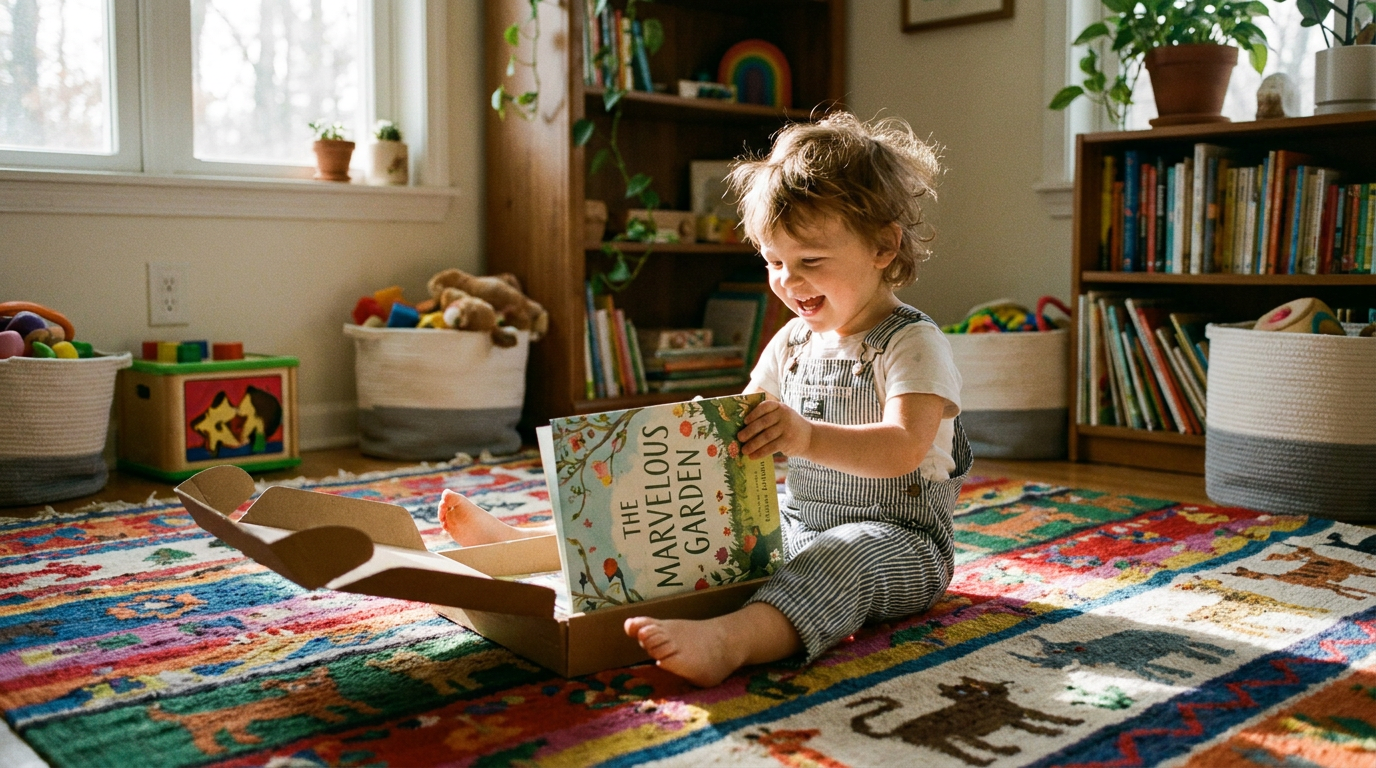
Dolly Parton's Imagination Library has officially surpassed 314 million free books gifted to children worldwide, cementing its status as one of the most expansive early childhood literacy initiatives in history. As of mid-2026, the program is mailing over 3.4 million books every single month to children across the United States, Canada, the United Kingdom, Australia, and the Republic of Ireland. What began as a localized effort in a single Tennessee county has blossomed into a global logistical powerhouse, delivering high-quality, age-appropriate reading materials directly to the mailboxes of families regardless of their income level.[1][6]
The sheer volume of the program is now being matched by rigorous quantitative data. A newly released international study—the largest dataset ever collected on shared book reading—has confirmed the profound developmental impact of the initiative. For years, educators have anecdotally praised the program's ability to foster a love of reading, but the new findings provide empirical evidence that direct-to-home book deliveries fundamentally alter a child's educational trajectory before they even enter the formal school system.[2]
Led by researcher Dr. Claire Galea, the study tracked more than 86,000 caregivers across five countries over a twelve-month period. It compared families currently enrolled in the Imagination Library with those who had not yet begun receiving books, seeking to measure the tangible benefits of consistent access to age-appropriate reading material. The sheer scale of the dataset allowed researchers to control for various socioeconomic factors, isolating the specific impact that the monthly arrival of a new book has on a household's daily routine and a child's cognitive development.[1][2]

The findings reveal that the threshold for meaningful developmental change is surprisingly low. After receiving just 10 books, children in the program demonstrated significantly stronger early literacy skills, including accelerated vocabulary development and improved phonological awareness. These metrics are widely considered by educators to be the foundational building blocks for reading fluency, suggesting that even a brief period of enrollment in the program can yield measurable academic advantages. The data dispels the notion that massive, resource-intensive interventions are always required to move the needle on early education; sometimes, simply ensuring that a child has physical books to hold and explore is enough to spark critical neural connections.[1][2]
Researchers noted that these early gains are critical for closing educational gaps that often form long before a child ever sets foot in a kindergarten classroom. By normalizing the presence of books in the home, the program provides a developmental head start that compounds over time. Children who enter school with strong phonological awareness are far less likely to require remedial reading interventions later on, saving school districts significant resources while boosting the child's long-term academic confidence.[2]
Researchers noted that these early gains are critical for closing educational gaps that often form long before a child ever sets foot in a kindergarten classroom.
Beyond academic metrics, the study highlighted the program's profound effect on family dynamics and household habits. Caregivers enrolled in the Imagination Library reported establishing more consistent reading routines and engaging in highly interactive reading behaviors. Rather than passively listening, children were encouraged to hold the books, turn the pages, and discuss the illustrations. This active participation not only accelerates language acquisition but also deepens the emotional bond between the child and the caregiver, transforming reading from a solitary task into a shared daily ritual.[1][2]

Local milestones underscore the program's highly localized reach despite its massive global scale. In Fresno County, California, the initiative recently celebrated delivering its 100,000th book since launching in 2025. Notably, nearly a quarter of the enrolled children in that region live in rural communities where access to well-funded public libraries may be limited. Furthermore, approximately 20% of the families receive bilingual Spanish book collections, ensuring that the program remains accessible and relevant across diverse linguistic demographics.[3]
Similar community-level impacts are being felt globally as the program expands its international footprint. In Australia, local partners like United Way have facilitated the delivery of hundreds of thousands of books, using the program to anchor community events. Initiatives like 'Baby Rhyme Time' at local libraries frequently center around Imagination Library titles, helping new parents build vital social networks and find a sense of belonging in their communities while simultaneously promoting early literacy.[4]
The United Kingdom has also seen a resurgence in library engagement tied directly to the program. Public libraries across the UK are leveraging the Imagination Library to bring families through their doors, using the promise of free books to introduce them to broader civic resources. This symbiotic relationship helps revitalize local library systems, proving that direct-to-home mailing does not replace community institutions, but rather acts as a catalyst to increase their utilization.[5]

The founder, who launched the charity in 1995 in honor of her father's inability to read or write, has maintained a steadfast focus on the simple joy of reading rather than complex educational mandates. 'My dream has always been to help children love books and love learning, no matter where they live,' she noted in a recent statement celebrating the research milestone. This deeply personal origin story has helped the program maintain widespread bipartisan and international support.[1][6]
The initiative stands out in the landscape of celebrity philanthropy for its longevity, singular focus, and massive logistical infrastructure. While many high-profile charitable efforts center on one-off donations, gala fundraisers, or broad awareness campaigns, the Imagination Library operates as a highly efficient global supply chain dedicated entirely to early education. Its ability to consistently procure, personalize, and mail millions of physical items every month demonstrates a level of operational efficiency that rivals major logistics corporations.[7]
As the program looks toward its 30th anniversary and beyond, its footprint continues to expand at an unprecedented rate. With one in seven children under the age of five in the U.S. now receiving a book in the mail each month, the initiative has quietly reshaped the foundational learning environment for an entire generation. By proving that a simple, consistent intervention can yield massive developmental dividends, the Imagination Library has set a new gold standard for global philanthropic impact.[1][6]
How we got here
1995
The Imagination Library is launched in Sevier County, Tennessee.
2000
A national replication effort begins to expand the program across the United States.
2004
Tennessee becomes the first state to pledge coverage for every child under five.
2023
The organization celebrates its 200 millionth book gifted.
March 2026
The program surpasses 314 million books, alongside a landmark study proving its developmental impact.
Viewpoints in depth
Early Education Researchers
Focuses on the empirical evidence that early access to books closes developmental gaps.
Educational researchers emphasize that the most critical window for language development occurs before a child turns five. By providing a steady stream of books directly to the home, the program bypasses traditional barriers to access, such as library proximity or household income. The recent study confirms that this direct-to-home model effectively accelerates phonological awareness and vocabulary, providing a measurable head start that traditional interventions often struggle to achieve.
Community Partners
Emphasizes how the program acts as a catalyst for local engagement.
For local governments and community organizations, the books are just the starting point. Partners like United Way and regional library systems use the monthly book deliveries to anchor community events, such as reading circles and parent support groups. This approach transforms a simple mail delivery into a tool for building social infrastructure, helping new parents connect with civic resources and each other.
Philanthropic Observers
Highlights the unique logistical model of the charity.
Philanthropy analysts frequently point to the Imagination Library as an anomaly in the celebrity charity space. Instead of relying on one-off fundraising galas or awareness campaigns, the organization operates a highly sophisticated, global supply chain. Its ability to consistently procure, personalize, and mail 3.4 million physical items every month demonstrates a level of operational efficiency that rivals major logistics corporations, ensuring long-term sustainability.
What we don't know
- How the program will adapt its supply chain to accommodate potential expansion into non-English speaking countries beyond its current bilingual offerings.
- Long-term longitudinal data tracking the enrolled children through high school to measure ultimate graduation and literacy rates.
Key terms
- Phonological awareness
- The ability to recognize and manipulate the spoken parts of sentences and words, a crucial foundational skill for learning to read.
- Shared book reading
- The practice of a caregiver and child reading a book together interactively, which promotes language development and bonding.
- Early literacy skills
- The knowledge, skills, and attitudes that come before and help lead to conventional reading and writing.
Frequently asked
What is the Imagination Library?
It is a book gifting program that mails free, high-quality, age-appropriate books to children from birth to age five, regardless of their family's income.
How did the program start?
Dolly Parton founded the initiative in 1995 in Sevier County, Tennessee, inspired by her father's inability to read and write.
What did the recent international study find?
A study tracking 86,000 caregivers found that receiving just 10 books significantly improved a child's vocabulary and phonological awareness.
Where is the program available?
The program currently operates in the United States, Canada, the United Kingdom, Australia, and the Republic of Ireland.
Sources
Source coverage
7 outlets
3 viewpoints surfaced






[1]Imagination Library OfficialPhilanthropic Observers
Dolly Parton's Imagination Library Celebrates Spring Impact and Global Research Milestone
Read on Imagination Library Official →[2]Early Childhood Literacy JournalEarly Education Researchers
International Study Reaffirms Impact of Shared Book Reading Programs
Read on Early Childhood Literacy Journal →[3]The PulseCommunity Partners
Dolly Parton's Imagination Library Crosses 100,000 Book Milestone in Fresno County
Read on The Pulse →[4]United Way AustraliaCommunity Partners
Dolly Parton's Imagination Library in Australia: looking back on 2024
Read on United Way Australia →[5]BBC NewsCommunity Partners
How Dolly Parton's Imagination Library is Helping UK Public Libraries Thrive
Read on BBC News →[6]The TennesseanPhilanthropic Observers
Dolly Parton's literacy program hits 314 million books gifted globally
Read on The Tennessean →[7]Entertainment TonightPhilanthropic Observers
Celebs Give Back: How Stars Are Changing Communities
Read on Entertainment Tonight →

Every angle. Every day.
Get entertainment stories with full source coverage and perspective breakdowns delivered to your inbox.