
How Virtual Power Plants Are Turning Homes Into the Grid's Best Defense
By networking thousands of home batteries, solar panels, and smart thermostats, virtual power plants are replacing expensive fossil-fuel peaker plants and saving the grid billions.
By Factlen Editorial Team
- Grid Planners & Utilities
- Value VPPs for deferring expensive infrastructure upgrades, but struggle to integrate them into legacy forecasting models.
- Clean Energy & Tech Industry
- Champion VPPs as the fastest, most cost-effective way to retire polluting fossil-fuel peaker plants and maximize renewable energy.
- Consumer Advocates
- Focus on the financial empowerment of homeowners, turning them into 'prosumers' who earn money from their smart home investments.
What's not represented
- · Traditional fossil-fuel peaker plant operators
- · Homeowners without access to smart energy devices
Why this matters
As electricity demand surges from data centers and electric vehicles, virtual power plants offer a cheaper, cleaner way to keep the lights on—while paying homeowners hundreds of dollars a year for participating.
Key points
- Virtual power plants (VPPs) network home batteries, EVs, and smart thermostats to act as a single power plant.
- The Department of Energy projects VPPs could save the grid $10 billion annually by 2030.
- VPPs provide peaking capacity at 40% to 60% lower cost than traditional natural gas peaker plants.
- Homeowners who participate are financially compensated through bill credits, cash, or upfront rebates.
- Data center demand is accelerating utility adoption of VPPs to avoid building expensive new infrastructure.
The U.S. electric grid is facing a math problem it has not seen in decades: demand is suddenly skyrocketing. Driven by the rapid expansion of energy-intensive data centers, a boom in domestic manufacturing, and the electrification of vehicles and heating, peak electricity demand is projected to jump from 800 gigawatts in 2024 to 900 gigawatts by 2030.[1]
Historically, grid operators solved rising demand by doing what they have always done: building massive, centralized power plants and stringing up thousands of miles of new transmission lines. But today, building a traditional natural gas "peaker" plant—a facility designed to run only during the few hours a year when demand is highest—takes years of permitting, faces severe interconnection backlogs, and costs billions of dollars that are ultimately passed down to ratepayers.[1][4]
Enter the Virtual Power Plant, or VPP. A VPP is not a physical facility with smokestacks or cooling towers. Instead, it is a cloud-based, centralized digital network that aggregates thousands of decentralized, small-scale energy devices—known in the industry as Distributed Energy Resources.[3][6]

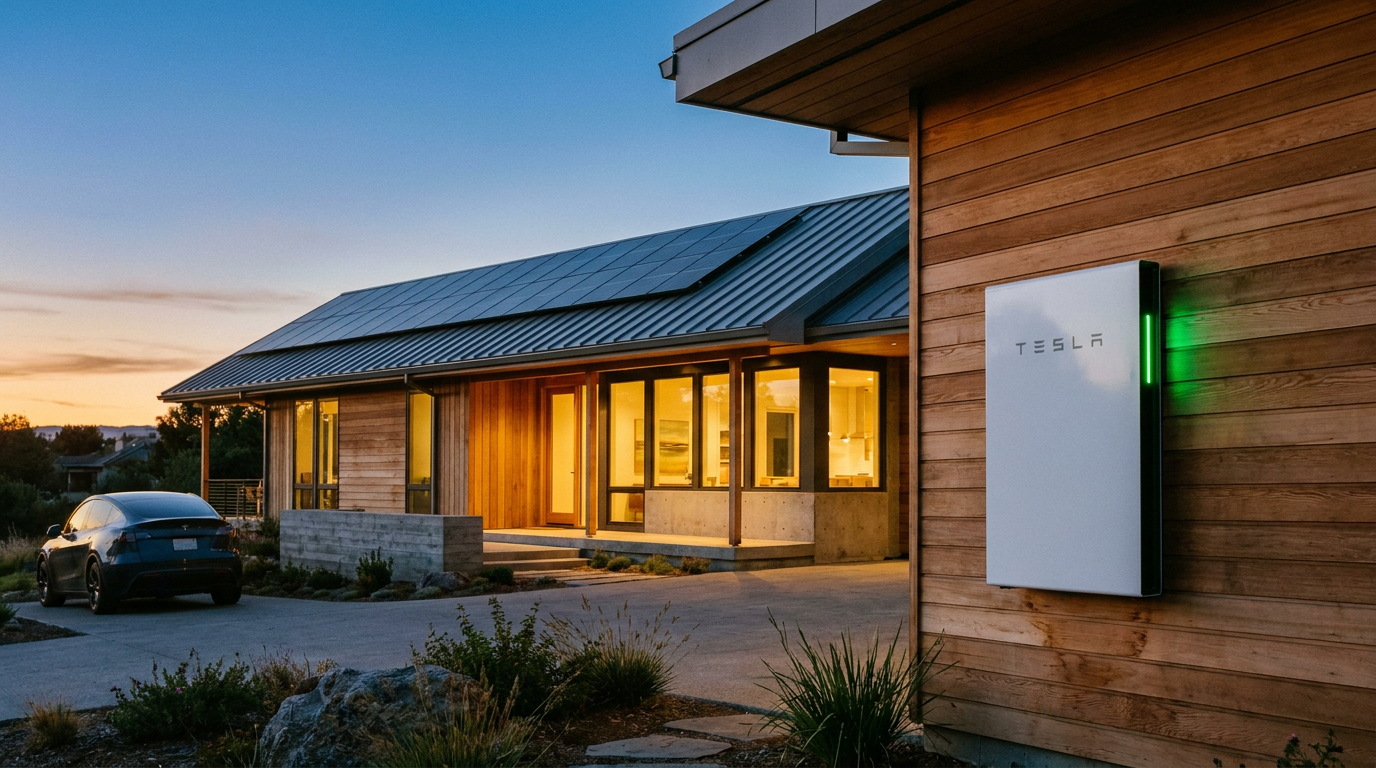
These resources include residential rooftop solar arrays, behind-the-meter home batteries, electric vehicle chargers, smart thermostats, and electric water heaters. By using advanced software and artificial intelligence, a VPP coordinates these decentralized assets to act like a single, massive, dispatchable power plant.[1][3]
The mechanism is both elegant and largely invisible to the average consumer. When the grid is stressed—such as during a summer heatwave when millions of air conditioners are running simultaneously—the VPP operator sends a digital signal to its network of enrolled devices.[6]
Within milliseconds, the VPP can command thousands of home batteries to discharge their stored solar energy back into the grid simultaneously. At the same time, it might subtly adjust smart thermostats up by a single degree or temporarily pause electric vehicle charging across thousands of homes. The users barely notice the shift, but the grid operator suddenly gains megawatts of capacity, averting the need to fire up an expensive fossil-fuel peaker plant.[3][6]
The scale of this transition is accelerating rapidly. According to industry data, the current scale of VPPs has grown to over 37 gigawatts across North America, with active deployments jumping 33% year-over-year as new programs come online.[2][5]
The financial implications for the grid are staggering. The Department of Energy estimates that tripling the current capacity of VPPs to between 80 and 160 gigawatts by 2030 could address 10% to 20% of peak load. Doing so would save roughly $10 billion in annual grid costs by avoiding new generation buildouts and delaying expensive power infrastructure investments.[1]

The Department of Energy estimates that tripling the current capacity of VPPs to between 80 and 160 gigawatts by 2030 could address 10% to 20% of peak load.
For utilities, the economics are increasingly difficult to ignore. Analysis shows that a VPP made up of residential thermostats, water heaters, EV chargers, and batteries can provide peaking capacity at roughly 40% to 60% lower net cost than utility-scale batteries or natural gas peaker plants.[1][4]
But the most radical shift introduced by VPPs is the changing role of the consumer. Homeowners are no longer just passive buyers of electricity; they are active participants—often referred to as "prosumers"—who are financially compensated for their contribution to grid stability.[6]
Compensation models vary by state and utility, but they are becoming increasingly lucrative. Participants can earn direct cash payments, credits on their electricity bills, or upfront discounts on battery installations. For example, some programs offer homeowners hundreds of dollars a year simply for allowing the VPP to manage their battery or thermostat during critical grid events.[6]
In California, Tesla's VPP network has delivered more than 535 megawatts of capacity to the grid during peak events, with participating households providing enough capacity to power half of San Francisco. In Puerto Rico, similar VPPs have delivered critical megawatts during grid emergencies, helping the utility avoid rolling blackouts and maintain reliable service.[3]

Despite the clear benefits, the transition is not without friction. The Rocky Mountain Institute notes that while VPPs are approaching the scale of traditional power plants, utility planning processes are struggling to keep up. Many distribution planners still lack familiarity with distributed energy capabilities and rarely model VPP alternatives when making long-term grid investment decisions.[4]
Furthermore, the regulatory landscape remains a patchwork. The tools necessary for grid operators to evaluate, integrate, and compensate VPPs are inconsistent across jurisdictions. While states like California, Texas, and Massachusetts lead the way with robust incentive programs, other regions lag behind due to outdated regulatory frameworks that favor traditional infrastructure investments.[1][5]
There are also technical hurdles to overcome. Not all home batteries or smart devices are compatible with VPP software. Devices must support remote controls, live performance data, and bidirectional communication. As the market matures, standardization across manufacturers will be crucial to unlocking the full potential of these networks.[6]
Yet, the momentum appears unstoppable. The convergence of federal support, such as the expanded Investment Tax Credits for battery storage under the Inflation Reduction Act, and the urgent need for grid flexibility is driving unprecedented investment in the sector.[5]
As data center demand continues to put pressure on power markets, utilities and even tech companies themselves are increasingly looking to VPPs to offset coincident peak demand and enable faster grid connections.[2]
Ultimately, virtual power plants represent a fundamental rewiring of the energy system. By transforming millions of isolated homes into a collaborative, flexible clean energy network, VPPs are proving that the grid of the future will not just be built by massive utility companies, but by the very consumers it serves.[7]
How we got here
2023
The Department of Energy releases its first VPP Liftoff Report, identifying the technology as critical for grid stability.
2024
North American VPP capacity grows significantly, with active deployments jumping 33% year-over-year.
January 2025
The DOE releases its updated VPP Liftoff Report, targeting 80-160 GW of capacity by 2030 to offset surging data center and EV demand.
July 2025
California VPPs deliver over 535 MW of capacity to the grid during peak events, proving the technology's scale.
Viewpoints in depth
Grid Operators & Utilities
Focus on the cost savings but the challenge of integrating decentralized assets into legacy planning models.
For utility companies, virtual power plants represent a massive cost-saving opportunity, allowing them to defer billions of dollars in infrastructure upgrades. However, the shift requires a fundamental change in how grids are managed. Many distribution planners are accustomed to centralized, predictable power plants and struggle to integrate thousands of decentralized, customer-owned assets into their long-term forecasting and reliability models.
Consumer Advocates
Focus on the financial empowerment of homeowners, turning them into 'prosumers' who earn money.
Consumer groups champion VPPs as a way to democratize the energy grid, allowing everyday homeowners to monetize their investments in solar panels and smart thermostats. By turning consumers into 'prosumers,' these programs lower household energy bills. However, advocates also stress the need for clear data privacy protections and transparent contracts so homeowners understand exactly when and how their devices will be controlled.
Environmental & Climate Groups
Focus on VPPs as the fastest way to retire fossil-fuel peaker plants and integrate variable renewable energy.
Climate advocates view virtual power plants as the linchpin of a zero-carbon grid. Because solar and wind power are intermittent, the grid has historically relied on highly polluting natural gas peaker plants to fill the gaps. By using aggregated home batteries to store excess solar power during the day and discharge it at night, VPPs eliminate the need for these fossil-fuel plants, drastically reducing the grid's overall carbon footprint.
What we don't know
- How quickly outdated state-level regulatory frameworks will adapt to allow full VPP market participation.
- Whether hardware standardization will improve enough to allow seamless integration across all smart device brands.
Key terms
- Virtual Power Plant (VPP)
- A cloud-based network that coordinates thousands of small-scale energy devices to act like a single, large power plant.
- Distributed Energy Resources (DERs)
- Small-scale energy generation or storage technologies located close to where electricity is used, such as home batteries and solar panels.
- Peaker Plant
- A traditional power plant, usually powered by natural gas, that only runs during times of highest electricity demand.
- Prosumer
- A consumer who both produces and consumes electricity, typically through home solar and battery systems.
- Bidirectional Charging
- Technology that allows an electric vehicle to not only draw power from the grid to charge its battery but also send stored power back to the grid.
Frequently asked
Do I lose control of my home's power if I join a VPP?
You give the VPP operator permission to draw from your battery or adjust your thermostat during peak events, but most programs allow you to opt out of specific events or set minimum battery reserve levels.
How much money can I make joining a VPP?
Compensation varies widely by state and utility, but participants typically earn between $100 and $1,000 annually through bill credits, cash payments, or upfront equipment rebates.
Do I need solar panels to participate?
Not necessarily. While solar-plus-battery systems are common, standalone home batteries, smart thermostats, and compatible electric vehicle chargers can also be enrolled in many VPP programs.
What happens if the grid goes down during a VPP event?
Most VPP-enrolled home batteries are programmed to maintain a backup reserve (e.g., 20%) specifically to ensure the home retains power during an unexpected blackout.
Sources
Source coverage
7 outlets
3 viewpoints surfaced







[1]Department of EnergyGrid Planners & Utilities
Pathways to Commercial Liftoff: Virtual Power Plants 2025 Update
Read on Department of Energy →[2]Wood MackenzieClean Energy & Tech Industry
Virtual power plant growth is getting very real
Read on Wood Mackenzie →[3]TeslaClean Energy & Tech Industry
What Is a Virtual Power Plant?
Read on Tesla →[4]Rocky Mountain InstituteGrid Planners & Utilities
Grid-Scale Virtual Power Plants are Here. Have Utilities Noticed?
Read on Rocky Mountain Institute →[5]Smart Electric Power AllianceGrid Planners & Utilities
VPP and Supporting DER Policy Developments
Read on Smart Electric Power Alliance →[6]EnergySageConsumer Advocates
Virtual Power Plants: What You Need To Know
Read on EnergySage →[7]Factlen Editorial TeamConsumer Advocates
Synthesis by Factlen editorial team
Read on Factlen Editorial Team →
Every angle. Every day.
Get energy stories with full source coverage and perspective breakdowns delivered to your inbox.