
PHEV vs. BEV in 2026: Which Electrified Vehicle Should You Buy?
As tax incentives shift and the used market matures, the choice between a fully electric vehicle and a plug-in hybrid depends entirely on your daily driving and charging access.
By Factlen Editorial Team
- BEV Advocates
- Argue that fully electric vehicles offer superior long-term savings, better driving dynamics, and essential environmental benefits.
- PHEV Pragmatists
- Believe plug-in hybrids provide the perfect transitional step, offering daily electric driving without sacrificing road-trip flexibility.
- Financial & Fleet Analysts
- Evaluate the decision purely on total cost of ownership, depreciation curves, and real-world charging behavior.
What's not represented
- · Apartment renters without charging access
- · Rural drivers far from charging infrastructure
Why this matters
Choosing between a fully electric vehicle and a plug-in hybrid is the most consequential financial decision a car buyer makes in 2026. With shifting tax incentives and a volatile used market, picking the wrong powertrain for your daily routine can cost thousands in hidden fuel, maintenance, and depreciation expenses.
Key points
- BEVs offer lower running costs and zero emissions but require reliable home charging to maximize savings.
- PHEVs provide 15 to 50 miles of electric range for daily commutes while retaining a gas engine for long road trips.
- Without federal tax credits, new BEVs cost significantly more upfront than comparable hybrids.
- Used BEVs have become a massive financial loophole, offering nearly full battery capacity at half the original sticker price.
- PHEVs lose their efficiency advantage if they are not plugged in daily, as the gas engine must haul the dead weight of the battery.
The transition to electrified driving is no longer a fringe movement for early adopters; it is the reality of the 2026 automotive market. Yet, as internal combustion engines slowly yield the fast lane, buyers are faced with a complex fork in the road. The decision is no longer simply whether to abandon gasoline, but how far to take the leap. Consumers must choose between going fully electric with a Battery Electric Vehicle (BEV) or hedging their bets with a Plug-in Hybrid Electric Vehicle (PHEV). This choice dictates not only the environmental footprint of a household but also its long-term financial health and daily logistical routine.[1][5]
The stakes of this decision have shifted dramatically in recent months. With the expiration of key federal tax incentives for many models by late 2025 and a rapidly maturing used car market, the financial math that guided buyers just a few years ago is now obsolete. It is no longer a simple calculation of environmental impact versus sticker price. Today, the true winner between a BEV and a PHEV depends entirely on a driver's lifestyle fit, their access to home charging infrastructure, and a clear-eyed assessment of the total cost of ownership over a five-year horizon.[3][9]
To understand the trade-offs, one must first define the contenders. A Battery Electric Vehicle relies entirely on electrical power, featuring a massive battery pack, no gas tank, and zero tailpipe emissions. These vehicles offer a fundamentally different driving experience, characterized by instant torque, a whisper-quiet cabin, and the unparalleled convenience of waking up to a "full tank" every morning—provided the owner has installed a home charger. They represent the purest vision of a post-carbon automotive future, completely severing ties with the traditional gas station.[1][11]
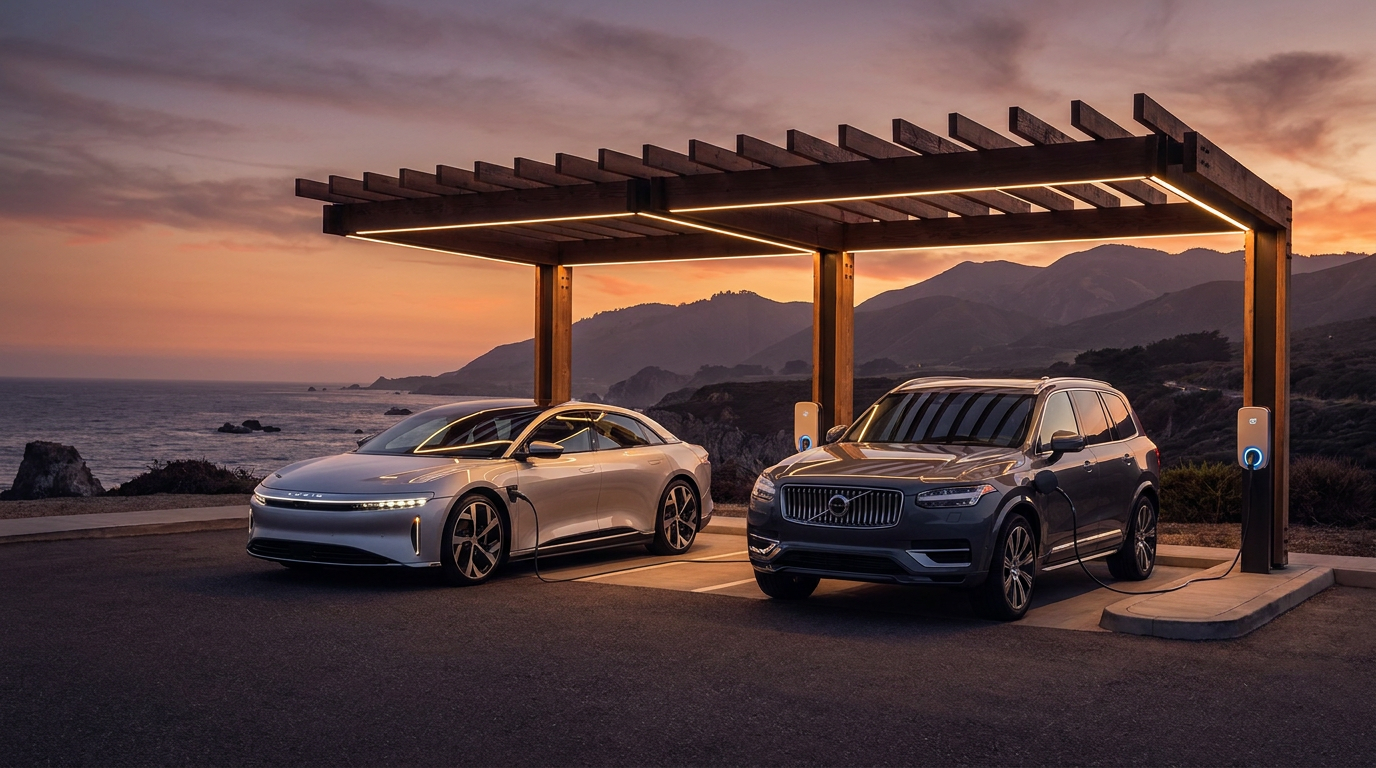
Conversely, a Plug-in Hybrid Electric Vehicle represents a pragmatic middle ground. A PHEV houses both an electric motor with a moderate-sized battery and a traditional internal combustion engine. Depending on the model, they typically offer between 15 and 50 miles of pure electric range, which is more than enough to cover the average American's daily commute and local errands. Once that battery is depleted, the vehicle seamlessly transitions to gasoline power, operating much like a standard hybrid and allowing for cross-country road trips without the need to map out charging networks.[5][10]

When evaluating the upfront costs in the new car market, PHEVs often present a significantly lower barrier to entry. Without the $7,500 federal tax credit—which has vanished for many buyers and models in 2026—the price gap is stark. Industry data reveals that the average new EV costs roughly $62,000, while a comparable hybrid averages around $47,600. This $14,400 difference translates to nearly $300 more per month on a standard auto loan, a premium that can be difficult to offset through fuel savings alone unless the vehicle is driven extensively.[3][9]
However, the depreciation curve has turned the used EV market into an incredibly compelling financial loophole. Because early electric vehicles suffered from steep initial depreciation, three-year-old BEVs can often be purchased for half of their original sticker price. Fleet telematics data from 2026 shows that these used models still retain between 90 and 95 percent of their original battery capacity. For savvy buyers, letting the first owner absorb the depreciation bloodbath makes a lightly used BEV one of the smartest automotive purchases of the decade.[13]
The debate over running costs hinges almost entirely on where the vehicle is charged. For drivers with reliable Level 2 home charging, a BEV is undeniably cheaper to operate. Charging during off-peak hours can cost the equivalent of roughly $1 per gallon, allowing high-mileage commuters to save thousands of dollars annually compared to fueling a gas engine. However, if a driver is forced to rely on public fast-charging networks, those savings evaporate quickly, as commercial charging rates can often rival the cost of premium gasoline.[3][12]
The debate over running costs hinges almost entirely on where the vehicle is charged.
PHEVs carry their own hidden financial trap: they only deliver their promised efficiency if they are plugged in daily. Real-world fleet telemetry data from the UK in 2026 revealed that many corporate PHEVs were rarely charged by their drivers. When a PHEV is driven primarily on gasoline with an empty battery, it becomes significantly less efficient than a standard, cheaper hybrid. The internal combustion engine is forced to lug around the dead weight of a depleted battery pack and electric motor, plummeting the vehicle's actual miles-per-gallon far below the manufacturer's claims.[2][7][14]

In the service bay, BEVs hold a distinct and undeniable advantage. Lacking internal combustion engines, they are free from the burden of oil changes, spark plug replacements, and traditional transmission servicing. They simply have fewer moving parts that can break or wear out. Furthermore, the use of regenerative braking—which uses the electric motor to slow the vehicle and recapture energy—drastically reduces wear on the physical brake pads, meaning EV owners often go years without needing a brake job.[4][12]
By contrast, PHEVs require the maintenance of two entirely separate powertrains. While the electric motor certainly reduces the daily wear and tear on the gas engine, owners cannot escape the reality of internal combustion upkeep. They must still adhere to traditional maintenance schedules, ensuring that the oil is changed, the exhaust system is monitored, and the mechanical components of the gas engine are regularly inspected. This dual-system complexity can lead to higher long-term maintenance costs compared to a pure electric vehicle.[8][9]
For years, the fear of catastrophic battery failure and massive replacement bills kept cautious buyers away from BEVs. However, massive telematics studies released by 2026, which analyzed tens of thousands of vehicles over several years, have largely put this myth to rest. The data shows that modern EV batteries degrade at an average rate of just 2.3 percent per year. This means that even after eight years of daily driving, a typical EV battery still retains over 80 percent of its original range, far outlasting the initial anxieties of early adopters.[13]
This proven reliability has translated into measurable owner satisfaction. According to 2026 consumer index reports, BEV drivers consistently report higher overall satisfaction than PHEV owners. This gap is particularly pronounced in the premium segment, where BEV owners experience fewer mechanical problems and express greater contentment with their long-term cost of ownership. Having entirely escaped the gas pump, the oil change, and the mechanical vibrations of an engine, BEV drivers rarely express a desire to return to combustion power.[4]

Despite the overwhelming advantages of pure electric driving, the PHEV remains the undisputed champion of the spontaneous road trip. For drivers who frequently travel through rural areas, embark on long weekend camping trips, or visit regions with sparse fast-charging infrastructure, the PHEV eliminates range anxiety entirely. It offers the quiet efficiency of an EV for the Monday-to-Friday grind, while retaining the ability to pull into any gas station on a Sunday afternoon for a quick, five-minute refueling stop.[8][13]
Ultimately, a Battery Electric Vehicle fits perfectly for a specific, yet rapidly expanding, demographic. It is the optimal choice for drivers who own their home, can easily install a Level 2 charger, have predictable daily commutes, and want to minimize their long-term running costs and environmental footprint. If you have a second gas-powered vehicle in the household for long trips, or if you are willing to plan your road trips around charging stops, a BEV offers a superior, lower-maintenance driving experience.[6][12]
Conversely, a Plug-in Hybrid Electric Vehicle is the smarter purchase for one-car households that frequently embark on long journeys, or for drivers living in apartments without dedicated overnight charging access. It is the ideal transitional vehicle for those who want to experience the smooth, silent acceleration of electric school runs and grocery trips, without fully severing their ties to the ubiquitous gasoline infrastructure. In 2026, the best vehicle is not determined by the badge on the hood, but by the reality of the driveway it parks in.[5][12]
How we got here
1997
Toyota introduces the Prius, popularizing the standard hybrid electric vehicle (HEV).
2010
The Nissan Leaf and Chevrolet Volt launch, bringing modern BEVs and PHEVs to the mass market.
2022
Major telematics studies begin proving that EV battery degradation is far slower than initially feared.
2025
Key federal tax credits for certain new clean vehicles expire, shifting the financial math for buyers.
2026
Used EVs hit record affordability as off-lease models flood the market, making them a highly competitive alternative to new hybrids.
Viewpoints in depth
BEV Advocates
Argue that fully electric vehicles offer superior long-term savings, better driving dynamics, and essential environmental benefits.
This camp, supported by environmental groups and EV-only manufacturers, emphasizes that the transition to zero-emission driving should not be delayed by half-measures. They point to data showing that BEVs have significantly lower lifetime maintenance costs due to the absence of an internal combustion engine. Furthermore, they argue that as the public charging network expands, the primary argument for PHEVs—range anxiety—is rapidly becoming obsolete, making BEVs the only truly future-proof investment.
PHEV Pragmatists
Believe plug-in hybrids provide the perfect transitional step, offering daily electric driving without sacrificing road-trip flexibility.
Automakers with strong hybrid lineages and pragmatic consumer advocates champion the PHEV as the ultimate 'best of both worlds' solution for the 2026 market. They argue that since the vast majority of daily driving falls under 40 miles, a PHEV can operate as a zero-emission vehicle for 90 percent of a driver's needs. Crucially, they highlight that PHEVs require significantly smaller battery packs, making them cheaper to produce, less resource-intensive, and entirely immune to the charging infrastructure gaps that still plague rural areas.
Total Cost Analysts
Evaluate the decision purely on total cost of ownership, depreciation curves, and real-world charging behavior.
Financial analysts and fleet managers strip away the environmental sentiment and focus strictly on the math. They warn that PHEVs are a financial trap if the owner lacks home charging, as the vehicle simply becomes a heavy, inefficient gas car. However, they also caution against buying new BEVs due to the steep initial depreciation curve. This camp strongly advocates for purchasing three-year-old used BEVs, which offer the lowest possible total cost of ownership by combining a heavily discounted purchase price with the rock-bottom running costs of home electricity.
What we don't know
- How future fluctuations in public electricity rates will impact the long-term cost advantage of BEVs over gasoline.
- Whether the rapid expansion of the NACS public charging network will fully eliminate range anxiety for single-car BEV households.
Key terms
- BEV (Battery Electric Vehicle)
- A vehicle powered entirely by electricity, featuring a large battery pack and zero tailpipe emissions.
- PHEV (Plug-in Hybrid Electric Vehicle)
- A vehicle with both an electric motor and a gasoline engine, capable of driving short distances on electricity before switching to gas.
- Level 2 Charging
- A 240-volt charging system, typically installed at home or found at public stations, that charges an EV much faster than a standard wall outlet.
- Regenerative Braking
- A system that captures the kinetic energy normally lost during braking and uses it to recharge the vehicle's battery, saving wear on the brake pads.
- Range Anxiety
- The fear that an electric vehicle will run out of battery power before reaching a charging station.
Frequently asked
Do I need to install a special charger for a PHEV?
No. Because PHEVs have smaller batteries, they can usually charge overnight using a standard 110-volt household outlet, making them highly accessible for renters.
What happens if I never plug in my PHEV?
It will operate entirely on gasoline. However, because it carries the extra weight of an unused battery and motor, it will likely get worse fuel economy than a standard hybrid.
Are used EVs a good deal in 2026?
Yes. Due to steep initial depreciation, three-year-old EVs can often be purchased for half their original price while still retaining over 90% of their original battery capacity.
Do EVs really cost less to maintain?
Yes. BEVs lack internal combustion engines, meaning they never require oil changes, spark plug replacements, or traditional transmission service.
Sources
Source coverage
14 outlets
3 viewpoints surfaced












[1]Classic ToyotaPHEV Pragmatists
2026 Toyota EV Guide: HEV vs PHEV vs BEV Explained
Read on Classic Toyota →[2]Car and DriverFinancial & Fleet Analysts
Hybrids vs. Plug-In Hybrids: Pros and Cons
Read on Car and Driver →[3]CarZingFinancial & Fleet Analysts
Hybrid vs. Electric Car in 2026: Which Should You Buy?
Read on CarZing →[4]JD PowerBEV Advocates
2026 U.S. Electric Vehicle Experience (EVX) Ownership Study
Read on JD Power →[5]EdmundsPHEV Pragmatists
Hybrid vs. Plug-in Hybrid Cars: What's Right for You?
Read on Edmunds →[6]EcodiscussionFinancial & Fleet Analysts
PHEV vs BEV Guide: Choosing Your First Electric Car Today
Read on Ecodiscussion →[7]Orbis IOFinancial & Fleet Analysts
PHEV vs BEV Company Car: Which is Right for Your Fleet?
Read on Orbis IO →[8]Mazda USAPHEV Pragmatists
Hybrid vs. Electric Cars: Pros and Cons
Read on Mazda USA →[9]ImnobaFinancial & Fleet Analysts
Electric vs. Hybrid in 2026: Which One Actually Saves You More?
Read on Imnoba →[10]Grappone HondaPHEV Pragmatists
BEV vs. PHEV: What's the Difference?
Read on Grappone Honda →[11]Pod PointBEV Advocates
Should I Get a Hybrid or an EV
Read on Pod Point →[12]GreenCarsBEV Advocates
PHEV vs EV: Which One Fits Your Driveway and Drive?
Read on GreenCars →[13]Greentec AutoFinancial & Fleet Analysts
Who Should Actually Buy An EV In 2026?
Read on Greentec Auto →[14]RACVFinancial & Fleet Analysts
Hybrid vs plug-in hybrid vs mild hybrid vs electric vehicle: What's the difference?
Read on RACV →
More in shopping
See all 6 stories →Powertrain Choice
Comparing the True Costs and Lifestyle Fit of EVs and Plug-in Hybrids in 2026
0 sources
Used EV Market
The 2026 Guide to Buying a Used EV: Battery Health, Adapters, and Finding the Best Value
0 sources
Sleep Tech
Do Sleep Trackers Actually Work? The Clinical Evidence on Oura, Apple Watch, and Whoop
0 sources

Display Tech
OLED vs. Mini-LED: The 2026 Display Technology Comparison
0 sources

Every angle. Every day.
Get shopping stories with full source coverage and perspective breakdowns delivered to your inbox.