
How the Oil and Gas Industry's Technology is Unlocking a Geothermal Energy Boom
Startups are repurposing fracking techniques and abandoned oil wells to generate 24/7 clean geothermal power, offering a lifeline to fossil fuel workers and a solution for energy-hungry data centers.
By Factlen Editorial Team
- Geothermal Innovators
- Argue that applying modern drilling tech to hot dry rock is the key to unlocking scalable, firm clean energy.
- Oil & Gas Industry
- View geothermal as a profitable way to transition their workforce and repurpose stranded well assets.
- Tech & AI Sector
- Desperately need 24/7 zero-carbon baseload power to fuel data center expansion without relying on fossil fuels.
- Energy Economists
- Focus on the macro impact of falling levelized costs and the dual benefit of capping methane leaks.
What's not represented
- · Local communities near repurposed wells
- · Lithium-ion battery manufacturers
Why this matters
The ability to generate 24/7 clean energy anywhere on Earth solves the biggest flaw of solar and wind power—intermittency—while providing a direct economic lifeline to fossil fuel workers and capping thousands of leaking, abandoned oil wells.
Key points
- Startups are using horizontal drilling and fracking techniques from the shale boom to unlock geothermal energy in hot, dry rock.
- Drilling speeds have nearly quadrupled, slashing the massive upfront capital costs that previously held the industry back.
- Millions of abandoned oil and gas wells are being evaluated for retrofitting, turning environmental liabilities into clean energy assets.
- Tech giants like Meta are signing major off-take agreements to power their AI data centers with firm, 24/7 geothermal power.
- The transition provides a frictionless career pivot for petroleum engineers and rig workers, utilizing their exact existing skill sets.
The global energy transition faces a stubborn, structural bottleneck: the desperate need for "firm" clean power that runs reliably 24/7, regardless of weather conditions or time of day. Simultaneously, the legacy fossil fuel industry is grappling with millions of aging or entirely abandoned oil and gas wells, alongside a highly specialized, millions-strong workforce facing an increasingly uncertain future. Now, these two seemingly disparate global challenges are converging into a singular, elegant solution. A new wave of well-funded energy startups is actively cannibalizing the technology, the heavy infrastructure, and the veteran personnel of the oil and gas sector to unlock the massive, untapped potential of next-generation geothermal energy.[1][6]
Historically, geothermal power was treated as a highly localized, niche asset in the broader energy portfolio. It relied entirely on naturally occurring underground reservoirs of hot water and highly permeable rock, restricting commercial development to geologically active regions like Iceland, New Zealand, or parts of California and Nevada. For decades, the prospect of drilling deep into solid, dry rock to artificially create these hydrothermal conditions was deemed far too expensive and technically daunting to pursue at scale. A seminal 2006 MIT report outlined the staggering theoretical potential of the earth's heat, but the physical reality of grinding drill bits through miles of abrasive granite remained a formidable, seemingly insurmountable economic barrier.[1][4]
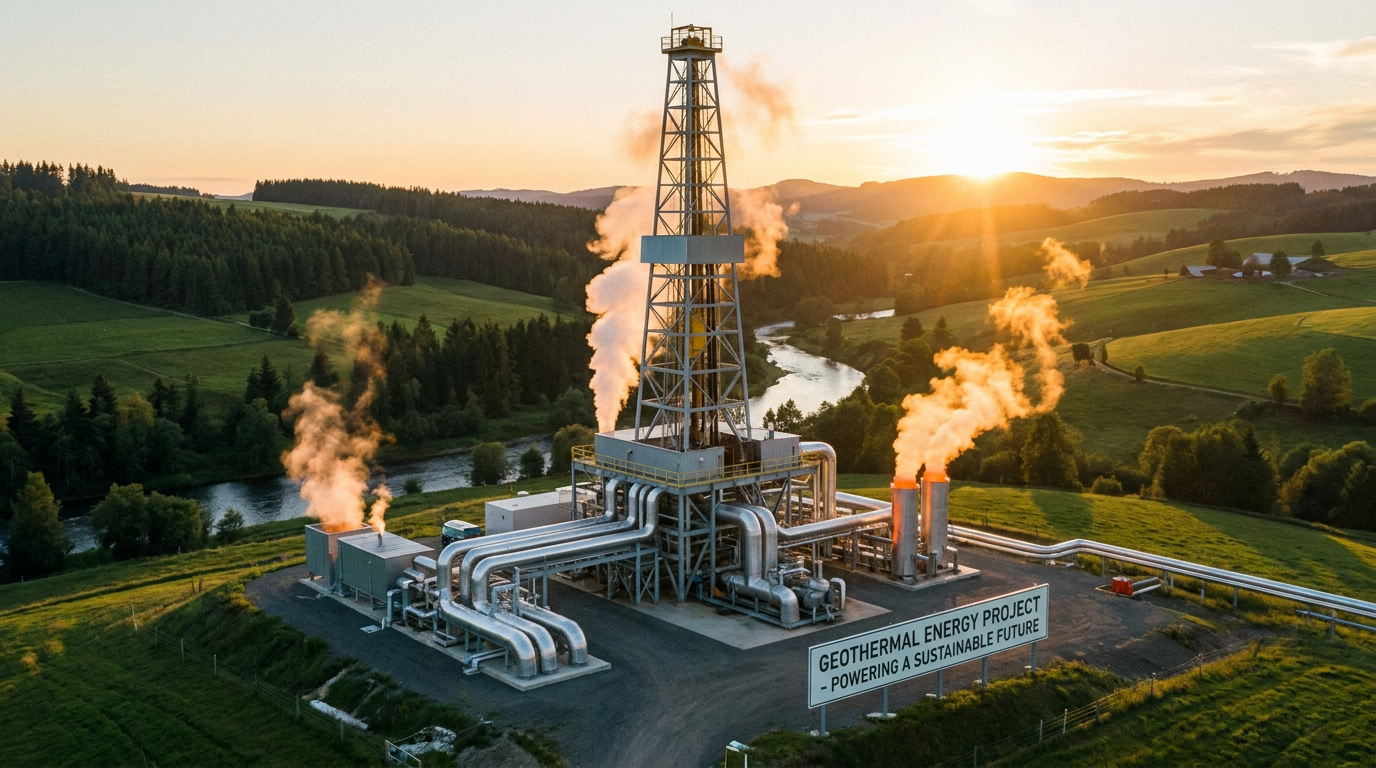
The technological breakthrough that changed the math arrived via an ironic source: the American shale oil boom. The exact heavy-industrial techniques pioneered to aggressively extract fossil fuels—specifically precision horizontal drilling and high-pressure hydraulic fracturing—are now being deployed to harvest zero-carbon heat. This novel approach, known broadly as Enhanced Geothermal Systems (EGS), involves drilling deep into hot, dry rock formations, injecting fluid at high pressure to create a vast network of tiny fractures, and then circulating water through this artificial subterranean radiator. The water absorbs the earth's ambient heat before being brought back to the surface to drive steam turbines.[1][4][6]
The results of this technological crossover from oil to geothermal have been immediate and dramatic. The United States Department of Energy’s Frontier Observatory for Research in Geothermal Energy (FORGE) initiative has served as a primary testing ground for importing oil and gas knowledge directly into the geothermal space. By applying modern, highly durable drill-bit designs and real-time subsurface analytics developed for shale, developers have shattered historical speed limits. Fervo Energy, a leading EGS developer heavily staffed by former oil and gas professionals, has accelerated its drilling rates from a sluggish baseline of 8 meters per hour to an astonishing 30 meters per hour.[1][6]

This rapid acceleration in drilling speed fundamentally alters the baseline economics of geothermal power generation. Because complex drilling operations traditionally account for 40% to 60% of a geothermal project's total upfront capital expenditure, drilling faster directly and proportionally translates to cheaper electricity for the grid. Institutional investors have taken notice of this shifting paradigm. Between 2022 and 2025, Fervo Energy successfully raised over $1 billion in capital, backed heavily by traditional energy players like Devon Energy, which poured $100 million into the startup. As of early 2026, the sector is entering a mature phase of price discovery, with major players preparing for highly anticipated initial public offerings.[1][2][3][4][5]
While Enhanced Geothermal Systems focus on the expensive process of drilling entirely new wells, a parallel, highly efficient strategy seeks to eliminate drilling costs entirely by repurposing existing, abandoned oil and gas wells. Worldwide, millions of these depleted wells sit idle, scarring landscapes. Decommissioning them is a massive, unavoidable financial liability for energy companies and local governments; properly plugging a single well with cement can cost anywhere between $20,000 and $76,000, yielding absolutely zero return on investment. Worse, improperly sealed or neglected wells are notorious for leaking methane, a greenhouse gas significantly more potent than carbon dioxide.[2]
Instead of burying these expensive liabilities in cement and walking away, petroleum engineers are retrofitting them to extract low-grade geothermal heat. By utilizing the existing steel casing that already reaches thousands of feet deep into the earth's crust, developers can circulate fluids to harvest thermal energy without the massive upfront capital required to drill a new hole from scratch. This adaptive approach is particularly viable in regions with extensive historical hydrocarbon exploration, which often feature surprisingly steep geothermal gradients and, crucially, immediate proximity to existing power grids and industrial infrastructure.[2][3]
Instead of burying these expensive liabilities in cement and walking away, petroleum engineers are retrofitting them to extract low-grade geothermal heat.
The specific conversion strategies vary widely based on the local geology, the depth of the well, and the integrity of the aging steel casing. Some retrofitted projects utilize "open-loop" co-production, where hot water that is naturally produced alongside residual oil is separated at the surface and used to generate power before being safely reinjected into the reservoir. Other projects employ sophisticated "closed-loop" systems, inserting a sealed, thermally conductive pipe within the existing wellbore to circulate a proprietary working fluid. This entirely isolates the power generation process from the surrounding rock, eliminating the risk of subsurface contamination or pressure loss.[2]

Early pilot projects and detailed feasibility studies have already demonstrated the clear economic viability of this repurposing approach. In Oklahoma, researchers successfully modeled the conversion of depleted oil wells to provide direct, baseload heating and cooling for a cluster of public schools. By producing just 2,000 barrels of hot water per day through natural flow, the retrofitted wells could supply sufficient energy with an estimated payback period of roughly 11 years. This drastically reduces the carbon footprint associated with both the schools' daily energy use and the well's original, carbon-intensive construction.[2]
The demand for this specific type of firm, clean power is currently being supercharged by the technology sector's unprecedented expansion. The explosive, global growth of artificial intelligence has triggered a massive buildout of hyper-scale data centers, which require vast amounts of continuous, uninterrupted electricity to cool servers and run complex models. Solar and wind power, while incredibly cheap to install, are inherently intermittent and require prohibitively expensive, massive battery arrays to provide the strict 24/7 reliability that data center operators demand. Geothermal offers the perfect, elusive profile: true baseload clean energy that runs around the clock.[4][5]
Tech giants are aggressively moving to secure this capacity before the grid runs short. In late 2025, Meta struck a landmark, market-making deal with Sage Geosystems, a prominent Texas-based geothermal venture, to develop a dedicated 150-megawatt dry-rock power plant specifically to supply its data centers by 2027. This massive influx of infrastructure capital and guaranteed revenue from the tech industry is providing the ironclad off-take agreements necessary to make next-generation geothermal projects bankable for traditional Wall Street lenders.[4][5]

Beyond pure electricity generation, innovative companies are also utilizing oil and gas techniques to turn the earth itself into a massive, mechanical battery. Sage Geosystems is pioneering a novel method that pumps water deep underground into fractured rock during periods of excess renewable energy production, storing it under immense geological pressure. When the grid needs power after the sun sets, the pressurized, naturally heated water is released back to the surface to drive turbines. This provides cost-effective, long-duration energy storage that rivals the scale of traditional pumped hydro or massive lithium-ion battery farms.[5]
The human and cultural element of this energy transition is equally significant, offering a rare bright spot for industrial labor. The geothermal boom offers a direct, frictionless, and highly lucrative off-ramp for fossil fuel workers who fear being left behind by decarbonization. The specific skills required to operate a complex geothermal rig, manage volatile subsurface pressure, and analyze deep seismic data are nearly identical to those used daily in the oil patch. Recognizing this, the Society of Petroleum Engineers has actively begun hosting dedicated symposiums on geothermal conversion, signaling a profound cultural shift within the legacy energy sector.[1][3][6]
The global, macroeconomic implications of this technological crossover are vast and increasingly optimistic. The International Energy Agency (IEA) projects that with continued, iterative technological improvements and economies of scale, next-generation geothermal could meet up to 15% of global electricity demand growth by the year 2050. Achieving this milestone would require the worldwide deployment of roughly 800 gigawatts of new geothermal capacity, producing enough continuous electricity to power the current, combined demands of the entire United States and India.[1]

What was once dismissed as a highly localized, geographically constrained niche energy source is rapidly transforming into a globally scalable, industrial-grade solution. By actively cannibalizing the heavy tools, the sprawling infrastructure, and the hard-won expertise of the fossil fuel era, the geothermal industry is not just solving its own historical cost barriers. It is actively cleaning up the environmental legacy of the past while drilling the literal foundation for a zero-carbon, high-energy future that can sustain both human progress and a stable climate.[6]
How we got here
2006
MIT publishes a seminal 372-page report outlining the massive theoretical potential of Enhanced Geothermal Systems.
2021
The US Department of Energy's FORGE project drills its first test wells to apply oil and gas tech to geothermal rock.
2024
Fervo Energy successfully demonstrates commercial-scale EGS, achieving drilling rates of 30 meters per hour.
Aug 2025
Meta strikes a landmark deal with Sage Geosystems for a 150-megawatt geothermal plant to power data centers.
Early 2026
The geothermal sector enters a phase of price discovery as major players prepare for initial public offerings.
Viewpoints in depth
Geothermal Innovators
Applying modern drilling tech to hot dry rock is the key to unlocking scalable clean energy.
Startups in the EGS space argue that the earth is a functionally inexhaustible battery, and the only thing keeping us from tapping it was the cost of drilling. By importing the precision horizontal drilling and hydraulic fracturing techniques perfected during the shale oil boom, these companies believe they have solved the cost equation. They point to quadrupled drilling speeds and massive influxes of capital as proof that geothermal is ready to scale globally, moving beyond its historical reliance on natural hot springs.
The Legacy Energy Sector
Geothermal represents a profitable pivot for stranded assets and specialized workforces.
For the oil and gas industry, the geothermal boom is a rare opportunity to transition without abandoning core competencies. Petroleum engineers, rig operators, and subsurface geologists are finding that their skills translate seamlessly to EGS development. Furthermore, the industry views the millions of abandoned, non-producing wells not as environmental liabilities, but as pre-drilled assets. Repurposing these wells for low-grade heat extraction offers a way to generate new revenue streams while avoiding the massive costs of permanent decommissioning.
Tech & Data Center Operators
Firm, zero-carbon power is an existential requirement for the future of artificial intelligence.
The technology sector is facing a severe energy crunch. The exponential growth of AI data centers requires massive, uninterrupted power loads that intermittent sources like solar and wind cannot reliably provide without cost-prohibitive battery storage. Tech giants view next-generation geothermal as the holy grail: a baseload power source that runs 24/7 and emits zero carbon. This desperation for clean, firm power is driving companies like Meta to sign massive advance purchase agreements, effectively bankrolling the commercialization of the geothermal industry.
What we don't know
- How effectively closed-loop systems will perform over a 30-year lifespan without thermal depletion of the surrounding rock.
- Whether the regulatory permitting process for geothermal drilling can be streamlined to match the speed of oil and gas approvals.
- The exact timeline for when next-generation geothermal will achieve cost parity with combined-cycle natural gas plants.
Key terms
- Enhanced Geothermal Systems (EGS)
- A technology that injects fluid into hot, dry underground rock to create artificial fractures, allowing heat to be extracted for power generation.
- Firm Power
- Electricity generation that can be relied upon to produce energy 24/7, regardless of weather conditions or time of day.
- Closed-loop Geothermal
- A system that circulates a sealed fluid down a wellbore to absorb heat without the fluid ever physically touching the surrounding rock.
- Levelized Cost of Heat (LCOH)
- A metric used to compare the overall lifetime cost of generating thermal energy across different technologies.
Frequently asked
Can any abandoned oil well be used for geothermal energy?
No. Wells must have intact steel casing, be located in areas with a sufficient underground temperature gradient, and be close enough to power grids or end-users to be economically viable.
Does geothermal fracking cause earthquakes?
Enhanced Geothermal Systems do create micro-seismicity to fracture rock, but developers use advanced subsurface monitoring to keep these events far below the threshold that can be felt on the surface.
Why is geothermal better than solar or wind?
It isn't necessarily better, but it is complementary. Geothermal provides 'firm' baseload power that runs 24/7, filling the critical gaps when the sun isn't shining and the wind isn't blowing.
Sources
Source coverage
6 outlets
4 viewpoints surfaced






[1]International Energy Agency (IEA)Energy Economists
The Future of Geothermal Energy: Next-generation technologies
Read on International Energy Agency (IEA) →[2]Elsevier / Penn StateEnergy Economists
Repurposing abandoned oil and gas wells for geothermal energy
Read on Elsevier / Penn State →[3]Society of Petroleum EngineersOil & Gas Industry
Repurposing Oil and Gas Wells to Geothermal Wells
Read on Society of Petroleum Engineers →[4]Noema MagazineGeothermal Innovators
The Geothermal Future: Enhanced Geothermal Systems
Read on Noema Magazine →[5]Latitude MediaGeothermal Innovators
Is Next-Generation Geothermal Finally Bankable?
Read on Latitude Media →[6]Factlen Editorial TeamEnergy Economists
Synthesis by Factlen editorial team
Read on Factlen Editorial Team →
Every angle. Every day.
Get energy stories with full source coverage and perspective breakdowns delivered to your inbox.