
U.S. and Iran Reach Deal to Reopen Strait of Hormuz, Pulling Global Economy Back from the Brink
A preliminary peace agreement will end the 100-day naval standoff in the world's most critical oil chokepoint, sending crude prices tumbling and sparking a global market rally.
By Factlen Editorial Team
- Economic Realists
- Focuses on sticky inflation and long-term GDP scars that will persist despite the deal.
- Diplomatic Optimists
- Focuses on the immediate economic relief and the successful negotiation of the blockade's end.
- Energy & Maritime Operators
- Prioritizes the physical hurdles of clearing sea mines, securing insurance, and restarting shut-in oil.
- Geopolitical Skeptics
- Focuses on the fragility of the deal, the ongoing Lebanon conflict, and permanent LNG damage.
What's not represented
- · Middle Eastern oil field workers
- · Lebanese civilians affected by the ongoing Israeli offensive
- · Asian manufacturing importers
Why this matters
The reopening of the Strait of Hormuz averts a worst-case global economic crisis, pulling oil prices back from the brink. However, the 100-day closure has already inflicted deep supply chain scars, meaning consumers will continue to face sticky inflation and delayed economic growth through the end of the year.
Key points
- The U.S. and Iran have reached a preliminary agreement to end their 100-day naval war.
- The deal lifts the U.S. blockade and reopens the Strait of Hormuz to global shipping.
- Brent crude oil prices tumbled to $83 a barrel, sparking a global stock market rally.
- Experts warn that clearing sea mines and restarting shut-in oil production will take months.
- Global inflation is expected to remain sticky due to the long-term supply chain damage.
- Israel's refusal to withdraw from Lebanon remains a major threat to the fragile peace.
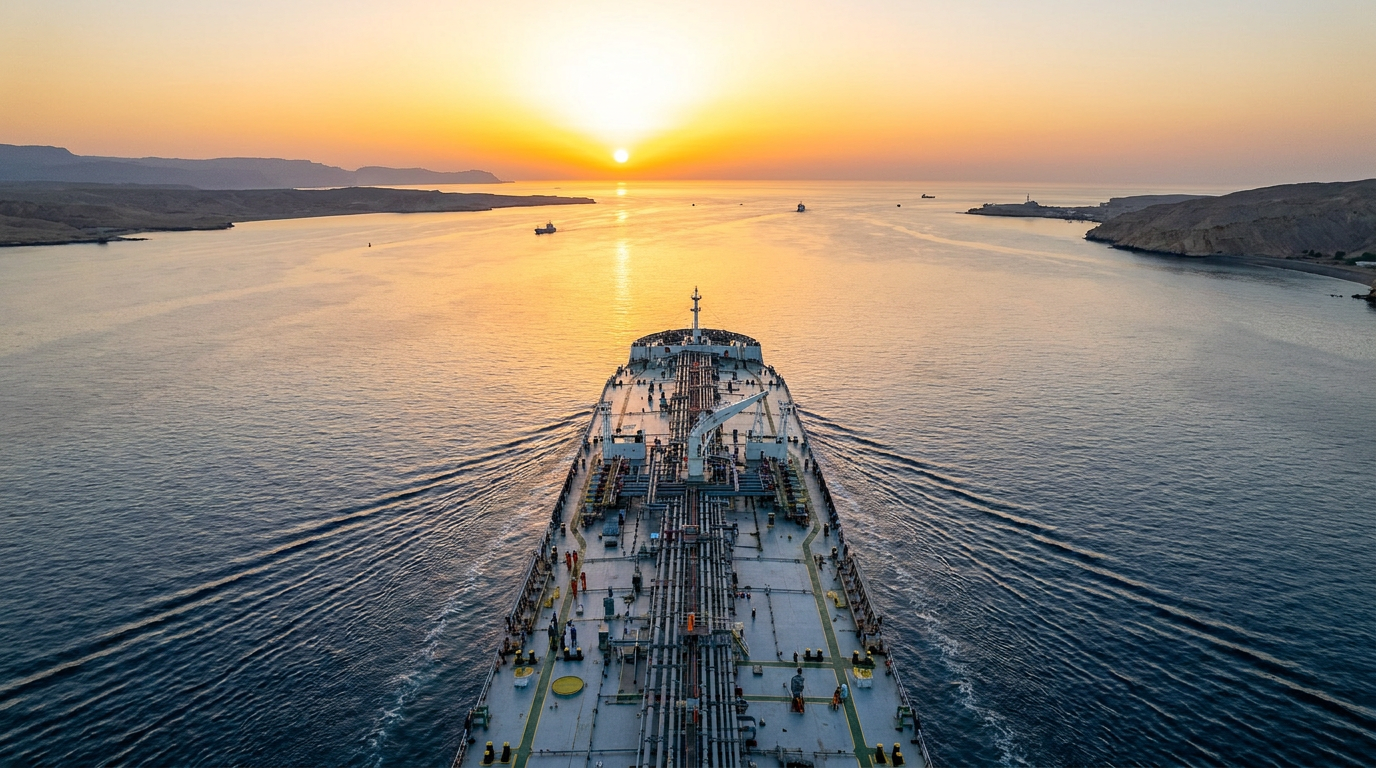
After more than 100 days of a devastating conflict that choked off the world's most critical energy artery, the United States and Iran have reached a preliminary peace agreement to reopen the Strait of Hormuz. The memorandum of understanding, digitally signed over the weekend, sets the stage for a formal ceremony in Geneva on June 19. The breakthrough promises to end a naval standoff that has paralyzed global shipping, spiked inflation, and forced major economies to downgrade their growth forecasts.[3][8]
The immediate market reaction was euphoric. Brent crude, the international oil benchmark, tumbled nearly 5 percent to around $83 a barrel on Monday, a sharp drop from the crisis peaks that exceeded $126 earlier in the conflict. Global stock markets surged in tandem, with the Dow Jones Industrial Average hitting a record high and major Asian indices jumping as much as 5 percent. Investors are betting that the resumption of Gulf oil exports will extinguish the most severe energy supply crisis in modern history.[1][5]
U.S. President Donald Trump heralded the agreement on social media, declaring an end to the U.S. naval blockade of Iranian ports and authorizing the toll-free opening of the Strait. "Ships of the World, start your engines. Let the oil flow!" he wrote. Iranian officials confirmed the finalized text, noting that the deal extends the current ceasefire and paves the way for a 60-day negotiation period regarding Iran's nuclear program.[3][4]

To understand the sheer scale of the economic relief, one must look at the mechanics of the Strait of Hormuz. Before the war erupted in late February, the narrow waterway between Oman and Iran carried roughly 20 percent of the world's crude oil and a significant portion of its liquefied natural gas (LNG). When Iran militarized the chokepoint and the U.S. responded with a blockade, millions of barrels of daily production were effectively trapped in the Persian Gulf.[2][6][8]
The macroeconomic damage over the past three months has been profound. The Organization for Economic Cooperation and Development (OECD) recently downgraded its global GDP growth forecast for 2026 from 3.4 percent to 2.8 percent, citing the energy shock. Across Asia, which relies heavily on Middle Eastern crude, currencies plummeted and supply chain bottlenecks choked industrial output.[5][8]
However, while the political agreement is a monumental step, energy experts and economists warn that the physical reality of reopening the Strait will not match the speed of the diplomatic announcements. The claim that oil will immediately flood the market faces severe logistical and operational hurdles that cannot be solved with a signature in Geneva.[2][7]

First, the waterway itself must be secured. The Strait has been heavily mined, and clearing these hazards to re-establish internationally recognized transit lanes will take weeks. Shipping data analysts note that captains, fleet owners, and maritime insurers will demand concrete proof of safety before sending multi-million-dollar vessels and crews back into the passage. Currently, ships are only trickling out through heavily vetted, military-guided lanes.[2]
The Strait has been heavily mined, and clearing these hazards to re-establish internationally recognized transit lanes will take weeks.
Second, the oil cannot simply be turned back on like a faucet. During the 100-day closure, Middle Eastern producers—including Saudi Arabia, Kuwait, and Iraq—were forced to shut in millions of barrels of daily production because regional storage facilities quickly filled to capacity. Restarting these aging oilfields is a complex engineering task. The U.S. Energy Information Administration projects that while shipments will resume in the third quarter, ramping up to pre-conflict traffic volumes will likely take until early 2027.[1][6]
The natural gas market faces an even steeper climb. During the conflict, Iranian drone strikes severely damaged Qatar's Ras Laffan complex, effectively erasing a fifth of the world's LNG supply overnight. Because repairing these specialized processing facilities could take years, buyers will be forced to compete for a permanently smaller pool of gas, keeping prices elevated long after crude oil normalizes.[1]

Consequently, the relief for everyday consumers will be delayed. Economists caution that the recent drop in wholesale oil prices will not immediately translate to lower inflation at the grocery store or the gas pump. The costs of the supply chain disruption have already been baked into the prices of goods, and inflation is expected to remain sticky throughout the remainder of 2026.[2][5][8]
"Even if the deal reopens the strait immediately, it will not prevent inflation from rising a bit further in the near term, nor will it avoid some economic damage," noted Neil Shearing, group chief economist at Capital Economics. The best-case scenario is that the global economy avoids a deep recession, instead facing a period of weaker growth before recovering its pre-conflict pace in late 2026.[1]
Beyond the economic mechanics, the diplomatic foundation of the deal remains fragile. The memorandum of understanding defers several highly contentious issues, most notably the future of Iran's highly enriched uranium stockpile. Negotiators have a tight 60-day window to reach a comprehensive nuclear agreement, a feat that previously took years to achieve.[2][3]

Furthermore, the agreement does not encompass all belligerents in the broader regional conflict. Israel, which joined the U.S. in launching the war in February, is not a party to the Geneva signing. Israeli Prime Minister Benjamin Netanyahu has explicitly stated that Israeli troops will not withdraw from southern Lebanon, where they are fighting the Iran-backed Hezbollah militant group.[2][3]
This localized continuation of hostilities poses a direct threat to the broader peace. Hezbollah has framed the U.S.-Iran deal as a victory, but Iran has historically insisted that any permanent resolution must include an end to the fighting in Lebanon. If the Lebanese front escalates, the fragile consensus holding the Strait of Hormuz open could easily shatter.[2][7]
For now, the global economy is breathing a collective sigh of relief. The worst-case scenarios of sustained $150-a-barrel oil and crippling global stagflation appear to have been averted. Yet the crisis has permanently altered the calculus of global trade, exposing the profound vulnerability of relying on a single, 21-mile-wide chokepoint for the lifeblood of the modern economy.[1][7][8]
How we got here
Late February 2026
Conflict erupts, leading Iran to militarize the Strait of Hormuz and the U.S. to impose a naval blockade.
April 2026
A temporary truce pauses direct military engagement, though the naval standoff and blockade continue.
May 2026
Global oil inventories plummet as Middle Eastern producers are forced to shut in millions of barrels of daily production.
June 14, 2026
The U.S. and Iran digitally sign a preliminary memorandum of understanding to end the war.
June 19, 2026
The formal peace agreement is scheduled to be signed in Geneva, Switzerland.
Viewpoints in depth
U.S. Administration
The White House views the deal as a definitive victory that neutralizes a global economic threat.
President Trump and his administration frame the agreement as a successful use of maximum pressure. By ending the blockade and securing a commitment to halt Iran's nuclear ambitions, the administration argues it has stabilized global markets while defanging a major adversary, pointing to the immediate stock market rally as proof of success.
Iranian Leadership
Tehran portrays the agreement as a successful defense of its sovereignty that forced the lifting of a crippling blockade.
Iranian officials emphasize that the reopening of the Strait will happen under their own logistical arrangements and timelines. They view the lifting of the U.S. naval blockade as a major concession won through their willingness to endure a 100-day standoff, while maintaining that any long-term peace depends on Israeli actions in Lebanon.
Energy Markets & Shippers
The maritime and energy sectors are highly cautious, focusing on the physical realities of resuming trade.
Fleet operators, insurers, and energy analysts argue that political declarations do not instantly clear sea mines or restart dormant oilfields. They warn that the risk premium will remain embedded in crude prices until safe, internationally recognized transit lanes are fully operational and Middle Eastern producers can successfully ramp up shut-in production.
Macroeconomists
Global economists warn that the inflationary damage of the 100-day closure is already baked into the system.
While acknowledging the relief of avoiding $150-a-barrel oil, economists stress that supply chain disruptions have a long tail. Because goods and raw materials were delayed or rerouted at high costs over the past three months, consumer prices will remain sticky. They project that a full return to pre-conflict economic growth will not materialize until late 2026 or 2027.
What we don't know
- Whether the 60-day negotiation window will produce a lasting agreement on Iran's nuclear program.
- How quickly maritime insurers will clear commercial vessels to transit the heavily mined Strait.
- If Israel's continued military operations in Lebanon will cause Iran or Hezbollah to abandon the deal.
Key terms
- Strait of Hormuz
- A narrow, 21-mile-wide waterway between Oman and Iran that serves as the only sea passage from the Persian Gulf to the open ocean.
- Brent Crude
- The primary international benchmark price for purchasing crude oil worldwide.
- Shut-in Production
- Oil wells that are temporarily capped or turned off because the extracted oil cannot be transported or stored.
- Liquefied Natural Gas (LNG)
- Natural gas that has been cooled to a liquid state for easier and safer storage and transport across oceans.
- Risk Premium
- The extra cost added to the price of oil to account for the geopolitical danger of supply disruptions.
Frequently asked
When will oil start flowing through the Strait of Hormuz again?
While political leaders have authorized immediate reopening, experts say it will take weeks to clear naval mines and secure insurance for commercial vessels.
Why did the Strait of Hormuz closure cause global inflation?
The Strait is a critical chokepoint that handles 20% of the world's oil. Its closure trapped millions of barrels, spiking energy costs which cascaded into the prices of everyday goods and transportation.
Does this peace deal end the conflict in the Middle East?
No. While it pauses the U.S.-Iran naval war, Israel has stated it will not withdraw from Lebanon, leaving a major regional flashpoint unresolved.
Will gas prices at the pump drop immediately?
Not immediately. Economists warn that the supply chain disruptions of the past 100 days are already baked into consumer prices, meaning inflation will remain sticky for months.
Sources
Source coverage
8 outlets
4 viewpoints surfaced








[1]The GuardianGeopolitical Skeptics
Donald Trump posts 'Let the oil flow' as US-Iran peace deal sparks immediate drop for Brent crude
Read on The Guardian →[2]PBSEconomic Realists
Tentative agreement to end Iran war and reopen Strait of Hormuz would be good news for global economy
Read on PBS →[3]TimeDiplomatic Optimists
U.S. and Iran Reach Preliminary Deal to End War and Reopen Strait of Hormuz
Read on Time →[4]CBS NewsDiplomatic Optimists
Iran peace deal to be signed Sunday and strait reopened immediately, Trump says
Read on CBS News →[5]The Business TimesEconomic Realists
Strait of Hormuz reopening would offer relief for Asia, but economic scars will remain
Read on The Business Times →[6]U.S. Energy Information AdministrationEnergy & Maritime Operators
Short-Term Energy Outlook - June 2026
Read on U.S. Energy Information Administration →[7]Atlantic CouncilEnergy & Maritime Operators
Experts react: What the US-Iran peace deal means for the Strait of Hormuz and global energy
Read on Atlantic Council →[8]Investment WeekEconomic Realists
Deal to reopen Strait of Hormuz 'less about geopolitics and more about inflation'
Read on Investment Week →

More in business
See all 5 stories →


Every angle. Every day.
Get business stories with full source coverage and perspective breakdowns delivered to your inbox.