
ISU Releases 2026/2027 Figure Skating World Standings as New Olympic Cycle Begins
Following the Milano-Cortina Olympics, the newly released ISU World Standings highlight a massive generational shift, with Alysa Liu driving a U.S. resurgence and veterans stepping away.
By Jackson Reed

The International Skating Union (ISU) has officially released the World Standings and Grand Prix assignments for the 2026/2027 figure skating season, formally turning the page on the Milano-Cortina Olympic cycle. June is traditionally the month when the figure skating world resets its hierarchies, calculating points from the past two seasons to seed the upcoming international circuit. However, this year's standings reveal a sport undergoing a massive generational shift. With legendary veterans retiring and reigning champions weighing sabbaticals, the top 24 seedings look drastically different than they did just months ago.[3]
The ISU World Standings are the lifeblood of a competitive figure skater's career. The rankings dictate who receives coveted invitations to the six senior Grand Prix events held each autumn. Skaters who finished in the top 12 at the World Championships, or who sit in the top 24 of the World Standings, are guaranteed up to two Grand Prix assignments. These assignments are critical not just for ranking points, but for visibility and financial stability in a notoriously expensive sport.[3]
In the women's discipline, the landscape has been completely reshaped by the retirement of Japan's Kaori Sakamoto. Sakamoto walked away from competitive skating in March after capturing her fourth World Championship in Prague, leaving a massive power vacuum at the top of the ISU rankings. Her departure marks the end of an elegant, powerful era; she became the first women's single skater to win four world titles since American Michelle Kwan achieved the feat in 2003.[2]
Sakamoto's exit forces the Japanese Skating Federation to pivot toward its rising stars. Skaters like Mone Chiba, who finished second to Sakamoto at the World Championships, and Mao Shimada are now seeded in prime positions to take over the mantle. The Japanese women have dominated the upper echelons of the standings for the past four years, but they now face a revitalized international field eager to claim the top spot.[3]
Stepping directly into that spotlight is 20-year-old American Alysa Liu, whose storybook comeback defined the 2026 season. After retiring at age 16 due to burnout, Liu returned to the ice to capture double gold at the Milano-Cortina Games, winning both the team and individual events. Her victory marked the first individual Olympic gold medal for an American woman since Sarah Hughes in 2002, ending a 24-year drought.
Liu's dominance has not only secured her the top tier of the World Standings but has also ignited a domestic boom in the sport. U.S. figure skating officials are calling it the biggest grassroots participation surge since the 1990s, cementing her status as the face of the new Olympic cycle. Currently headlining the Stars on Ice tour, Liu's blend of athletic excellence and joyful online engagement has brought a new demographic of fans to the rinks.
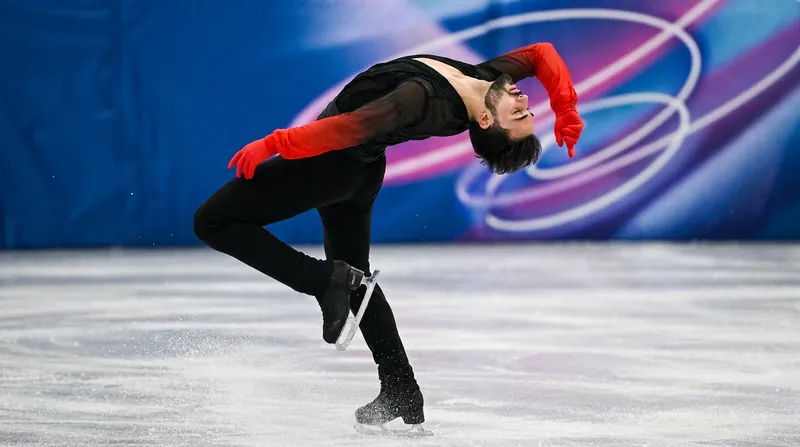
The men's standings present a more complex and unpredictable picture. American Ilia Malinin, famously dubbed the "Quad God," remains the gravitational center of the sport after winning his third consecutive World Championship in Prague. Malinin is the only skater in history to master all six jumps in quadruple form, and his technical ceiling remains entirely unmatched on the global stage.[1][3][4]
However, Malinin's path forward is intentionally unwritten. After struggling with the immense pressure of the Olympic individual event—where he finished eighth before bouncing back for World gold a month later—the 21-year-old has indicated he may take a partial or full break during the 2026/2027 Grand Prix season. "I needed to put everyone before me—and that's really what just caused it to go wrong," Malinin recently reflected regarding the Olympic spotlight, noting he is taking his future "one step at a time."[1][3]
This prioritization of mental health and longevity is becoming a defining theme of the post-Olympic season. Malinin's potential absence is compounded by reports that Japanese Olympic silver medalist Yuma Kagiyama is also planning to take the season off to recover and recalibrate. In previous eras, skipping the post-Olympic season was a luxury reserved for retiring veterans, but today's elite skaters are increasingly treating it as a necessary reset to survive another four-year cycle.[1][3]
The potential absence of the top two men blows the Grand Prix circuit wide open. Skaters like France's Adam Siao Him Fa, who brings immense artistic flair, and Japan's Kao Miura and Shun Sato are now seeded in prime positions to capture Grand Prix Final spots. Without Malinin's insurmountable technical base scores dominating the math, the men's events are expected to be fiercely contested battles of execution and component scores.[3]
A similar changing of the guard is occurring in the ice dance and pairs disciplines. Following the Olympics, several top teams have opted to step back, including American silver medalists Madison Chock and Evan Bates, who elected not to pursue a fourth straight world championship in Prague. This clears the runway for teams like Canada's Piper Gilles and Paul Poirier, and Great Britain's Lilah Fear and Lewis Gibson, to dominate the early-season standings.[2]
For all competitors, securing these Grand Prix assignments is a critical financial lifeline. The global prize money for individual events sits at $180,000 per competition. First-place finishers take home $18,000, while fifth place yields $2,000, making the difference between a podium finish and the middle of the pack highly consequential for athletes funding their own coaching and choreography.[3]
The ISU's Grand Prix series will officially kick off in late October with the Grand Prix de France in Angers. The tour will then move rapidly across the globe, with consecutive weekend stops at Skate Canada International, the Cup of China, the NHK Trophy in Japan, Skate America in Washington state, and the Finlandia Trophy in Helsinki. The top six point-earners in each discipline will then converge for the Grand Prix Final in December.[3]
As the sport transitions away from the intense glare of the 2026 Games, the newly minted standings emphasize a period of healthy renewal. With Sakamoto's era concluded, Liu sparking a renaissance, and Malinin recalibrating his historic trajectory, the ice is clear for a new cast of challengers. The road to the 2030 French Alps Games begins now, defined by a generation that values both record-breaking athleticism and personal well-being.[1][2][3]
Key points
- The ISU has released the 2026/2027 World Standings, dictating the upcoming Grand Prix assignments.
- Kaori Sakamoto's retirement leaves the women's field open for Olympic champion Alysa Liu.
- Liu's recent Olympic victories have sparked a massive grassroots participation boom in the U.S.
- Men's World Champion Ilia Malinin may take a sabbatical to prioritize mental health.
- The Grand Prix series begins in October, offering $180,000 in prize money per event.
How we got here
Feb 2026
Alysa Liu wins double gold and Ilia Malinin wins team gold at the Milano-Cortina Winter Olympics.
Mar 2026
Kaori Sakamoto wins her fourth World title before retiring, while Malinin captures his third.
Jun 2026
The ISU finalizes the World Standings and announces the seedings for the upcoming Grand Prix season.
Oct 2026
The 2026/2027 Grand Prix series will commence with the Grand Prix de France.
- U.S. Skating Advocates
- Focuses on the massive grassroots boom sparked by American Olympic successes and the dominance of skaters like Alysa Liu.
- Athlete Wellbeing Advocates
- Emphasizes the importance of skaters taking sabbaticals to protect their mental and physical health after the grueling Olympic cycle.
- Japanese Skating Federation
- Focuses on honoring retiring legends while quickly pivoting to develop the next generation of podium contenders.
Perspectives this story doesn't cover
- Junior skaters moving up to the senior level
- Host country selection committees
Sources
Source coverage
4 outlets
3 viewpoints surfaced




- [1]Olympics.comAthlete Wellbeing Advocates
Ilia Malinin reflects on Olympic pressure, looks ahead to uncertain 2026-27 season
Read on Olympics.com → - [2]The GuardianJapanese Skating Federation
US players agree with Zlatan Ibrahimovic that World Cup title is possible: ‘That’s our mindset’
Read on The Guardian → - [3]AnythingGOEAthlete Wellbeing Advocates
Grand Prix Assignments for the 2026/27 season: Who is seeded?
Read on AnythingGOE → - [4]TIMEU.S. Skating Advocates
Ilia Malinin: TIME100 Most Influential People in Sports 2026
Read on TIME →
More in Sports
See all →Injury
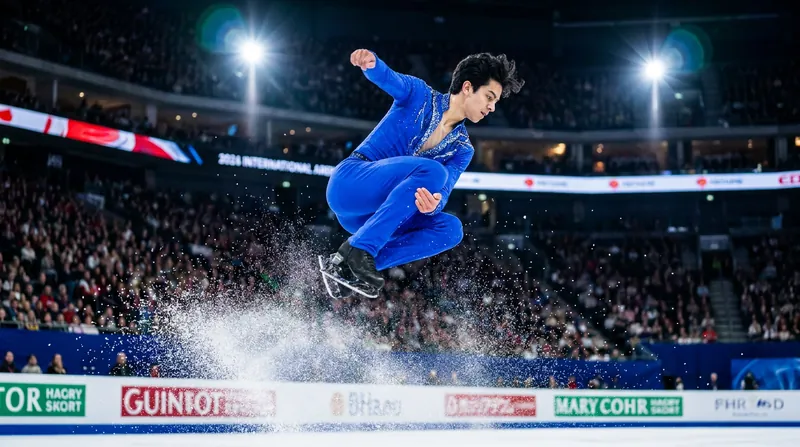
Figure Skating Injury Report: Sadovsky and Yamamoto Cleared for Grand Prix Action as Thorngren Transitions to Coaching
6 sources
Injury
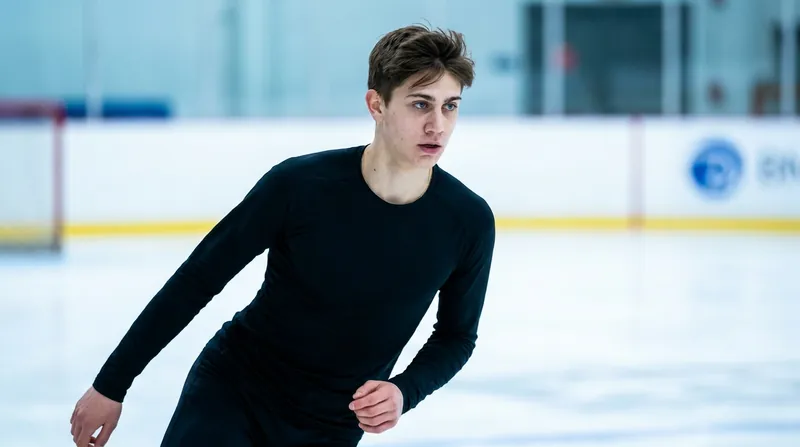
Figure Skating Injury Report: Britschgi Cleared for Grand Prix as Behr and Kwan Highlight Global Resilience
5 sources
Injury
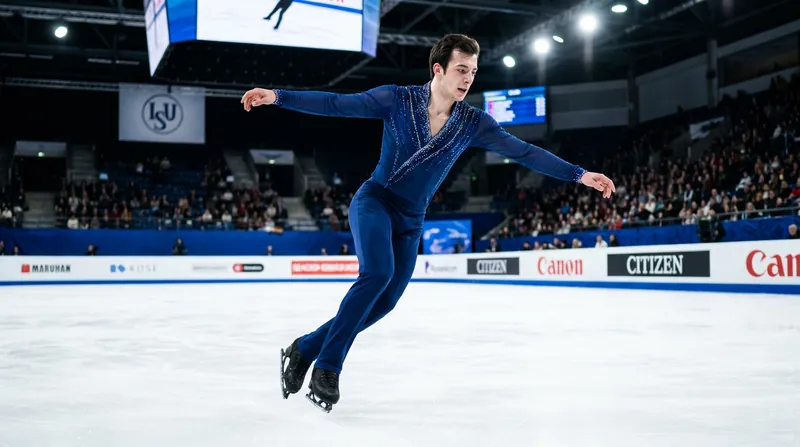
Minkyu Seo Balances Ankle Rehabilitation With Ambitious Senior Grand Prix Debut
3 sources
Injury
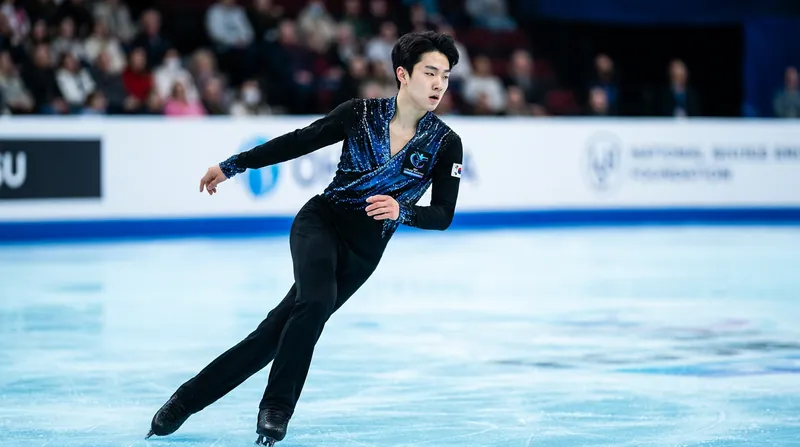
Figure Skating Injury Report: Aymoz, Howe, and Glenn Showcase Resilience Ahead of 2026-27 Season
2 sources
Comments
Every angle. Every day.
Get Sports stories with full source coverage and perspective breakdowns, free every day.