
The 'Green Collar' Boom: Why Clean Energy Trades Are the Fastest-Growing Jobs in America
Driven by billions in infrastructure spending, vocational roles like wind turbine technicians and solar installers are surging, offering high-paying, debt-free alternatives to a four-year degree.
By Factlen Editorial Team
- Clean Energy Employers
- Companies building and maintaining renewable infrastructure who are desperate for trained workers.
- Vocational Educators
- Trade schools and certification bodies adapting curriculums to meet the green energy boom.
- Labor Economists
- Analysts tracking the shift from four-year degrees to high-paying specialized trades.
- Transitioning Workforce
- Workers and military veterans seeking debt-free, high-paying entry into the labor market.
What's not represented
- · Traditional four-year university administrators losing enrollment to the trades
- · Workers in declining fossil-fuel industries attempting to transition to green trades
Why this matters
The explosion of clean energy trades offers a highly lucrative, debt-free path to the middle class for workers willing to learn physical skills, fundamentally challenging the assumption that a four-year college degree is the only route to financial security.
Key points
- Wind turbine technicians and solar PV installers are the two fastest-growing occupations in the United States.
- These roles offer high starting salaries and do not require a traditional four-year college degree.
- The clean energy sector faces a massive labor shortage, with a projected deficit of 124,000 wind workers by 2030.
- Employers are heavily recruiting military veterans due to their technical skills and strict adherence to safety protocols.
- The electrification of the economy is also driving massive demand for EV charging and heat pump installers.
For decades, the American educational default was a four-year college degree, often accompanied by crippling student debt and uncertain job prospects. But a structural shift is currently underway in the vocational sector, driven by a massive influx of infrastructure spending and a global pivot toward renewable energy. The skilled trades are experiencing a profound renaissance, and at the absolute forefront of this movement are 'green collar' jobs. These roles offer a compelling alternative to the traditional university track, providing hands-on work, rapid entry into the labor force, and highly competitive starting salaries. As the energy grid transforms, the definition of a blue-collar worker is evolving into a highly technical, specialized profession.[7]
The data tracking this shift is unambiguous and historically unprecedented. According to the U.S. Bureau of Labor Statistics, the two fastest-growing occupations in the entire American economy are not in software engineering, artificial intelligence, or healthcare administration, but rather wind turbine service technicians and solar photovoltaic installers. Employment for wind turbine technicians is projected to surge by a staggering 50 percent between 2024 and 2034, while solar PV installers are expected to grow by 42 percent over the same decade. To put those figures into perspective, the average growth rate for all occupations in the United States hovers around a mere 4 percent.[1][3]

This explosive growth is not happening in a vacuum; it is the direct result of a massive mobilization of capital. Billions of dollars in federal incentives, state-level renewable energy mandates, and private sector investments in grid modernization have created an insatiable demand for labor. The Department of Energy notes that the United States now has over 75,000 onshore wind turbines operating across 42 states. Every single one of those massive structures requires regular inspection, preventative maintenance, and complex mechanical repair to keep the blades turning and the power flowing reliably into the grid.[2][3][5]
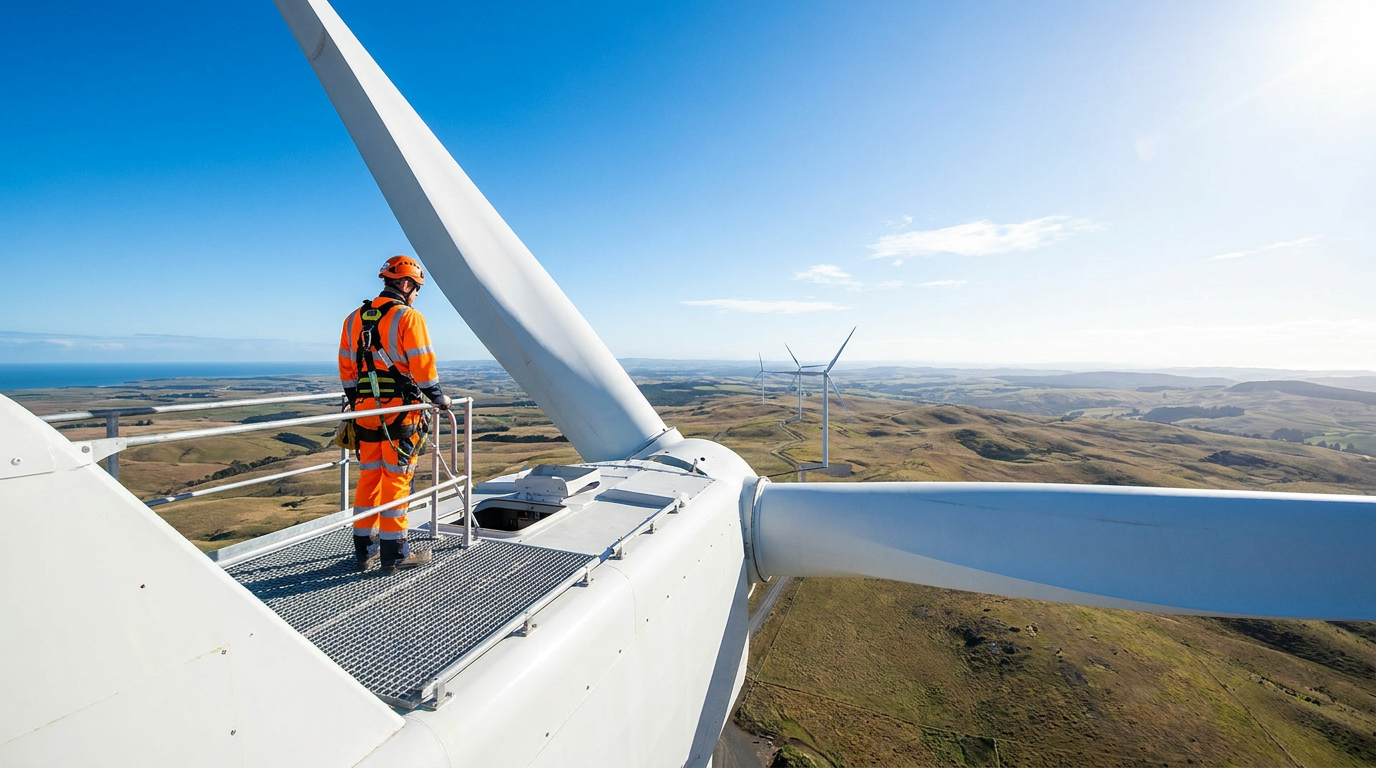
So, what does the day-to-day work actually entail for these highly sought-after professionals? For wind turbine technicians, the job is intensely physical, highly technical, and often located in remote rural areas. Technicians routinely climb interior tower ladders that reach 200 to 300 feet into the sky, carrying heavy diagnostic gear and tools. Once at the top, they troubleshoot mechanical, hydraulic, and electrical faults inside the nacelle—the bus-sized housing at the apex of the tower that contains the massive generator and gearbox.[4]
Solar PV installation, while keeping workers closer to the ground, is equally demanding and precise. Installers are responsible for assembling, setting up, and maintaining solar panel systems on residential rooftops, commercial buildings, and sprawling utility-scale ground arrays. The daily work involves reading complex electrical blueprints, mounting heavy racking systems, wiring panels to inverters and the broader electrical grid, and testing system performance under the hot sun. It is a rigorous blend of roofing, electrical work, and construction coordination. Because the technology is constantly evolving, installers must also stay updated on the latest smart-grid integration standards.[3]
Solar PV installation, while keeping workers closer to the ground, is equally demanding and precise.
Beyond the towering wind farms and rooftop solar arrays, the broader electrification of the American economy is creating entirely new vocational sub-specialties. As electric vehicle adoption accelerates across the country, the demand for certified EV charging station installers has skyrocketed. Electricians who specialize in EV infrastructure can often command premium rates that are 20 to 30 percent higher than those performing traditional residential electrical work. Similarly, the nationwide push to replace traditional fossil-fuel heating systems with highly energy-efficient alternatives has made heat pump installation one of the hottest specializations in the modern trades. The Department of Energy projects that heat pump installations will grow by over 65 percent through the end of the decade, creating thousands of specialized, high-paying positions.[5]

The mechanism for entering these lucrative fields is starkly different from the traditional four-year college track, offering a much faster return on educational investment. Becoming a wind turbine technician typically requires completing a one-to-two-year associate degree or a specialized certificate program at a community college or trade school. Crucially, workers must also obtain mandatory safety certifications from the Global Wind Organisation, which rigorously cover basic safety, advanced rescue at heights, and enhanced first aid. For solar installers, the barrier to entry can be even lower. A high school diploma or GED, combined with basic electrical training, is usually sufficient to secure an entry-level position, with many employers providing extensive on-the-job training.[3][4][5]
The financial proposition for these green trades is highly compelling. In May 2024, the median annual wage for wind turbine technicians was $62,580, while solar PV installers earned a median of $51,860. However, these baseline figures often exclude the significant overtime pay, travel per diems, and hazard pay that technicians frequently earn. Furthermore, union-affiliated utility-scale workers and licensed electricians performing specialized solar or EV work often command salaries that push well into the six-figure range. Perhaps most importantly, these workers are entering the economy without the crushing burden of student loans. When factoring in the opportunity cost of spending four years out of the workforce, the lifetime wealth accumulation for green tradespeople can be highly competitive.[1][3][7]

Despite the clear economic opportunities, the clean energy industry faces a severe and looming bottleneck: there simply are not enough trained workers to meet the exploding demand. A comprehensive study published by the National Renewable Energy Laboratory projected a staggering shortfall of 124,000 workers in the wind energy sector alone by the year 2030. To close this massive labor gap, the NREL estimates that the United States will need to establish 570 or more entirely new training programs nationwide. Currently, roughly 68 percent of wind energy employers report significant difficulty finding qualified applicants to fill their open technician roles, sparking a bidding war among contractors.[3][7]
To address this critical shortage, recruiters and clean energy companies are increasingly turning their attention to a highly compatible and disciplined talent pool: military veterans. Renewable energy sites run on rigorous, uncompromising safety protocols—including strict lockout/tagout procedures, fall protection mandates, and confined space rules for nacelles and inverter rooms. Veterans, particularly those who served as interior electricians, power generation repairers, or aircraft mechanics, already possess the technical aptitude and the checklist-driven safety culture required to thrive in these high-stakes roles. Ultimately, the unprecedented surge in clean energy vocational training represents a rare alignment of personal economic opportunity and global environmental necessity, offering a new generation of workers a lucrative and meaningful path forward.[6][7]

How we got here
2022
The Inflation Reduction Act passes, injecting billions into clean energy and spurring massive labor demand.
2024
Wind turbine technicians and solar installers officially rank as the two fastest-growing jobs in the BLS database.
2026
Industry reports highlight a critical bottleneck, projecting a 124,000 worker shortfall by 2030.
Viewpoints in depth
Clean Energy Employers
Companies building and maintaining renewable infrastructure.
Employers in the wind and solar sectors argue that the transition to renewable energy is currently constrained not by capital or technology, but by human labor. They emphasize the urgent need for more vocational training programs and are increasingly offering signing bonuses, paid on-the-job training, and higher wages to attract talent. Their primary concern is that without a massive influx of skilled technicians, ambitious national climate and infrastructure goals will be impossible to meet on schedule.
Vocational Educators
Trade schools, community colleges, and certification bodies.
Educational institutions view the green collar boom as a validation of the skilled trades over the traditional four-year university track. They are rapidly adapting their curriculums to meet industry standards, such as integrating Global Wind Organisation (GWO) safety protocols and advanced electric vehicle infrastructure training. Educators argue that these programs offer students a faster, debt-free path to the middle class, though they acknowledge the challenge of scaling up facilities and finding qualified instructors to teach the sudden influx of new students.
Labor Economists
Analysts tracking workforce trends and wage growth.
Economists highlight the structural shift in the American labor market, noting that the fastest-growing jobs are now physical, location-dependent trades rather than easily offshored digital roles. They point to the high median wages and lack of student debt as key indicators of the economic viability of green trades. However, they also caution that the current wage premiums are partly driven by acute labor shortages, and they are closely monitoring how compensation will evolve as more workers eventually enter the talent pool.
What we don't know
- Whether the U.S. vocational education system can scale fast enough to create the 570+ new training programs required by 2030.
- How the wage premium for green trades will evolve as the talent pool eventually expands to meet demand.
Key terms
- Nacelle
- The large housing at the top of a wind turbine tower that contains the generator, gearbox, and other critical mechanical components.
- Global Wind Organisation (GWO)
- The international body that sets the mandatory safety and technical training standards required for workers in the wind energy industry.
- Photovoltaic (PV)
- The technology used in solar panels that directly converts sunlight into electricity.
- Lockout/Tagout
- A strict safety procedure used in industry to ensure that dangerous machines are properly shut off and not able to be started up again prior to the completion of maintenance work.
Frequently asked
What does a wind turbine technician do?
They inspect, maintain, and repair wind turbines, which often involves climbing 200 to 300 feet to troubleshoot mechanical and electrical systems inside the nacelle.
Do I need a college degree to work in renewable energy?
No. Most solar installers need only a high school diploma and basic training, while wind turbine technicians typically complete a one-to-two-year certificate or associate degree program.
How much do green collar jobs pay?
As of May 2024, the median annual wage was $62,580 for wind turbine technicians and $51,860 for solar installers, though overtime and specialized union work can push earnings much higher.
Why are military veterans heavily recruited for these roles?
Veterans possess technical experience, are accustomed to physical demands, and have a deeply ingrained safety culture that aligns perfectly with the strict protocols of renewable energy sites.
Sources
Source coverage
7 outlets
4 viewpoints surfaced







[1]U.S. Bureau of Labor StatisticsLabor Economists
Fastest Growing Occupations: 2024-2034
Read on U.S. Bureau of Labor Statistics →[2]U.S. Department of EnergyLabor Economists
Prepare for a Career in Wind Energy
Read on U.S. Department of Energy →[3]TradeColleges.orgClean Energy Employers
Clean energy is the fastest-growing sector of the U.S. job market right now
Read on TradeColleges.org →[4]Skilled Trades IQVocational Educators
Wind turbine technician — America's #1 fastest-growing occupation
Read on Skilled Trades IQ →[5]The Blue Collar RecruiterClean Energy Employers
The Fastest-Growing Skilled Trades in 2026 — and How to Get Hired
Read on The Blue Collar Recruiter →[6]Best Military ResumeTransitioning Workforce
Why Veterans Are the Secret Weapon for Solar and Wind Hiring
Read on Best Military Resume →[7]Factlen Editorial TeamTransitioning Workforce
Synthesis by Factlen editorial team
Read on Factlen Editorial Team →
Every angle. Every day.
Get education stories with full source coverage and perspective breakdowns delivered to your inbox.