
The Rise of Local AI: How Consumer Hardware is Breaking the Cloud Monopoly
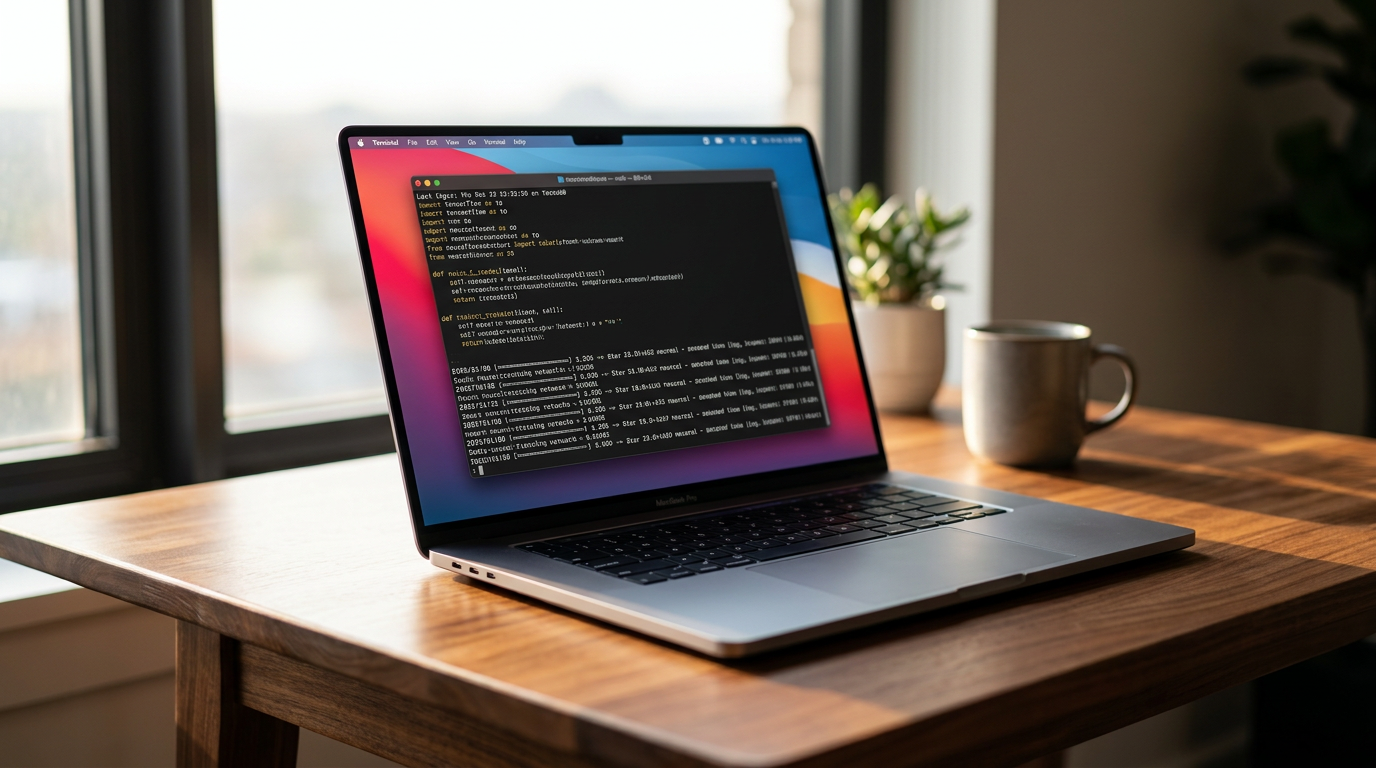
Advances in open-source software and hardware efficiency now allow everyday users to run powerful AI models directly on their laptops, ensuring total privacy and zero subscription costs.
By Factlen Editorial Team
- Privacy & Security Advocates
- Argue that local AI is the only ethical way to handle sensitive corporate and personal data, eliminating the risk of cloud telemetry.
- Open-Source Developers
- Value the zero marginal cost and unrestricted access to model weights, allowing them to build autonomous agents offline.
- Hardware Enthusiasts
- Focus on performance metrics, pushing consumer GPUs and Apple Silicon to their absolute limits to achieve data-center speeds.
What's not represented
- · Cloud AI Providers
- · Non-technical Consumers
Why this matters
By running artificial intelligence directly on your own computer, you can eliminate monthly subscription fees, work entirely offline, and guarantee that your personal data and proprietary documents never leave your device.
Key points
- Local AI allows users to run advanced language models directly on their personal computers without relying on cloud servers.
- Techniques like quantization have compressed massive AI models to fit within the memory constraints of standard laptops.
- Apple Silicon's unified memory architecture has made Macs uniquely powerful for running local AI tasks efficiently.
- Tools like Ollama and LM Studio have simplified the setup process, removing the need for complex command-line configurations.
- Running models locally ensures absolute data privacy and eliminates the per-token costs associated with cloud APIs.
For the past few years, using artificial intelligence meant entering a quiet pact with the cloud. Every question asked, every line of code generated, and every document summarized was packaged up, sent to a server farm hundreds of miles away, processed, and beamed back. It was a miracle of modern networking, but it came with inherent compromises: monthly subscription fees, per-token API costs, and the unavoidable reality that your private data was passing through someone else's computers. In 2026, a quiet revolution has upended that dynamic. A rapidly maturing ecosystem of open-source software and highly optimized models has made it entirely practical to run advanced AI directly on consumer laptops and desktop PCs.[1][4]
This shift from cloud-dependent AI to "local inference" is not just a niche hobby for hardware enthusiasts anymore. According to recent industry benchmarks, a significant portion of enterprise and personal AI workloads is moving on-premises or directly onto user devices. The appeal is straightforward: once the hardware is purchased, the marginal cost of generating an answer drops to zero. There are no rate limits, no internet connection required, and, most importantly, absolute data privacy. For developers handling proprietary codebases, writers working on unreleased manuscripts, or anyone tired of paying a monthly premium for a chatbot, local AI has become the ultimate empowering tool.[2][5]
The mechanics of local AI are surprisingly simple in concept, even if the underlying math is complex. When you query a cloud model like ChatGPT or Claude, your device is merely a terminal; the heavy lifting happens on clusters of enterprise-grade graphics processing units (GPUs) owned by massive tech corporations. Local AI flips this architecture. The entire "brain" of the model—the neural network weights—is downloaded directly to your hard drive. When you type a prompt, your own computer's processor and memory calculate the response. Nothing ever leaves your machine.[3]
Two major catalysts have made this possible on everyday consumer hardware. The first is a breakthrough in how the models themselves are packaged, specifically through a technique called quantization. Raw AI models are massive, often requiring hundreds of gigabytes of memory to run. Quantization mathematically compresses these models, reducing the precision of the numbers inside the neural network from 16-bit to 4-bit or even lower. This drastically shrinks the file size and memory footprint with only a negligible drop in the model's actual intelligence. A model that once required a dedicated server can now fit snugly into 4 to 5 gigabytes of memory.[2][3]

The second catalyst is a hardware evolution, led prominently by Apple's M-series chips. Traditional desktop PCs separate system memory (RAM) from graphics memory (VRAM). Because AI models need to sit in VRAM to run quickly, PC users historically needed expensive graphics cards to run even basic models. Apple Silicon, however, uses a "unified memory" architecture. The CPU and the GPU share the exact same pool of memory. This means a standard Mac Mini or MacBook Pro with 16GB or 24GB of unified memory can dedicate massive chunks of it directly to AI tasks, effectively rivaling high-end PC workstations for a fraction of the cost and power consumption.[1][2]
For Windows and Linux users, the barrier to entry has also dropped, provided they have the right components. The critical metric is no longer just processor speed, but VRAM capacity. A mid-range graphics card like an NVIDIA RTX 3060 with 12GB of VRAM has become the sweet spot for budget-conscious local AI, allowing users to run highly capable 7-billion and 8-billion parameter models at blistering speeds of 30 to 50 words per second. For those willing to invest in 24GB cards, the performance rivals what was considered bleeding-edge enterprise tech just two years ago.[3]
But hardware and compressed models are useless without accessible software, and this is where 2026 has seen the most dramatic user-experience improvements. The undisputed champion of this space is Ollama, an open-source tool that recently surpassed 100,000 stars on GitHub. Ollama acts as a lightweight engine that runs in the background of your computer. It abstracts away all the complex Python environments and driver configurations that used to plague local AI. With a single terminal command, the software automatically downloads the model, configures the hardware, and opens a chat interface.[2][4]
But hardware and compressed models are useless without accessible software, and this is where 2026 has seen the most dramatic user-experience improvements.
For users who prefer to avoid the command line entirely, graphical interfaces have matured into polished, consumer-ready applications. LM Studio has emerged as the "Spotify of LLMs," offering a clean desktop app for Windows and Mac where users can search for models, click download, and start chatting in a familiar interface. Another popular option, Jan.ai, provides a 1-to-1 visual replacement for the standard web chatbot interface, ensuring that the transition to local AI feels seamless for non-technical users. These tools automatically detect the host computer's hardware and optimize the model's performance on the fly.[3][4]

The models available to run on these tools have also seen a generational leap. In early 2026, tech giants and open-source communities released a flurry of highly optimized "small" language models. Google's Gemma 4, Meta's Llama 4 Scout, and Alibaba's Qwen 3.5 were specifically engineered to punch above their weight class. Despite being small enough to run on a laptop with just 8GB to 16GB of RAM, these models routinely match or beat the performance of massive cloud models from 2024 on coding, reasoning, and writing benchmarks.[3][4]
The implications for privacy are profound. In sectors like healthcare, law, and finance, uploading sensitive documents to a cloud AI provider is often a strict compliance violation. Local AI solves this instantly. Because the model runs entirely offline, a lawyer can feed a confidential contract into a local instance of Llama 4 to summarize clauses without ever triggering a data-sharing agreement. Developers are similarly adopting local tools like Continue.dev and Cline, which integrate directly into code editors. These tools read the developer's entire proprietary codebase to suggest improvements, ensuring that unreleased corporate software never leaks to an external server.[2][5]
Beyond privacy, the economics of local AI are reshaping how developers build applications. Cloud AI providers charge by the "token"—essentially fractions of words. When an AI is asked to read a massive document or write thousands of lines of code, those fractions add up quickly into hefty monthly bills. By shifting inference to local hardware, developers achieve zero marginal costs. An AI agent can be left running overnight to analyze thousands of spreadsheets or refactor an entire application, and the only cost incurred is the electricity used by the laptop.[3][5]

This zero-cost environment has fueled the rise of "agentic workflows." Instead of just chatting with an AI, users are now deploying local AI agents—like the wildly popular OpenClaw framework—to act autonomously. Because there is no financial penalty for the AI "thinking" for a long time, these local agents can break down complex tasks, search the user's local files, draft emails, and execute scripts, looping through errors and correcting themselves without racking up a massive API bill.[4][5]
Naturally, local AI is not without its trade-offs. Running a neural network at full tilt is computationally demanding. A MacBook running a heavy model will see its battery drain significantly faster, and a PC graphics card will generate noticeable heat and fan noise. Furthermore, while local models are shockingly capable for daily tasks, they still cannot match the sheer encyclopedic knowledge and complex reasoning capabilities of the absolute largest frontier cloud models, which run on data centers the size of football fields.[1][2]

Because of this, the most pragmatic approach emerging in 2026 is the hybrid model. Power users are routing 80% of their daily AI tasks—routine coding, email drafting, and document summarization—through their local, private, and free models. They reserve the expensive cloud APIs only for the most complex, multi-step reasoning problems that genuinely require a trillion-parameter brain. This hybrid workflow offers the best of both worlds: maximum privacy and zero cost for the mundane, with frontier intelligence available on tap when needed.[2][6]
Ultimately, the rise of local AI represents a massive democratization of computing power. Artificial intelligence is transitioning from a centralized utility controlled by a handful of mega-corporations into a decentralized tool that anyone can own and operate. By putting the models directly onto the devices we use every day, the tech industry is ensuring that the future of AI can be private, affordable, and entirely in the user's control.[6]
How we got here
2023
Early open-source models require complex Python setups and massive enterprise GPUs to run effectively.
Early 2024
The release of tools like Ollama and LM Studio begins to simplify the installation process for everyday users.
Late 2025
Apple's M-series chips and unified memory architecture prove highly capable of running large models locally.
Early 2026
Highly optimized "small" models like Gemma 4 and Llama 4 Scout are released, matching the performance of older cloud models on consumer hardware.
Mid 2026
Local AI adoption surges as developers and privacy advocates shift away from paid cloud APIs toward zero-cost local inference.
Viewpoints in depth
Privacy & Security Advocates
Argue that local AI is the only ethical way to handle sensitive corporate and personal data, eliminating the risk of cloud telemetry.
For professionals handling sensitive data—such as lawyers, healthcare workers, and enterprise developers—the cloud represents an unacceptable security risk. Privacy advocates argue that even with strict enterprise agreements, sending proprietary code or confidential patient records to a third-party server exposes organizations to potential data breaches and unwanted telemetry. By shifting to local inference, these advocates point out that the data perimeter is reduced entirely to the user's physical device, making compliance with strict data protection laws like GDPR and HIPAA significantly easier.
Open-Source Developers
Value the zero marginal cost and unrestricted access to model weights, allowing them to build autonomous agents offline.
The developer community views local AI as a fundamental shift in software economics. When relying on cloud APIs, developers are penalized financially for every experiment, retry, or long-running autonomous task. Open-source advocates emphasize that local AI removes this friction, enabling the creation of 'agentic workflows' where AI can be left to analyze massive datasets or refactor entire codebases overnight for free. Furthermore, having direct access to the model weights allows developers to fine-tune the AI for highly specific, niche tasks without being locked into a single vendor's ecosystem.
Hardware Enthusiasts
Focus on performance metrics, pushing consumer GPUs and Apple Silicon to their absolute limits to achieve data-center speeds.
For the hardware community, the rise of local AI is a benchmark of computing progress. Enthusiasts are actively testing the limits of consumer hardware, demonstrating how Apple's unified memory architecture or dual-GPU PC setups can rival the performance of enterprise data centers from just a few years ago. This camp is less concerned with the philosophical debates over open-source software and more focused on the raw metrics: tokens per second, VRAM optimization, and the efficiency of quantization techniques that allow massive models to run on surprisingly modest machines.
What we don't know
- Whether local hardware will be able to keep pace with the memory demands of future trillion-parameter frontier models.
- How cloud providers will adjust their pricing models to compete with the zero-marginal-cost reality of local inference.
Key terms
- Local Inference
- The process of running an artificial intelligence model directly on a personal device rather than relying on cloud servers.
- Quantization
- A compression technique that reduces the memory footprint of AI models by lowering the precision of their internal numbers.
- Unified Memory
- A hardware architecture, notably used in Apple Silicon, where the CPU and GPU share the exact same pool of memory, greatly accelerating AI tasks.
- VRAM (Video RAM)
- Dedicated memory located on a graphics card, crucial for loading and running AI models quickly on standard PCs.
- Ollama
- A popular open-source software tool that simplifies the process of downloading and running large language models on personal computers.
- Agentic Workflows
- Systems where AI models act autonomously to complete multi-step tasks, such as reading files, writing code, and correcting errors.
Frequently asked
Can I run ChatGPT locally on my computer?
No. ChatGPT is a proprietary cloud service owned by OpenAI. However, you can run open-source models like Llama 4 or Gemma 4 locally, which offer comparable performance for daily tasks.
Do I need an expensive gaming PC to run local AI?
Not necessarily. While a dedicated graphics card helps, modern Apple Silicon Macs (M1 and newer) or PCs with at least 8GB to 16GB of RAM can run smaller, highly optimized models smoothly.
Is local AI completely private?
Yes. When configured correctly, local AI models process all your prompts and data directly on your device's hardware. Nothing is sent over the internet, ensuring complete data privacy.
What is quantization in AI?
Quantization is a mathematical compression technique that shrinks the file size and memory requirements of massive AI models, allowing them to fit on consumer laptops without losing significant intelligence.
Sources
Source coverage
6 outlets
3 viewpoints surfaced






[1]Mac O'ClockHardware Enthusiasts
Running a Local AI Development Environment on a Mac Mini M4 with Ollama
Read on Mac O'Clock →[2]TechsyPrivacy & Security Advocates
How to Run LLMs Locally: Hardware, Tools, and Models [2026]
Read on Techsy →[3]PromptQuorumHardware Enthusiasts
Best Local LLMs May 2026: Ollama, LM Studio, Hardware & VRAM Guide
Read on PromptQuorum →[4]PinggyOpen-Source Developers
Running powerful AI language models locally in 2026
Read on Pinggy →[5]Dev.toOpen-Source Developers
Smart developers are now turning to open-source AI tools
Read on Dev.to →[6]Factlen Editorial TeamHardware Enthusiasts
Synthesis by Factlen editorial team
Read on Factlen Editorial Team →

Every angle. Every day.
Get ai stories with full source coverage and perspective breakdowns delivered to your inbox.