
How the Snapdragon X2 Elite is Rewriting the Rules of Windows Laptops
Qualcomm's new 18-core ARM processor is bringing multi-day battery life and massive AI capabilities to Windows PCs, finally offering a true rival to Apple's M-series chips.
By Factlen Editorial Team
- Mobile Computing Advocates
- Believe ARM architecture is the inevitable future of laptops, prioritizing battery life and efficiency.
- Performance Power Users
- Focus on raw speed and graphical output, noting that x86 still wins for heavy gaming.
- Ecosystem Integration Proponents
- Emphasize how the NPU enables seamless local AI features and cross-device synchronization.
What's not represented
- · Legacy Enterprise IT Managers
- · Hardcore PC Gamers
Why this matters
For decades, Windows users had to choose between software compatibility and battery life. The transition to ARM architecture means consumers can finally buy a Windows laptop that lasts through a cross-country flight without sacrificing the speed needed for heavy multitasking.
Key points
- The Snapdragon X2 Elite is a new ARM-based processor designed to give Windows laptops multi-day battery life.
- It features an 18-core CPU and an 80 TOPS Neural Processing Unit for local artificial intelligence tasks.
- Microsoft's Prism emulation software allows these new laptops to run older x86 Windows applications smoothly.
- Early benchmarks show the chip trading blows with top-tier processors from Apple, Intel, and AMD.
The long-standing divide in the laptop world has always been a matter of compromise. For years, users who wanted multi-day battery life and silent, fanless operation migrated to MacBooks, while those who needed broad software compatibility and gaming support stayed with Windows, accepting that their machines would run hotter and die faster.
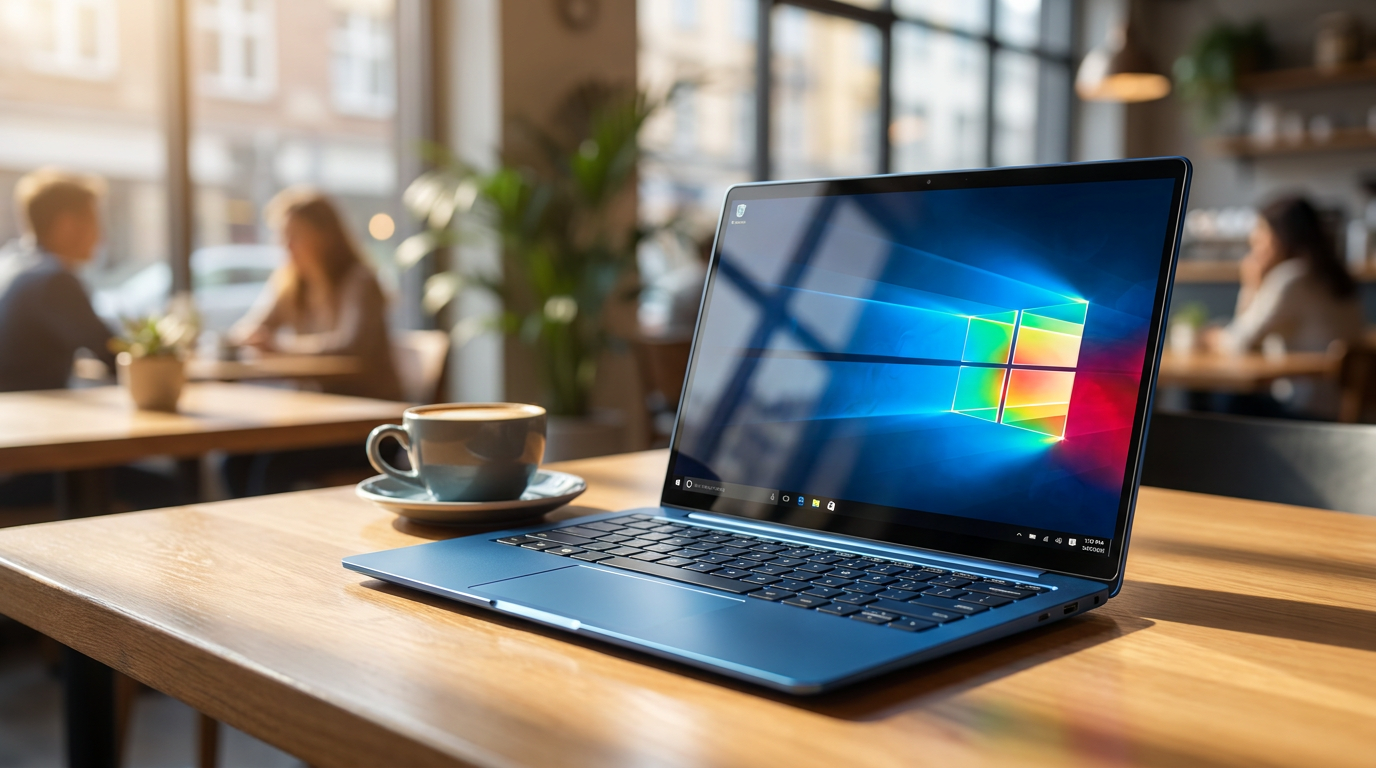
In 2026, that paradigm has definitively fractured. A new wave of Windows laptops, powered by Qualcomm's Snapdragon X2 Elite processor, is hitting the market, promising to deliver the holy grail of mobile computing: massive performance combined with true all-day battery endurance.[1]
The latest entrant to showcase this silicon is Samsung's Galaxy Book 6 Edge, which launched this week. Priced at $2,099, the ultra-thin 12.3mm laptop boasts a 16-inch AMOLED display and makes a staggering claim of up to 22 hours of video playback on a single charge.[3][7]
But the real story isn't just one premium laptop; it is the fundamental shift in the silicon inside it. To understand why the Snapdragon X2 Elite is a watershed moment, one must look at processor architecture. For decades, Windows PCs relied almost exclusively on the x86 architecture championed by Intel and AMD.[6]

The x86 design is incredibly powerful but historically power-hungry, requiring substantial cooling systems and draining batteries rapidly under heavy workloads. In contrast, the Snapdragon X2 Elite uses ARM (Advanced RISC Machine) architecture—the exact same foundational blueprint that powers smartphones, tablets, and Apple's highly successful M-series chips.[6][8]
ARM architecture is fundamentally engineered to do more work per watt of energy consumed. It achieves this efficiency through a streamlined instruction set and a core arrangement that routes lightweight background tasks to highly efficient cores, while reserving high-performance cores for demanding workloads.[6]
Qualcomm's implementation in the X2 Elite Extreme pushes this concept to its absolute limits. The flagship chip features an 18-core "Oryon" CPU capable of boosting up to a blistering 5.0 GHz. In independent benchmark testing, this translates to a massive generational leap; the X2 Elite delivers an 800-point jump in single-core performance over its predecessor, allowing it to trade blows with top-tier chips from AMD, Intel, and Apple.[1][4]

However, raw speed is only half the equation. The true test of an ARM-based Windows machine is software compatibility. Because Windows and its vast library of legacy applications were originally built for x86 processors, running them on an ARM chip requires a translation layer.[6]
The true test of an ARM-based Windows machine is software compatibility.
Microsoft's solution is an emulation engine called Prism. When a user opens an older x86 application, Prism translates the code in real-time so the ARM processor can understand and execute it. In the past, this translation process was notoriously sluggish, earning early ARM laptops a reputation for poor performance.[8]
Today, the sheer brute force of the Snapdragon X2 Elite, combined with deep software optimizations in Windows 11, has largely erased that penalty. Most everyday applications—from Google Chrome to Microsoft Office—now have native ARM versions that run flawlessly, while legacy apps run through Prism with minimal noticeable lag.[8]
The only significant remaining hurdle is PC gaming. While the X2 Elite's Adreno GPU represents a major step forward for light video editing and casual gaming, many competitive multiplayer titles rely on kernel-level anti-cheat software that fundamentally cannot run through an emulation layer. For hardcore gamers, traditional x86 machines remain the only viable option.[5]
Beyond the CPU and GPU, the defining feature of the 2026 laptop landscape is the Neural Processing Unit, or NPU. The Snapdragon X2 Elite integrates a dedicated Hexagon NPU capable of 80 TOPS (Trillions of Operations Per Second).[1][7]

An NPU is specialized silicon designed exclusively to handle artificial intelligence and machine learning tasks locally on the device, rather than sending data to the cloud. This allows features like live video translation, background noise removal, and advanced image generation to run instantly and securely.[7][8]
Crucially, offloading these AI tasks to the NPU prevents the main CPU from being bogged down, preserving battery life even when running intensive Copilot+ features. Microsoft has heavily leaned into this hardware shift, positioning Windows on ARM as the premier platform for local AI development and agentic workflows.[1][8]
So, does the "all-day battery" claim hold up in the real world? Independent testing suggests the answer is a resounding yes, even if it falls slightly short of marketing maximums. While Samsung's 22-hour claim is based on local video playback with Wi-Fi disabled, real-world mixed usage tells a highly practical story.[2][3]
In rigorous streaming and productivity benchmarks, laptops equipped with the Snapdragon X2 Elite consistently deliver between 12 and 15 hours of continuous active use. While pushing the 18-core chip to its absolute maximum can drain the battery faster than Apple's M-series equivalents under heavy load, the X2 Elite still vastly outperforms traditional x86 laptops in everyday longevity.[2][5]

The transition to ARM is not without its growing pains. The premium pricing of first-generation flagship devices—like the $2,099 Galaxy Book 6 Edge, which ships with a non-upgradable 16GB of RAM—presents a steep barrier to entry for average consumers.[3][7]
Yet, the trajectory is undeniable. By proving that Windows can run efficiently and powerfully on ARM architecture, Qualcomm and Microsoft have broken a decades-old hardware monopoly. For the everyday user who values a laptop that wakes instantly, runs silently, and reliably survives a full workday away from a wall outlet, the Windows ecosystem has finally delivered a true alternative.[5][6]
How we got here
2012
Microsoft launches Windows RT, an early and largely unsuccessful attempt to bring Windows to ARM architecture.
2020
Apple introduces the M1 chip, proving that ARM architecture can deliver industry-leading performance and battery life in laptops.
2024
Qualcomm releases the first-generation Snapdragon X Elite, establishing a credible foothold for high-performance Windows on ARM.
June 2026
The Snapdragon X2 Elite launches in flagship devices like the Galaxy Book 6 Edge, pushing core counts to 18 and NPU performance to 80 TOPS.
Viewpoints in depth
Mobile Computing Advocates
Focus on the paradigm shift away from power-hungry chips toward efficiency and battery life.
This camp argues that for 95% of users, the ability to leave a charger at home and experience instant-wake functionality is far more valuable than peak benchmark scores. They view the Snapdragon X2 Elite as the moment Windows finally matches the Apple Silicon experience, prioritizing silent operation and true all-day endurance over legacy x86 compatibility.
Performance Power Users
Acknowledge the multi-core gains but remain cautious about emulation taxes and gaming limitations.
While impressed by the 18-core CPU's raw speed, power users point out that the Adreno GPU still lags behind dedicated graphics cards. Furthermore, the inability to run kernel-level anti-cheat software makes these machines non-starters for serious gamers. They argue that traditional x86 chips still hold the crown for heavy, specialized workloads.
Ecosystem Integration Proponents
View the hardware primarily as a vessel for next-generation local AI software.
For this group, the true value of the Snapdragon X2 Elite isn't just battery life, but its 80 TOPS Neural Processing Unit. They emphasize how these chips enable seamless AI features—like Microsoft's Copilot+ and Samsung's Galaxy ecosystem—turning the PC into a local AI hub that processes data securely on-device rather than relying on cloud servers.
What we don't know
- How quickly major video game developers will update their anti-cheat software to be compatible with ARM architecture.
- Whether the premium pricing of first-generation X2 Elite laptops will drop fast enough to capture the mainstream student and budget markets.
Key terms
- ARM Architecture
- A type of computer processor design that prioritizes power efficiency and low heat, originally developed for mobile devices.
- x86 Architecture
- The traditional processor design used by Intel and AMD for decades, known for high performance but higher power consumption.
- NPU (Neural Processing Unit)
- Specialized silicon built specifically to accelerate artificial intelligence and machine learning tasks.
- TOPS
- Trillions of Operations Per Second; a metric used to measure the speed and capability of an NPU.
- Prism
- Microsoft's emulation software that translates legacy x86 code so it can run on newer ARM-based processors.
Frequently asked
What is a Snapdragon processor?
It is a family of ARM-based chips designed by Qualcomm, originally for smartphones, now engineered to power high-performance Windows laptops.
Will my old Windows apps work on an ARM laptop?
Yes. Most popular apps now have native ARM versions, and Windows 11 uses an emulator called Prism to run older x86 applications smoothly.
Can I play PC games on the Snapdragon X2 Elite?
Casual gaming works well, but many competitive multiplayer games will not run because their anti-cheat software is incompatible with ARM emulation.
What does an NPU do?
A Neural Processing Unit handles artificial intelligence tasks locally on the device, speeding up AI features while saving battery life.
Sources
Source coverage
8 outlets
3 viewpoints surfaced








[1]QualcommMobile Computing Advocates
Snapdragon X2 Elite: Performance Leap
Read on Qualcomm →[2]PCWorldPerformance Power Users
Tested: Qualcomm's Snapdragon X2 Elite is faster, but the battery life hit is real
Read on PCWorld →[3]9to5GoogleEcosystem Integration Proponents
Samsung Galaxy Book 6 Edge launches with Snapdragon X2 Elite
Read on 9to5Google →[4]PCMagPerformance Power Users
I Tested Qualcomm's Snapdragon X2 Elite Extreme: This 18-Core Power CPU Hits Hard
Read on PCMag →[5]Hardware CanucksPerformance Power Users
Snapdragon X2E Review - It CRUSHES Everything, but...
Read on Hardware Canucks →[6]HP Tech InfoMobile Computing Advocates
What is Snapdragon Processor? ARM Technology Explained
Read on HP Tech Info →[7]ThurrottEcosystem Integration Proponents
Samsung Launches Qualcomm-Powered Galaxy Book6 Edge
Read on Thurrott →[8]The VergeEcosystem Integration Proponents
Build 2026: Native Windows, Arm, Local AI, and Agent-First Hardware Explained
Read on The Verge →
Every angle. Every day.
Get technology stories with full source coverage and perspective breakdowns delivered to your inbox.