
Samsung Launches Galaxy Book 6 Edge Powered by 18-Core Snapdragon X2 Elite
Samsung has released its ultra-premium Galaxy Book 6 Edge, featuring Qualcomm's next-generation ARM processor, 22 hours of battery life, and advanced on-device AI capabilities.
By Factlen Editorial Team
- Power Users & Reviewers
- Impressed by the silicon but critical of the hardware configuration limits.
- Mobile Professionals
- Prioritize battery life, portability, and seamless ecosystem integration.
- Silicon Manufacturers
- View this as proof that ARM architecture is the future of mobile computing.
What's not represented
- · Budget-Conscious Consumers
- · Traditional PC Gamers
Why this matters
The Galaxy Book 6 Edge represents the maturation of ARM-based Windows laptops, proving they can finally rival Apple's MacBooks in both battery life and raw performance. However, its premium price tag and memory limitations highlight the growing cost of on-device AI capabilities.
Key points
- Samsung has launched the 16-inch Galaxy Book 6 Edge for $2,099.99.
- The laptop is powered by Qualcomm's new 18-core Snapdragon X2 Elite processor.
- It features an upgraded NPU capable of 80 TOPS for advanced on-device AI tasks.
- Samsung claims up to 22 hours of battery life on a single charge.
- Reviewers have criticized the device for maxing out at 16GB of non-upgradable RAM.
The next generation of Windows-on-ARM computing has officially arrived in its most premium shell yet. Following months of anticipation, Samsung has launched the Galaxy Book 6 Edge, a flagship 16-inch laptop powered by Qualcomm’s brand-new Snapdragon X2 Elite processor.[1][2]
The release marks a significant milestone in the ongoing shift away from traditional x86 architecture in Windows laptops. By pairing Samsung’s ultra-thin hardware design with Qualcomm’s 18-core silicon, the Galaxy Book 6 Edge aims to deliver a no-compromise balance of raw performance, multi-day battery life, and advanced artificial intelligence capabilities.[2][6]
At the heart of the new machine is the Snapdragon X2 Elite, a processor that represents a fundamental reengineering rather than a simple iterative update. Utilizing Qualcomm’s third-generation "Oryon" CPU architecture, the chip features up to 18 cores capable of boosting to 5.0 GHz.[4][6]

Early benchmark tests of the X2 Elite platform have shown dramatic generational leaps. Reviewers note that the chip outclasses current Intel and AMD offerings in single-core performance and delivers massive multi-core muscle, effectively challenging Apple’s dominant M-series silicon in the premium ultraportable space.[4][5]
Beyond traditional compute power, the Galaxy Book 6 Edge is heavily optimized for the AI era. The laptop features a dedicated Neural Processing Unit (NPU) capable of 80 Tera Operations Per Second (TOPS)—nearly double the AI processing power of the previous generation.[4][6]
This NPU headroom powers a suite of on-device Copilot+ features and Samsung-specific tools. Users can leverage "AI Select" to seamlessly highlight on-screen content, remove objects from images, or use natural language prompts to search across local files, the Samsung Gallery, and system settings without relying on cloud processing.[1][2]
This NPU headroom powers a suite of on-device Copilot+ features and Samsung-specific tools.
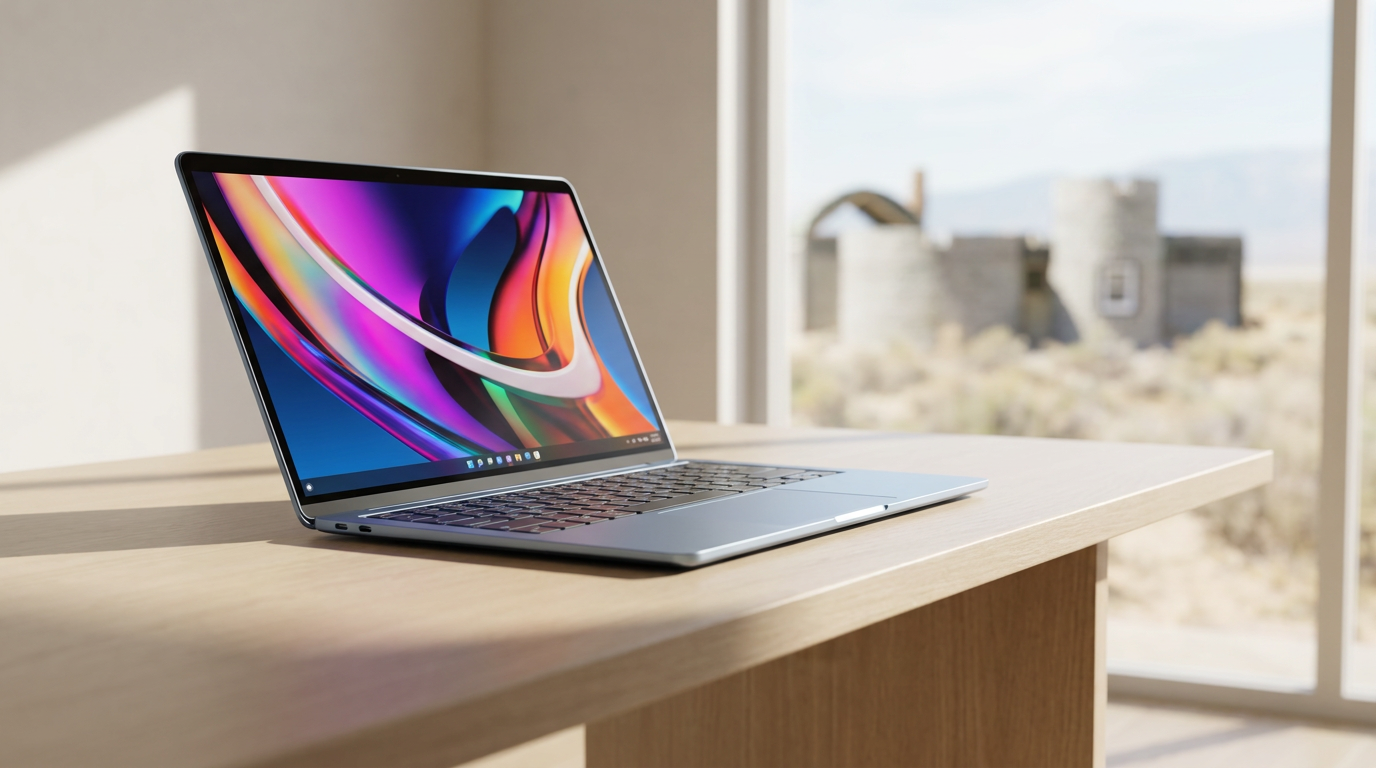
On the hardware front, Samsung has housed this silicon in a chassis that measures just 12.3 millimeters (0.48 inches) thin and weighs 3.42 pounds. The centerpiece is a 16-inch Dynamic AMOLED 2X display, featuring a 2880 x 1800 resolution, a 120Hz adaptive refresh rate, and an anti-reflective coating designed to minimize glare.[1][2]

The transition to ARM architecture continues to pay massive dividends for battery endurance. Samsung claims the Galaxy Book 6 Edge can achieve up to 22 hours of continuous video playback on its 61.8 Wh battery. When it does need a top-up, the included 65W fast charger can restore 40% capacity in just 30 minutes.[1][2]
For users already invested in the Samsung ecosystem, the laptop acts as a central hub. Features like Storage Share and Multi Control allow for cable-free file transfers and seamless drag-and-drop functionality between the PC, Galaxy smartphones, and Galaxy tablets. A "Second Screen" feature even lets users instantly turn a Galaxy Tab into a portable external monitor.[2][3]
Despite the impressive technological leap, the Galaxy Book 6 Edge has sparked debate over its pricing and configuration limits. The laptop is available in a single "Gray Blue" model priced at $2,099.99, which includes a spacious 1TB storage drive but maxes out at 16GB of system memory.[2][3]

The 16GB RAM ceiling—which cannot be upgraded after purchase due to the memory being integrated on-package—has been a point of contention among power users. Competitors like the Lenovo Yoga Slim 7x offer the same Snapdragon X2 Elite chipset paired with 32GB of RAM for $1,899, making Samsung's premium markup a tough sell for spec-focused buyers.[3]
Nevertheless, the device remains highly practical for daily productivity, featuring a robust port selection that includes two USB-C ports, a full-size HDMI 2.1 port, a USB-A port, a built-in microSD slot, and a headphone jack.[2][7]
Ultimately, the Galaxy Book 6 Edge serves as a high-water mark for the Windows-on-ARM ecosystem. It proves that manufacturers can deliver whisper-quiet, ultra-thin machines with battery life that rivals smartphones, without sacrificing the processing power required for demanding creative workflows.[4][6]
How we got here
Mid-2024
Qualcomm launches the first-generation Snapdragon X Elite, kicking off the Copilot+ PC era.
January 2026
Qualcomm unveils the 18-core Snapdragon X2 Elite architecture at CES.
April 2026
First benchmark reviews of the X2 Elite show massive performance gains over Intel and AMD.
June 2026
Samsung officially releases the Galaxy Book 6 Edge to consumers.
Viewpoints in depth
Mobile Professionals
Prioritize battery life, portability, and seamless ecosystem integration.
For professionals constantly on the move, the Galaxy Book 6 Edge is a dream machine. The combination of a 12.3mm thin chassis and 22 hours of battery life means users can leave their chargers at home. Furthermore, the deep integration with Samsung's ecosystem—allowing users to drag and drop files directly from their Galaxy phones or use a tablet as a second screen—creates a frictionless workflow that rivals Apple's walled garden.
Power Users & Reviewers
Impressed by the silicon but critical of the hardware configuration limits.
Hardware enthusiasts are thrilled by the raw power of the Snapdragon X2 Elite, noting its 18 cores and 80 TOPS NPU represent a massive leap forward for Windows-on-ARM. However, they are deeply critical of Samsung's decision to cap the $2,100 machine at 16GB of RAM. In an era where local AI models and heavy multitasking demand significant memory, reviewers argue that 32GB should be the baseline for a laptop at this premium price point.
Silicon Manufacturers
View this as proof that ARM architecture is the future of mobile computing.
For Qualcomm, the launch of ultra-premium devices like the Galaxy Book 6 Edge validates their aggressive push into the PC market. By consistently beating traditional x86 chips from Intel and AMD in both single-core performance and power efficiency, silicon makers believe ARM architecture is no longer just a smartphone technology, but the definitive foundation for the next decade of personal computing.
What we don't know
- Whether Samsung plans to release a 32GB RAM configuration in the future to appease power users.
- How the Snapdragon X2 Elite's battery efficiency holds up under sustained, heavy creative workloads like 4K video rendering compared to Apple's M-series.
Key terms
- Snapdragon X2 Elite
- Qualcomm's flagship 18-core processor designed specifically for high-performance Windows laptops.
- NPU (Neural Processing Unit)
- A specialized chip dedicated to running artificial intelligence and machine learning tasks efficiently.
- Copilot+ PC
- A Microsoft certification for laptops that include powerful NPUs capable of running advanced AI features locally.
- ARM Architecture
- A type of processor design known for high power efficiency, traditionally used in smartphones but now powering premium laptops.
Frequently asked
Can this laptop run standard Windows applications?
Yes. Windows 11 on ARM includes a translation layer that allows traditional x86 applications to run smoothly, though native ARM apps offer the best performance and battery life.
Can I upgrade the RAM later?
No. The 16GB of memory is integrated directly onto the processor package to maximize speed and efficiency, meaning it cannot be upgraded after purchase.
What does 80 TOPS mean?
TOPS stands for Tera Operations Per Second. It measures the speed of the Neural Processing Unit (NPU), which handles AI tasks like image generation and live translation without draining the main battery.
Sources
Source coverage
7 outlets
3 viewpoints surfaced







[1]SamsungMobile Professionals
Samsung Electronics unveils the Galaxy Book6 Edge
Read on Samsung →[2]ThurrottMobile Professionals
Samsung Launches Qualcomm-Powered Galaxy Book6 Edge
Read on Thurrott →[3]9to5GooglePower Users & Reviewers
Samsung Galaxy Book 6 Edge launches with Snapdragon X2 Elite
Read on 9to5Google →[4]PCMagPower Users & Reviewers
I Tested Qualcomm's Snapdragon X2 Elite Extreme: This 18-Core Power CPU Hits Hard
Read on PCMag →[5]ForbesPower Users & Reviewers
Qualcomm Snapdragon X2 Elite Extreme Review
Read on Forbes →[6]QualcommSilicon Manufacturers
Snapdragon X2 Elite Product Brief
Read on Qualcomm →[7]YugaTechMobile Professionals
Samsung unveils Galaxy Book 6 Edge with Snapdragon X2 Elite
Read on YugaTech →

More in technology
See all 5 stories →Authentication Tech
The End of the Password: The Evidence Behind the Passkey Revolution
0 sources

Mechanistic Interpretability
Unlocking the AI Black Box: How 'Mechanistic Interpretability' is Making Neural Networks Safe
0 sources

Consumer Privacy
Canada Moves to Restrict 'Surveillance Pricing' in Major Privacy Law Update
0 sources

Every angle. Every day.
Get technology stories with full source coverage and perspective breakdowns delivered to your inbox.