
SpaceX's Record $86.2 Billion IPO Rewrites Wall Street Rules With Massive Retail Allocation
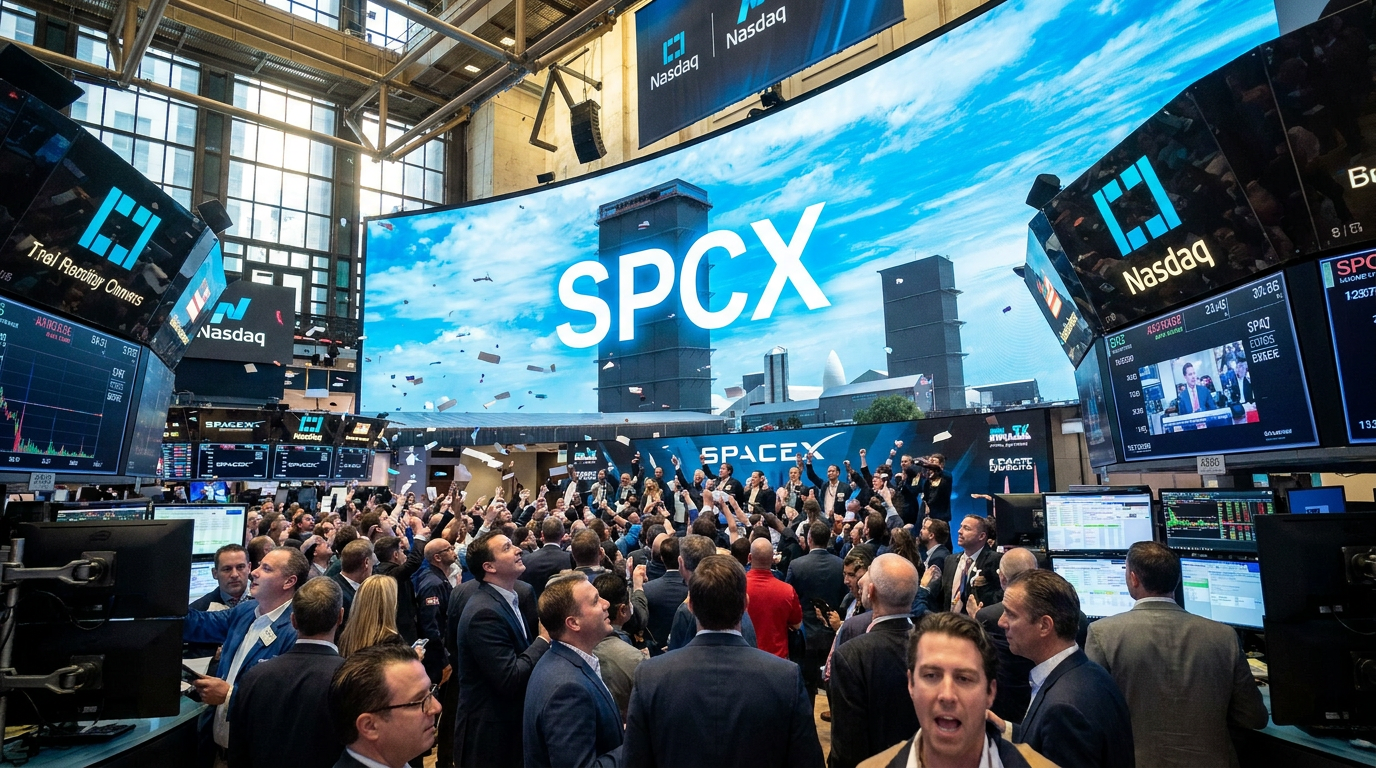
SpaceX has executed the largest initial public offering in history, allocating an unprecedented 20% of its shares to everyday retail investors.
By Factlen Editorial Team
- Retail Investors
- Thrilled by the democratization of access to a generational wealth-building event, viewing the 20% allocation as a major victory.
- Institutional Underwriters
- Focused on the sheer scale of the $86.2 billion raise, managing the unprecedented $250 billion total demand, and ensuring market stability.
- Market Fairness Advocates
- Highlighting the asymmetry in 'flipping' rules where retail investors face 15-30 day lockups while hedge funds can sell immediately.
What's not represented
- · Private equity firms whose early stakes were diluted
- · Competitors in the aerospace sector assessing the new valuation benchmark
Why this matters
By allocating an unprecedented 20% of the largest IPO in history to everyday traders, SpaceX is rewriting the rules of Wall Street. This historic debut proves that retail investors can successfully participate in generational wealth-building events previously reserved exclusively for institutional elites.
Key points
- SpaceX raised a record $86.2 billion in its Nasdaq debut, reaching a $2.5 trillion valuation.
- The company allocated roughly 20% of its shares to retail investors, far above the industry standard.
- Brokerages like Robinhood and Fidelity ensured hundreds of thousands of users received at least one share.
- Retail investors face 15 to 30-day lockup periods preventing them from immediately selling for profit.
- Hedge funds and institutional investors largely avoided these strict anti-flipping restrictions.
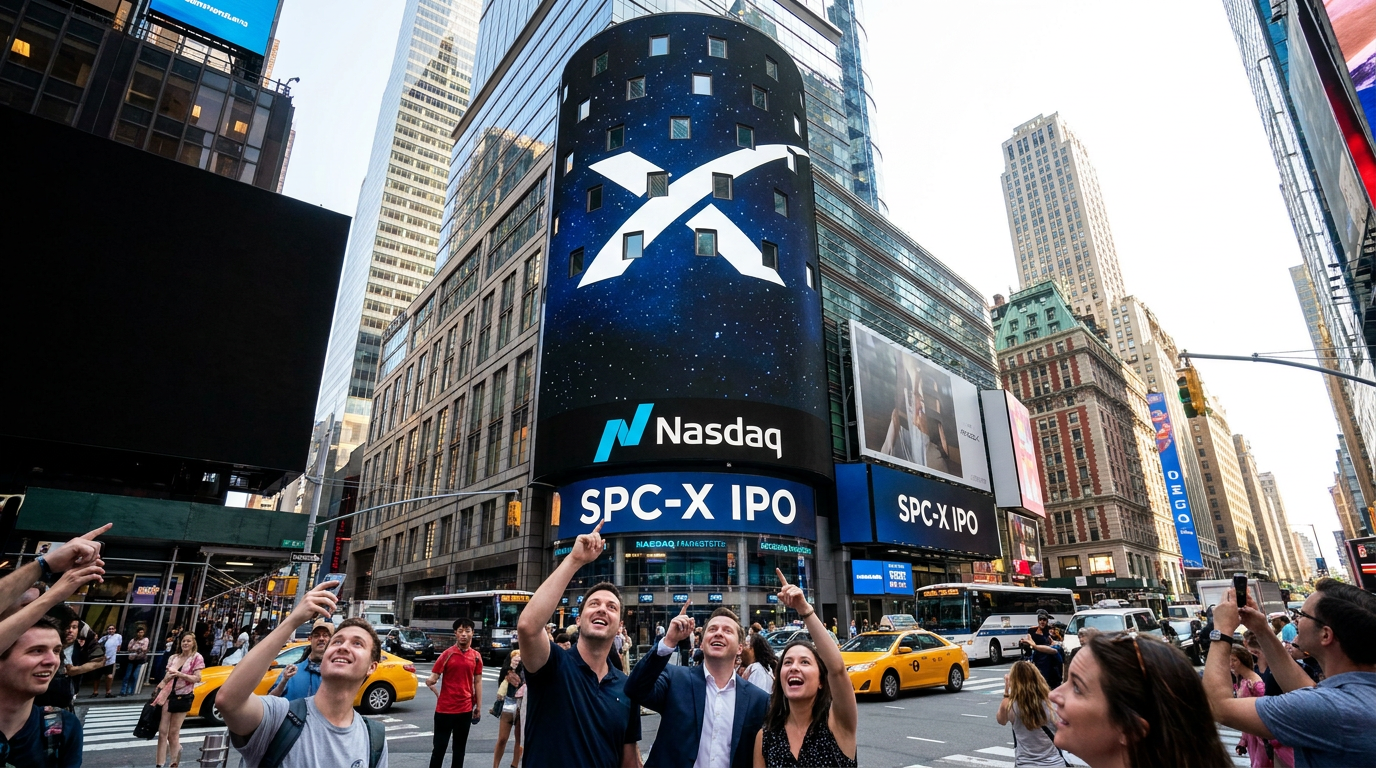
Space Exploration Technologies Corp. has officially transitioned from a closely held private juggernaut to a publicly traded behemoth, executing the largest initial public offering in history. Debuting on the Nasdaq under the ticker SPCX, the Elon Musk-led aerospace company raised a staggering $86.2 billion after underwriters exercised their over-allotment options. The sheer scale of the debut instantly vaulted SpaceX into the ranks of the world's most valuable public companies, with its market capitalization surging past $2.5 trillion by the end of its second day of trading.[2][3][8]
But beyond the record-breaking financial figures, the SpaceX IPO is being hailed as a watershed moment for the democratization of finance. In a stark departure from Wall Street tradition, the company allocated roughly 20 percent of its offering directly to retail investors. Typically, mom-and-pop investors are locked out of high-profile tech debuts, with underwriters reserving 90 to 95 percent of shares for institutional clients, hedge funds, and private wealth networks.[5][6][7]
The decision to open the doors to everyday traders sparked a frenzy of demand. Retail investors globally submitted more than $100 billion in orders, far outstripping the available supply even with the expanded allocation. To manage the deluge, major brokerages including Robinhood, Fidelity Investments, and Charles Schwab implemented systems designed to ensure broad participation rather than concentrating shares among a few wealthy clients.[1][3][6]

At Robinhood, where more than 850,000 customers requested shares through its IPO Access platform, the company managed to fill every single request with at least one share. Fidelity similarly lowered its usual barriers to entry, allowing any customer with a minimum account balance of just $2,000 to participate in the offering—a sharp reduction from the stringent requirements typically attached to IPO access.[1][2][5]
The retail enthusiasm extended well beyond the United States. In the United Kingdom, individual buyers secured approximately $364 million worth of shares after submitting nearly $1 billion in orders through platforms like Hargreaves Lansdown. Japanese retail investors also participated heavily, acquiring 16.3 million shares in aggregate for $2.2 billion, underscoring the global resonance of the SpaceX brand and the universal appetite for aerospace investments.[2][7]
The retail enthusiasm extended well beyond the United States.
The market reception was euphoric. Priced initially at $135 per share, SPCX opened trading at $150 and climbed nearly 20 percent on its first day to close around $161. The momentum only accelerated during the second trading session, with shares surging an additional 20 percent to close at $192.46. This rapid appreciation added over $400 billion to the company's market value in a matter of hours, rewarding those who managed to secure an allocation.[2][3][4]

To accommodate the overwhelming demand, underwriters including Goldman Sachs, JPMorgan Chase, and Morgan Stanley exercised their greenshoe over-allotment option. This mechanism allowed them to sell an additional 83.3 million shares, bringing the total capital raised to $86.2 billion. That figure easily eclipses the previous record set by Saudi Aramco's $29.4 billion offering in 2019, cementing SpaceX's debut as a historic financial milestone.[4][6][8]
However, the unprecedented retail access came with significant strings attached. Individual investors hoping to quickly cash in on the initial price surge found themselves navigating strict anti-flipping rules enforced by their brokerages. Platforms like Fidelity, E*TRADE, and SoFi instituted policies restricting small investors from selling their newly acquired shares within the first 15 to 30 days of trading.[4]
Those who violate these lockup periods face severe penalties, ranging from temporary bans on participating in future IPOs to permanent exclusion from brokerage IPO platforms entirely. The rigid restrictions are designed to prevent massive retail sell-offs from destabilizing the stock's price during its critical first weeks on the public market.[4]

This dynamic has sparked a debate about market fairness, as the anti-flipping rules highlight a glaring asymmetry between everyday traders and Wall Street giants. Hedge funds and large asset managers, who received the lion's share of the offering, are generally not subjected to the same rigid lockups. Because their access is driven by the lucrative fee relationships they maintain with underwriting banks, many institutional players are free to sell their shares immediately to lock in profits.[4]
Despite the friction over trading restrictions, the successful execution of the SpaceX offering is being viewed as a massive confidence booster for the broader technology sector. Analysts note that the market's ability to easily absorb an $86 billion stock issuance assuages fears of liquidity constraints and proves that investor appetite for transformative innovation remains incredibly strong.[2][8]

This robust performance is widely expected to pave the way for other highly anticipated mega-unicorns to test the public markets. Industry watchers are already pointing to artificial intelligence leaders like OpenAI and Anthropic as the next likely candidates to pursue blockbuster IPOs before the end of the year, potentially utilizing similar retail-friendly allocation models to reward their own communities of supporters.[2][8]
How we got here
May 20, 2026
The SEC publicly discloses SpaceX's IPO paperwork, detailing plans to go public.
June 11, 2026
SpaceX finalizes its IPO price at $135 per share, cementing a record valuation.
June 12, 2026
SpaceX officially debuts on the Nasdaq under the ticker SPCX, opening at $150.
June 15, 2026
Shares surge an additional 20% in their second day of trading, pushing the company's valuation past $2.5 trillion.
Viewpoints in depth
Retail Investors' view
Everyday traders see the expanded allocation as a long-overdue democratization of generational wealth creation.
Retail advocates argue that for too long, the massive gains of tech unicorns have been captured entirely by private equity and institutional funds before the companies ever go public. By securing 20% of the SpaceX offering, mom-and-pop investors finally had a chance to buy into a foundational technology company at the ground floor of its public life, viewing the event as a blueprint for future tech listings.
Institutional Underwriters' view
Banks and large funds focused on managing the unprecedented scale and ensuring market stability.
For the financial institutions managing the $86.2 billion raise, the primary challenge was absorbing $250 billion in total demand without breaking the market. They view the heavy retail allocation as a calculated move by Elon Musk to reward his loyal fanbase, but emphasize that institutional capital remains the bedrock that allowed a $2.5 trillion valuation to hold steady during the critical first days of trading.
Market Fairness Advocates' view
Critics point to the unequal trading restrictions placed on small investors versus Wall Street giants.
While celebrating the access, market watchdogs are highly critical of the 'anti-flipping' rules enforced by brokerages. They argue it is fundamentally unfair that retail investors are threatened with platform bans if they sell within 30 days, while hedge funds—who received their shares at the same $135 price—are free to dump their allocations on day one to capture the initial price pop.
What we don't know
- Whether the heavy retail presence will lead to increased stock volatility once the 30-day lockup periods expire.
- If other major tech unicorns like OpenAI and Anthropic will adopt similar retail-heavy allocation models for their own IPOs.
Key terms
- Initial Public Offering (IPO)
- The process by which a private company offers shares of its stock to the public for the first time.
- Retail Investor
- An individual, non-professional investor who buys and sells securities through brokerage firms or savings accounts.
- Greenshoe Option
- A provision in an underwriting agreement that allows the underwriters to sell more shares than originally planned if demand is higher than expected.
- Flipping
- The practice of buying shares in an IPO and selling them almost immediately for a quick profit when the stock begins trading.
- Lockup Period
- A predetermined window of time during which certain investors are restricted from selling their shares to prevent market instability.
Frequently asked
What was the SpaceX IPO price?
Shares were initially priced at $135, though strong demand pushed the price to $161 on the first day and $192 by the end of the second day of trading.
How much of the IPO went to retail investors?
SpaceX allocated approximately 20% of its shares to retail investors, a massive increase over the 5% to 10% typically reserved for individual buyers in major IPOs.
Can retail investors sell their SpaceX shares immediately?
Most retail brokerages enforce a 15 to 30-day lockup period, penalizing investors with future platform bans if they try to 'flip' the stock immediately for a profit.
How much did SpaceX raise in total?
With the greenshoe over-allotment option exercised by underwriters, the company raised a record-breaking $86.2 billion.
Sources
Source coverage
8 outlets
3 viewpoints surfaced








[1]BloombergRetail Investors
SpaceX Investors at US Retail Brokers Got at Least One IPO Share
Read on Bloomberg →[2]The Straits TimesInstitutional Underwriters
SpaceX exercises greenshoe option, raising IPO total to $86.2 billion
Read on The Straits Times →[3]ForbesInstitutional Underwriters
SpaceX Finalizes IPO Price At $135, Setting Stage For Record Debut
Read on Forbes →[4]BNN BloombergMarket Fairness Advocates
Retail investors face tighter limits than funds in SpaceX IPO flipping
Read on BNN Bloomberg →[5]Fidelity InvestmentsRetail Investors
SpaceX IPO participation guide
Read on Fidelity Investments →[6]QuartzInstitutional Underwriters
SpaceX IPO draws $70 billion in retail investor orders
Read on Quartz →[7]Hargreaves LansdownRetail Investors
SpaceX IPO: What you need to know
Read on Hargreaves Lansdown →[8]Advisor PerspectivesInstitutional Underwriters
SpaceX shares jumped in their second day of trading
Read on Advisor Perspectives →


Every angle. Every day.
Get business stories with full source coverage and perspective breakdowns delivered to your inbox.