
Animal-Free Dairy Enters New Era as Precision-Fermented Casein Reaches FDA Review
German food-tech startup Formo has advanced its precision-fermented casein into active FDA review, unlocking the potential for vegan cheese that stretches and melts exactly like traditional dairy.
By Factlen Editorial Team
- Food Tech Innovators
- Argue that precision fermentation is the necessary evolution of protein production to meet global demand sustainably without sacrificing taste.
- Environmental Analysts
- Highlight the massive land and water savings but caution that the industry must transition to renewable energy and sustainable feedstocks.
- Market & Consumer Analysts
- Focus on the commercial viability, projecting massive market growth as bioidentical proteins are integrated into familiar consumer formats.
- Traditional Dairy Industry
- View the technology cautiously, balancing the threat of disruption with opportunities for lucrative supply-chain partnerships and hybrid products.
What's not represented
- · Traditional dairy farmers facing potential disruption
- · Consumers with severe dairy allergies navigating new labels
Why this matters
Casein is the 'holy grail' of dairy—the protein responsible for the stretch and melt of cheese. Its successful commercialization via precision fermentation could fundamentally disrupt the $800 billion global dairy market, offering a bioidentical alternative that requires a fraction of the land and water.
Key points
- Formo's precision-fermented casein protein has entered active FDA GRAS review, a major step toward commercializing bioidentical vegan cheese.
- Precision fermentation uses genetically engineered microbes to produce exact replicas of cow's milk proteins without animal agriculture.
- The technology promises up to 97% fewer greenhouse gas emissions and 99% less land use, though it remains highly energy-intensive.
- The global precision fermentation dairy market is projected to grow from $4.5 billion in 2026 to nearly $17.8 billion by 2030.
For decades, the plant-based dairy industry has struggled with a fundamental chemical limitation: plants do not produce casein. Casein is the structural protein that gives traditional cheese its signature stretch, melt, and mouthfeel. Without it, vegan cheeses have historically relied on starches and coconut oil, resulting in products that often fail to replicate the culinary experience of their animal-derived counterparts. But in June 2026, the landscape of alternative dairy shifted. Formo, a German food technology startup, announced that its animal-free casein protein had entered active 'Generally Recognized as Safe' (GRAS) review with the U.S. Food and Drug Administration.[1][2]
The milestone represents a critical threshold for the burgeoning food-tech sector. Formo, in partnership with Belgian biotech firm Those Vegan Cowboys, is the first company to push precision-fermented casein to this advanced regulatory stage in the United States. If the FDA issues a 'no questions' letter—expected later this year—it will clear the path for food manufacturers to incorporate bioidentical, cow-free casein into commercial products. This regulatory green light would unlock the holy grail of the alternative dairy market: a meltable, stretchable cheese that involves zero animal agriculture.[1][2]
To understand the significance of this development, one must look at the underlying mechanism: precision fermentation. While humanity has used basic fermentation for millennia to brew beer and leaven bread, precision fermentation is a highly targeted biotechnological process. It uses genetically engineered microorganisms, such as specific strains of yeast or fungi, as microscopic factories to produce complex, high-value molecules. Scientists begin by isolating the exact genetic sequence responsible for producing a target protein—in this case, bovine casein or beta-lactoglobulin. Using recombinant DNA technology, they insert that specific blueprint into the microbe's genome, effectively reprogramming the organism to manufacture a dairy protein instead of its usual byproducts.[4]

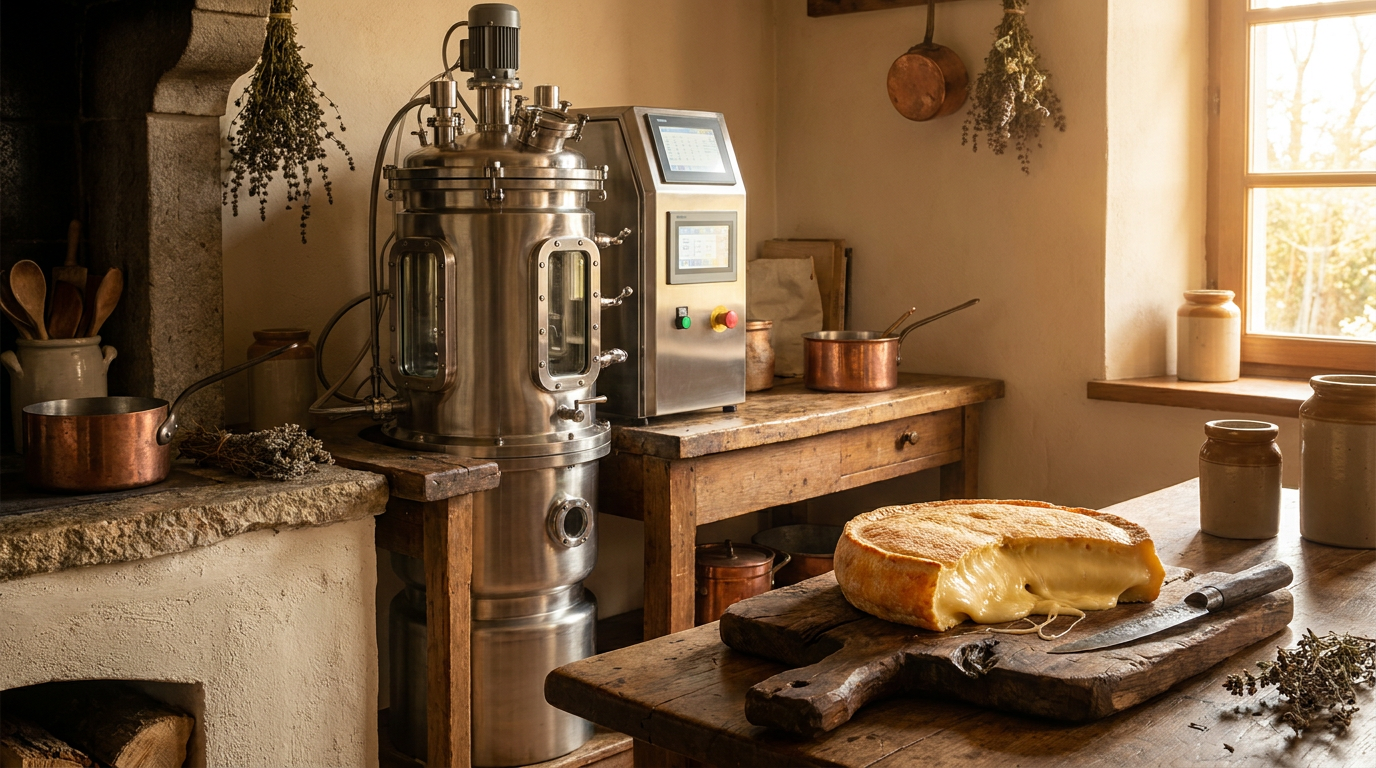
Once engineered, these microbes are placed into massive, stainless-steel bioreactors that resemble the equipment found in a commercial brewery. Fed a steady, nutrient-rich diet of water, vitamins, minerals, and simple sugars, the microorganisms undergo rapid fermentation, churning out the exact proteins found in cow's milk. Crucially, the final step of the process involves separating and highly purifying the target protein from the remaining microbial biomass. The resulting ingredient is molecularly identical to traditional dairy protein. This means it delivers the exact same functional properties—such as emulsification, foaming, and gelation—without containing any lactose, cholesterol, or traces of animal DNA.[1][4]
While casein is just now approaching the U.S. market, precision-fermented whey protein is already a commercial reality. Companies like California-based Perfect Day and Israel's Remilk have successfully scaled the production of beta-lactoglobulin, the primary whey protein found in bovine milk. Perfect Day received its FDA GRAS status several years ago and has since integrated its animal-free whey into a variety of consumer goods, including ice creams, protein powders, and milk alternatives sold in major U.S. retailers like Sprouts Farmers Market. This early success proved that consumers were willing to embrace lab-brewed dairy if the taste and texture matched their expectations.[3][9]
The alternative dairy industry is now aggressively moving from niche experimentation to industrial-scale manufacturing. Perfect Day recently announced that its new large-scale production facility in Gujarat, India, is expected to begin operations in the second half of 2026, with executives projecting instant profitability at launch due to high demand. Meanwhile, Remilk has partnered with major traditional dairy companies, including Gad Dairies in Israel, to launch lactose-free, animal-free milk products in mainstream supermarkets. These partnerships signal a shift in how traditional dairy conglomerates view fermentation: less as an existential threat and more as a lucrative supply-chain upgrade.[3][9]
This rapid commercialization is largely driven by a strategic shift in how food-tech companies approach consumer demand. Market intelligence data indicates that consumers are most receptive to novel proteins when they are embedded in familiar, everyday formats like coffee creamer, milkshakes, and cream cheese. Rather than asking the public to adopt entirely new dietary paradigms or unfamiliar product categories, precision fermentation allows food brands to swap out the underlying protein source invisibly. This approach maintains the exact taste, texture, and culinary performance the public expects, significantly lowering the barrier to entry for skeptical shoppers.[7]

This rapid commercialization is largely driven by a strategic shift in how food-tech companies approach consumer demand.
The economic projections for this sector reflect its seamless integration into existing food systems. The global precision fermentation dairy market, valued at roughly $4.5 billion in 2026, is forecast to surge to nearly $17.8 billion by 2030, representing a massive compound annual growth rate. This exponential growth is heavily fueled by multinational consumer packaged goods companies. Facing mounting pressure to insulate their supply chains from climate shocks and meet aggressive corporate sustainability targets, these conglomerates are increasingly turning to bio-identical proteins to future-proof their product portfolios.[6][8]
Sustainability remains the primary rallying cry and value proposition for the precision fermentation sector. Traditional animal agriculture is notoriously resource-intensive, contributing significantly to global greenhouse gas emissions, widespread deforestation, and severe freshwater depletion. Proponents of precision fermentation argue that brewing proteins in localized bioreactors fundamentally decouples food production from ecological strain. By removing the cow from the equation, the industry bypasses the massive caloric inefficiency of feeding livestock to produce a relatively small amount of usable protein.[4][5]
The theoretical environmental savings offered by this technology are staggering. Life-cycle assessments provided by leading startups suggest that precision-fermented dairy proteins can generate up to 97 percent fewer greenhouse gas emissions than conventional milk production. Furthermore, the bioreactor process requires up to 99 percent less land and 80 to 90 percent less water. This drastic reduction in resource usage also mitigates the severe nutrient pollution and freshwater eutrophication typically associated with the fertilizer runoff and manure management of industrial cattle farming.[5][9]
However, environmental analysts and academic researchers caution that these optimistic figures come with significant structural caveats that could complicate the industry's green narrative. While precision fermentation entirely eliminates the potent methane emissions of cows and the vast land requirements of grazing pasture, it introduces a new, formidable environmental bottleneck: massive energy consumption. Industrial bioreactors must be continuously powered, heated, cooled, and stirred to maintain the precise conditions required for microbial growth, making the entire biomanufacturing process highly energy-intensive from start to finish.[5]

If a precision fermentation facility is powered by a fossil-fuel-heavy electrical grid, its overall carbon footprint can rival or even exceed that of traditional dairy extraction. A comprehensive 2022 environmental study found that the carbon footprint of fermentation-derived protein ranged from 5.5 to 17.6 tonnes of carbon dioxide equivalent per tonne of protein. This range directly overlaps with the 10 tonnes of carbon dioxide equivalent produced by traditional milk protein extraction. To truly deliver on its sweeping climate promises, the alternative protein industry must scale its operations in tandem with the expansion of renewable energy infrastructure.[5]
Another critical variable in the sustainability equation is the carbon feedstock used to nourish the microbes during fermentation. Currently, most commercial operations rely on highly refined sugars derived from commodity crops like corn or sugar cane. The agricultural footprint of growing, harvesting, and processing these crops offsets a portion of the land and water savings achieved by removing the cow. To achieve true circularity, researchers are actively exploring next-generation feedstocks, such as agricultural waste, lignocellulose, or even captured carbon dioxide, though these advanced technologies remain in their commercial infancy.[5]
Beyond environmental and technical metrics, the industry faces complex regulatory and labeling hurdles as it expands globally. While the U.S. Food and Drug Administration and the Singapore Food Agency have established clear, navigable pathways for approving these novel ingredients, the European Union's novel food framework remains notoriously slow and stringent. To navigate this fragmented landscape, companies like Formo and Those Vegan Cowboys have formed lobbying alliances, such as Food Fermentation Europe, to push for standardized regulatory frameworks that can accelerate market access across the continent.[2][6]
Labeling also presents a unique philosophical, legal, and medical challenge for regulators and brands alike. Because precision-fermented proteins are molecularly identical to cow's milk, they trigger the exact same dairy allergies in sensitive individuals, meaning they cannot be labeled as entirely 'dairy-free' in a medical context. The FDA has previously accepted the term 'non-animal whey protein' to bridge this gap, and industry watchers expect 'non-animal casein' to become the standard nomenclature as Formo's products hit the market, ensuring consumers understand the product is vegan but still an allergen.[1][9]

Looking ahead, the future of the dairy aisle is increasingly likely to be a hybrid ecosystem. Food tech executives and traditional dairy producers increasingly view precision fermentation not as a complete replacement for traditional dairy farming, but as a highly functional supplementary capability. By blending fermentation-derived proteins with plant-based fats, oat milk, or even traditional dairy products, manufacturers can optimize their offerings for cost, nutritional density, and culinary functionality, creating a spectrum of choices for the modern consumer.[1][8]
As Formo prepares for its highly anticipated commercial debut at the Institute of Food Technologists expo in July 2026, the stakes for the broader food system are coming into sharp focus. If precision fermentation can overcome its energy dependencies, secure sustainable feedstocks, and achieve price parity with heavily subsidized animal agriculture, it promises to rewrite the fundamental chemistry of how the world eats. It represents a rare opportunity to preserve the foods humanity loves while fundamentally changing the planetary cost of producing them.[1][2][5]
How we got here
2014
Perfect Day is founded, pioneering the use of precision fermentation for animal-free whey.
2019
Perfect Day receives FDA GRAS status for its precision-fermented whey protein.
2023
Remilk becomes the first company to secure regulatory approval for precision-fermented dairy in Israel.
Dec 2025
Formo obtains self-affirmed GRAS status for its precision-fermented casein protein.
Jun 2026
Formo's casein officially enters active FDA GRAS review, paving the way for commercial vegan cheese.
Viewpoints in depth
Food Tech Innovators
Argue that precision fermentation is the necessary evolution of protein production.
Companies like Formo and Perfect Day view traditional animal agriculture as an inefficient technology that cannot scale to feed a growing global population. By programming microbes to produce bioidentical proteins, they argue we can preserve the culinary experiences humanity loves—like melting cheese and creamy milk—while drastically reducing land and water use. They see fermentation not as an alternative to dairy, but as the next logical upgrade to the global protein supply chain.
Environmental Analysts
Highlight resource savings but warn about energy-intensive bottlenecks.
Sustainability researchers acknowledge the staggering potential of removing cows from the food system, particularly the elimination of methane emissions and the freeing up of vast tracts of agricultural land. However, they caution that industrial bioreactors require massive, continuous inputs of electricity and refined sugars. If these facilities are powered by fossil fuels and fed by monocrop agriculture, the overall carbon footprint could rival traditional dairy. They argue the industry's true climate benefit hinges entirely on its integration with renewable energy grids.
Traditional Dairy Industry
Balancing the threat of disruption with opportunities for supply-chain partnerships.
The conventional dairy sector's response has evolved from skepticism to strategic integration. While some farming advocacy groups emphasize the nutritional complexity and cultural heritage of whole cow's milk, major dairy conglomerates are increasingly partnering with fermentation startups. By co-packing animal-free milk or developing 'hybrid' products that blend traditional dairy with fermented proteins, legacy companies are hedging their bets, viewing the technology as a way to meet corporate climate targets and diversify their portfolios.
What we don't know
- Whether precision-fermented casein can achieve price parity with heavily subsidized conventional dairy cheese in the near term.
- How quickly the European Union will update its novel food framework to allow these products to be sold in Formo's home market.
- The exact long-term environmental footprint of the industry once scaled, which depends heavily on the future greening of the electrical grid.
Key terms
- Precision Fermentation
- A process using programmed microorganisms to produce specific functional ingredients, like proteins or fats, in a bioreactor.
- Casein
- The main family of proteins in milk that gives dairy products like cheese their structural integrity, meltability, and stretch.
- Beta-lactoglobulin
- The primary whey protein found in cow's milk, often produced via fermentation to create animal-free milk and ice cream.
- Bioreactor
- A large, controlled industrial vessel where microorganisms are cultivated and undergo fermentation to produce target proteins.
- GRAS (Generally Recognized as Safe)
- A U.S. FDA designation indicating that an ingredient is safe for human consumption based on scientific evidence.
- Recombinant DNA
- DNA that has been artificially formed by combining genetic material from multiple sources, used to instruct microbes to produce dairy proteins.
Frequently asked
What is precision fermentation?
It is a biotechnological process that uses genetically engineered microorganisms, like yeast, to produce specific complex molecules, such as dairy proteins, without using animals.
Is precision-fermented cheese vegan?
Yes, it involves zero animal agriculture. However, because the proteins are molecularly identical to cow's milk, they still trigger dairy allergies and are not suitable for people with milk allergies.
Why is casein important for vegan cheese?
Casein is the primary structural protein in cow's milk responsible for the signature stretch, melt, and texture of traditional cheese—qualities that plant-based ingredients struggle to replicate.
Is precision fermentation better for the environment?
It uses significantly less land and water and produces fewer direct greenhouse gases than cattle farming. However, the bioreactors require massive amounts of energy, meaning the true climate benefit depends on using renewable power.
Sources
Source coverage
9 outlets
4 viewpoints surfaced








[1]Green QueenFood Tech Innovators
Formo Obtains Self-Affirmed GRAS Status for Precision-Fermented Casein
Read on Green Queen →[2]Cultivated XFood Tech Innovators
Formo's Precision-Fermented Casein Enters Active FDA GRAS Review
Read on Cultivated X →[3]AgFunderNewsFood Tech Innovators
Perfect Day confident in instant profitability at plant launch
Read on AgFunderNews →[4]GFI EuropeEnvironmental Analysts
What is precision fermentation?
Read on GFI Europe →[5]Sustainable Nutrition InitiativeEnvironmental Analysts
Environmental impacts of precision fermentation
Read on Sustainable Nutrition Initiative →[6]Persistence Market ResearchMarket & Consumer Analysts
Precision Fermentation Market By Ingredient Type
Read on Persistence Market Research →[7]TastewiseMarket & Consumer Analysts
Precision fermentation enters through milk and coffee
Read on Tastewise →[8]Dairy ReporterTraditional Dairy Industry
Cow-free dairy finds its stride as start-ups attract new investment
Read on Dairy Reporter →Remilk Commercialises Precision-Fermented Dairy in Israel
Read on Green Queen →
Every angle. Every day.
Get food drink stories with full source coverage and perspective breakdowns delivered to your inbox.