
The Science of No-Dig Gardening: Why Leaving the Soil Alone Produces Better Yields
A quiet revolution in horticulture is challenging the annual ritual of the rototiller. By leaving the soil ecosystem undisturbed, regenerative gardeners are harnessing fungal networks to grow healthier crops with a fraction of the labor.
By Factlen Editorial Team
- No-Dig Advocates
- Argue that leaving the soil undisturbed maximizes yields and minimizes labor.
- Soil Microbiologists
- Focus on the preservation of fungal networks and soil aggregates.
- Horticultural Institutions
- Balance the ecological benefits of no-dig with the practical challenges of compost sourcing.
What's not represented
- · Commercial synthetic fertilizer manufacturers
- · Large-scale industrial farmers reliant on heavy tillage
Why this matters
Traditional tilling destroys the microscopic ecosystems that plants rely on to thrive. Adopting a no-dig approach can save home gardeners hours of back-breaking labor while simultaneously sequestering carbon and reducing the need for synthetic fertilizers.
Key points
- No-dig gardening involves leaving the soil completely undisturbed and layering compost on the surface.
- Tilling destroys delicate fungal networks that help plants scavenge for water and nutrients.
- Undisturbed soil maintains its natural structure, improving drainage and sequestering carbon.
- By not turning the soil, dormant weed seeds remain buried and unable to germinate.
- The primary drawback is the large volume of high-quality compost required to start the system.
The spring ritual of the rototiller is a familiar one. For generations, the smell of freshly turned earth and the sight of a pulverized, weed-free bed were the hallmarks of a "clean" and ready garden. But a quiet revolution is taking over backyards and market farms alike, challenging the very foundation of how we grow food.[7]
It is called "no-dig" or "no-till" gardening, and it serves as a cornerstone of the broader regenerative agriculture movement. The premise is radically simple: put down the spade, park the rototiller, and leave the soil ecosystem completely undisturbed.[3][7]
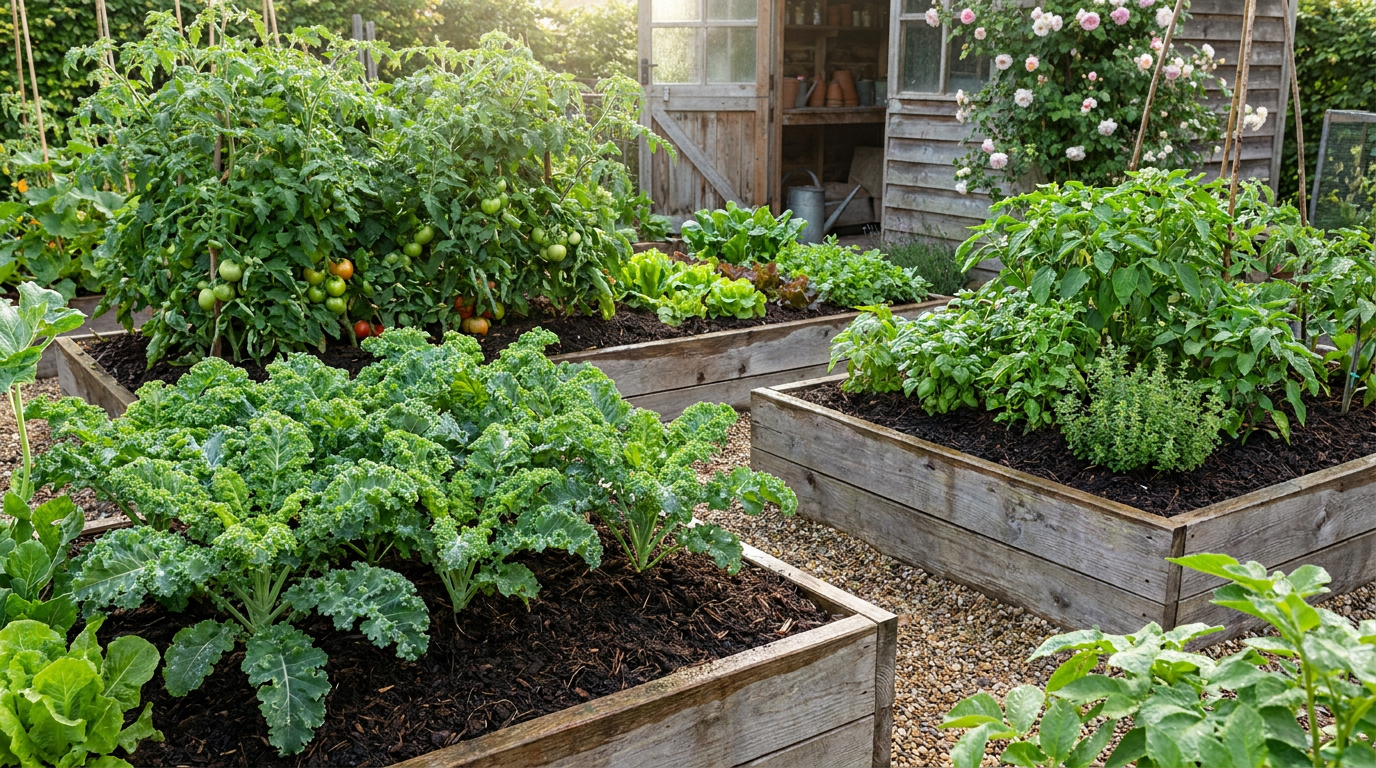
Instead of turning the earth to loosen it, no-dig gardeners build upward. They mimic the natural accumulation of a forest floor by layering organic matter—typically compost or leaf mold—directly onto the surface of the soil.[3][4]
The claims driving this movement sound almost too good to be true: do less physical labor, pull fewer weeds, and harvest significantly higher yields. Yet, unlike most gardening fads, this approach is grounded in a rapidly expanding scientific understanding of soil microbiology.[2][4]

To understand why no-dig works, one must look at what traditional digging destroys. Beneath the surface lies a microscopic superhighway known as the "wood wide web," constructed by arbuscular mycorrhizal fungi.[6]
These beneficial fungi form symbiotic relationships with the roots of most garden plants. Because the fungi cannot photosynthesize, they rely entirely on the host plant to pump liquid carbon, in the form of sugars, down into the root zone.[6]
In exchange, the fungi extend thread-like filaments called hyphae far beyond the reach of the plant's own roots. This vast network acts as a massive secondary root system, scavenging water, phosphorus, and vital micronutrients from the surrounding earth and delivering them back to the host plant.[6]
When a gardener plunges a spade into the earth or runs a rototiller through a bed, they physically shred this delicate fungal network. The plants are suddenly cut off from their subterranean supply lines, forcing them to rely solely on their own localized roots and whatever synthetic fertilizers the gardener applies.[1][6]

When a gardener plunges a spade into the earth or runs a rototiller through a bed, they physically shred this delicate fungal network.
Beyond the fungal highway, undisturbed soil maintains its structural integrity through a biological glue called glomalin, which is produced by these same fungi. Glomalin binds soil particles together into stable aggregates, creating tiny, resilient pockets for air and water.[6]
Earthworms and decaying plant roots further engineer the soil, boring vertical drainage channels. Tilling collapses this intricate architecture. While freshly tilled soil feels fluffy for a few weeks, the first heavy rain inevitably compacts the pulverized dirt into a dense, anaerobic crust.[1][5]
Then there is the paradox of weeding. Traditional digging is often done to bury weeds, but it simultaneously brings thousands of dormant weed seeds to the surface, exposing them to the flash of sunlight they need to germinate.[1][4]
No-dig gardening short-circuits this cycle. By laying down a barrier of plain cardboard over existing grass or weeds, and topping it with several inches of compost, gardeners smother the existing vegetation. The weed seeds buried deep in the soil remain dormant in the dark.[2][3]
The empirical evidence supporting the method is compelling. Charles Dowding, a British market gardener and the most prominent evangelist of the no-dig method, has run side-by-side trial beds for over a decade. His meticulously weighed harvests consistently show the undisturbed beds out-yielding the dug beds, often by substantial margins.[2]

Major horticultural institutions are taking note. The Royal Horticultural Society now actively promotes no-dig techniques, noting that minimizing cultivation is essential for reducing the environmental impact of gardening and keeping sequestered carbon locked in the ground.[1]
However, the transition to a no-dig system is not without friction. The primary bottleneck is the sheer volume of compost required to establish the initial beds. Covering a modest garden with four to six inches of compost can require buying bulk deliveries, which is expensive and labor-intensive to move.[5]

Furthermore, the system's success hinges entirely on the quality of that compost. Contaminated municipal compost can introduce persistent agricultural herbicides, which survive the composting process and can stunt garden crops for years. Poorly managed compost can also harbor invasive jumping worms or new weed seeds.[4]
Finally, in colder climates, the thick layer of surface mulch acts as insulation. While this protects the soil food web over the winter, it also means the ground warms up more slowly in the early spring, potentially delaying the planting of heat-loving crops.[5]
Despite these logistical hurdles, the shift toward regenerative gardening represents a fundamental change in horticultural philosophy. Rather than viewing the soil as an inert sponge that merely holds roots and synthetic fertilizers, the no-dig method treats the soil as a living organism. By feeding the soil, the gardener allows the soil to feed the plant.[7]
How we got here
1940s
F.C. King and A. Guest publish early works advocating for no-dig gardening in the UK.
1982
Charles Dowding begins his first no-dig market garden experiments in Somerset, England.
2010s
Advances in soil microbiology reveal the exact mechanisms of mycorrhizal fungi, providing hard science for the method.
2024
The Royal Horticultural Society officially champions no-dig methods to reduce the environmental impact of gardening.
Viewpoints in depth
No-Dig Advocates
Argue that leaving the soil undisturbed maximizes yields and minimizes labor.
Proponents like Charles Dowding argue that nature does not rototill the forest floor. By simply top-dressing with compost, they claim gardeners can eliminate the back-breaking labor of digging while simultaneously reducing weed pressure. They point to decades of trial data showing that undisturbed soil food webs produce healthier, more resilient crops.
Soil Microbiologists
Focus on the subterranean ecosystems destroyed by mechanical cultivation.
Researchers emphasize the role of arbuscular mycorrhizal fungi and glomalin in maintaining soil architecture. From their perspective, a rototiller is a catastrophic event that shreds the "wood wide web," cutting plants off from their symbiotic nutrient-scavenging partners and releasing sequestered carbon back into the atmosphere.
Traditional Horticulturists
Acknowledge the benefits of no-dig but highlight the practical challenges of implementation.
While institutions like the Royal Horticultural Society now advocate for minimizing cultivation, traditionalists note that no-dig is not a magic bullet. They point out the massive logistical hurdle of sourcing enough high-quality, weed-free compost to establish the initial beds, and caution that heavy surface mulches can delay spring planting by keeping the soil cold.
What we don't know
- How quickly heavily degraded or chemically treated urban soils can re-establish their fungal networks without active inoculation.
- The long-term impact of sourcing massive amounts of municipal compost on the broader carbon footprint of the practice.
Key terms
- Mycorrhizal Fungi
- Beneficial fungi that form a symbiotic network with plant roots, exchanging water and nutrients for plant sugars.
- Hyphae
- The microscopic, thread-like filaments of fungi that spread through the soil to scavenge nutrients.
- Glomalin
- A biological glue produced by soil fungi that binds soil particles together, improving structure and water retention.
- Tilling
- The agricultural practice of mechanically digging, stirring, or overturning the soil to prepare it for planting.
- Regenerative Agriculture
- An approach to farming and gardening focused on restoring soil health, increasing biodiversity, and sequestering carbon.
Frequently asked
Can I start a no-dig garden on top of grass?
Yes. By laying plain cardboard directly over the grass and covering it with several inches of compost, you can smother the existing vegetation without digging.
Do I need to buy special soil?
No. The method relies on adding a thick layer of organic compost to the surface, which soil organisms will gradually incorporate into your existing dirt.
How do I control weeds without digging?
The thick compost layer blocks light from dormant weed seeds. Any new weeds that blow in are easily pulled from the loose surface.
Does no-dig work on heavy clay?
Yes. Soil organisms and earthworms will naturally aerate and improve the structure of clay soil over time without the need for mechanical tilling.
Sources
Source coverage
7 outlets
3 viewpoints surfaced







[1]Royal Horticultural SocietyHorticultural Institutions
No-dig gardening
Read on Royal Horticultural Society →[2]Charles DowdingNo-Dig Advocates
Beginner's Guide to No Dig
Read on Charles Dowding →[3]Soil AssociationNo-Dig Advocates
No-dig gardening: benefits, how it works and how to get started
Read on Soil Association →[4]University of VermontSoil Microbiologists
Digging into the No-Dig Method
Read on University of Vermont →[5]National Allotment SocietyHorticultural Institutions
To Dig or Not to Dig? A Balanced Guide
Read on National Allotment Society →[6]No-Till FarmerSoil Microbiologists
Four Major Impacts Mycorrhizae Has on No-Till Crops
Read on No-Till Farmer →[7]Factlen Editorial TeamHorticultural Institutions
Synthesis by Factlen editorial team
Read on Factlen Editorial Team →

Every angle. Every day.
Get home stories with full source coverage and perspective breakdowns delivered to your inbox.