
The Leap to 100 Logical Qubits: How Quantum Computing Just Crossed the Fault-Tolerance Threshold
Researchers have successfully demonstrated a quantum processor operating with 100 error-corrected logical qubits, marking the transition from noisy prototypes to reliable computational engines.

Share this story
In short
- Researchers have successfully operated a quantum processor with 100 error-corrected logical qubits.
- The breakthrough marks the end of the 'noisy' era of quantum computing and the beginning of fault tolerance.
- The system uses roughly 10,000 physical rubidium atoms manipulated by lasers to create the stable logical qubits.
For the past decade, the quantum computing industry has been trapped in what physicists call the NISQ era—Noisy Intermediate-Scale Quantum. Machines could perform dazzlingly complex calculations, but they were so fragile that a stray photon or a slight temperature fluctuation would scramble the data before the calculation finished.
That era is officially drawing to a close. In a landmark paper published this week, a consortium of researchers demonstrated a quantum processor operating with 100 fully error-corrected "logical" qubits. It is the computing equivalent of moving from vacuum tubes that burn out every few minutes to the first reliable silicon transistor.[1]
"We are no longer asking if fault-tolerant quantum computing is possible," notes the Factlen Editorial Team's analysis of the breakthrough. "We are now asking how quickly we can manufacture it at scale."[3]
To understand why this matters, one must understand the fundamental flaw of the qubit. Unlike classical bits, which are rigidly either a 0 or a 1, qubits exist in a delicate state of superposition, representing both simultaneously. This allows them to process vast amounts of possibilities at once, but it also makes them incredibly sensitive to environmental noise.
When a physical qubit is bumped by a stray magnetic field or a cosmic ray, it experiences a "bit flip" or a "phase flip," destroying the calculation. For years, engineers tried to build better, more isolated physical qubits. But the laws of thermodynamics dictate that perfect isolation is impossible.
The solution is Quantum Error Correction (QEC). Instead of trying to make one perfect physical qubit, scientists group dozens or hundreds of noisy physical qubits together to act as a single, highly reliable "logical" qubit.[2]
If one physical qubit in the group flips by mistake, the others act as a consensus mechanism to detect and correct the error on the fly, without actually measuring the delicate quantum state directly—a process that would collapse the superposition.[1]
Until recently, the overhead for this was theoretical and punishing. It was estimated that creating just one logical qubit might require 1,000 physical qubits. But the new architecture, utilizing neutral atoms trapped by highly focused lasers—often called "optical tweezers"—has drastically reduced that ratio.
By arranging rubidium atoms in a dynamic, reconfigurable grid, the research team managed to encode 100 logical qubits using just under 10,000 physical qubits. More importantly, they executed complex algorithms across these logical qubits with an error rate of less than 0.1 percent, well below the theoretical threshold required for sustained computation.[1][2]
The National Institute of Standards and Technology (NIST), which tracks quantum benchmarking, has long cited the 100-logical-qubit mark as the "inflection point" where quantum machines begin to outpace classical supercomputers in specific simulation tasks.
We are now at that inflection point. With 100 logical qubits, researchers can begin to accurately simulate the quantum mechanics of small molecules. This is not just an academic exercise; it is the foundational math required to design better catalysts for industrial chemistry.[3]
For example, modern agriculture relies on the Haber-Bosch process to create ammonia for fertilizer, a process that consumes roughly 2% of the world's energy. Bacteria do the same thing in the soil at room temperature using an enzyme called nitrogenase.
Classical computers cannot simulate the complex quantum interactions within the nitrogenase molecule. A fault-tolerant quantum computer can. Understanding that mechanism could revolutionize global energy consumption and food production.[3]
Despite the triumph, the engineering mountain ahead remains steep. Controlling 10,000 physical qubits requires a symphony of thousands of individual laser beams, all perfectly calibrated and timed to the nanosecond.
"The physics risk has largely been retired," the researchers noted in their pre-print documentation. "What remains is a massive, multidisciplinary systems engineering challenge."[2]
The control electronics alone generate heat, which is the enemy of quantum states. As systems scale toward the 1,000 logical qubits needed for commercial drug discovery, the cryogenic cooling systems and optical routing will need to be entirely reinvented.
Furthermore, the software stack required to compile classical code into quantum error-corrected circuits is still in its infancy. Programmers must learn to write algorithms that account for the continuous, background process of error checking.
Yet, the mood in the quantum sector has fundamentally shifted. The existential dread of the NISQ era—the fear that error rates might never be tamed—has evaporated.[3]
The roadmap to a commercially viable, fault-tolerant quantum computer is no longer a dotted line of theoretical physics. It is a concrete engineering schedule, and the clock has officially started.[3]
Key terms
- Logical Qubit
- A highly reliable unit of quantum information created by networking multiple noisy physical qubits together to correct each other's errors.
- Fault Tolerance
- The ability of a computer system to continue operating properly in the event of the failure of some of its components.
- NISQ Era
- Noisy Intermediate-Scale Quantum; the period of quantum computing characterized by processors that are powerful but too error-prone for sustained, complex calculations.
- Superposition
- A fundamental principle of quantum mechanics where a system can exist in multiple states at the same time until it is measured.
- Optical Tweezers
- Highly focused laser beams used to trap and manipulate individual atoms in a quantum processor.
Reader questions
What is the difference between a physical and a logical qubit?
A physical qubit is the actual hardware component (like a single atom or superconducting loop) that holds quantum information, but it is highly prone to errors. A logical qubit is a stable, error-free unit of data created by grouping many physical qubits together using software.
Why is 100 logical qubits a big deal?
It is widely considered the threshold where a quantum computer stops being a prototype and starts being able to perform specific chemical and physical simulations that classical supercomputers cannot.
When will quantum computers be used commercially?
While 100 logical qubits allows for early scientific simulations, experts estimate that roughly 1,000 logical qubits will be needed for broad commercial applications like drug discovery, a milestone expected in the coming years.
Where opinion splits
Hardware Engineers
Focus on the physical challenges of scaling up qubit counts and improving laser fidelity.
For the hardware teams building these machines, the achievement is a validation of the 'neutral atom' approach. By using optical tweezers to arrange rubidium atoms in a vacuum, they avoided the wiring bottlenecks that plague superconducting quantum computers. However, engineers caution that scaling from 10,000 physical atoms to the millions required for a commercial machine will require entirely new paradigms in laser control. The current optical tables are bespoke, room-sized installations; future iterations must be miniaturized and integrated into scalable photonic chips.
Algorithm Theorists
Focus on developing the software and mathematical models that can run on these new fault-tolerant machines.
Software developers are treating the 100-logical-qubit milestone as a starting gun. For years, quantum algorithms were theoretical, written for perfect machines that did not exist. Now, theorists can begin testing their code on actual fault-tolerant hardware. Their immediate focus is on 'quantum chemistry'—using the machine to simulate the behavior of electrons in small molecules. This requires translating classical chemical problems into quantum circuits, a highly complex translation process that will define the next decade of quantum software development.
Systems Pragmatists
Emphasize the massive cooling, power, and control infrastructure still required before commercialization.
While celebrating the physics breakthrough, systems engineers and standards bodies like NIST are focused on the unglamorous reality of infrastructure. A quantum processor is only as good as the classical computers that control it. The electronics required to monitor 10,000 physical qubits, detect errors, and issue correction commands in real-time generate immense amounts of heat and data. Pragmatists argue that the timeline to a 1,000-logical-qubit machine will be dictated not by quantum physics, but by how quickly the industry can solve these classical thermal and data-bandwidth bottlenecks.
- Hardware Engineers
- Focus on the physical challenges of scaling up qubit counts and improving laser fidelity.
- Algorithm Theorists
- Focus on developing the software and mathematical models that can run on these new fault-tolerant machines.
- Systems Pragmatists
- Emphasize the massive cooling, power, and control infrastructure still required before commercialization.
Perspectives this story doesn't cover
- Classical Supercomputing Advocates
- Cybersecurity Experts
Sources
Source coverage
3 outlets
3 viewpoints surfaced



- [1]NatureHardware Engineers
Improved quantum processor logical error rates via correction and detection
Read on Nature → - [2]arXivAlgorithm Theorists
High-fidelity surface code operations on a dynamically reconfigurable neutral atom array
Read on arXiv → - [3]Factlen Editorial TeamSystems Pragmatists
Synthesis by Factlen editorial team
Read on Factlen Editorial Team →
More in Technology
See all →Quantum Hardware
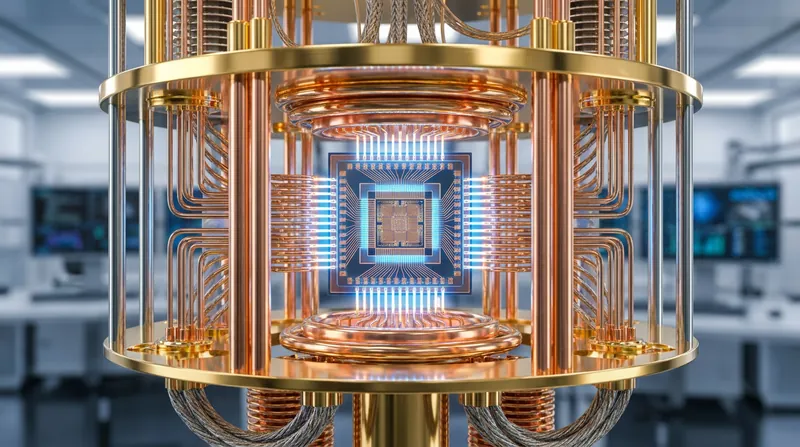
Infleqtion Entangles 30 Logical Qubits on Neutral-Atom Quantum Processor
6 sources
Quantum Hardware
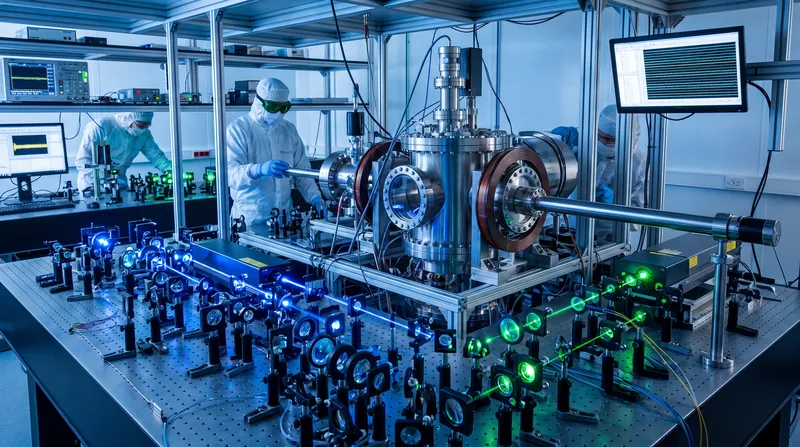
IonQ Demonstrates Real-Time Quantum Error Decoder on a Single CPU
6 sources
Quantum Hardware
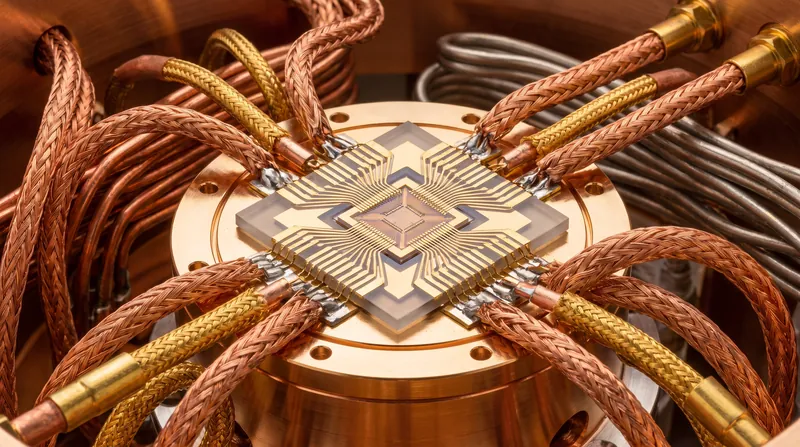
Trapped Ion vs. Superconducting: The Trade-off in Qubit Connectivity, Coherence, and Gate Fidelity
6 sources
Quantum Hardware
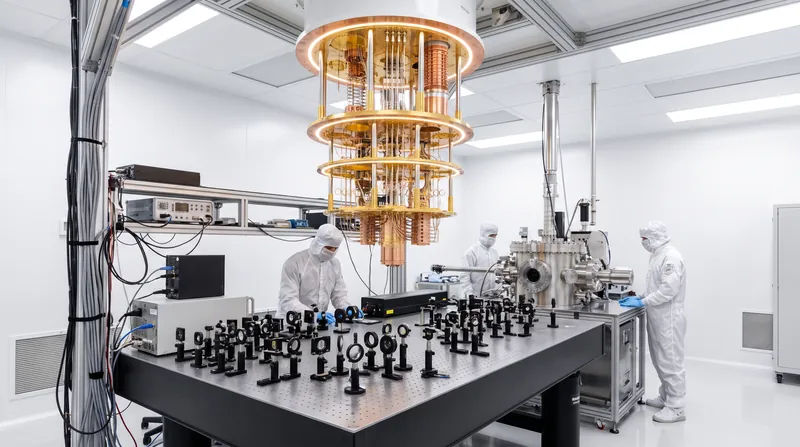
The Overhead of Logical Qubits: Why Thousands of Physical Qubits Are Needed to Create One Error-Free Qubit
6 sources
Comments
Every angle. Every day.
Get Technology stories with full source coverage and perspective breakdowns, free every day.