
How Temperature and Light Optimize Deep Sleep and Brain Health
Recent breakthroughs in sleep science reveal that optimizing bedroom temperature and light exposure can dramatically enhance deep sleep, triggering the brain's natural waste-clearance system.

In short
- Slow-wave sleep is the most physically restorative phase of rest, essential for cellular repair and memory consolidation.
- The glymphatic system acts as the brain's waste-clearance network, flushing out neurotoxins primarily during deep sleep.
- Core body temperature must drop by 1 to 1.5 degrees Celsius to initiate and maintain deep sleep.
For decades, the cultural conversation around sleep has been framed as a battle against fatigue—a necessary, passive state we endure simply to feel awake the next day. But a quiet revolution in neuroscience and circadian biology is fundamentally rewriting that narrative. Sleep is no longer viewed as an absence of wakefulness; it is recognized as a highly active, orchestrated period of biological recovery. As researchers peer deeper into the sleeping brain, they are discovering that the quality of our rest dictates everything from daily cognitive performance to long-term neurological health.[1]
The focus of modern sleep science has shifted away from simple hours-in-bed metrics toward the concept of sleep architecture. The holy grail of this architecture is slow-wave sleep, also known as stage N3 or deep sleep. This is the most physically restorative phase of the night, characterized by synchronized, low-frequency brain waves. During slow-wave sleep, the body releases growth hormone, repairs cellular damage, and consolidates memories. But perhaps its most critical function is one that scientists have only recently begun to fully map.[1][3]
Enter the glymphatic system. Discovered just over a decade ago and confirmed in human MRI studies in late 2024, this microscopic network fundamentally changes our understanding of why we sleep. The glymphatic system serves as the brain's dedicated waste clearance pathway—a biological night shift cleaning crew that sweeps away the metabolic byproducts generated during waking hours.[2]
Unlike the rest of the body, the brain lacks a traditional lymphatic system to clear cellular waste. Instead, it relies on cerebrospinal fluid. During the day, this clear fluid mostly surrounds the brain, providing a protective cushion. But when we transition into deep sleep, the system kicks into high gear, pumping the fluid actively through the brain tissue to wash away toxins.
The mechanics of this process are remarkably elegant. As the brain enters slow-wave sleep, the glial cells that support neurons actually shrink slightly. This cellular contraction expands the interstitial space—the gaps between brain cells—by up to 60 percent. With the floodgates opened, cerebrospinal fluid rushes through these widened channels, flushing out metabolic waste products like beta-amyloid and tau proteins, and carrying them to the bloodstream for disposal.[2][4]
The stakes of this nightly brainwashing are incredibly high. Beta-amyloid and tau are the very proteins that, when allowed to accumulate and form plaques, are heavily implicated in neurodegenerative conditions such as Alzheimer's disease. Clinical data now suggests that chronic sleep deprivation not only impairs immediate memory consolidation but actively reduces this glymphatic clearance, accelerating the buildup of neurotoxins.[2][3]
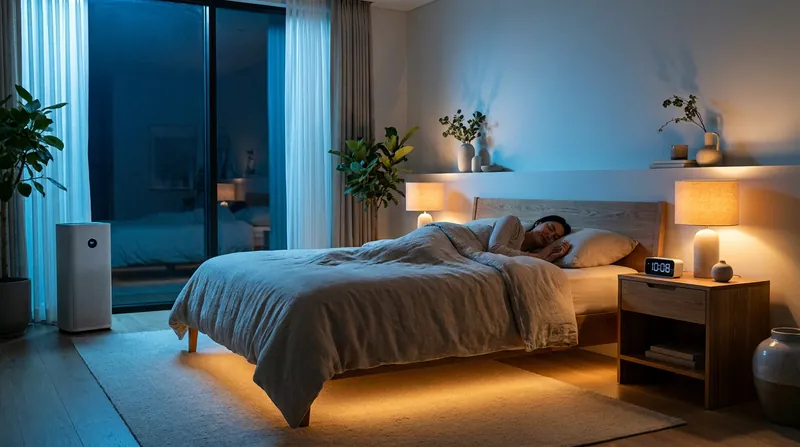
If slow-wave sleep is the key to unlocking this vital clearance process, the obvious question is how to maximize it. While many turn to supplements or medications, sleep scientists point to a much more powerful, yet frequently overlooked, biological lever: temperature.[1][5]
Human sleep is inextricably linked to thermoregulation. To successfully initiate sleep and transition into the deep, slow-wave stages, the body's core temperature must drop by approximately 1 to 1.5 degrees Celsius. This precise thermal decline is a non-negotiable biological signal that tells the brain it is time to rebuild and restore.[5]
Unfortunately, modern sleeping environments often actively fight this process. Heavily insulated homes, synthetic bedding, and heat-trapping foam mattresses can create microclimates that prevent the necessary core temperature drop. When the body cannot shed heat efficiently, it is forced to expend energy on thermoregulation rather than restoration, resulting in fragmented sleep and a drastic reduction in time spent in the N3 stage.[1][5]
Research examining the effects of ambient temperature on sleep architecture reveals a narrow window for optimal rest. Studies consistently show that bedroom temperatures above 75 degrees Fahrenheit (24 degrees Celsius) significantly impair sleep quality, reducing slow-wave sleep and increasing nighttime awakenings by up to 40 percent. For most adults, the ideal ambient temperature for deep sleep falls surprisingly low, between 60 and 67 degrees Fahrenheit (15.5 to 19.5 degrees Celsius).[5]
Counterintuitively, one of the most effective ways to achieve this core cooling is through heat exposure. Taking a hot shower or bath 60 to 90 minutes before bed is a highly validated sleep intervention. The external heat causes vasodilation—widening the blood vessels near the surface of the skin. When you step out of the warm water into a cool room, this increased blood flow to the surface allows the body to rapidly dump heat, accelerating the core temperature drop required for deep sleep.[1][5]
The extremities play a surprisingly outsized role in this thermal dance. The hands and feet act as the body's primary radiators. Warming the feet by wearing light socks to bed can promote peripheral vasodilation, drawing heat away from the core and signaling to the brain that it is safe to power down. Conversely, if the extremities are too cold, the body may constrict blood vessels to conserve heat, inadvertently keeping the core temperature elevated and delaying sleep onset.[5]
While temperature is a master regulator of sleep architecture, it does not operate in a vacuum. It is tightly coupled with the body's circadian rhythm, which is primarily anchored by light exposure. The contrast between daytime brightness and nighttime darkness is the fundamental metronome that keeps our biological clocks synchronized.[1]
The protocol begins the moment we wake up. Viewing bright, natural sunlight within 30 minutes of waking is arguably the single most impactful circadian intervention. This morning light exposure halts the production of melatonin, boosts morning cortisol to increase alertness, and essentially sets a biological timer that dictates when melatonin will be released 14 to 16 hours later.[1][3]
In the evening, the inverse is required. Blue light emitted by smartphones, tablets, and LED lighting tricks the brain's suprachiasmatic nucleus into believing the sun is still up. This suppresses the natural release of melatonin and delays the evening temperature drop, making it physiologically difficult to enter deep sleep. Dimming lights and utilizing warm, low-lux lighting in the hours before bed helps protect the fragile transition into rest.[1][3]
This deeper understanding of sleep biology is driving a paradigm shift in clinical practice. Psychologists and primary care physicians are increasingly treating sleep as a vital sign. Rather than immediately prescribing sedative-hypnotic medications—which can actually suppress slow-wave sleep and impair glymphatic clearance—clinicians are turning to evidence-based behavioral interventions. Cognitive behavioral therapy for insomnia, combined with strict light and temperature protocols, is becoming the gold standard for restoring healthy sleep architecture.[3]
The intersection of biology and technology is also offering new solutions. The market is seeing a surge in advanced sleep systems, including active cooling mattresses that use water or air to dynamically regulate temperature throughout the night. By monitoring physiological signals and automatically lowering the temperature during the first half of the night to promote slow-wave sleep, these systems create a closed feedback loop that personalizes the sleeping environment.[5]
Ultimately, the science of 2026 presents an empowering view of sleep. It is not a mysterious phenomenon that happens to us, but a highly orchestrated biological process that we can actively support. By respecting our evolutionary need for cool temperatures, dark nights, and bright mornings, we can unlock profound physical recovery and protect our cognitive health for decades to come.[1]
Jargon, explained
- Glymphatic System
- The brain's dedicated waste clearance network that uses cerebrospinal fluid to flush out metabolic toxins during deep sleep.
- Slow-Wave Sleep (N3)
- The deepest, most physically restorative stage of sleep, characterized by slow brain waves and peak glymphatic activity.
- Cerebrospinal Fluid (CSF)
- The clear fluid surrounding the brain and spinal cord that actively washes through brain tissue during sleep to remove waste.
- Vasodilation
- The widening of blood vessels, particularly near the skin, which allows the body to release heat and lower its core temperature.
- Circadian Rhythm
- The body's internal 24-hour clock that regulates sleep-wake cycles, hormone release, and temperature, primarily driven by light exposure.
Common questions
Why do I often wake up feeling hot in the middle of the night?
Your body naturally attempts to shed heat to maintain the low core temperature required for deep sleep. If your mattress or bedding traps this heat, it disrupts your thermoregulation and causes you to wake up.
Does taking a hot shower right before bed keep you awake?
No, it actually helps you sleep. The external heat brings blood to the surface of your skin, which allows your body to rapidly dump heat and cool its core temperature once you step out of the shower.
Can I catch up on deep sleep during the weekend?
While you can recover some lost sleep, chronic disruption of the glymphatic system's nightly clearance cannot be fully reversed in a single weekend. Consistency is more important than binge-sleeping.
Is it better to sleep with or without socks?
For many people, sleeping with light socks helps. Warming the feet dilates blood vessels, which draws heat away from the body's core and accelerates the temperature drop needed for sleep onset.
Competing readings
Sleep Scientists & Neurologists
Focus on the glymphatic system's role in clearing neurotoxins and preventing cognitive decline.
For researchers focused on brain health, sleep is primarily a mechanical cleaning process. This camp emphasizes that the brain is a highly metabolic organ that generates significant waste, including beta-amyloid and tau proteins. Without the nightly expansion of the interstitial space during slow-wave sleep, this waste accumulates and forms the plaques associated with Alzheimer's and other neurodegenerative diseases. Their primary concern is that modern society's chronic sleep deprivation is quietly fueling a future crisis of cognitive decline, making deep sleep optimization a critical pillar of preventive neurology.
Circadian Biologists
Emphasize the primacy of light exposure and the contrast between daytime brightness and nighttime darkness.
Circadian researchers view sleep not as an isolated event, but as the second half of a 24-hour biological cycle. They argue that poor sleep is often a symptom of poor daytime light exposure. By failing to get bright sunlight in the morning and exposing ourselves to blue light at night, we flatten the natural amplitude of our circadian rhythm. This camp advocates for treating light as a biological drug, stressing that no amount of sleep hygiene or temperature hacking can overcome a fundamentally misaligned internal clock.
Clinical Practitioners
Focus on actionable, non-pharmacological interventions like room cooling and behavioral routines over sleep medications.
Primary care physicians and sleep psychologists are on the front lines of the insomnia epidemic. This camp is increasingly moving away from sedative-hypnotic medications, which can induce unconsciousness but often suppress the crucial slow-wave sleep phase. Instead, they focus on environmental and behavioral levers that patients can control. By prescribing strict temperature ranges, hot-water protocols, and cognitive behavioral therapy for insomnia (CBT-I), practitioners aim to restore the body's natural sleep architecture rather than artificially overriding it.
- Sleep Scientists & Neurologists
- Focus on the glymphatic system's role in clearing neurotoxins and preventing cognitive decline.
- Circadian Biologists
- Emphasize the primacy of light exposure and the contrast between daytime brightness and nighttime darkness.
- Clinical Practitioners
- Focus on actionable, non-pharmacological interventions like room cooling and behavioral routines over sleep medications.
Perspectives this story doesn't cover
- Shift workers who cannot align their sleep with natural light cycles
- Individuals suffering from clinical sleep apnea or chronic insomnia
- Menopausal women experiencing severe thermoregulation disruption
Sources
Source coverage
5 outlets
3 viewpoints surfaced





- [1]Factlen Editorial TeamCircadian Biologists
Synthesis by Factlen editorial team
Read on Factlen Editorial Team → - [2]Journal of Experimental and Basic Medical SciencesSleep Scientists & Neurologists
The Glymphatic System and Brain Health: A New Frontier in Neurodegeneration Prevention
Read on Journal of Experimental and Basic Medical Sciences → - [3]American Psychological AssociationClinical Practitioners
The new science of sleep
Read on American Psychological Association → - [4]Neuron JournalSleep Scientists & Neurologists
Brain aging and waste clearance dynamics
Read on Neuron Journal → - [5]Sleep Medicine ReviewsCircadian Biologists
Temperature Dependence of Sleep: How Ambient Heat and Cold Affect Sleep Quality
Read on Sleep Medicine Reviews →
More in Health
See all →Sleep Science
How Sleep Restriction and Stimulus Control Break the Learned Association of Insomnia
6 sources
Sleep Science
The Evidence-Based Guide: Comparing CPAP, Oral Appliances, and Lifestyle Interventions for Sleep Apnea
9 sources
Sleep Apnea
FDA Approves First-Ever Drug Treatment for Obstructive Sleep Apnea
2 sources
Heart Health
Landmark 10-Year Study Finds Irregular Bedtimes Double Risk of Heart Attack and Stroke
6 sources
Comments
Every angle. Every day.
Get Health stories with full source coverage and perspective breakdowns, free every day.