
How Formula 1's 2026 Regulations Are Changing the Sport
Formula 1 has introduced its most radical technical overhaul in decades, featuring a 50/50 hybrid power split, active aerodynamics, and 100% sustainable fuels. The new rules aim to improve wheel-to-wheel racing while developing net-zero technologies for the automotive industry.
By Factlen Editorial Team
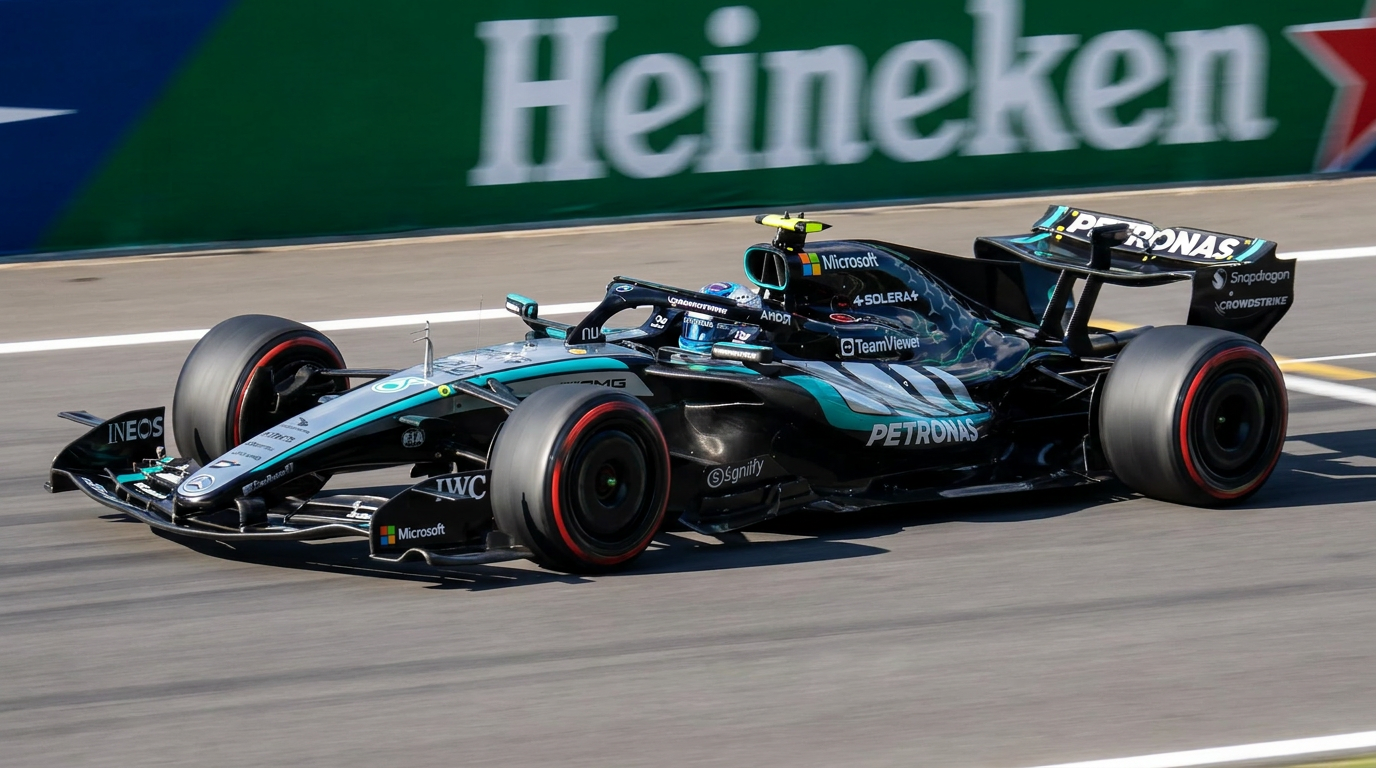
- Regulatory & Sustainability Advocates
- Focuses on making the sport carbon-neutral and road-relevant for the future of the automotive industry.
- Drivers & Purists
- Prioritizes the on-track racing spectacle, car handling, and the purity of wheel-to-wheel battles.
- Automotive Manufacturers
- Values cost-effective, relatable technology that can be transferred directly to consumer road cars.
What's not represented
- · Grassroots Motorsport Categories
- · Fossil Fuel Industry Representatives
Why this matters
The 2026 regulations represent the biggest technological leap in modern motorsport, fundamentally changing how Formula 1 cars race. By pioneering 100% sustainable fuels and advanced hybrid systems, the sport is actively developing net-zero technologies that will eventually power everyday consumer road cars.
Key points
- The 2026 F1 cars feature a 50/50 power split between the internal combustion engine and the electric motor.
- All power units now run on 100% advanced sustainable 'drop-in' fuels, releasing no new fossil carbon.
- Active aerodynamics replace the traditional DRS, automatically adjusting wings for downforce or top speed.
- Cars are shorter, narrower, and roughly 30 kilograms lighter to encourage closer racing.
- Drivers must manage complex energy harvesting techniques, including 'super-clipping' on the straights.
The 2026 Formula 1 season has arrived, and with it, the most radical overhaul of the sport's technical rulebook in the modern era. Fans tuning into the opening rounds have witnessed cars that look, sound, and race entirely differently than their predecessors. This is not merely a cosmetic update; it is a fundamental reimagining of what a Formula 1 car is designed to do.[1][2]
At the heart of this transformation is a dual mandate from the FIA and Formula 1: make the sport more sustainable for the planet and more relevant to the automotive industry, all while improving the wheel-to-wheel spectacle. The result is a complex, high-stakes engineering chess match that has forced every team on the grid to start from scratch.[1][3]
The most significant shift lies beneath the engine cover. The 2026 regulations introduce a "50/50 split" in power delivery, fundamentally changing the architecture of the hybrid power units. While the cars still utilize a 1.6-liter V6 turbocharged internal combustion engine, its role has been heavily modified.[1][3]
Under the previous regulations, the internal combustion engine produced the vast majority of the car's power—roughly 550 to 600 kilowatts. For 2026, the combustion engine's output has been dialed back to approximately 400 kilowatts. To compensate, the sport has dramatically increased its reliance on electricity.[3]
The electrical output from the hybrid system has skyrocketed from a mere 120 kilowatts to a massive 350 kilowatts—a nearly 300 percent increase. This means that at peak output, half of the car's roughly 1,000 horsepower is generated purely by the electric motor.[3]

To achieve this, the FIA made a crucial subtraction: the MGU-H (Motor Generator Unit - Heat) has been eliminated. The MGU-H, which harvested energy from the exhaust gases, was an engineering marvel but proved incredibly expensive and largely irrelevant to consumer road cars. Removing it has lowered the barrier to entry, successfully enticing massive automotive giants like Audi and Ford to join the grid.[1][3]
Alongside the electrification push, Formula 1 has achieved a major environmental milestone. As of this season, all 2026 power units are mandated to run on 100 percent advanced sustainable fuels. These "drop-in" fuels are synthesized from non-food biomass, municipal waste, or atmospheric carbon capture, ensuring that absolutely no new fossil carbon is released into the atmosphere during a race.[1][3]
Alongside the electrification push, Formula 1 has achieved a major environmental milestone.
The chassis itself has also been put on a diet. Modern Formula 1 cars had grown notoriously heavy and cumbersome, making overtaking difficult on tight street circuits. The 2026 cars are shorter, narrower, and approximately 30 kilograms lighter than the 2025 generation, designed specifically to be more nimble and responsive.[2][5]

Aerodynamics have undergone an equally dramatic revolution. The era of static wings and the traditional Drag Reduction System (DRS) is officially over. In their place, the 2026 cars feature sophisticated "active aerodynamics" on both the front and rear wings, which adjust dynamically depending on where the car is on the track.[1][2]
Drivers now switch between two primary aerodynamic profiles. "Corner Mode" deploys the wing flaps to generate maximum downforce, keeping the cars glued to the track through sweeping turns. Once the car hits a straight, the driver engages "Straight Mode," which flattens the wings to shed drag and maximize top speed.[1][2]
With DRS retired, overtaking relies on two new electrical deployment tools. The first is "Overtake Mode," an automated electrical push granted when a driver is within one second of the car ahead, designed to facilitate genuine wheel-to-wheel battles. The second is "Boost Mode," a driver-activated surge of maximum combined power from both the engine and battery that can be used offensively or defensively anywhere on the lap.[2]

These new tools have fundamentally altered the driver's workload. Formula 1 in 2026 is an exercise in extreme energy management. Because the electric motor provides such a massive percentage of the car's total power, draining the battery leaves a driver severely vulnerable.[2][6]
This dynamic has introduced a controversial new technique known as "super-clipping." To ensure they have enough electrical energy for critical overtaking zones, drivers must aggressively harvest energy during the lap. While still flat on the throttle on a long straight, a driver will switch the electric motor into generator mode.[6]
This action "steals" up to 250 kilowatts of power that would normally go to the rear wheels, converting it back into battery charge. To the viewer, the car appears to suddenly stop accelerating hard despite the driver keeping the pedal to the metal—a jarring visual that has become the defining tactical battleground of the 2026 season.[6]

The learning curve has been steep. Early races saw teams struggling to balance harvesting and deployment, leading to massive speed differentials on the straights. In response, the FIA quickly introduced targeted updates ahead of the Miami Grand Prix, capping the maximum Boost power at +150 kilowatts and reducing the permitted recharge limits to encourage more consistent, flat-out racing.[4]
Beyond performance, the 2026 regulations have also ushered in vital safety enhancements. The roll hoop behind the driver's head has been substantially strengthened to withstand 20G impacts, and a new two-stage front impact structure prevents the nose from snapping off entirely during secondary collisions.[3]

Ultimately, the 2026 regulations represent a delicate balancing act. By merging active aerodynamics, massive electrical power, and fully sustainable fuels, Formula 1 is attempting to secure its future as both the pinnacle of motorsport and a relevant laboratory for the next generation of road cars. The chess match has only just begun.[1][2][3]
How we got here
August 2022
The FIA officially publishes the 2026 power unit regulations, confirming the removal of the MGU-H and the shift to sustainable fuels.
June 2024
The first comprehensive chassis and active aerodynamics regulations are revealed to the public.
February 2026
Formula 1 teams unveil their radically redesigned cars ahead of pre-season testing.
March 2026
The 2026 season begins, debuting active aero, Overtake Mode, and the controversial super-clipping technique on track.
April 2026
The FIA introduces targeted updates at the Miami Grand Prix to refine energy management and cap Boost Mode power.
Viewpoints in depth
The Rulemakers' Vision
The FIA and Formula 1 prioritized sustainability and industry relevance.
For the sport's governing bodies, the 2026 regulations were an existential necessity. By mandating 100% sustainable fuels and a massive increase in electrification, the FIA ensured that Formula 1 remains a relevant research laboratory for the global automotive industry. Removing the hyper-complex MGU-H was a direct concession to attract new manufacturers, successfully bringing automotive giants like Audi and Ford into the fold while keeping the sport on track for its 'Net Zero by 2030' carbon target.
The Drivers' Challenge
Competitors are grappling with entirely new handling characteristics and extreme multitasking.
From the cockpit, 2026 is a radically different sport. Drivers have noted that while the lighter, narrower cars are more nimble through slow corners, the reduction in overall downforce makes them trickier to handle at the limit. More pressingly, the mental workload has skyrocketed. Drivers are no longer just racing the car ahead; they are constantly managing their battery state, deciding exactly when to deploy Boost Mode and when to suffer the speed penalties of super-clipping to recharge.
The Manufacturers' Incentive
Engine builders face the dual challenge of electrical efficiency and synthetic fuel development.
For power unit manufacturers, the battleground has shifted from raw combustion horsepower to electrical efficiency and fuel chemistry. Because the internal combustion engine is now capped at roughly 400kW, the key differentiator is how effectively a team can harvest, store, and deploy the 350kW of electrical energy. Furthermore, the race to develop the most potent 100% sustainable 'drop-in' fuel has sparked intense competition among petrochemical partners, as any slight advantage in fuel combustion directly translates to lap time.
What we don't know
- Whether the mid-season tweaks to energy management will completely eliminate the extreme speed differentials seen during super-clipping.
- Which engine manufacturer has developed the most efficient 100% sustainable fuel blend.
- How the active aerodynamics will perform in extreme wet-weather conditions over the course of a full season.
Key terms
- Active Aerodynamics
- Movable front and rear wing flaps that automatically adjust to provide high downforce in corners and low drag on straights.
- MGU-H
- Motor Generator Unit - Heat; a complex system that harvested energy from exhaust gases, which has been banned for 2026 to reduce costs.
- Drop-in Fuel
- A 100% sustainable synthetic fuel designed to be chemically identical to fossil fuels, meaning it can be used in engines without requiring modifications.
- Boost Mode
- A driver-activated setting that deploys maximum combined power from both the engine and the battery for attacking or defending.
Frequently asked
Is DRS still used in the 2026 F1 season?
No. The traditional Drag Reduction System (DRS) has been replaced by active aerodynamics and an electrical 'Overtake Mode' that gives trailing cars a power boost.
What does a 50/50 power split mean?
It means the car's total horsepower is generated almost equally by the internal combustion engine (approx. 400kW) and the electric motor (350kW).
What is super-clipping?
Super-clipping is a technique where the car's electric motor switches to generator mode on a straight, harvesting energy and slowing the car's acceleration even while the driver is full throttle.
Are the 2026 F1 cars fully electric?
No. They are advanced hybrids. They still use a 1.6-liter turbocharged V6 engine, but it now runs entirely on 100% sustainable, lab-created fuel.
Sources
Source coverage
6 outlets
3 viewpoints surfaced






[1]Formula 1Regulatory & Sustainability Advocates
Everything you need to know for 2026
Read on Formula 1 →[2]The GuardianDrivers & Purists
Rule changes to the 2026 F1 cars
Read on The Guardian →[3]SilverstoneRegulatory & Sustainability Advocates
A power unit revolution: The 50/50 split
Read on Silverstone →[4]Williams RacingAutomotive Manufacturers
Agreed changes to 2026 F1 regulations to debut in Miami
Read on Williams Racing →[5]AutosportAutomotive Manufacturers
2026 F1 cars to be lighter and smaller
Read on Autosport →[6]Motorsport.comDrivers & Purists
Super-clipping: The new 2026 technique that shocked everyone
Read on Motorsport.com →

More in sports
See all 36 stories →Preview
England's 2026 World Cup Outlook: Inside Thomas Tuchel's High-Stakes Group L Campaign
0 sources

College Baseball
Troy Trojans Complete Historic Cinderella Run to Reach First Men's College World Series
0 sources

MLB Preview
San Diego Padres Look to Snap Road Skid Against Baltimore Orioles in Interleague Clash
0 sources

Grassroots Tech
How 'Drop-In' Sports Apps Are Rewiring Urban Communities and Fighting Loneliness
0 sources

Every angle. Every day.
Get sports stories with full source coverage and perspective breakdowns delivered to your inbox.