
How Autonomous AI Agents Are Securing EV Charging Networks Against Cyberattacks
Researchers and industry leaders are deploying autonomous AI agents to protect electric vehicle chargers from protocol manipulation and grid-level cyber threats.
By Factlen Editorial Team
- Cybersecurity Researchers
- Advocate for continuous, autonomous red-teaming and edge-based anomaly detection.
- Grid Operators
- Focus on the systemic risk of coordinated attacks destabilizing the electrical grid.
- Charging Network Operators
- Balance advanced security requirements with operational uptime and driver experience.
What's not represented
- · Legacy Charger Manufacturers
- · Everyday EV Drivers
Why this matters
As electric vehicles become mainstream, the chargers that power them are essentially internet-connected industrial control systems placed on public streets. Securing this infrastructure with AI ensures that vulnerabilities cannot be exploited to steal energy or destabilize the broader electrical grid.
Key points
- EV charging networks are critical infrastructure often protected by inadequate, consumer-grade security models.
- The Open Charge Point Protocol (OCPP) is vulnerable to manipulation that static firewalls cannot detect.
- Cybersecurity researchers are deploying autonomous AI agents to monitor charging sessions in real-time.
- These agents understand the 'state machine' of a charge, allowing them to instantly block energy theft and protocol attacks.
- Simulations show AI agents can achieve a 98.9% cyberattack detection rate while also improving grid load distribution.
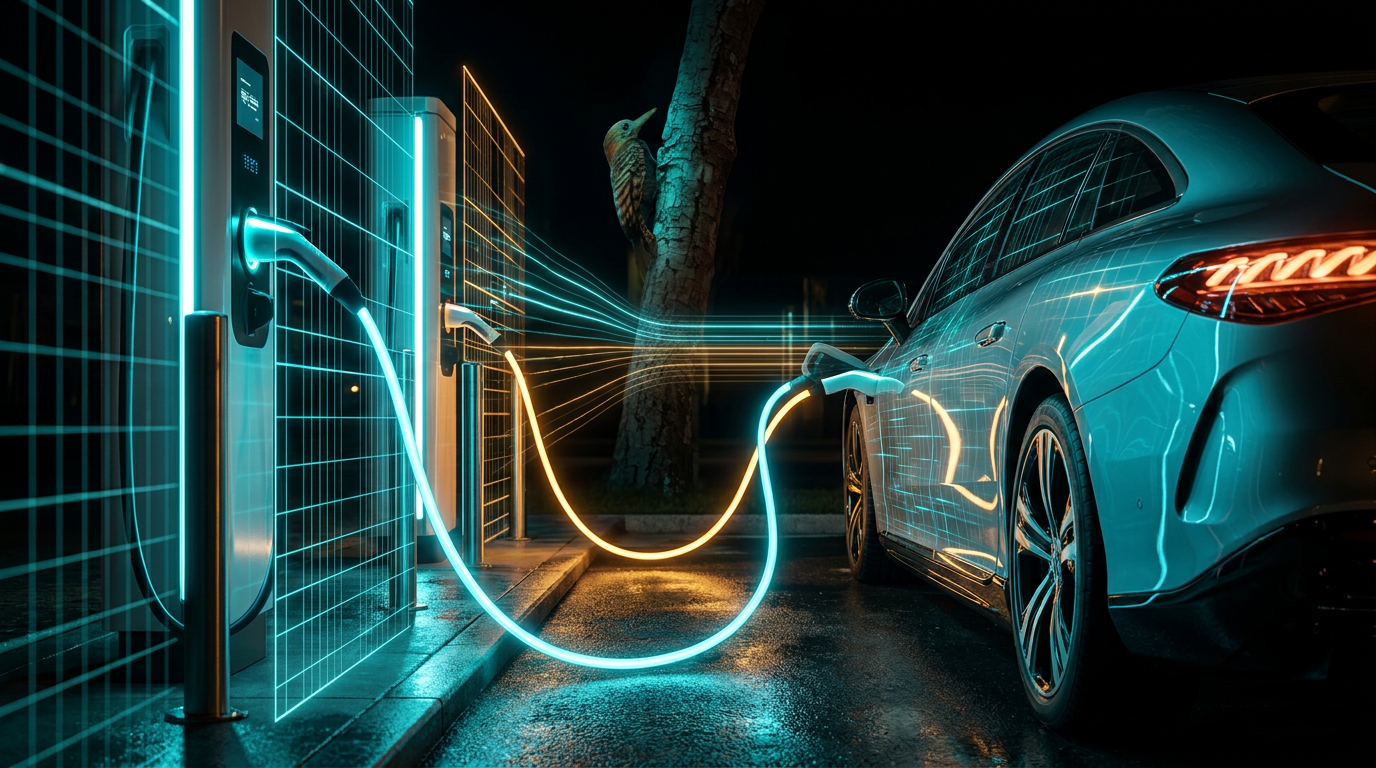
The global transition to electric vehicles has quietly distributed thousands of industrial control systems onto public sidewalks, parking garages, and highway rest stops. While these charging stations represent a massive leap in sustainable mobility, they also introduce a novel and highly distributed vulnerability to the electrical grid.[2]
According to industry security experts, the electric vehicle charging ecosystem is currently operating critical infrastructure using security models inherited from consumer internet-of-things devices. This mismatch creates a dangerous blind spot, as chargers are physically accessible to the public yet digitally connected to both cloud management platforms and the broader energy grid.[2][5]
The evidence of this vulnerability is mounting. A recent threat analysis revealed that 40 percent of deployed EV chargers lack essential endpoint protections, such as secure boot or runtime attestation. Furthermore, six out of ten recorded attacks on Electric Vehicle Supply Equipment had the potential to impact millions of connected devices.[5]

The primary attack vector lies in the communication protocols that govern the charging process. The Open Charge Point Protocol (OCPP) is the industry standard, allowing chargers to communicate with central management systems. However, researchers note that OCPP is a complex, stateful protocol where message ordering and timing create vulnerabilities that traditional static analysis and firewalls cannot detect.[2][3][6]
Traditional security measures, such as quarterly penetration tests and static vulnerability scans, are proving inadequate for infrastructure that changes daily with over-the-air firmware updates and dynamic pricing adjustments. Sophisticated threat actors can exploit these predictable testing windows to probe for gaps in the network while remaining undetected by legacy security tools.[2]
To address this escalating threat, cybersecurity researchers and industry leaders are turning to "agentic AI"—autonomous artificial intelligence systems capable of continuous monitoring, reasoning, and intervention. Unlike standard security software, these AI agents do not just look for known malware signatures; they understand the operational logic of the charging station.[1][2][4]
A recent breakthrough proposed by researchers in Spain demonstrates how AI agents can be deployed directly at the edge to protect EV chargers. These agents monitor real-time telemetry, including load priority, occupancy, and OCPP communication messages, to detect anomalies that indicate a cyberattack.[1][3]
The evidence supporting the efficacy of these AI agents is robust. In simulated multi-station networks, an AI intrusion detection system achieved a 98.9 percent cyberattack detection rate, with an overall accuracy of 96.8 percent. The system proved highly effective at identifying both software-based attacks and cyber-physical vulnerabilities.[3]

The evidence supporting the efficacy of these AI agents is robust.
One of the key advantages of AI agents is their ability to understand "state machines." Because charging a vehicle involves a specific sequence of events—authentication, locking the cable, initiating power flow, and billing—an AI agent can detect when a malicious actor attempts to manipulate this sequence, even if the individual commands appear legitimate in isolation.[2]
This state-aware monitoring is crucial for preventing localized threats like billing fraud and energy theft. By cross-referencing user authentication data with physical power draw and protocol messages, the AI agent can instantly flag and halt unauthorized transactions before power is siphoned from the grid.[4][6]
Beyond individual charger security, AI agents offer a defense against systemic threats to the power grid. A coordinated cyberattack that simultaneously switches thousands of high-capacity chargers on or off could cause severe frequency deviations, potentially leading to localized blackouts.[5]
AI agents mitigate this risk by enabling autonomous, decentralized decision-making. If a central management cloud is compromised, edge-based AI agents can sever the connection and default to a safe, localized operating mode, ensuring that the chargers do not participate in a coordinated grid attack.[1][2][5]
Furthermore, these agents can optimize the legitimate use of the grid. The same AI systems used for intrusion detection can also manage load balancing across multiple stations. Research indicates that AI-driven load distribution can improve efficiency by 23.5 percent, reducing the peak-to-average load ratio and easing the strain on local transformers.[3]

Despite the strong evidence supporting AI agent deployment, transparent uncertainty remains regarding implementation at scale. The primary challenge is computational overhead. Many older, legacy EV chargers lack the processing power required to run sophisticated machine learning models directly at the edge.[4]
For these legacy systems, operators must rely on cloud-based AI agents, which introduces latency and leaves the charger vulnerable if the network connection is severed or jammed. The industry has yet to standardize how AI agents will be retrofitted into the existing, highly fragmented charging infrastructure.[4][6]
Additionally, there is the risk of false positives. If an AI agent incorrectly flags a legitimate charging session as an anomaly and shuts down the charger, it strands the driver. Balancing aggressive threat detection with high operational reliability is an ongoing challenge for AI model tuning.[3]
Ultimately, the transition to AI-driven security is becoming an imperative rather than an option. As charging networks integrate with Vehicle-to-Grid technologies—allowing cars to push power back into the grid—the attack surface will only expand.[5]
By shifting from reactive, point-in-time testing to continuous, autonomous AI validation, the electric mobility sector is building a resilient foundation. The deployment of AI agents ensures that the infrastructure powering the next generation of transportation remains both accessible to drivers and secure from adversaries.[1][2][7]
How we got here
2010s
Early EV charging networks are deployed using consumer-grade IoT security models and static firewalls.
2024
Industry threat analyses reveal that 40% of deployed EV chargers lack essential endpoint protections.
2025-2026
Researchers and cybersecurity firms begin deploying autonomous AI agents capable of understanding charging protocols to actively block attacks.
Viewpoints in depth
Cybersecurity Researchers
Advocate for continuous, autonomous red-teaming and edge-based anomaly detection.
Security experts argue that the EV charging industry has built critical infrastructure using consumer-grade security models. Because chargers receive weekly cloud updates and dynamic pricing changes, static quarterly penetration tests leave massive exposure windows. Researchers emphasize that only autonomous AI agents—capable of understanding the complex state machines of charging protocols—can provide the 24/7 validation required to secure these distributed industrial control systems.
Grid Operators
Focus on the systemic risk of coordinated attacks destabilizing the electrical grid.
For utility companies and grid managers, a compromised EV charger is not just a localized fraud issue; it is a vector for grid destabilization. If a nation-state adversary were to compromise a central charging management system, they could orchestrate a synchronized attack, turning thousands of high-capacity chargers on or off simultaneously. Grid operators view edge-based AI agents as a necessary fail-safe to sever compromised connections and prevent catastrophic frequency deviations.
Charging Network Operators
Balance advanced security requirements with operational uptime and driver experience.
Charge point operators (CPOs) acknowledge the security risks but are highly sensitive to the operational realities of deploying AI at the edge. Their primary metric is uptime. If an overly aggressive AI security agent generates false positives—flagging a legitimate, slightly anomalous charging session as an attack—it will shut down the charger and strand the driver. CPOs advocate for a phased rollout of AI agents, prioritizing cloud-based monitoring before pushing autonomous kill-switches to the edge hardware.
What we don't know
- Whether older, legacy EV chargers have the computational power required to run sophisticated AI anomaly detection models directly at the edge.
- How frequently AI agents might generate false positives, potentially shutting down legitimate charging sessions and stranding drivers.
Key terms
- Agentic AI
- Artificial intelligence systems that can autonomously monitor environments, make decisions, and execute multi-step workflows without requiring human intervention.
- OCPP (Open Charge Point Protocol)
- The global standard communication protocol used to transmit data between electric vehicle chargers and central management systems.
- Industrial Control System (ICS)
- Computer systems that monitor and control physical industrial processes, such as power grids, manufacturing plants, and high-voltage charging stations.
- State Machine
- A computational model that tracks the current status of a system—like a charging session—and only allows specific, logical transitions between steps.
Frequently asked
Why are EV chargers vulnerable to cyberattacks?
EV chargers are essentially internet-connected industrial control systems placed in public areas. Many run on consumer-grade security and use complex communication protocols that traditional firewalls struggle to monitor effectively.
How do AI agents protect the chargers?
Instead of just looking for known malware, AI agents understand the specific sequence of a charging session. They monitor real-time data to instantly detect and block anomalies, such as protocol manipulation or energy theft.
Can a hacked charger affect the power grid?
Yes. While a single hacked charger is a localized issue, a coordinated attack that simultaneously manipulates thousands of high-capacity chargers could cause severe power fluctuations, potentially destabilizing local electrical grids.
Sources
Source coverage
7 outlets
3 viewpoints surfaced







[1]WiredCybersecurity Researchers
Here’s How AI Agents Can Protect EV Chargers
Read on Wired →[2]The EV ReportCybersecurity Researchers
EV chargers are critical infrastructure running on consumer-grade security
Read on The EV Report →[3]MDPIGrid Operators
AI-Driven Load Balancing and Cybersecurity in Multi-Station EV Charging Networks
Read on MDPI →[4]TechRxivCybersecurity Researchers
LLM-Driven Anomaly Detection for Securing EV Charging Infrastructure
Read on TechRxiv →[5]Tata Consultancy ServicesGrid Operators
Securing the EV Charging Ecosystem: A Roadmap
Read on Tata Consultancy Services →[6]CSL GroupCharging Network Operators
How CSL Group Enables Resilient and Secure OCPP Communications with AI
Read on CSL Group →[7]Factlen Editorial TeamCharging Network Operators
Synthesis by Factlen editorial team
Read on Factlen Editorial Team →

More in technology
See all 26 stories →Vibecoding
How 'Vibecoding' is Turning Anyone with an Idea into a Software Developer
0 sources

Mobile Photography
Apple Brings Generative AI to the iPhone Camera: How iOS 27’s New Photo Tools Work
0 sources

Zero-Knowledge Proofs
How Zero-Knowledge Proofs Are Ending the Era of Data Sharing
0 sources
Digital Wellbeing
The End of the Screen Time Limit: How AI is Redefining 'Nutritional' Digital Media
0 sources

Every angle. Every day.
Get technology stories with full source coverage and perspective breakdowns delivered to your inbox.