
How AI and Spatial Audio Are Making Video Games Accessible to Visually Impaired Players
Advancements in artificial intelligence, 3D soundscapes, and modular hardware are breaking down historical barriers, allowing visually impaired gamers to navigate complex virtual worlds.
By Factlen Editorial Team
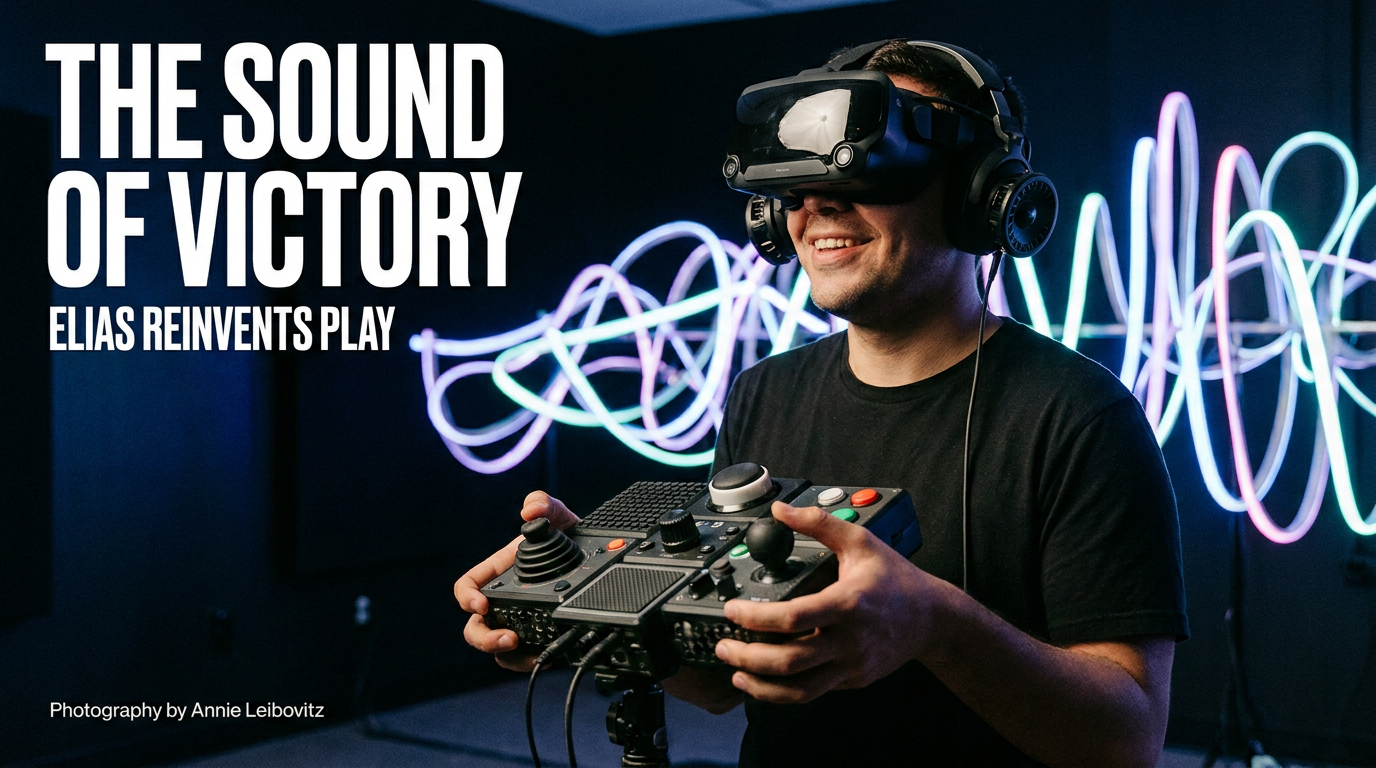
- Accessibility Advocates
- Argue that disabled gamers deserve uncompromised AAA experiences, emphasizing that accessibility tools are about equal information, not reduced difficulty.
- Game Developers
- Focus on the technical challenges of translating complex visual environments into intuitive spatial audio and AI-driven cues without overwhelming the player.
- Hardware Manufacturers
- Prioritize modular, customizable physical interfaces that allow players to adapt the control scheme to their specific physical and cognitive needs.
What's not represented
- · Indie game developers with limited budgets for accessibility
- · Deaf-blind gamers requiring purely haptic solutions
Why this matters
For decades, video games have been an inherently visual medium, locking millions of disabled players out of a massive cultural touchstone. The rapid integration of AI, spatial audio, and modular hardware is now proving that complex digital worlds can be navigated entirely without sight, setting a new standard for inclusive technology.
Key points
- An estimated 250 million gamers worldwide identify as visually impaired, historically facing massive barriers to entry.
- The new UK Nerve Lab is utilizing AI and brain imaging to develop real-time navigation tools for non-visual gaming.
- Spatial audio replaces visual cues by using 3D soundscapes and 'audio pinging' to guide players toward objectives.
- Forza Motorsport's Blind Driving Assists use stereo panning to help blind players steer and compete at high levels.
- Modular hardware like the PlayStation Access Controller allows players to fully customize button layouts and reduce physical strain.
Video games have historically been an inherently visual medium, built around flashing health bars, tiny crosshairs, and sprawling, complex environments. For the estimated 250 million gamers worldwide who identify as visually impaired, this design paradigm has often served as an insurmountable barrier to entry. While the global games industry generates hundreds of billions of dollars annually, a massive demographic has been left relying on rudimentary screen magnifiers or locked out of blockbuster titles entirely.[2]
But the landscape of digital entertainment is undergoing a quiet revolution. Driven by advancements in artificial intelligence, spatial audio, and highly modular hardware, developers are proving that complex virtual worlds can be navigated without sight.[8]
The shift from visual reliance to multi-sensory design is accelerating rapidly, moving beyond basic text-to-speech menus into real-time environmental mapping. This week, the pioneering Nerve Lab opened in London, marking a significant milestone in this effort. The facility, the first of its kind in the United Kingdom, combines wearable brain imaging, motion capture, and AI-powered analytics to study how people respond to media in real time.[1]

Among its core initiatives is the development of advanced AI tools specifically designed to help visually impaired people navigate video games. By analyzing player responses and environmental data simultaneously, researchers aim to create dynamic systems that translate visual obstacles into intuitive, non-visual feedback.[1]
At the heart of this accessibility revolution is spatial audio—a technology that replaces line-of-sight with highly precise 3D soundscapes. In traditional game design, audio is often atmospheric; in accessible design, it becomes the primary navigational tool. Developers utilize "audio pinging" to guide players toward objectives. If a player needs to find an exit door or a specific item, the object emits a continuous spatial ping. As the character moves through the virtual space, the player can track the exact origin of the sound, adjusting their trajectory until they reach the target.[6]
At the heart of this accessibility revolution is spatial audio—a technology that replaces line-of-sight with highly precise 3D soundscapes.
Some specialized titles take this concept even further by implementing virtual radar systems. In audio-centric space exploration games, for example, players use a short-range radar that detects objects within a specific radius—often around 300 distance units. When an object enters this range, the system announces its type and distance. Additionally, players can trigger a 180-degree radar sweep that plays continuous tones, with deeper pitches indicating massive objects like planets and higher pitches signaling smaller hazards like debris. This creates a genuine sensation of three-dimensional flight and verticality, despite the complete absence of visual output.[7]
Translating these mechanics to high-speed, mainstream blockbuster games presents a much steeper challenge. Turn 10 Studios tackled this directly with the release of Forza Motorsport, a highly technical racing simulator. After years of research and collaboration with blind accessibility consultants, the studio introduced a groundbreaking system known as "Blind Driving Assists" (BDA). The system was built from the ground up to provide low-vision and blind players with the exact same track information that sighted players receive, ensuring they could compete at the highest levels without relying on visual racing lines.[3]

The centerpiece of the BDA system is the "steering guide." Rather than simply telling a player to turn left or right, the game continuously pans the audio of the player's own car engine and tires. If the car begins to drift toward the left side of the track, the engine audio pans to the right ear of the player's headset. The player instinctively steers toward the sound to bring the audio back to the center, effectively keeping the car aligned on the track. It is a continuous, fluid waypoint system that relies entirely on stereo panning optimized for headphone listening.[3]
Beyond steering, Forza Motorsport utilizes a dense suite of supplemental audio cues to communicate the physics of the race. Players hear specific high-contrast beeps when they approach the edge of the track, allowing them to ride the line without incurring penalties. Distinct pitch-shifting tones indicate exactly when to begin decelerating for a corner, and separate audio prompts signal the optimal moment to shift gears for players using manual transmissions. Crucially, accessibility advocates emphasize that this is not an "easy mode." The game's physics remain identical; the assists merely translate visual telemetry into auditory data, requiring the same level of skill and reaction time to master.[3][4]
While software innovations like spatial audio and AI mapping address in-game navigation, physical hardware remains a significant hurdle. Standard game controllers, with their tightly clustered buttons and dual thumbsticks, demand a high degree of manual dexterity and fine motor control. For players who are visually impaired—or those who have overlapping mobility disabilities—locating and pressing the correct sequence of tiny, identical buttons can be frustrating or physically impossible. Recognizing this, hardware manufacturers have begun rethinking the physical interface from the ground up.[5]

Sony's PlayStation Access Controller represents a major leap forward in modular hardware design. Built as a highly customizable circular pod, the controller allows players to swap out magnetic button caps of various shapes and sizes—such as curved, flat, or overhanging caps—to suit their specific physical needs. The joystick can be oriented in any 360-degree direction, and the device can be mounted on flat surfaces or specialized stands, eliminating the need for the player to physically hold the controller. The true power of the Access Controller lies in its software integration. Players can reprogram any button to perform any function, storing up to 30 different control profiles directly on the console.[5]
Looking ahead, researchers are exploring how to merge spatial audio with advanced haptic feedback to create even more immersive non-visual experiences. Innovators envision systems that utilize head-tracking technology to pinpoint exactly where audio is originating in a 3D space, and then translating that data into physical sensations via wearable haptic devices. Despite these monumental breakthroughs, the games industry still has a long way to go. Accessibility advocates point out that many high-profile modern releases still rely entirely on visual cues, leaving a massive demographic underserved. The challenge now is shifting the industry's culture so that these AI and audio-driven accessibility features become a standard requirement, rather than an optional afterthought.[2][6][8]
How we got here
2020
The Last of Us Part II launches with over 60 accessibility settings, setting a new industry standard for AAA games.
April 2023
Turn 10 Studios unveils Blind Driving Assists for Forza Motorsport, built in collaboration with blind accessibility consultants.
December 2023
Sony releases the PlayStation Access Controller, providing a highly customizable hardware kit for disabled players.
June 2026
The UK Nerve Lab opens in London, pioneering AI-powered analytics to map player responses and build real-time non-visual navigation tools.
Viewpoints in depth
Accessibility Advocates
Argue that disabled gamers deserve the full, uncompromised AAA experience.
Consultants and advocates within the disabled gaming community frequently stress that accessibility is about equity, not difficulty. Features like Blind Driving Assists or spatial audio pinging are not designed to serve as an 'easy mode.' Instead, they are complex translations of visual telemetry into auditory data, requiring players to learn, react, and execute with the same level of skill as sighted players. The goal is to ensure that a blind player can experience the exact same intended challenge and triumph as anyone else.
Game Developers
Focus on the technical challenge of translating visual data into spatial audio and AI-driven cues.
For audio engineers and developers, the primary hurdle is information density. Sighted players can process dozens of visual cues simultaneously—speed, track position, enemy locations, and UI elements. Translating all of that into audio without creating a chaotic, overwhelming wall of sound requires meticulous mixing. Studios like Turn 10 and research facilities like the UK Nerve Lab are heavily focused on prioritizing audio cues, using distinct pitches, stereo panning, and AI to ensure the most critical information reaches the player exactly when they need it.
Hardware Innovators
Prioritize modular, customizable physical interfaces to reduce physical and cognitive strain.
Hardware manufacturers recognize that software accessibility can only go so far if the physical controller remains a barrier. By developing modular kits like the PlayStation Access Controller, companies are allowing players to build their own interface. The ability to map multiple functions to a single button, or use toggle switches instead of holding buttons down, drastically reduces the physical fatigue associated with gaming, opening the door for players with overlapping visual and motor disabilities.
What we don't know
- Whether smaller indie studios will be able to afford the high development costs associated with complex spatial audio and AI mapping.
- How quickly the broader gaming industry will adopt these features as standard requirements rather than optional additions.
Key terms
- Spatial Audio
- 3D sound technology that allows players to pinpoint the exact location, distance, and elevation of an object using precise auditory cues.
- Blind Driving Assists (BDA)
- A suite of supplemental audio cues used in racing simulators to indicate steering direction, track limits, and braking points without visual reliance.
- Haptic Feedback
- Technology that uses touch and targeted vibration to communicate in-game events or spatial information directly to the player's body.
- Screen Narration
- Text-to-speech software that reads out in-game menus, user interface elements, and chat logs to assist visually impaired players.
Frequently asked
How do blind players steer in racing games?
Games like Forza Motorsport use a 'steering guide' that pans engine and tire sounds to the left or right ear, prompting the player to steer toward the sound to stay centered.
Do accessibility features make games easier?
No. Accessibility consultants emphasize that tools like spatial audio and screen narration simply provide disabled players with the same information sighted players receive, maintaining the game's intended challenge.
What is the UK Nerve Lab doing for gamers?
The newly opened London facility uses wearable brain imaging and AI analytics to study real-time player responses, aiming to develop dynamic navigation tools for visually impaired users.
Sources
Source coverage
8 outlets
3 viewpoints surfaced








[1]The GuardianGame Developers
Pioneering UK Nerve Lab harnesses AI to map effect of children's screen time
Read on The Guardian →[2]Direct AccessAccessibility Advocates
The State of Accessibility in the Video Game Industry
Read on Direct Access →[3]XboxGame Developers
From Blind Driving Assists to One Touch Driving, Meet The Most Accessible Forza Motorsport Ever
Read on Xbox →[4]Access-Ability UKAccessibility Advocates
Forza Motorsport (2023) Accessibility Review
Read on Access-Ability UK →[5]PlayStationHardware Manufacturers
Access controller for PS5
Read on PlayStation →[6]Lighthouse GuildAccessibility Advocates
How Spatial Audio is Changing Gaming for the Visually Impaired
Read on Lighthouse Guild →[7]American Foundation for the BlindAccessibility Advocates
A Guide to Viewpoint, an AI Recognition Tool for Blind and Low-Vision Windows Users
Read on American Foundation for the Blind →[8]Factlen Editorial TeamGame Developers
Synthesis by Factlen editorial team
Read on Factlen Editorial Team →

More in technology
See all 26 stories →Vibecoding
How 'Vibecoding' is Turning Anyone with an Idea into a Software Developer
0 sources

Mobile Photography
Apple Brings Generative AI to the iPhone Camera: How iOS 27’s New Photo Tools Work
0 sources
Zero-Knowledge Proofs
How Zero-Knowledge Proofs Are Ending the Era of Data Sharing
0 sources

Digital Wellbeing
The End of the Screen Time Limit: How AI is Redefining 'Nutritional' Digital Media
0 sources

Every angle. Every day.
Get technology stories with full source coverage and perspective breakdowns delivered to your inbox.