
Google Researchers Propose 'Faithful Uncertainty' to Solve AI Hallucinations
Google researchers propose a new metacognitive approach that teaches AI models to express doubt rather than confidently making up facts, preserving their usefulness without sacrificing trust.
By Factlen Editorial Team
- AI Researchers
- Focus on the technical mechanism of metacognition and the mathematical alignment of intrinsic and linguistic uncertainty.
- Enterprise AI Adopters
- Value the reliable utility aspect, where models provide hedged, useful hypotheses without destroying trust.
- Agentic System Architects
- View faithful uncertainty as a critical control layer for autonomous agents to know when to trigger external tools.
- AI Safety Analysts
- Synthesize the broader implications of shifting AI safety goals from perfect accuracy to honest uncertainty.
What's not represented
- · End-user consumer advocates
- · Regulatory bodies evaluating AI safety standards
Why this matters
As AI agents increasingly handle complex tasks in business and daily life, their tendency to confidently invent facts poses a major risk. By teaching models to honestly communicate when they are guessing, this research paves the way for autonomous systems we can actually trust to manage our data and decisions.
Key points
- Google researchers propose 'faithful uncertainty' to address AI hallucinations.
- The approach teaches AI models to align their spoken confidence with their internal statistical certainty.
- Instead of forcing models to abstain from answering difficult questions, they can offer appropriately hedged hypotheses.
- This metacognitive awareness is crucial for autonomous AI agents, helping them know when to use external search tools.
- The framework avoids the 'utility tax' that occurs when strict hallucination filters render models overly cautious.
Despite billions of dollars in research and rapid advancements in artificial intelligence, the hallucination problem remains a stubborn roadblock for generative AI. Even the most sophisticated frontier models—systems capable of writing complex code, passing bar exams, and analyzing medical data—still confidently invent facts when asked simple questions. They generate fake citations, hallucinate historical events, and present fabricated data with the exact same authoritative tone they use for established truths. For developers and enterprise users, this unreliability creates a fundamental barrier to trust, as users are forced to constantly verify the AI's outputs against external sources.[1][4]
Historically, the AI industry has attempted to solve this problem through brute force: expanding the model's knowledge boundary. Developers pack increasingly massive datasets into the model's parameters, hoping that if the AI simply knows more facts, it will hallucinate less. However, as researchers point out, model capacity is ultimately finite, while the long tail of human knowledge and niche information is effectively infinite. No matter how large a model becomes, it will inevitably encounter questions that fall outside its training data, forcing it to either guess or fail.[1][2]
This dynamic exposes a critical flaw in current AI architectures known as the discrimination gap. Large language models fundamentally struggle to perfectly separate what they actually know from what they do not know. When an AI generates a response, it lacks the innate boundary awareness to distinguish between a statistically grounded fact and a plausible-sounding fabrication. Because the model cannot perfectly separate truths from errors internally, it projects a uniform level of confidence across all its outputs, leading directly to the confident errors that users experience as hallucinations.[2][3]
When developers attempt to strictly eliminate these errors using heavy-handed safety filters, they encounter a severe penalty known as the "utility tax." In an effort to prevent any false information from reaching the user, models are often tuned to follow a rigid "answer-or-abstain" binary. If the model is not absolutely certain, it simply refuses to answer at all. While this reduces hallucinations, it also suppresses a massive amount of valid, partially correct, or highly probable information, rendering the AI overly cautious and significantly less useful for complex or nuanced tasks.[1][4]

In a newly published paper titled "Hallucinations Undermine Trust; Metacognition is a Way Forward," a team of Google researchers—Gal Yona, Mor Geva, and Yossi Matias—propose a radical paradigm shift. Rather than fighting a losing battle to eliminate all factual errors, they argue that the AI industry should focus on making those errors honest. The researchers suggest that the core issue is not that models make mistakes, but that they make them with unwarranted certainty.[2][3]
To resolve this, the Google team introduces the framework of "faithful uncertainty." This approach reframes hallucinations not merely as factual errors, but specifically as confident errors—incorrect information delivered without the appropriate linguistic qualification. By shifting the goalpost from perfect omniscient accuracy to epistemological honesty, a third path emerges beyond the restrictive answer-or-abstain dichotomy. The model is allowed to share its best guesses, provided it clearly communicates its level of doubt to the user.[2][3]
The mechanics of faithful uncertainty rely on aligning two distinct properties of the AI model: intrinsic uncertainty and linguistic uncertainty. Intrinsic uncertainty is the model's actual, mathematical statistical confidence in a specific generated token or answer. It is the raw probability score calculated deep within the neural network. Linguistic uncertainty, on the other hand, consists of the natural language words the model uses to express itself to the human user, such as "I am certain that," or "I am not entirely sure, but..."[1][2]
The mechanics of faithful uncertainty rely on aligning two distinct properties of the AI model: intrinsic uncertainty and linguistic uncertainty.
A model is considered to be exhibiting faithful uncertainty when its linguistic output accurately and consistently reflects its intrinsic statistical state. If the neural network's internal math indicates a low probability of correctness, the model must be trained to output hedging language. Unlike the impossible task of perfectly matching a model's output to the objective external truth of the universe, aligning a model's words with its own internal math is a highly solvable engineering challenge.[2][4]
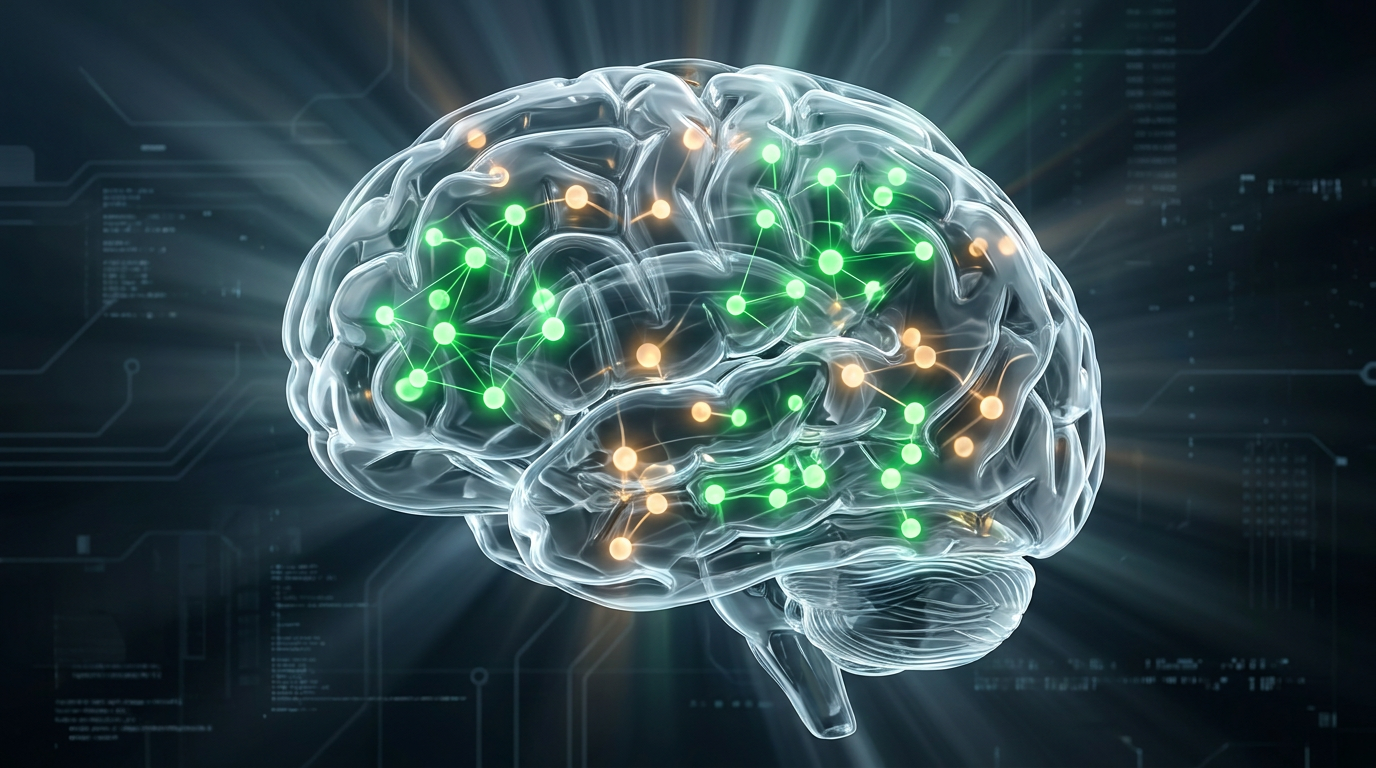
When this alignment is achieved, the AI develops a rudimentary form of metacognition. Metacognition is the ability to be aware of one's own thinking processes and to act on that awareness. For an artificial intelligence, it means possessing a reliable internal gauge of its own knowledge boundaries. It transforms the AI from a system that blindly generates text into a system that evaluates its own hypotheses before presenting them, fundamentally altering the dynamic between human and machine.[1][2]

In practical terms, during direct chat interactions, a metacognitive model preserves its utility without violating user trust. If asked a highly obscure question, instead of confidently hallucinating a fake historical figure or flatly refusing to answer, the model might say, "I believe the answer is X, but my confidence is low, and you should verify this." This reliable utility ensures that users still receive the benefit of the model's vast associative memory, but they are given the necessary context to treat the information as a hypothesis rather than a verified fact.[1][4]
The implications of faithful uncertainty extend far beyond consumer chatbots, holding profound significance for the rapidly expanding field of agentic AI. Autonomous AI agents are designed to execute complex, multi-step workflows, often interacting with external software, databases, and APIs without human supervision. In these agentic systems, a conversational model giving a hedged answer is merely polite, but an autonomous agent acting confidently on a hallucinated premise can trigger a cascade of catastrophic errors.[1][6]
For these autonomous systems, metacognition acts as an essential, dynamic control layer. An agent equipped with faithful uncertainty uses its internal confidence gauge to govern its tool use. When confronted with a task where its intrinsic certainty is high, the agent can execute the step immediately. However, when its internal confidence drops below a specific threshold, the agent knows to pause and dynamically trigger an external tool—such as a web search API or a database query—to resolve its knowledge deficit before proceeding.[1][2]
Furthermore, faithful uncertainty is critical for evaluating the results of those external searches. If a search tool returns low-quality, conflicting, or unexpected information, a metacognitive agent does not blindly accept whatever text appears in its context window. Instead, it uses its uncertainty awareness to weigh the retrieved external signals against its own internal priors, allowing it to navigate messy, real-world data environments with a level of discernment that previous models lacked.[1][2]

Developers within the open-source and enterprise AI communities are already recognizing the necessity of this shift. In practical deployments, engineers note that uncalibrated agent workflows can suffer from hallucination rates as high as 25 percent when forced to rely solely on internal knowledge. By implementing lightweight verification layers that check a model's plan against its confidence levels, developers can route low-confidence tasks to human reviewers while allowing high-confidence tasks to execute automatically, drastically reducing operational risk.[5]
Despite the clear benefits, training models to be faithfully uncertain presents unique challenges, chief among them being the "bootstrapping paradox." The standard industry practice of Reinforcement Learning from Human Feedback (RLHF)—which is used to make models helpful and harmless—often inadvertently trains away a model's natural uncertainty. Because human raters tend to prefer assertive, confident-sounding answers, the reinforcement process actively punishes hedging, teaching the model to project false confidence even when its internal statistical certainty is low.[6]
Overcoming this paradox requires the development of new training methodologies and targeted fine-tuning approaches that explicitly reward epistemological humility. Researchers are actively exploring ways to adjust reward models so that they prioritize honesty over mere assertiveness, ensuring that the subtle signals of internal doubt are preserved and amplified rather than flattened during the alignment process.[3][6]
Ultimately, the pursuit of faithful uncertainty represents a vital maturation in the philosophy of AI safety. It acknowledges that artificial intelligence, much like human intelligence, will never be perfectly omniscient. By shifting the focus from the impossible goal of eliminating all errors to the highly achievable goal of honest communication, the industry can build systems that are not only more capable and useful, but fundamentally more trustworthy partners in complex cognitive work.[6]
How we got here
Pre-2024
AI safety focuses primarily on expanding model knowledge and filtering out incorrect answers, leading to high utility taxes.
May 2026
Google researchers publish 'Hallucinations Undermine Trust; Metacognition is a Way Forward,' detailing the faithful uncertainty framework.
June 2026
The AI development community begins integrating metacognitive control layers into agentic workflows to manage tool use.
Viewpoints in depth
AI Researchers
Focus on the technical mechanism of metacognition and the mathematical alignment of intrinsic and linguistic uncertainty.
For the research community, the primary challenge is overcoming the discrimination gap—the reality that models cannot perfectly separate truths from errors internally. By shifting the focus from expanding knowledge boundaries to improving boundary awareness, researchers aim to solve the hallucination problem at its root. They argue that aligning a model's linguistic output with its intrinsic statistical state is a highly solvable engineering challenge, unlike the impossible task of perfectly matching a model's output to the objective external truth of the universe.
Enterprise AI Adopters
Value the reliable utility aspect, where models provide hedged, useful hypotheses without destroying trust.
Enterprise users are acutely aware of the 'utility tax' imposed by strict hallucination filters. When models are forced into an answer-or-abstain binary, they often refuse to answer valid prompts, rendering them overly cautious and less useful for complex business tasks. Enterprise adopters view faithful uncertainty as a way to preserve the model's vast associative memory while maintaining user trust, as employees are given the necessary context to treat hedged information as a hypothesis rather than a verified fact.
Agentic System Architects
View faithful uncertainty as a critical control layer for autonomous agents to know when to trigger external tools.
Developers building autonomous AI agents emphasize that a conversational model giving a hedged answer is merely polite, but an agent acting confidently on a hallucinated premise is dangerous. For these architects, metacognition acts as a dynamic control layer. When an agent's internal confidence drops below a specific threshold, it knows to pause and trigger an external tool—such as a web search API—to resolve its knowledge deficit, drastically reducing operational risk in multi-step workflows.
What we don't know
- How easily existing frontier models can be retrofitted with faithful uncertainty without requiring complete retraining.
- Whether users will accept and trust AI models that frequently express doubt, compared to models that project absolute confidence.
- How to prevent standard reinforcement learning (RLHF) from inadvertently training away a model's epistemological humility.
Key terms
- Hallucination
- When an AI generates factually incorrect information but presents it with absolute confidence.
- Metacognition
- An AI model's ability to be aware of its own internal confidence levels and act on that awareness.
- Intrinsic Uncertainty
- A model's actual, mathematical statistical confidence in a specific generated answer.
- Linguistic Uncertainty
- The natural language words a model uses to express doubt, such as 'I believe' or 'My best guess is.'
- Utility Tax
- The loss of useful, partially correct AI answers that occurs when developers force a model to strictly abstain from answering any prompt it isn't perfectly sure about.
Frequently asked
Does this mean AI models will still make mistakes?
Yes. The goal of faithful uncertainty is not to eliminate all errors, but to ensure the AI honestly communicates when it is guessing, rather than presenting errors as absolute facts.
How does this help autonomous AI agents?
When an AI agent knows it is uncertain, it can automatically trigger a web search or use an external tool to find the right answer, rather than acting on a hallucinated premise.
Why can't we just teach AI everything so it never hallucinates?
Model capacity is finite, and the long tail of human knowledge is effectively infinite. Researchers argue it is impossible to encode every fact, making boundary awareness essential.
Sources
Source coverage
6 outlets
4 viewpoints surfaced






[1]VentureBeatAI Researchers
Google researchers introduce 'faithful uncertainty', allowing LLMs to offer best guesses instead of hallucinations
Read on VentureBeat →[2]arXivAI Researchers
Hallucinations Undermine Trust; Metacognition is a Way Forward
Read on arXiv →[3]Hugging FaceAI Researchers
Hallucinations Undermine Trust; Metacognition is a Way Forward
Read on Hugging Face →[4]GitConnectedEnterprise AI Adopters
Why Faithful Uncertainty Is Feasible When Eliminating Hallucinations Isn't
Read on GitConnected →[5]Reddit r/MachineLearningAgentic System Architects
Faithful uncertainty in LLM agents: calibration vs utility tradeoff in practice
Read on Reddit r/MachineLearning →[6]Factlen Editorial TeamAI Safety Analysts
Synthesis by Factlen editorial team
Read on Factlen Editorial Team →

More in technology
See all 27 stories →Vibecoding
How 'Vibecoding' is Turning Anyone with an Idea into a Software Developer
0 sources

Mobile Photography
Apple Brings Generative AI to the iPhone Camera: How iOS 27’s New Photo Tools Work
0 sources

Zero-Knowledge Proofs
How Zero-Knowledge Proofs Are Ending the Era of Data Sharing
0 sources

Digital Wellbeing
The End of the Screen Time Limit: How AI is Redefining 'Nutritional' Digital Media
0 sources
Every angle. Every day.
Get technology stories with full source coverage and perspective breakdowns delivered to your inbox.