
Why Science is Rebranding Creatine as a Brain and Longevity Supplement
Once confined to gym locker rooms, creatine monohydrate is now being championed by researchers for its ability to combat age-related muscle loss, boost cognitive function, and support cellular energy across the lifespan.
By Factlen Editorial Team
- Longevity & Gerontology
- Views creatine as a critical intervention for preserving physical independence in older adults.
- Cognitive & Clinical Research
- Explores the compound's potential to protect brain health and enhance mental processing.
- Sports & Performance Science
- Focuses on creatine's ability to maximize high-intensity output and training volume.
- Factlen Editorial
- Synthesizes the overarching shift from niche supplement to general health staple.
What's not represented
- · Pediatric Nutritionists
- · Plant-Based Dietitians
Why this matters
For decades, creatine was dismissed by the general public as a niche muscle-building powder. Understanding its true role in cellular energy could provide you with one of the cheapest, safest, and most effective tools available to protect your brain function and physical independence as you age.
Key points
- Creatine is shifting from a niche bodybuilding supplement to a mainstream intervention for healthy aging and brain health.
- The compound works by buffering cellular energy, rapidly regenerating ATP during periods of high physical or mental demand.
- Clinical trials show creatine improves memory and processing speed, especially under stress like sleep deprivation.
- When paired with resistance training, it significantly helps older adults combat sarcopenia and maintain functional independence.
- Women, who naturally have lower baseline creatine stores, may experience particularly pronounced benefits for muscle and bone health.
- The International Society of Sports Nutrition affirms it is safe, effective, and does not cause kidney damage in healthy individuals.
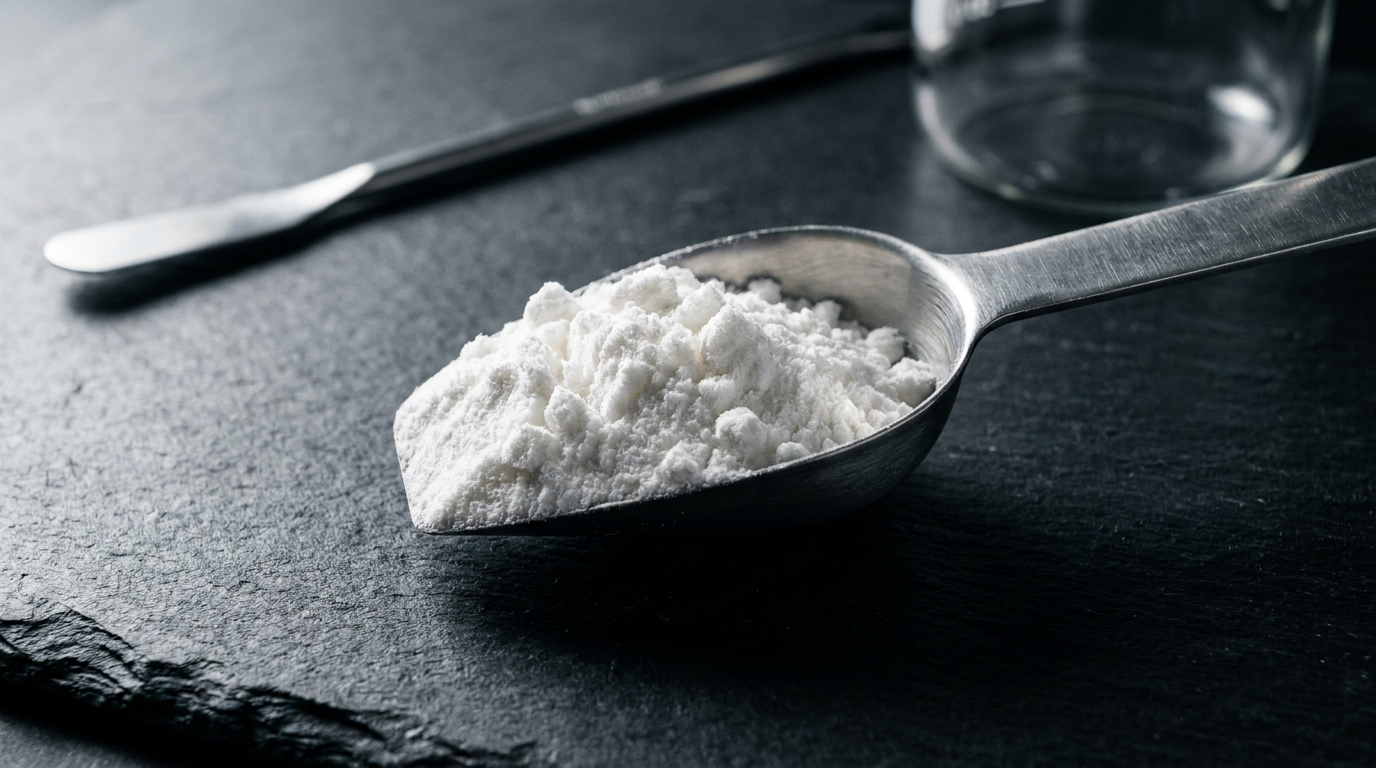
For decades, creatine monohydrate has been culturally confined to the locker room. Associated with bodybuilders, sprinters, and fitness influencers, the white powder earned a reputation as a niche tool for adding bulk and squeezing out an extra repetition on the bench press. But in recent years, the scientific consensus has quietly undergone a radical shift. Today, researchers are repositioning creatine not merely as a sports supplement, but as a foundational compound for healthy aging, cognitive resilience, and overall longevity.[8]
This rebrand is not driven by marketing, but by an overwhelming volume of clinical data. The International Society of Sports Nutrition (ISSN) now recognizes creatine as one of the most extensively studied nutritional aids in existence, backed by hundreds of peer-reviewed trials. While its efficacy for high-intensity exercise remains undisputed, the ISSN and other medical bodies have expanded their focus to its therapeutic benefits across the lifespan, from neuroprotection to the management of age-related muscle loss.[3]
To understand why a muscle-building supplement is now being recommended for brain health and longevity, one must look at the fundamental mechanism of cellular energy. Every cell in the human body relies on a molecule called adenosine triphosphate (ATP) as its primary energy currency. Whether you are sprinting, lifting a heavy box, or solving a complex math problem, your cells are rapidly burning through ATP to fuel the work.[7]
The body's supply of ATP is highly limited and depletes within seconds of intense demand. This is where creatine enters the equation. Stored primarily in the body as phosphocreatine, it acts as a cellular backup generator. When ATP is broken down into adenosine diphosphate (ADP), phosphocreatine rapidly donates a phosphate molecule to recycle ADP back into usable ATP. By supplementing with creatine, individuals increase their cellular reserves, allowing for sustained energy output before fatigue sets in.[6]

While this mechanism was historically viewed through the lens of skeletal muscle, researchers have increasingly turned their attention to the brain. Despite accounting for only about 2% of total body weight, the human brain consumes roughly 20% of the body's resting energy. Maintaining this immense energy supply is critical for neuroplasticity, memory consolidation, and executive function, particularly during periods of high cognitive demand.[5]
Emerging clinical trials have demonstrated that boosting brain creatine stores through supplementation can yield measurable cognitive benefits. Studies show significant improvements in short-term memory, information processing speed, and attention span. These effects are particularly pronounced when the brain is under metabolic stress, such as during sleep deprivation, mental fatigue, or oxygen deprivation.[1][5]
Furthermore, the neuroprotective properties of creatine are being explored as a defense against age-related cognitive decline. By buffering cellular energy and providing antioxidant support, creatine helps maintain mitochondrial stability in neurons. Researchers are currently investigating its potential therapeutic applications for neurodegenerative conditions, noting that older adults often experience a natural decline in brain creatine levels that supplementation can help correct.[2]
Furthermore, the neuroprotective properties of creatine are being explored as a defense against age-related cognitive decline.
Beyond the brain, the most pressing clinical application for creatine lies in combating sarcopenia—the progressive, age-related loss of muscle mass and strength. Sarcopenia is not merely a cosmetic concern; it is a primary driver of frailty, loss of independence, and increased mortality in older adults. As muscle mass deteriorates, the risk of debilitating falls and fractures rises exponentially.[7]
Resistance training is the universally prescribed intervention for sarcopenia, but recent data suggests that adding creatine significantly amplifies the benefits. Across multiple systematic reviews, older adults who combined structured weightlifting with daily creatine supplementation saw greater increases in lean body mass and muscular strength compared to those who only exercised.[4]

These physiological gains translate directly into functional independence. Clinical assessments measuring everyday tasks—such as the ability to repeatedly stand up from a chair or maintain balance—show marked improvements in supplemented geriatric populations. By enhancing the capacity for rapid ATP regeneration, creatine helps older adults maintain the power necessary to catch themselves during a stumble, effectively serving as a nutritional intervention for fall prevention.[2][7]
The benefits of supplementation are also highly sex-specific, with women uniquely positioned to gain from the compound. Research indicates that women naturally possess lower baseline stores of intramuscular creatine compared to men. As a result, female subjects often experience a more pronounced relative benefit when those stores are saturated through supplementation, particularly regarding mood stabilization and physical performance.[1][4]
This becomes especially critical during menopause, when the sharp decline in estrogen accelerates both muscle loss and bone resorption. While creatine is not a standalone treatment for osteoporosis, its ability to increase strength and training output indirectly supports the mechanical loading required to preserve bone mineral density. For women navigating midlife physiological shifts, it offers a vital tool for maintaining structural integrity.[1][4]

Despite its proven benefits, lingering myths about creatine's safety continue to deter potential users. The most persistent misconceptions claim that the supplement causes kidney damage, dehydration, or excessive weight gain. The ISSN has systematically debunked these claims, stating unequivocally that there is no scientific evidence linking short- or long-term creatine use—even up to 30 grams per day for five years—to renal distress in healthy individuals.[3]
The infamous "water weight" associated with creatine is also widely misunderstood. Creatine is an osmotically active substance, meaning it draws water into the muscle cell. This intracellular hydration is actually an anabolic signal that promotes muscle protein synthesis and cellular health, rather than the subcutaneous bloating often feared by consumers.[3][6]
For those looking to incorporate the supplement, the clinical protocol is remarkably simple and cost-effective. While a "loading phase" of 20 grams per day for a week can saturate muscles quickly, a steady maintenance dose of 3 to 5 grams per day will achieve the same saturation over approximately 28 days. Experts universally recommend creatine monohydrate over newer, more expensive formulations, as it remains the most bioavailable and rigorously tested variant on the market.[1][7]

As the global population ages and the burden of neurodegenerative and musculoskeletal diseases grows, the medical community is increasingly looking for accessible, low-risk interventions. With its unparalleled safety profile and profound impact on cellular energy, creatine monohydrate is successfully shedding its locker-room stigma. It is rapidly emerging not just as a performance enhancer, but as a daily staple for anyone invested in the long-term preservation of their brain and body.[1][8]
How we got here
1992
Creatine gains global attention after British track and field athletes use it at the Barcelona Olympics.
1990s–2000s
Becomes the most popular, heavily researched sports supplement for bodybuilders and strength athletes.
2017
The International Society of Sports Nutrition publishes a landmark position stand affirming its safety and efficacy.
2024–2025
A surge in clinical trials shifts focus toward creatine's benefits for brain health, memory, and sleep deprivation.
2026
Medical consensus broadens, increasingly recommending creatine for older adults to combat sarcopenia and cognitive decline.
Viewpoints in depth
Sports & Performance Science
Focuses on creatine's ability to maximize high-intensity output and training volume.
For decades, the sports science community has viewed creatine primarily through the lens of ergogenic performance. By saturating intramuscular phosphocreatine stores, athletes can regenerate ATP faster during short, intense bursts of activity like sprinting or weightlifting. This camp emphasizes that while the health benefits are a welcome addition, the compound's primary utility remains its unparalleled ability to increase work capacity, speed up recovery between sets, and drive muscular hypertrophy in trained individuals.
Longevity & Gerontology
Views creatine as a critical intervention for preserving physical independence in older adults.
Gerontologists and aging researchers are increasingly prescribing creatine to combat sarcopenia—the age-related loss of muscle mass and function. This perspective highlights that resistance training combined with creatine supplementation yields significantly better results in older adults than exercise alone. For this camp, the goal is not athletic performance, but functional independence: ensuring seniors maintain the leg strength and power necessary to stand up from a chair, climb stairs, and prevent debilitating falls.
Cognitive & Clinical Research
Explores the compound's potential to protect brain health and enhance mental processing.
A growing faction of neuroscientists and clinical researchers are shifting the focus from the muscles to the brain. Because the brain consumes 20% of the body's energy, buffering its ATP supply with creatine has shown promise in improving memory, processing speed, and resilience against mental fatigue. This camp is actively investigating creatine's therapeutic potential for mitigating the effects of sleep deprivation, supporting mood stabilization, and offering neuroprotection against age-related cognitive decline.
What we don't know
- The optimal dosing protocol specifically tailored for cognitive benefits, as brain tissue may require higher doses to saturate than skeletal muscle.
- The long-term efficacy of creatine as a preventative measure against specific neurodegenerative diseases.
- Whether the bone-density benefits observed in post-menopausal women are a direct physiological effect of creatine or entirely secondary to increased lifting capacity.
Key terms
- Sarcopenia
- The progressive, age-related loss of muscle mass, strength, and physical function.
- ATP (Adenosine Triphosphate)
- The primary molecule that stores and transfers energy within cells for all biological processes.
- Phosphocreatine
- The stored form of creatine in the body that rapidly donates a phosphate molecule to regenerate ATP during high energy demand.
- Creatine Monohydrate
- The most extensively studied, clinically proven, and cost-effective form of creatine supplement.
- Ergogenic aid
- Any substance, device, or practice that enhances energy production, use, or recovery, thereby improving physical performance.
Frequently asked
Does creatine cause hair loss?
No. This myth stems from a single 2009 study suggesting it increased DHT levels, but subsequent extensive research has found no link between creatine and hair loss.
Do I need to do a loading phase?
No. While taking 20g a day for a week saturates muscles faster, taking a standard 3–5g daily dose will achieve the same saturation in about 28 days.
Is creatine bad for your kidneys?
Decades of clinical trials have shown no evidence of kidney damage in healthy individuals, even with long-term use.
Does creatine just make you gain water weight?
Creatine draws water into the muscle cells, which is a healthy, anabolic process. It does not cause subcutaneous bloating or 'puffiness'.
Sources
Source coverage
8 outlets
4 viewpoints surfaced







[1]Nutrition InsightCognitive & Clinical Research
More than a sports supplement? Creatine's studied benefits extend to brain health
Read on Nutrition Insight →[2]National Institutes of HealthLongevity & Gerontology
Creatine supplementation and exercise interventions targeting aging populations
Read on National Institutes of Health →[3]International Society of Sports NutritionSports & Performance Science
Position stand of International Society of Sports Nutrition (ISSN) related to creatine supplementation
Read on International Society of Sports Nutrition →[4]Creatine for HealthLongevity & Gerontology
Why the conversation now goes beyond muscle
Read on Creatine for Health →[5]CrossFit Medical SocietySports & Performance Science
Creatine for the Brain?
Read on CrossFit Medical Society →[6]Jeffrey Peng MDCognitive & Clinical Research
Creatine monohydrate: Beyond Muscle Building
Read on Jeffrey Peng MD →[7]Hormone SynergyLongevity & Gerontology
Summary of Creatine Benefits for Aging and Sarcopenia
Read on Hormone Synergy →[8]Factlen Editorial TeamFactlen Editorial
Synthesis by Factlen editorial team
Read on Factlen Editorial Team →

More in fitness
See all 10 stories →Rucking
The Science of Rucking: Why Weighted Hiking is Becoming the Ultimate Longevity Exercise
0 sources

Exercise Science
The Science of Zone 2 Cardio: Why Slowing Down Might Be the Key to Longevity
0 sources

Exercise Science
The Minimum Effective Dose: How Little You Can Lift and Still Build Muscle
0 sources
Endurance Science
The Science of Zone 2 Cycling: Why Riding Slower Builds a Faster Engine
0 sources

Every angle. Every day.
Get fitness stories with full source coverage and perspective breakdowns delivered to your inbox.