
Valve's 'Steam Frame' VR Headset Nears Launch After Massive US Import Shipment
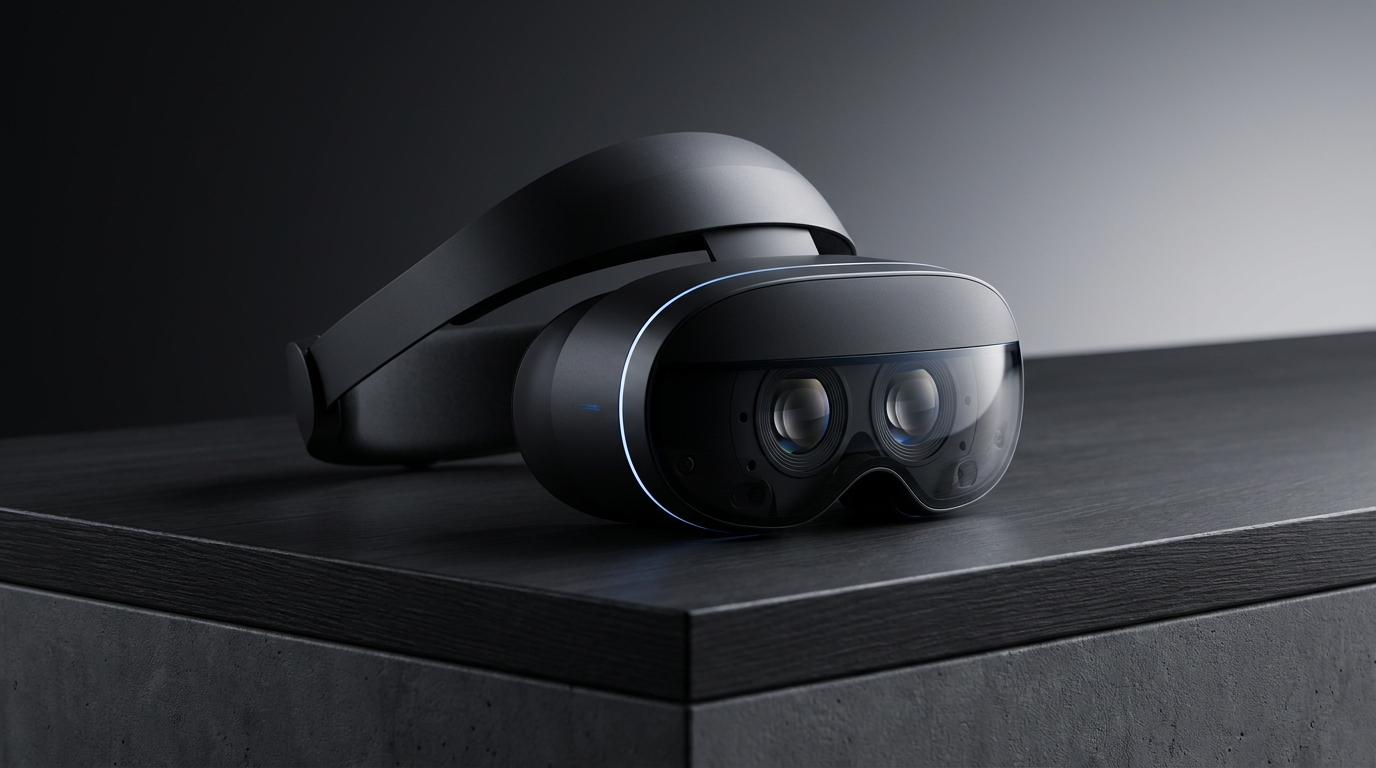
Shipping manifests reveal Valve has imported over 30 tons of virtual reality hardware into the US, signaling the imminent release of its highly anticipated Steam Frame headset. The standalone device aims to bridge the gap between portable VR and high-fidelity PC gaming through advanced streaming technology.
By Factlen Editorial Team
- PC VR Enthusiasts
- Gamers prioritizing maximum graphical fidelity and modding capabilities.
- Standalone VR Adopters
- Users who value portability, ease of use, and wire-free gaming.
- Hardware Analysts
- Industry observers tracking supply chains, market share, and component costs.
- Technical Reference
- Encyclopedic and architectural documentation of the hardware specifications.
What's not represented
- · Meta / Competitor Executives
- · Indie VR Developers
Why this matters
For years, virtual reality gamers have had to choose between the graphical power of a tethered PC headset and the wireless freedom of standalone devices like the Meta Quest. The Steam Frame attempts to eliminate that compromise, potentially reshaping the VR hardware market and making high-end PC gaming fully portable.
Key points
- Valve has imported roughly 32 metric tons of virtual reality hardware into the United States.
- The shipments signal the imminent launch of the Steam Frame, Valve's new standalone VR headset.
- The device features a Snapdragon 8 Gen 3 processor and 16GB of RAM for untethered gaming.
- A dedicated 6GHz Wi-Fi dongle and eye-tracking technology enable high-fidelity, wireless PC VR streaming.
- The headset was delayed from early 2026 to the summer due to global memory component shortages.
The arrival of the German container ship Posen at the Port of Los Angeles on June 10 brought more than just standard international cargo. According to recently surfaced customs manifests and bills of lading, the massive vessel offloaded roughly 32 metric tons of "Virtual Reality Devices" destined for Valve's United States distribution network. The shipment, which was processed by Valve's logistics partner Ceva, represents a massive influx of consumer electronics that industry analysts have been anticipating for months. Subtracting the standard weight of the 40-foot shipping containers themselves, the delivery translates to roughly 13 tons of actual, boxed hardware. This volume strongly suggests that tens of thousands of units are now sitting in American warehouses, confirming that mass production is complete and setting the stage for a promised summer launch.[1][2][3]
The arrival of these shipping containers marks the culmination of a multi-year, highly secretive development cycle for a device formerly known by its internal codename, "Deckard." Officially announced in late 2025, the Steam Frame represents a fundamental shift in Valve's hardware strategy. The company is moving away from the strictly PC-tethered architecture that defined its critically acclaimed 2019 Index headset, pivoting instead toward a hybrid, standalone ecosystem. For years, virtual reality enthusiasts have been forced to choose between the raw graphical horsepower of a desktop-connected headset and the frictionless, wire-free convenience of mobile devices. The Steam Frame is engineered specifically to eliminate that compromise, offering a unified platform that attempts to deliver the best of both worlds to a rapidly maturing VR market.[4][8]
At its core, the Steam Frame is designed to operate entirely independently of a gaming PC, placing it in direct competition with Meta's dominant Quest 3. The headset is powered by a Qualcomm Snapdragon 8 Gen 3 processor paired with a massive 16 gigabytes of unified LPDDR5X RAM—double the memory found in most competing standalone headsets. This robust onboard compute power allows the device to render both traditional flat-screen games and native virtual reality titles directly on the headset itself. Users can slip the device on and immediately access their existing Steam libraries, playing standard games on a massive, resizable virtual 2D theater screen or diving into fully immersive, natively compiled VR experiences without ever booting up a desktop computer.[4][5][6]

To achieve this standalone functionality, Valve is heavily leveraging the same software foundation that made its Steam Deck handheld console a breakout success. The Steam Frame runs a customized, ARM-compatible version of SteamOS, which is built on an Arch Linux architecture. Because the vast majority of PC games are built specifically for Windows operating systems and x86 processors, the Steam Frame utilizes sophisticated translation layers—specifically Proton and FEX—to emulate those environments on its mobile ARM chip in real-time. This translation happens invisibly in the background, allowing players to download and launch Windows-based games directly onto the headset's internal storage, which ranges from 256 gigabytes up to a full terabyte.[6][8]
Despite its impressive standalone capabilities, the hardware's true ambition lies in its advanced streaming architecture. While the onboard Snapdragon chip is highly capable for mobile rendering, it simply cannot match the graphical horsepower of a dedicated desktop GPU running demanding, physics-heavy titles like Half-Life: Alyx or high-fidelity flight simulators. To bridge this gap, Valve engineered a proprietary wireless pipeline designed to deliver lossless, ultra-low-latency PC VR experiences without the cumbersome physical tether that defined the previous generation of premium headsets. This streaming-first approach is designed to let the PC do the heavy lifting while the headset acts as a pristine, wireless receiver.[6][7]
Despite its impressive standalone capabilities, the hardware's true ambition lies in its advanced streaming architecture.
The secret to this wireless fidelity is a rendering technique known as "foveated streaming." The Steam Frame is equipped with dual internal cameras that track the user's eye movements with sub-millimeter precision. Instead of forcing the network to transmit the entire 360-degree game environment at maximum resolution at all times, the system dynamically concentrates the highest image quality only on the exact spot where the user's pupils are focused. The peripheral vision, which the human eye naturally perceives with significantly less detail, is heavily compressed before it is sent over the air. Valve claims this eye-tracking optimization yields a tenfold improvement in effective bandwidth, allowing massive amounts of visual data to travel wirelessly without introducing nauseating latency or visual artifacting.[4][8]

To ensure that the wireless connection remains absolutely stable, Valve opted not to rely on the user's existing home network infrastructure. The Steam Frame ships with a dedicated 6GHz Wi-Fi 6E dongle that plugs directly into the user's PC or the newly announced Steam Machine console. This dongle creates a private, direct wireless link between the computer and the headset, completely bypassing the user's home router. By isolating the VR data stream from the rest of the household's internet traffic—such as streaming video or smartphone downloads—the system eliminates the stuttering and dropped frames that have historically plagued wireless PC VR setups.[4][8]
Visually, the headset represents a massive generational leap over the aging Valve Index. The Steam Frame utilizes custom "pancake" lenses—a complex, folded optical design that allows the headset to be significantly thinner and lighter than older models that relied on bulky, concentric Fresnel lenses. Behind those advanced optics sit dual LCD panels pushing a staggering resolution of 2160 by 2160 pixels per eye. The displays are capable of variable refresh rates ranging from 72 hertz up to an experimental 144 hertz, ensuring smooth motion tracking that is critical for preventing motion sickness in virtual reality.[6][8]
The physical design of the Steam Frame heavily emphasizes modularity and long-term ergonomic comfort. The core computing module and display housing weigh just 185 grams, expanding to roughly 440 grams when the default facial interface, battery, and head strap are attached. Crucially, the rechargeable 21.6 watt-hour lithium-ion battery is mounted at the very rear of the head strap. This placement serves as a natural counterweight to the displays, perfectly balancing the device front-to-back and dramatically reducing the pressure on the user's cheeks and forehead during extended gaming sessions.[8]

The road to this summer's impending launch has not been without significant friction. When Valve officially unveiled the Steam Frame to the public in November 2025, the company confidently targeted an early 2026 release window. However, severe global supply chain constraints—specifically a massive shortage of memory components and skyrocketing wholesale RAM prices—forced the company to delay the rollout. In February 2026, Valve publicly acknowledged the supply chain realities, pushing the release to the summer and withholding final pricing details to account for the fluctuating cost of manufacturing.[4][6]
Now, the massive Los Angeles shipment indicates that those manufacturing bottlenecks have finally cleared and volume production is well underway. The hardware's arrival on American shores coincides with recent regulatory approvals, including clearance from Canada's telecommunications and economic development authority in early June. In the consumer electronics industry, these regulatory clearances typically serve as the final bureaucratic hurdle before a North American retail launch, suggesting that the hardware is fully finalized and ready for consumer distribution.[1][2]
The Steam Frame enters a virtual reality market that has been heavily consolidated under Meta's Quest ecosystem, which has dominated the standalone sector for years. By offering a device that seamlessly integrates with the massive existing libraries of Steam users, Valve is positioning the Frame as the ultimate premium alternative for dedicated PC gamers. While exact pricing remains unconfirmed, industry analysts expect the headset to target a premium mid-range bracket—likely under the $1,000 mark but significantly above the entry-level pricing of the Quest 3. With developer kits already in the wild and import pallets clearing customs, the final variable is simply when Valve will officially open the digital storefront for orders.[4][5][6]
How we got here
June 2019
Valve releases the Index, setting a new standard for tethered PC VR headsets.
Late 2021
Patents and internal code leaks first reveal Valve is working on a standalone headset codenamed 'Deckard'.
November 2025
Valve officially announces the Steam Frame, targeting an early 2026 release.
February 2026
The headset is delayed to the summer due to global memory component shortages.
June 2026
Shipping manifests reveal 32 tons of VR hardware arriving at Valve's US warehouses.
Viewpoints in depth
PC VR Enthusiasts
Gamers who prioritize maximum graphical fidelity and modding capabilities.
For the dedicated PC VR community, the Steam Frame represents a long-awaited escape from the physical tether without sacrificing the power of a desktop GPU. This camp has historically resisted standalone headsets like the Meta Quest due to their mobile processors and compressed streaming artifacts. By introducing a dedicated 6GHz Wi-Fi dongle and foveated streaming, Valve is directly addressing these enthusiasts' demands for a lossless, high-bandwidth wireless experience that can handle demanding titles like Half-Life: Alyx and heavily modded simulation games.
Standalone VR Adopters
Users who value portability, ease of use, and wire-free gaming.
Consumers accustomed to the Meta Quest ecosystem view the Steam Frame as a premium, albeit potentially complex, alternative. This camp values the friction-free experience of putting on a headset and immediately playing games without booting up a PC. While the Steam Frame's onboard Snapdragon processor and SteamOS translation layers allow for this standalone play, questions remain about battery life and how seamlessly heavy Windows-based games will emulate on an ARM architecture compared to titles natively compiled for mobile VR.
Hardware Analysts
Industry observers tracking supply chains, market share, and component costs.
Market analysts are closely watching the Steam Frame's delayed rollout and its impact on pricing. The global shortage of memory components that pushed the headset from early 2026 to the summer has likely squeezed Valve's profit margins. Analysts argue that while the hardware specifications—particularly the 16GB of RAM and eye-tracking cameras—are impressive, pricing the unit too close to the $1,000 mark could limit its adoption to a niche audience, preventing it from truly challenging Meta's dominance in the broader consumer VR market.
What we don't know
- Valve has not yet announced the official retail price for the Steam Frame.
- The exact release date within the Summer 2026 window remains unconfirmed.
- It is unclear how seamlessly heavy Windows-based games will emulate on the headset's ARM architecture.
Key terms
- Foveated Streaming
- A technique that uses eye-tracking to render only the exact spot a user is looking at in high resolution, heavily compressing the peripheral vision to save bandwidth.
- Pancake Lenses
- A type of optical lens that folds light multiple times, allowing VR headsets to be significantly thinner and lighter than older designs.
- Translation Layer
- Software that translates instructions meant for one type of processor (like a PC's x86 chip) so they can be understood by another (like the headset's ARM chip).
- Inside-out Tracking
- A system where cameras built directly into the headset track the user's movements and controllers, eliminating the need for external sensors placed around the room.
Frequently asked
Do I need a PC to use the Steam Frame?
No. The Steam Frame has its own onboard Snapdragon processor and can play games standalone, though a PC is required for the highest-fidelity VR streaming.
Can it play non-VR games?
Yes. The headset can project traditional flat-screen Steam games onto a massive virtual 2D display.
How much will the Steam Frame cost?
Valve has not announced official pricing, but industry estimates suggest it will be a premium device priced under $1,000.
When is the release date?
Valve has committed to a Summer 2026 launch, and recent import shipments suggest the release is imminent.
Sources
Source coverage
8 outlets
4 viewpoints surfaced








[1]The VergeHardware Analysts
Valve just imported 13 tons of VR headsets in one day
Read on The Verge →[2]Road to VRStandalone VR Adopters
Steam Frame is Poised for Launch as Units Begin Reaching the US
Read on Road to VR →[3]PC GamerPC VR Enthusiasts
The Steam Frame is arriving in the US, suggesting the VR headset's launch isn't far off
Read on PC Gamer →[4]EngadgetHardware Analysts
Valve's Steam Frame VR headset is finally official and it's coming in 2026
Read on Engadget →[5]IGNPC VR Enthusiasts
Valve's Standalone VR Headset Looks to Blend Your Steam Library
Read on IGN →[6]VR.orgStandalone VR Adopters
Steam Frame Is Still Coming. Here's Everything New Since the Announcement.
Read on VR.org →[7]Digital FoundryPC VR Enthusiasts
Valve's Steam Frame VR Headset: Hands-On + Impressions, Specs + Tech Breakdown
Read on Digital Foundry →[8]WikipediaTechnical Reference
Steam Frame
Read on Wikipedia →

More in technology
See all 26 stories →Vibecoding
How 'Vibecoding' is Turning Anyone with an Idea into a Software Developer
0 sources

Mobile Photography
Apple Brings Generative AI to the iPhone Camera: How iOS 27’s New Photo Tools Work
0 sources

Zero-Knowledge Proofs
How Zero-Knowledge Proofs Are Ending the Era of Data Sharing
0 sources

Digital Wellbeing
The End of the Screen Time Limit: How AI is Redefining 'Nutritional' Digital Media
0 sources

Every angle. Every day.
Get technology stories with full source coverage and perspective breakdowns delivered to your inbox.