
The Evidence Pack: How Next-Generation Geothermal Cracked the Commercial Code in 2026
Driven by oil-industry drilling techniques and massive AI energy demands, enhanced geothermal systems have transitioned from experimental pilots to heavily funded, grid-scale realities.
By Factlen Editorial Team
- Next-Gen Developers
- Argue that advanced drilling and closed-loop systems have permanently solved geothermal's geographic and economic limitations.
- Scientific & Federal Evaluators
- Validate the technical milestones while modeling the long-term execution risks and grid-scale economics.
- Corporate Offtakers
- Prioritize 24/7 firm, carbon-free baseload power to support the massive energy demands of AI data centers.
What's not represented
- · Local communities near drilling sites
- · Fossil fuel workers transitioning to geothermal
Why this matters
For decades, wind and solar have lacked a clean, 24/7 partner to replace coal and natural gas. The commercial viability of 'geothermal anywhere' provides the missing baseload puzzle piece for a fully decarbonized grid.
Key points
- Fervo Energy's $1.9 billion IPO in May 2026 signals massive public market confidence in enhanced geothermal systems.
- Developers have slashed drilling costs by 70% by adapting horizontal drilling and hydraulic fracturing techniques from the oil and gas industry.
- Eavor Technologies delivered the first commercial-scale electricity from a closed-loop geothermal system to the German grid in late 2025.
- The explosive energy demands of AI data centers are driving tech hyperscalers to underwrite geothermal projects through massive Power Purchase Agreements.
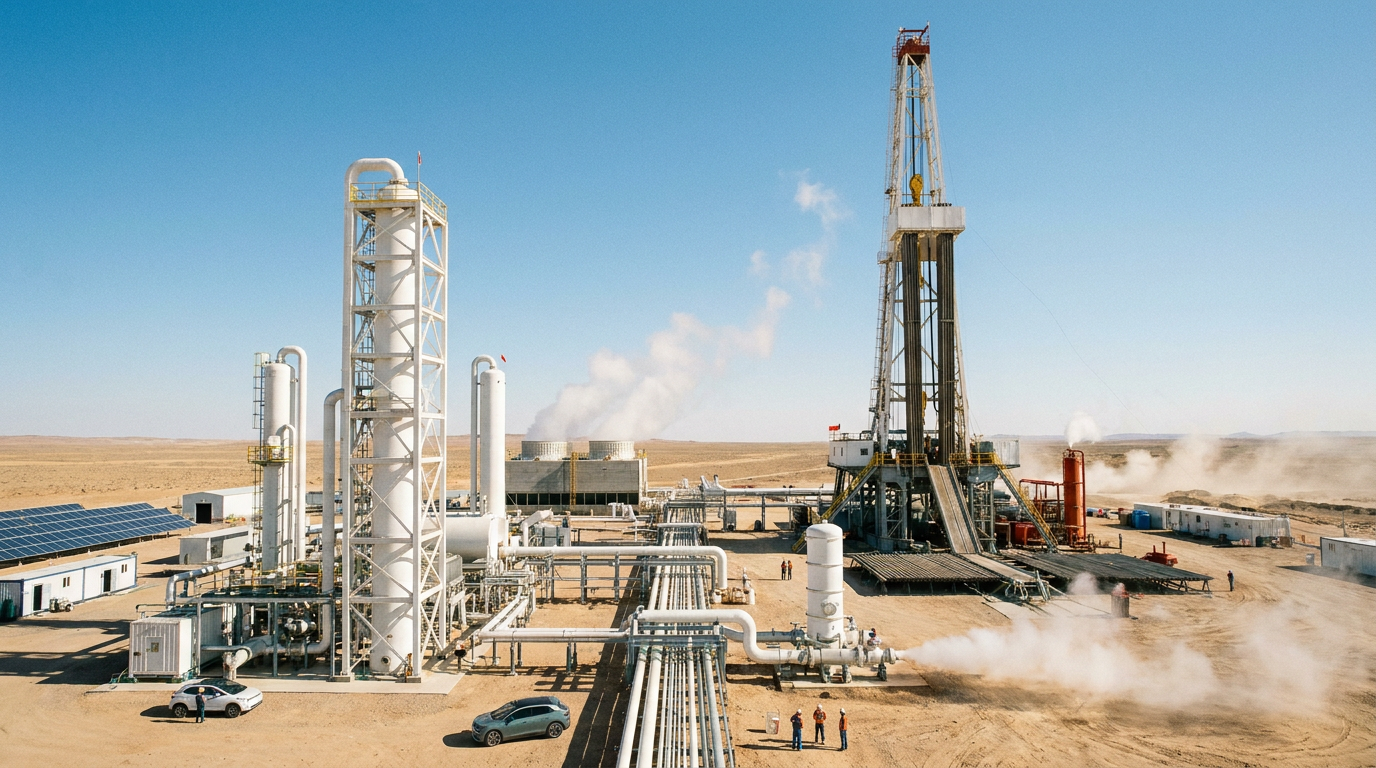
For decades, geothermal energy was trapped by geology. It required a rare convergence of subterranean heat, natural permeability, and underground water, restricting its footprint to volcanic hotspots and tectonic fault lines. In 2026, that geographic lottery has been bypassed. A suite of next-generation technologies—broadly categorized as Enhanced Geothermal Systems (EGS) and Advanced Geothermal Systems (AGS)—has successfully adapted the horizontal drilling and hydraulic fracturing techniques of the oil and gas industry to harvest heat from dry, impermeable rock. The market signal of this transition arrived in May 2026, when Houston-based developer Fervo Energy raised $1.9 billion in an upsized initial public offering, achieving a $7.7 billion valuation.[3][8]
This evidence pack examines the primary claims driving the 2026 geothermal surge, mapping the empirical data behind the industry's cost reductions, technological milestones, and remaining uncertainties. The central thesis advanced by developers and federal researchers is that geothermal has crossed the threshold from a niche, subsidized experiment to a scalable, commercially viable source of 24/7 baseload power. With the U.S. Energy Information Administration projecting that EGS could eventually unlock 150 gigawatts of cost-effective capacity nationwide, the implications for grid decarbonization are profound.[7]
The most critical claim supporting the geothermal renaissance is the collapse of its cost curve. Historically, the immense capital expenditure required to drill deep into hard, crystalline rock rendered artificial geothermal reservoirs economically unfeasible. However, recent operational data indicates a dramatic reversal. Between 2022 and 2025, Fervo Energy reported reducing its drilling times by 75 percent and slashing its per-foot drilling costs by 70 percent.[2][3]

By utilizing polycrystalline diamond compact bits and advanced mud motors originally designed for shale oil extraction, developers are now navigating extreme subsurface environments with unprecedented speed and precision. The physical evidence for this operational maturity is currently materializing at Cape Station, a massive greenfield development in Beaver County, Utah. Fervo Energy broke ground on the facility in 2023, designing it to function as the world's largest EGS project.[2][3]
The site is on track to deliver its first 100 megawatts of continuous, carbon-free power to the grid by late 2026, with fully contracted plans to scale to 500 megawatts by 2028. The sheer scale of Cape Station serves as the primary empirical test for whether EGS can transition from pilot-scale validation to gigawatt-scale infrastructure.[3][8]
Crucially, the Utah project has also yielded breakthrough evidence regarding subsurface control and safety. A persistent uncertainty surrounding EGS has been the ability to monitor and manage the artificial fractures created deep underground. In April 2026, scientists from the Lawrence Berkeley National Laboratory, working in collaboration with Fervo, announced the completion of a seven-month continuous high-temperature seismic monitoring campaign at Cape Station.[5]

Operating at depths of nearly 7,000 feet in extreme heat, the deployment of distributed fiber optic sensing provided an unprecedented, high-resolution map of the reservoir's behavior, significantly de-risking the operational profile for future investors. While EGS relies on fluid injection to create permeability, a parallel claim asserts that Advanced Geothermal Systems (AGS) can generate commercial power without any hydraulic stimulation.[2][5][8]
AGS utilizes a closed-loop architecture, functioning essentially as a massive underground radiator. Fluid circulates through sealed, pump-free wellbores, absorbing heat conductively from the surrounding rock before returning to the surface. Because the fluid never interacts directly with the geological formation, AGS eliminates the induced seismicity risks that have historically triggered regulatory hurdles for enhanced geothermal projects.[2]
AGS utilizes a closed-loop architecture, functioning essentially as a massive underground radiator.
The evidence for closed-loop viability arrived at the turn of the year. In December 2025, Calgary-based Eavor Technologies successfully delivered electricity to the commercial grid from its Geretsried facility in Bavaria, Germany. The plant, which utilizes multilateral horizontal wellbores connecting two vertical wells, is designed to supply 8.2 megawatts of electricity and 64 megawatts of thermal energy for local district heating.[4]

The milestone provided the first commercial-scale validation of the "geothermal anywhere" concept, earning Eavor the number two spot on TIME's 2026 ranking of the World's Top GreenTech Companies. Beyond drilling mechanics, the evidence pack highlights a third major claim: that artificial intelligence can radically expand the inventory of accessible, near-surface geothermal resources.[4][6]
Traditional prospecting relied heavily on visible surface indicators like hot springs. In contrast, startups like Zanskar are deploying machine learning models to analyze vast datasets of geological, magnetic, and seismic information to identify hidden thermal anomalies. The empirical proof of this AI-driven approach was demonstrated with the discovery of the "Big Blind" site in western Nevada.[6]
Despite lacking any historical exploration data or surface manifestations, Zanskar's models directed drilling to a location where near-boiling temperatures were encountered just 50 feet below the surface. Researchers at the University of Utah note that identifying these shallow, high-heat resources drastically reduces the capital required for well construction, pushing the industry closer to the Department of Energy's ambitious target of a $45 per megawatt-hour levelized cost of energy by 2035.[1][6]

The rapid commercialization of these technologies in 2026 is inextricably linked to a massive demand-side catalyst: the explosive growth of artificial intelligence data centers. Tech hyperscalers are engaged in an arms race for computing power, but their corporate climate pledges preclude them from relying on coal or natural gas. Because wind and solar generation is inherently intermittent, tech giants require a clean, firm baseload power source to run their facilities 24 hours a day.[8]
This dynamic has transformed the financing landscape for geothermal developers. Corporate offtakers are now underwriting the high upfront capital costs of EGS through massive Power Purchase Agreements (PPAs). Fervo Energy alone has secured over 658 megawatts in contracted offtake deals, including landmark agreements with Google and Southern California Edison. The willingness of hyperscalers to pay a premium for early-stage, firm clean power is providing the revenue certainty required to secure billions in non-recourse project financing and public market capital.[7][8]
Despite the overwhelming momentum, transparent uncertainties remain embedded in the evidence pack. The primary unknown is execution risk at the gigawatt scale. While drilling costs have plummeted in the context of single-well or pilot operations, maintaining those efficiencies across the hundreds of wells required for a national rollout will test the limits of the supply chain and the specialized labor pool. Furthermore, the long-term thermal decline rates of closed-loop AGS systems—how quickly the surrounding rock cools after years of continuous heat extraction—remain theoretical and will require decades of operational data to fully validate.[2][7]
Regulatory and grid interconnection bottlenecks also pose a significant threat to the industry's timeline. The Department of Energy, which announced $171.5 million in new funding for next-generation geothermal field tests in February 2026, acknowledges that permitting delays on federal lands could stall deployment in the American West. Even if developers can drill the wells efficiently, they face the same multi-year transmission queue delays that currently plague the broader renewable energy sector.[1][7]
Nevertheless, the empirical data gathered throughout 2025 and 2026 suggests that the fundamental physics and economics of next-generation geothermal have been proven. By successfully importing the heavy-industrial expertise of the fossil fuel era into the clean energy transition, the industry has unlocked a virtually inexhaustible battery beneath the earth's surface. If the current trajectory of cost reduction and corporate investment holds, enhanced geothermal is positioned to become the critical stabilizing force of the mid-century power grid.[2][7][8]
How we got here
2023
Fervo Energy breaks ground on the Cape Station geothermal project in Utah.
Dec 2025
Eavor Technologies delivers the first commercial closed-loop geothermal power to the grid in Germany.
Feb 2026
The Department of Energy announces $171.5 million for next-generation geothermal field tests.
May 2026
Fervo Energy raises $1.9 billion in an upsized initial public offering.
Late 2026
Cape Station Phase I is expected to deliver its first 100 megawatts of clean power to the grid.
Viewpoints in depth
Next-Gen Developers
Geothermal startups argue that the technology has permanently overcome its historical limitations.
Companies like Fervo Energy and Eavor maintain that the fundamental physics and economics of next-generation geothermal have been proven. By successfully importing the heavy-industrial expertise of the fossil fuel era—specifically horizontal drilling and advanced well completions—they argue that the industry has unlocked a virtually inexhaustible battery beneath the earth's surface. For these developers, the remaining challenges are no longer scientific, but rather logistical hurdles related to supply chain scaling and grid interconnection.
Corporate Offtakers
Tech hyperscalers view geothermal as the only viable path to meeting their AI energy demands while honoring climate pledges.
For companies like Google, Meta, and Microsoft, the intermittent nature of wind and solar power is fundamentally incompatible with the 24/7 operational requirements of massive AI data centers. Because they have committed to decarbonizing their operations, they cannot rely on natural gas peaker plants. Consequently, these corporate offtakers are willing to pay a premium and sign long-term Power Purchase Agreements to underwrite the high upfront capital costs of geothermal development, effectively acting as the financial engine for the entire sector.
Federal & Scientific Evaluators
Researchers validate the recent milestones but caution about the execution risks of gigawatt-scale deployment.
Agencies like the Department of Energy and the Lawrence Berkeley National Laboratory have provided the crucial empirical validation for geothermal's recent breakthroughs, confirming cost reductions and successful subsurface monitoring. However, these evaluators emphasize that scaling from a 100-megawatt pilot to 150 gigawatts of national capacity introduces immense execution risk. They point to the theoretical long-term thermal decline rates of closed-loop systems and the severe bottlenecks in federal permitting and transmission infrastructure as significant hurdles that could delay the industry's timeline.
What we don't know
- Whether the 70% reduction in drilling costs can be maintained as projects scale from dozens of wells to thousands.
- The long-term thermal decline rates of closed-loop systems over decades of continuous heat extraction.
- How quickly federal permitting and grid interconnection queues can be reformed to accommodate gigawatt-scale geothermal deployment.
Key terms
- Enhanced Geothermal Systems (EGS)
- A technology that creates artificial underground reservoirs by injecting fluid into hot, dry rock to generate steam for electricity.
- Advanced Geothermal Systems (AGS)
- A closed-loop geothermal technology that circulates fluid through sealed underground pipes to absorb heat conductively, requiring no hydraulic fracturing.
- Baseload Power
- The minimum amount of electric power needed to be supplied to the electrical grid at any given time, requiring energy sources that can run 24/7.
- Power Purchase Agreement (PPA)
- A long-term contract between an electricity generator and a buyer (like a tech company) that guarantees a fixed price for power over many years.
- Levelized Cost of Energy (LCOE)
- A metric used to compare the lifetime costs of generating electricity across different technologies, expressed in dollars per megawatt-hour.
Frequently asked
What is the difference between EGS and AGS?
Enhanced Geothermal Systems (EGS) inject fluid to create artificial fractures in hot rock, while Advanced Geothermal Systems (AGS) use sealed, closed-loop pipes that absorb heat conductively without fluid leaving the system.
Why is geothermal suddenly attracting billions in investment?
The technology has drastically lowered drilling costs by borrowing techniques from the shale oil boom, and tech companies urgently need 24/7 clean energy to power AI data centers.
Can geothermal really replace fossil fuels for baseload power?
Yes. Unlike wind and solar, geothermal provides continuous, reliable power regardless of weather conditions, making it a direct clean replacement for coal and natural gas plants.
Are there earthquake risks with enhanced geothermal?
EGS involves fluid injection which carries a minor risk of induced seismicity, though advanced fiber-optic monitoring is mitigating this. Closed-loop AGS systems eliminate this risk entirely.
Sources
Source coverage
8 outlets
3 viewpoints surfaced








[1]Department of EnergyScientific & Federal Evaluators
Enhanced Geothermal Systems Demonstration Projects
Read on Department of Energy →[2]Information Technology and Innovation FoundationScientific & Federal Evaluators
Advanced Geothermal Energy Is Widely Available, Clean, and Maybe Cheap Enough to Make a Big Impact
Read on Information Technology and Innovation Foundation →[3]Canary MediaNext-Gen Developers
Fervo Energy's IPO is a milestone for next-gen geothermal
Read on Canary Media →[4]TIMENext-Gen Developers
World's Top GreenTech Companies of 2026
Read on TIME →[5]Highways TodayScientific & Federal Evaluators
Geothermal Monitoring Breakthrough Reaches New Depths
Read on Highways Today →[6]The University of UtahScientific & Federal Evaluators
Could geothermal be nation's cheapest power?
Read on The University of Utah →[7]U.S. Energy Information AdministrationScientific & Federal Evaluators
Enhanced geothermal systems could expand geothermal power generation
Read on U.S. Energy Information Administration →[8]ESG TodayNext-Gen Developers
Geothermal Developer Fervo Energy Raises $1.9 Billion in Upsized IPO
Read on ESG Today →
More in science
See all 20 stories →Structural Biology
A 75-Kilowatt Laser Just Unlocked the Invisible World of Human Proteins
0 sources

Wind Power
Renewable Energy Groups Sue Pentagon Over 'De Facto Moratorium' on Wind Farms
0 sources
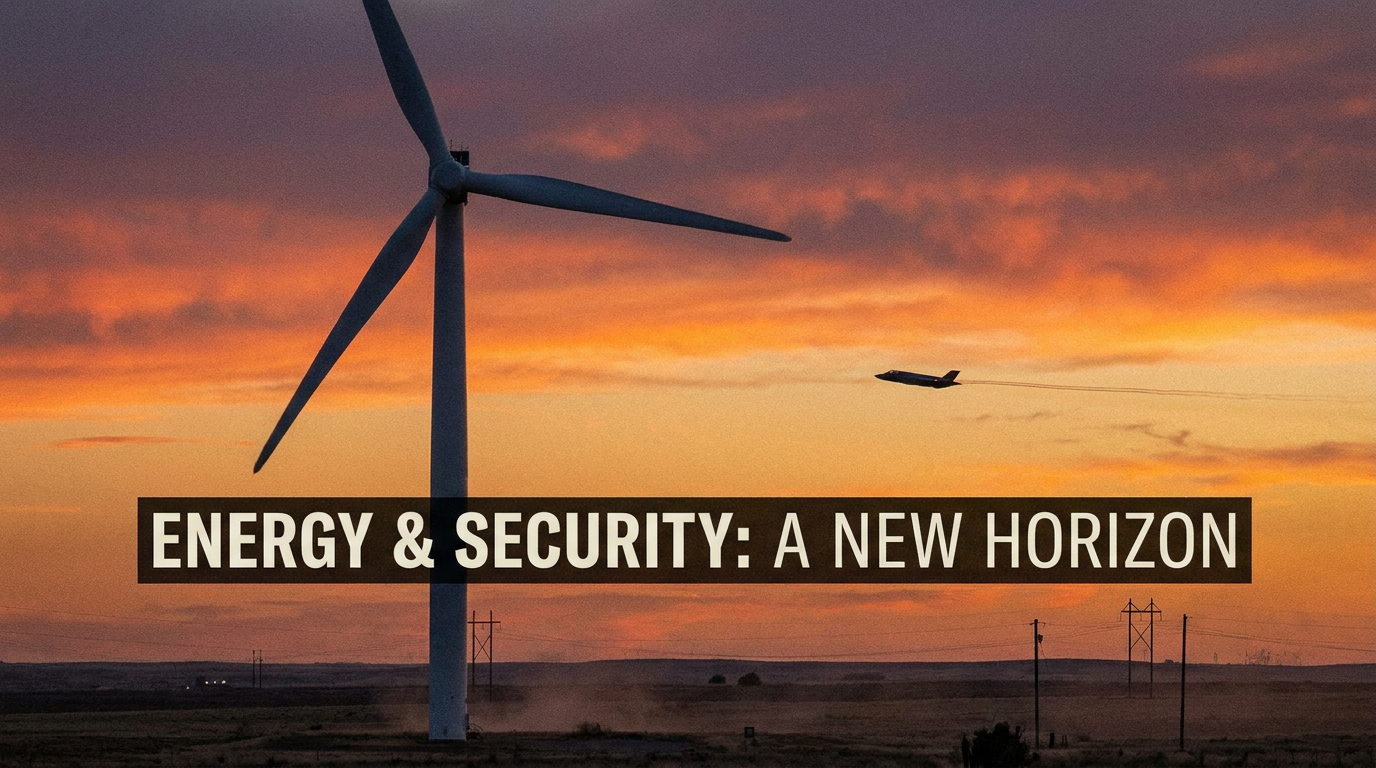
Cryo-EM Tech
Laser Phase Plate Breakthrough Illuminates the Invisible 90% of the Human Proteome
0 sources
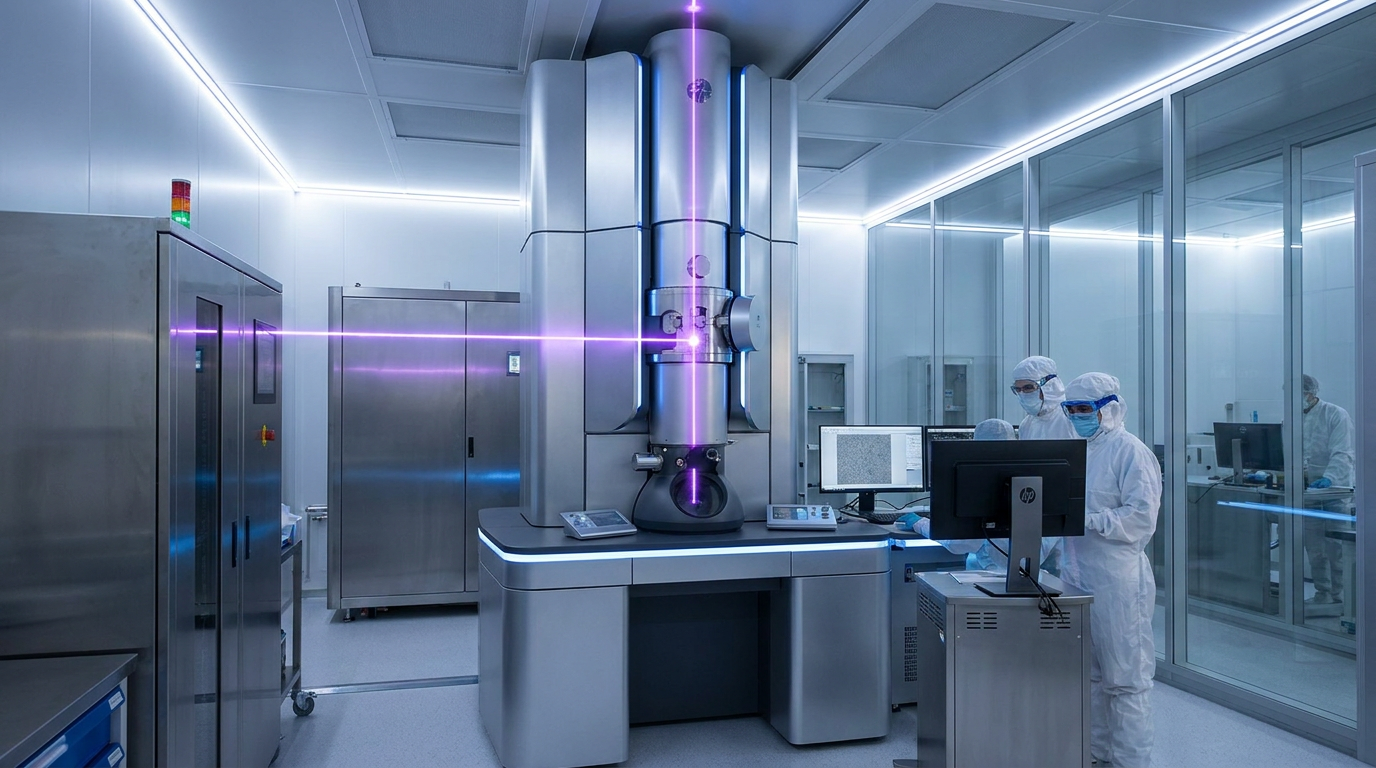
Wind Power Policy
Renewable Energy Groups Sue Pentagon Over 'Total Halt' of Wind Farm Reviews
0 sources

Every angle. Every day.
Get science stories with full source coverage and perspective breakdowns delivered to your inbox.