
How AI Agents Are Quietly Securing the World's EV Charging Networks
Researchers and commercial operators are deploying autonomous AI agents to protect electric vehicle chargers from cyberattacks, energy theft, and physical vandalism.
By Factlen Editorial Team
- Cybersecurity Researchers
- Focus on mitigating the severe vulnerabilities in charging protocols that could allow hackers to steal data or destabilize the electrical grid.
- Charging Network Operators
- Prioritize protecting expensive physical hardware from vandalism and ensuring chargers remain online to protect revenue streams.
- EV Drivers
- Value reliability, physical safety at charging locations, and the assurance that their payment data is secure when plugging in.
What's not represented
- · Utility Companies
- · Local Law Enforcement
Why this matters
As the world transitions to electric vehicles, the reliability of public charging stations is the single biggest bottleneck to adoption. By deploying autonomous AI to prevent vandalism and cyberattacks, operators are ensuring drivers aren't left stranded with empty batteries and broken plugs.
Key points
- EV charging stations face rising physical threats, including cable theft and vandalism.
- Cybersecurity researchers have identified digital vulnerabilities that allow hackers to steal energy or payment data.
- University of Malaga researchers developed AI agents that embed directly into chargers to detect anomalies.
- The agents use distributed consensus to validate threats without relying on a vulnerable central server.
- Commercial operators are deploying vision AI to detect tampering and prevent gas-powered cars from blocking chargers.
- Autonomous AI management is shifting EV infrastructure from reactive maintenance to proactive, self-healing networks.
The global transition to electric vehicles is accelerating, with projections estimating more than 600 million EVs on the road by 2040. To support this massive fleet, a sprawling network of public and private charging stations is being deployed worldwide, fundamentally altering how humanity fuels its transportation.[1][6]
However, this rapid expansion has exposed a critical vulnerability: the charging infrastructure itself. Field studies have shown that up to 27.5 percent of public DC fast chargers can be non-functional at any given time, plagued by a combination of physical damage, software glitches, and connectivity failures.[6]
Beyond simple wear and tear, these stations face malicious threats. Because modern EV chargers are essentially internet-connected computers bridging the physical world and the electrical grid, they are susceptible to both brute-force physical vandalism and highly sophisticated cyberattacks.[1][5]
On the physical front, the rising price of copper has made thick charging cables a prime target for thieves. Vandals frequently damage digital screens and connectors, while unauthorized vehicles—both gas-powered cars and fully charged EVs—often block access to the stations, frustrating drivers and costing operators significant revenue.[3][4]

The digital threats are even more insidious. Cybersecurity researchers have discovered severe vulnerabilities in the Open Charge Point Protocol (OCPP), the standard communication language used between individual chargers and central management systems.[5]
If exploited, these vulnerabilities allow hackers to launch distributed denial-of-service (DDoS) attacks, taking entire charging networks offline. Bad actors can also hijack connections to steal electricity, manipulate billing systems, or extract sensitive driver information, including payment data and location history.[5]
To combat these dual threats, the industry is turning to a sophisticated new defense mechanism: Agentic Artificial Intelligence. Unlike traditional software that simply follows static, pre-programmed rules, AI agents are autonomous systems capable of sensing their environment, making complex decisions, and taking action in real time.[6]
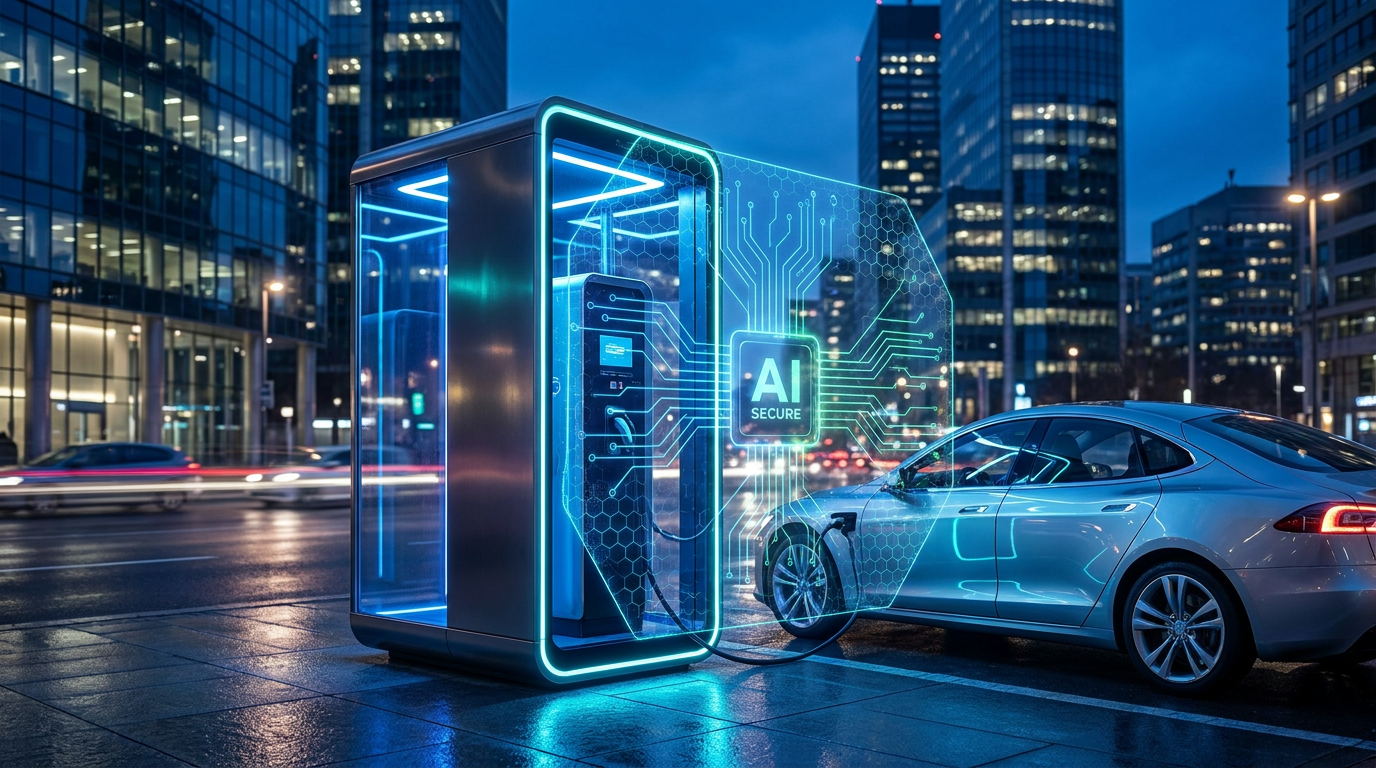
Researchers at the University of Malaga’s Network and Information Security (NICS) group in Spain have pioneered a groundbreaking approach to securing this infrastructure. Led by professors Cristina Alcaraz and Javier López, the team has developed a system that embeds intelligent software agents directly into individual charging stations.[1][2]
These embedded agents act as localized digital security guards. They continuously monitor a vast array of operational parameters, from the physical integrity of the charging cable to the flow of network communications and the stability of the electrical current being drawn from the grid.[2]

These embedded agents act as localized digital security guards.
By utilizing advanced machine learning algorithms, the agents can differentiate between benign irregularities—such as a temporary network lag or a fluctuating grid voltage—and genuine security incidents, like an attempted data breach or an unauthorized energy draw. This localized processing drastically reduces false alarms and accelerates response times.[2]
What makes the University of Malaga’s system particularly robust is its use of distributed intelligence. Rather than relying on a vulnerable central server that could be taken down in a single strike, the agents communicate with one another across the network using consensus mechanisms and blockchain technology.[2]
If one agent detects anomalous behavior, it shares that data with neighboring stations. The agents collectively validate the threat, ensuring that a coordinated defense is mounted only when a true attack is verified. This prevents hackers from compromising a single station to send false shutdown signals to the rest of the grid.[2]

While academic researchers are fortifying the digital architecture, commercial operators are deploying AI to tackle physical security. SWTCH Energy, a major charging network provider, recently launched a suite of AI-driven anti-theft solutions designed to protect physical hardware at multifamily and commercial properties.[3]
Their system utilizes presence-sensing cameras equipped with vision AI. When a person approaches a charger, the system analyzes their behavior in real time. The AI is trained to distinguish between a driver routinely plugging in their vehicle and a vandal attempting to cut the cable or smash the payment screen.[3]
If malicious activity is detected, the system initiates an intelligent escalation protocol. It can trigger visual deterrents, broadcast warnings through built-in speakers, and instantly alert property managers or local authorities. The hardware also includes instant cable-cut detection sensors that trigger immediate alarms if tampering occurs.[3]
Similarly, charging solutions provider Zevtron has partnered with SpotGenius to deploy AI-driven surveillance across its network. Their vision AI system monitors parking bays around the clock, using license plate verification to ensure that only authorized, actively charging vehicles occupy the spaces.[4]
When the system detects a violation—such as a gas-powered car blocking the charger or an EV overstaying its welcome—it pushes real-time, time-stamped alerts to site managers. This automated enforcement keeps chargers available for the drivers who actually need them, maximizing both convenience and station revenue.[4]

The integration of AI agents represents a fundamental shift from reactive maintenance to proactive, self-healing infrastructure. By automating threat detection and incident resolution, these systems reduce the need for manual intervention, significantly lower operating costs, and dramatically improve station uptime.[6]
Furthermore, securing the charging network is vital for the stability of the broader electrical grid. As millions of EVs plug in simultaneously, compromised chargers could theoretically be manipulated to cause massive power fluctuations. AI agents ensure that energy flows remain predictable, balanced, and secure.[1][5]
Ultimately, the deployment of intelligent, autonomous defenses builds trust in the EV ecosystem. By guaranteeing that chargers are safe, functional, and available when drivers arrive, AI agents are removing one of the final barriers to widespread electric vehicle adoption, paving the way for a cleaner transportation future.[1][6]
How we got here
2023
Security researchers publicly identify severe vulnerabilities in the Open Charge Point Protocol (OCPP).
2024
Rising global copper prices lead to a massive spike in physical thefts of EV charging cables.
2025
Commercial charging networks begin deploying vision AI and presence-sensing cameras to monitor parking bays.
2026
University of Malaga researchers unveil a distributed AI agent system capable of autonomously securing charging networks.
Viewpoints in depth
Cybersecurity Researchers
Focus on mitigating the severe vulnerabilities in charging protocols that could allow hackers to steal data or destabilize the electrical grid.
Security experts view EV chargers not just as power outlets, but as vulnerable edge-computing devices connected directly to critical national infrastructure. Researchers warn that the Open Charge Point Protocol (OCPP) was designed for interoperability, not robust security. They argue that without autonomous, localized defenses like AI agents, a coordinated cyberattack could exploit these chargers to cause localized blackouts, steal massive amounts of payment data, or execute widespread ransomware attacks against charging operators.
Charging Network Operators
Prioritize protecting expensive physical hardware from vandalism and ensuring chargers remain online to protect revenue streams.
For the companies building and maintaining these networks, the primary pain points are physical damage and downtime. Replacing a stolen copper charging cable can cost thousands of dollars, and a broken screen means the charger generates zero revenue until a technician arrives. Operators view AI agents and vision AI as essential tools to reduce maintenance costs, automate enforcement against vehicles blocking spots, and guarantee the high uptime required to turn a profit in the competitive EV charging market.
EV Drivers
Value reliability, physical safety at charging locations, and the assurance that their payment data is secure when plugging in.
From the consumer perspective, the technology running behind the scenes is irrelevant compared to the immediate experience of arriving at a charger. Drivers suffer from 'charge anxiety'—the fear that a station will be broken, vandalized, or blocked by a gas-powered car when they desperately need power. For this group, the success of AI agents is measured entirely by whether the charger works seamlessly on the first try, and whether they feel physically safe and digitally secure while using it.
What we don't know
- How quickly legacy charging stations can be retrofitted with the hardware required to run advanced AI agents.
- Whether sophisticated hackers will develop counter-AI tools capable of tricking the consensus mechanisms.
- How privacy regulations will adapt to the widespread use of vision AI and license plate scanners at public charging stations.
Key terms
- Agentic AI
- Artificial intelligence systems designed to act autonomously, making decisions and taking actions to achieve specific goals without requiring constant human oversight.
- Open Charge Point Protocol (OCPP)
- The standard global communication language used between electric vehicle charging stations and their central management software.
- Distributed Denial-of-Service (DDoS)
- A cyberattack where multiple compromised computer systems attack a target, such as a server or network, causing a denial of service for users.
- Consensus Mechanism
- A fault-tolerant process used in computer networks to achieve agreement on a single data value or state among distributed processes or systems.
Frequently asked
Can hackers really steal electricity from an EV charger?
Yes. Researchers have found vulnerabilities in charging protocols that allow attackers to bypass authentication, effectively forcing the charger to dispense electricity without billing the user.
How does AI prevent charging cable theft?
Vision AI cameras monitor the area and analyze human behavior to distinguish between normal charging and tampering. If tampering is detected, the system triggers alarms, visual deterrents, and alerts authorities.
What is an AI agent?
Unlike standard software that waits for human input, an AI agent is an autonomous system that can continuously monitor its environment, make decisions, and execute actions on its own to achieve a specific goal.
Sources
Source coverage
6 outlets
3 viewpoints surfaced






[1]WiredCybersecurity Researchers
Here’s How AI Agents Can Protect EV Chargers
Read on Wired →[2]ScienmagCybersecurity Researchers
University of Malaga cybersecurity innovation protects EV charging stations
Read on Scienmag →[3]The EV ReportCharging Network Operators
SWTCH Energy introduces anti-theft and vandalism solutions for EV charging stations
Read on The EV Report →[4]Environment+Energy LeaderCharging Network Operators
Zevtron and SpotGenius Roll Out AI-Driven Surveillance Across EV Charging Stations
Read on Environment+Energy Leader →[5]SecurityWeekCybersecurity Researchers
Vulnerabilities in electric vehicle charging management systems
Read on SecurityWeek →[6]eDRVCharging Network Operators
Agentic AI in EV Charging Infrastructure
Read on eDRV →

More in technology
See all 26 stories →Vibecoding
How 'Vibecoding' is Turning Anyone with an Idea into a Software Developer
0 sources

Mobile Photography
Apple Brings Generative AI to the iPhone Camera: How iOS 27’s New Photo Tools Work
0 sources

Zero-Knowledge Proofs
How Zero-Knowledge Proofs Are Ending the Era of Data Sharing
0 sources
Digital Wellbeing
The End of the Screen Time Limit: How AI is Redefining 'Nutritional' Digital Media
0 sources

Every angle. Every day.
Get technology stories with full source coverage and perspective breakdowns delivered to your inbox.