
How a Hybrid Refinery Process Turns Plant Waste Into Sustainable Nylon
A new hybrid chemical and biological process successfully converts lignin—a stubborn plant biopolymer—into a key ingredient for nylon, offering a scalable alternative to fossil-fuel-derived plastics.
By Factlen Editorial Team
- Green Chemists & Researchers
- Focus on the technical elegance of combining catalysis with synthetic biology.
- Biorefinery Operators
- Focus on the economic transformation of waste streams into high-value products.
- Environmental Advocates
- Focus on the elimination of greenhouse gas emissions from polymer manufacturing.
What's not represented
- · Traditional petrochemical manufacturers whose market share could be disrupted.
- · Agricultural producers who would supply the raw biomass feedstock.
Why this matters
Nylon is one of the most widely used materials on Earth, but its production relies heavily on fossil fuels and releases potent greenhouse gases. This breakthrough proves that we can manufacture essential plastics entirely from plant waste, offering a scalable blueprint for decarbonizing the heavy chemical industry.
Key points
- A new hybrid process combines chemical depolymerization with engineered bacteria to convert lignin into nylon precursors.
- Lignin is a highly abundant plant polymer that is notoriously difficult to break down and is usually burned as waste.
- The engineered bacteria use 'biological funneling' to consume a messy mixture of chemical fragments and produce a single, pure compound.
- This bio-derived precursor can serve as a drop-in replacement for petrochemical adipic acid in existing nylon manufacturing.
- The process eliminates the nitrous oxide emissions associated with traditional industrial nylon production.
- Researchers estimate the bio-derived precursor could eventually be produced for around $2.01 per kilogram, approaching cost-competitiveness.
For decades, the chemical industry has viewed lignin as a frustrating paradox. As the second most abundant biopolymer on Earth, it is a massive reservoir of renewable carbon, yet its interlocking, chaotic molecular structure makes it notoriously difficult to break down. Every year, the global paper and pulp industry generates roughly 50 million tonnes of lignin as a waste byproduct. Because it stubbornly resists chemical conversion, the vast majority of this material is simply burned for low-grade heat. However, a landmark study highlighted this week in Nature outlines a "hybrid refinery" process that successfully transforms this stubborn plant material into a high-yield precursor for nylon. By combining traditional chemical catalysis with engineered biological microbes, researchers have unlocked a scalable pathway to replace fossil-fuel-derived plastics with a sustainable, plant-based alternative.[1][6]
The implications of this breakthrough extend far beyond waste management. Nylon is one of the most ubiquitous materials in the modern global economy, utilized in everything from clothing and carpets to automotive parts and industrial ropes. Currently, the production of nylon relies heavily on adipic acid, a dicarboxylic acid derived entirely from petrochemicals. The traditional industrial synthesis of adipic acid is not only dependent on finite fossil resources but is also environmentally devastating. The oxidation of cyclohexanol and cyclohexanone using nitric acid releases massive quantities of nitrous oxide—a greenhouse gas that is nearly 300 times more potent than carbon dioxide in warming the atmosphere.[4][5]
Finding a green alternative to this process has been a "holy grail" for sustainable chemistry. The new hybrid refinery approach bypasses the petrochemical route entirely. Instead of relying on crude oil, the process begins with raw lignocellulosic biomass—such as corn stover, wood chips, or agricultural waste. The challenge, historically, has been that breaking down lignin yields a highly toxic, heterogeneous soup of aromatic compounds that is incredibly difficult to separate and purify into a single useful chemical using traditional methods.[1][3]

To solve this century-old problem, the research team designed a two-step "hybrid" system that leverages the strengths of both chemical engineering and synthetic biology. The first step involves a chemical depolymerization process. Using mild alkaline conditions or targeted catalysts, the rigid, three-dimensional lignin matrix is cleaved into smaller, soluble aromatic monomers, such as guaiacol, phenol, and catechol. While this chemical step is efficient at breaking the tough bonds that hold lignin together, it still leaves behind a messy mixture of different molecules that would be prohibitively expensive to separate using traditional industrial distillation.[3][4]
This is where the biological component of the hybrid refinery takes over. The researchers introduced a strain of Pseudomonas putida, a highly resilient soil bacterium known for its ability to survive in toxic environments. Through advanced genetic engineering, the team modified the bacterium's metabolic pathways to perform a process known as "biological funneling." Instead of requiring a purified feedstock, the engineered microbes are capable of consuming the entire chaotic mixture of lignin-derived aromatics simultaneously.[4][5]
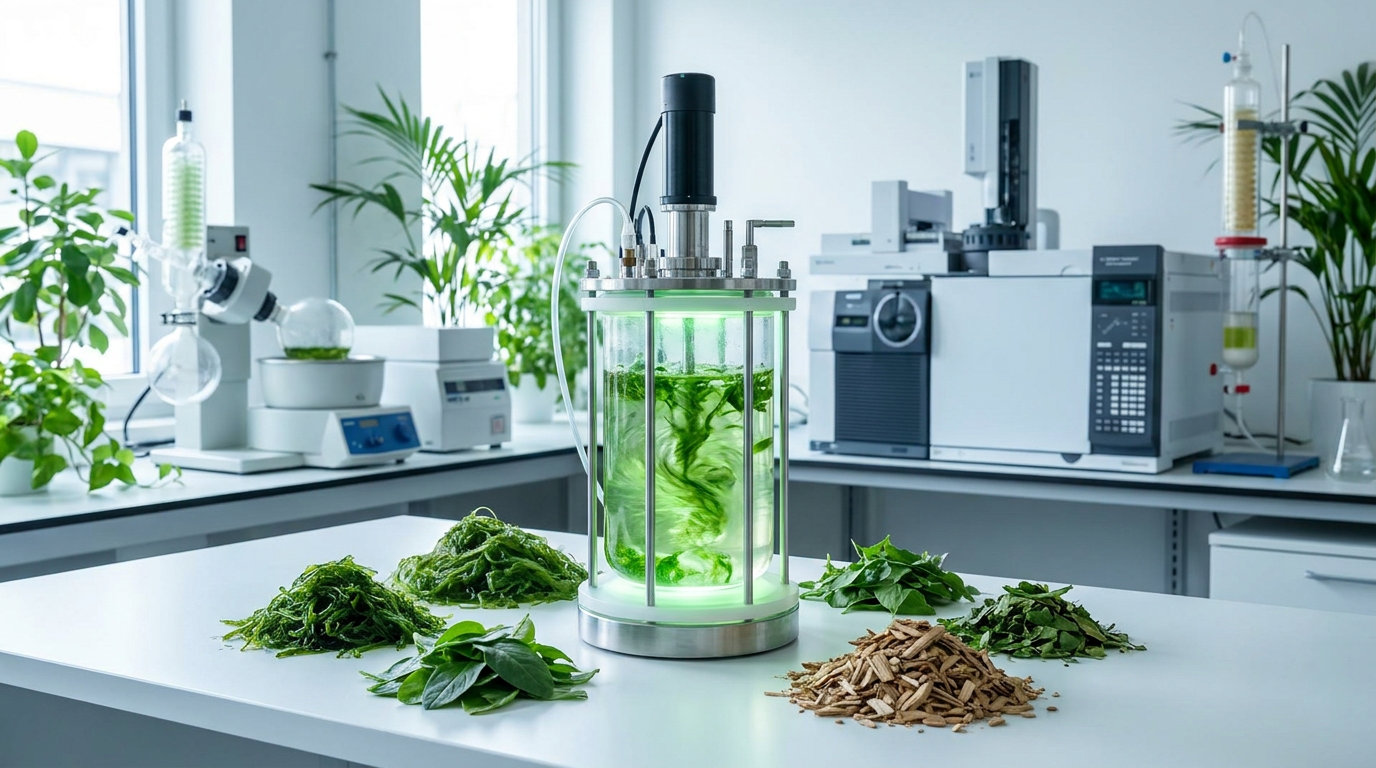
Inside the bioreactor, the bacteria act as microscopic chemical factories. They digest the diverse array of phenols and catechols and metabolically "funnel" them through a converging biochemical pathway. The end result is the secretion of a single, highly pure target molecule: cis,cis-muconic acid, or its direct derivative, β-ketoadipic acid. This biological funneling elegantly solves the separation problem that has plagued lignin valorization for decades. The microbes do the heavy lifting of sorting and converting the heterogeneous waste into a uniform product.[1][5]
Once the bacteria have produced the muconic acid, a final, straightforward chemical hydrogenation step converts it directly into adipic acid. This bio-derived adipic acid is chemically identical to its petrochemical counterpart, meaning it serves as a perfect "drop-in" replacement for existing nylon manufacturing infrastructure. Manufacturers will not need to retool their factories or alter their spinning processes to utilize the green precursor; they can simply swap out the fossil-derived chemical for the plant-derived one.[1][4]
Once the bacteria have produced the muconic acid, a final, straightforward chemical hydrogenation step converts it directly into adipic acid.
The efficiency and yield of this new hybrid process represent a significant leap forward. Previous attempts to valorize lignin often suffered from low conversion rates, making them economically unviable compared to cheap petroleum. However, the optimized Pseudomonas putida strains utilized in the recent studies have demonstrated remarkable tolerance to the toxic lignin monomers, achieving conversion rates that approach commercial viability. According to analyses by the U.S. Department of Energy’s National Renewable Energy Laboratory (NREL), advanced iterations of this biological funneling process could eventually produce nylon precursors for approximately $2.01 per kilogram.[2][4]

Reaching that $2.01 per kilogram threshold is critical because it approaches cost-competitiveness with conventional, petroleum-based adipic acid. For biorefineries, which currently struggle with tight profit margins primarily driven by ethanol or cellulose production, the ability to sell a high-value chemical derived from their lignin waste stream could fundamentally alter their economic models. Upcycling lignin from a low-value fuel into a premium chemical feedstock transforms a waste disposal problem into a lucrative secondary revenue stream.[2][6]
The environmental dividends of scaling this technology are equally profound. By replacing the nitric acid oxidation pathway used in conventional adipic acid production, the hybrid refinery process completely eliminates the associated nitrous oxide emissions. Historically, industrial adipic acid production has been responsible for releasing hundreds of thousands of metric tons of nitrous oxide into the atmosphere annually. Transitioning to a bio-based pathway offers a dual climate benefit: it sequesters biogenic carbon into durable goods while simultaneously halting the emission of a potent greenhouse gas.[4][5]
Despite the clear promise of the hybrid refinery, several engineering hurdles remain before bio-nylon can fully displace petrochemicals on a global scale. The primary challenge lies in scaling the bioreactors from laboratory and pilot-plant volumes to massive industrial capacities. Maintaining the precise conditions required for the engineered bacteria to thrive—such as optimal oxygen transfer rates and temperature control—becomes exponentially more difficult in tanks holding hundreds of thousands of liters of fluid.[5][6]
Furthermore, the variability of the raw biomass feedstock introduces complexities. Lignin extracted from hardwood trees differs chemically from lignin extracted from agricultural residues like corn stover or wheat straw. The chemical depolymerization step must be robust enough to handle these seasonal and regional variations in the feedstock without producing inhibitory compounds that could poison the downstream bacterial cultures. Researchers are actively developing real-time biosensors and adaptive control systems to monitor the toxicity of the depolymerized stream and adjust the feed rates to the microbes accordingly.[3][6]

Another area of active research is the downstream recovery and purification of the final product. While the bacteria successfully funnel the aromatics into a single compound, extracting that compound from the aqueous fermentation broth requires energy. Innovations in membrane separation and continuous crystallization are currently being tested to minimize the energy footprint of this final purification step, ensuring that the overall lifecycle emissions of the bio-nylon remain as low as possible.[4][6]
The broader chemical industry is watching these developments closely. Major polymer manufacturers are under increasing regulatory and consumer pressure to decarbonize their supply chains and reduce their reliance on virgin fossil fuels. The successful demonstration of the hybrid refinery process provides a tangible, evidence-backed roadmap for achieving these sustainability goals. It proves that the principles of green chemistry can be applied to some of the most recalcitrant materials in nature.[1][6]
Ultimately, the transformation of lignin from an industrial nuisance into a cornerstone of sustainable manufacturing represents a paradigm shift in how we view biological waste. By harmonizing chemical catalysis with the exquisite precision of synthetic biology, scientists have unlocked a vast, untapped reservoir of renewable carbon. As pilot facilities begin to scale these hybrid processes, the prospect of everyday materials—from the carpets in our homes to the clothes on our backs—being spun from the structural remnants of plants is rapidly moving from a laboratory curiosity to an industrial reality.[1][6]
How we got here
Early 2010s
Researchers identify biological funneling as a theoretical solution to lignin's heterogeneity.
2015
Early studies demonstrate the conversion of lignin-derived compounds to muconic acid using engineered bacteria.
2020
Chemists successfully demonstrate a two-step conversion of Kraft lignin to nylon precursors under mild conditions.
2023
NREL researchers engineer a highly optimized two-step process, approaching cost-competitiveness.
June 2026
Nature highlights the maturation of the hybrid refinery process, signaling readiness for industrial scaling.
Viewpoints in depth
Green Chemists & Researchers
Focus on the technical elegance of combining catalysis with synthetic biology.
For the scientific community, the hybrid refinery represents a triumph of interdisciplinary collaboration. By acknowledging that neither pure chemistry nor pure biology could solve the lignin problem alone, researchers created a synergistic system. Chemists handle the brute-force depolymerization that microbes cannot survive, while engineered bacteria handle the delicate sorting and purification that would be too expensive to achieve chemically. This paradigm—using microbes as highly specific chemical funnels—is now being explored for upcycling other complex waste streams, including mixed plastics.
Biorefinery Operators
Focus on the economic transformation of waste streams into high-value products.
From an industrial perspective, the breakthrough is entirely about economics. Currently, biorefineries operate on razor-thin margins, relying heavily on government subsidies for biofuels. Lignin is treated as a nuisance byproduct, burned simply to get rid of it while recovering a small amount of heat. The ability to convert this massive waste stream into a premium chemical precursor like adipic acid fundamentally changes the math. If the $2.01/kg target can be met at scale, biorefineries could see their profitability soar, accelerating the broader transition away from fossil fuels.
Environmental Advocates
Focus on the elimination of greenhouse gas emissions from polymer manufacturing.
Environmental groups emphasize the dual climate benefits of the hybrid process. Not only does it replace petroleum extraction with renewable biomass, but it also completely eliminates the nitric acid oxidation step used in traditional nylon manufacturing. This traditional step is a major global source of nitrous oxide, a greenhouse gas with nearly 300 times the warming potential of carbon dioxide. For these advocates, scaling bio-nylon is a critical piece of the puzzle in decarbonizing the heavy chemical industry.
What we don't know
- Whether the engineered bacteria can maintain their high conversion rates and genetic stability in massive, industrial-scale bioreactors.
- How variations in raw biomass feedstocks across different seasons and regions will affect the efficiency of the chemical depolymerization step.
- The exact timeline and capital expenditure required to retrofit existing biorefineries with this new hybrid technology.
Key terms
- Lignin
- A complex organic polymer that forms key structural materials in the support tissues of most plants, making them rigid and woody.
- Adipic Acid
- A major industrial dicarboxylic acid primarily used as a precursor for the production of nylon.
- Depolymerization
- The chemical process of breaking down a large polymer chain into its smaller, individual monomer components.
- Biological Funneling
- The use of engineered microbes to metabolize a diverse mixture of compounds and convert them into a single, unified chemical product.
- Green Chemistry
- The design of chemical products and processes that reduce or eliminate the use or generation of hazardous substances.
Frequently asked
What is lignin?
Lignin is a complex, rigid polymer found in the cell walls of plants. It gives wood its strength but is notoriously difficult to break down chemically.
Why is traditional nylon production harmful?
The conventional process for making nylon precursors relies on fossil fuels and releases large amounts of nitrous oxide, a potent greenhouse gas.
What is biological funneling?
It is a process where engineered bacteria consume a chaotic mixture of chemical fragments and convert them all into a single, pure target compound.
When will bio-nylon be commercially available?
While the chemistry is proven in the lab, scaling the bioreactors to industrial capacities will likely take several years of pilot testing.
Sources
Source coverage
6 outlets
3 viewpoints surfaced






[1]NatureGreen Chemists & Researchers
Hybrid refinery process turns plant material into industrially important chemical
Read on Nature →[2]Biomass MagazineBiorefinery Operators
NREL Scientists Engineer Process for Making β-ketoadipic Acid from Lignin
Read on Biomass Magazine →[3]Green ChemistryGreen Chemists & Researchers
Two-step conversion of Kraft lignin to nylon precursors under mild conditions
Read on Green Chemistry →[4]U.S. Department of EnergyBiorefinery Operators
NREL Scientists Engineer Process for Making β-ketoadipic Acid from Lignin
Read on U.S. Department of Energy →[5]Science AdvancesGreen Chemists & Researchers
Adipic acid production from lignin
Read on Science Advances →[6]Factlen Editorial TeamEnvironmental Advocates
Synthesis by Factlen editorial team
Read on Factlen Editorial Team →


Every angle. Every day.
Get science stories with full source coverage and perspective breakdowns delivered to your inbox.