
EV vs. PHEV: The 2026 Buying Guide to Choosing Your Next Electrified Vehicle
As the automotive market matures, choosing between a pure electric vehicle and a plug-in hybrid comes down to a careful calculation of daily driving habits, home charging access, and long-term maintenance costs.
By Factlen Editorial Team
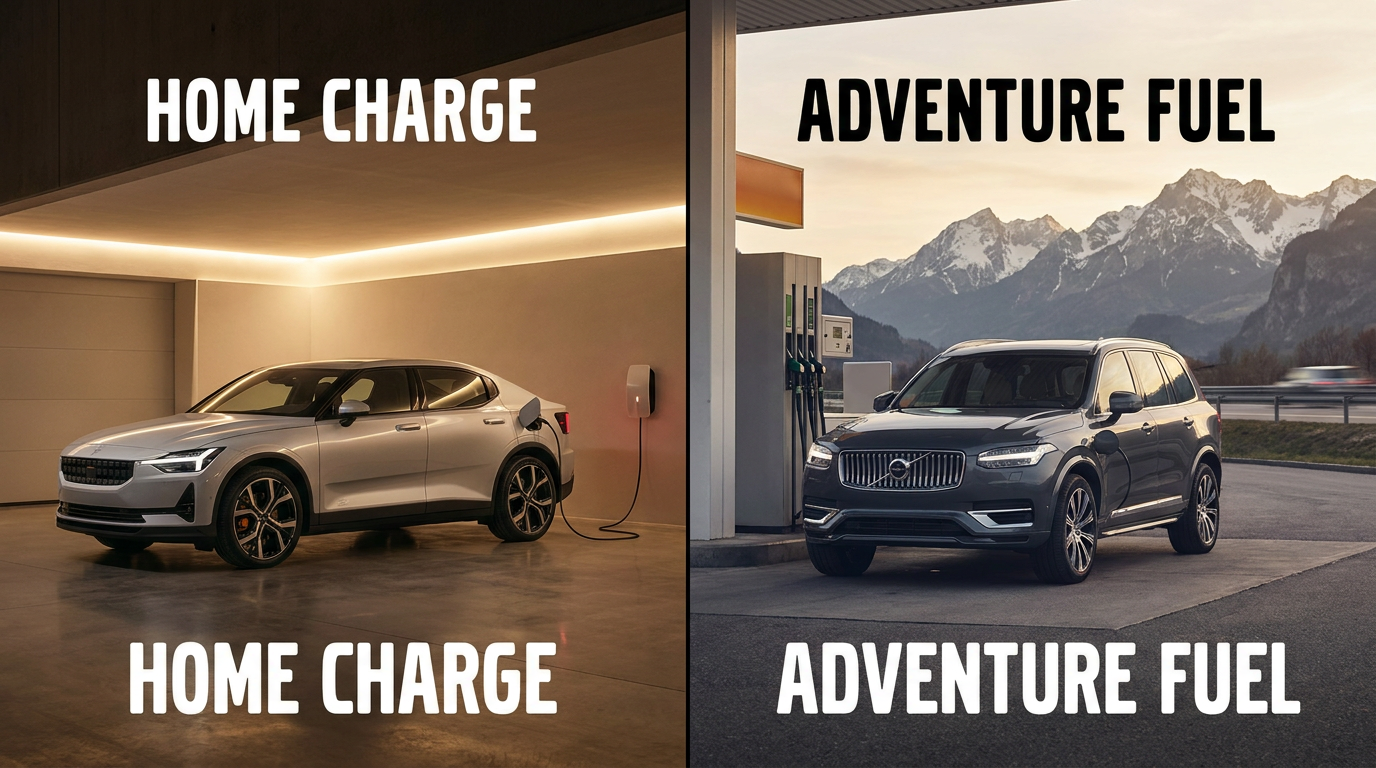
- Pragmatic Commuters
- Values the daily electric savings of a PHEV while demanding the cross-country flexibility of a gas engine.
- EV Purists
- Argues that pure electric vehicles are the only logical long-term investment due to mechanical simplicity and zero emissions.
- Financial Analysts
- Focuses strictly on the Total Cost of Ownership (TCO), depreciation curves, and charging infrastructure availability.
What's not represented
- · Apartment dwellers without dedicated parking
- · Rural drivers far from charging corridors
Why this matters
With traditional gasoline vehicles phasing out, choosing the right electrified powertrain is a major financial decision. Understanding the real-world trade-offs between daily electric range and long-distance flexibility ensures buyers do not overpay for technology that fails to fit their actual lifestyle.
Key points
- The 2026 market offers two primary electrified paths: pure Battery Electric Vehicles (EVs) and Plug-in Hybrid Electric Vehicles (PHEVs).
- EVs offer the lowest long-term maintenance costs and cheapest per-mile energy, provided owners have access to overnight home charging.
- PHEVs provide 30 to 50 miles of daily electric range, seamlessly switching to a gasoline engine for long-distance road trips.
- Maintaining a PHEV costs roughly double that of a pure EV annually, as owners must service both an electric motor and a combustion engine.
- The '80/20 rule' dictates that a PHEV is ideal for drivers whose daily local commutes are short but who frequently take unpredictable weekend trips.
- Without reliable daily charging access, a PHEV carries dead battery weight and operates less efficiently than a standard hybrid.
The automotive market in 2026 has moved past the simple binary of gasoline versus electric. For consumers standing in showrooms today, the most pressing decision is choosing between two distinct electrified paths: the battery electric vehicle and the plug-in hybrid electric vehicle. While early adoption waves were driven by pure electric purists, the current market reflects a more pragmatic buyer who is carefully weighing daily habits against long-term costs. The universal "just go electric" advice of previous years has evolved into a highly personalized calculation based on driveway infrastructure and weekend travel patterns.[1][2]
To understand the trade-offs, buyers must first define the contenders. A battery electric vehicle, or EV, runs entirely on electricity stored in a large battery pack, completely eliminating the internal combustion engine, exhaust system, and traditional transmission. In 2026, most mainstream EVs offer ranges between 200 and 400 miles on a single charge. Conversely, a plug-in hybrid electric vehicle, or PHEV, carries both a battery pack and a gasoline engine. The battery typically supports 30 to 50 miles of pure electric driving before the gasoline engine seamlessly takes over, operating the car like a standard hybrid for hundreds of additional miles.[1][7]
The argument for the pure electric vehicle centers heavily on mechanical simplicity and the lowest possible daily operating costs. Because an EV has a fraction of the moving parts found in a combustion vehicle, the evidence for long-term savings is substantial. Owners completely avoid oil changes, spark plug replacements, and transmission fluid flushes. Data from 2026 market analyses indicates that the average annual maintenance cost for an EV hovers around $650, significantly undercutting both traditional and hybrid alternatives.[3][4]
Furthermore, the evidence for EV energy savings is compelling when charging is done at home. Electricity rates remain far more stable than volatile global oil markets, allowing for predictable household budgeting. Charging an EV overnight on an off-peak residential tariff typically costs between three and five cents per mile. For a driver covering 15,000 miles annually, this translates to massive fuel savings compared to gasoline, allowing the higher upfront purchase price of the EV to be recouped over a standard five-year ownership window.[3][5]

Against the pure EV, the primary argument remains the friction of public charging during long-distance travel. While 2026 has seen mainstream adoption of 350-kilowatt ultra-fast chargers capable of adding an 80 percent charge in roughly twenty minutes, relying on public infrastructure requires planning and patience. For families traveling with young children or drivers on tight schedules, the necessity of mapping routes around charging stations—and the premium cost of public fast-charging electricity—can erode both the financial and psychological benefits of pure electric ownership.[1][7]
This is where the argument for the plug-in hybrid becomes highly persuasive, acting as the ultimate flexible safety net. The evidence supporting PHEVs is rooted in the "80/20 rule" of driving: for the vast majority of motorists, 80 percent of trips are short, predictable local routes, while only 20 percent involve long-distance travel. Because the average American drives roughly 40 miles a day, a modern PHEV with a 50-mile electric range can cover almost all daily commuting, school runs, and grocery trips entirely on battery power, provided it is plugged in every night.[1][2]
This is where the argument for the plug-in hybrid becomes highly persuasive, acting as the ultimate flexible safety net.
The evidence for the PHEV's utility shines on the weekend. When that 20 percent of unpredictable, long-distance driving occurs, the PHEV owner simply bypasses the electric charging network entirely. The gasoline engine provides the traditional "refuel and go" experience, eliminating range anxiety and the need to wait at public chargers. For households that can only afford or accommodate a single vehicle, the PHEV offers the daily zero-emission benefits of an EV without sacrificing the cross-country freedom of a combustion engine.[2][6]
However, the argument against the plug-in hybrid focuses on its inherent mechanical complexity. A PHEV forces the owner to maintain two entirely separate powertrains: a high-voltage battery system and a traditional gasoline engine. Evidence shows that this duality increases long-term maintenance costs. Industry data suggests that maintaining a PHEV costs approximately $1,200 annually—nearly double the maintenance cost of a pure EV. The vehicle must still undergo regular oil changes and engine servicing, even if the combustion engine is used infrequently.[3][4]

Additionally, the financial evidence for a PHEV collapses if the owner lacks the discipline or infrastructure to charge it daily. When the battery is depleted, the vehicle relies solely on its gasoline engine to haul the dead weight of the heavy battery pack and electric motors. In this scenario, a PHEV often returns worse fuel economy than a standard, non-plug-in hybrid. A 2024 study by SAE International highlighted this dynamic, noting that the total cost of ownership for a pure EV only definitively beats a PHEV when daily driving exceeds 100 miles, making the PHEV the more economical choice for average commuters—but only if they plug it in consistently.[4][8]
Depreciation and resale value also play a critical role in the trade-off analysis. In early 2026, market dynamics show a fascinating split. Pure EVs equipped with newer, long-life battery architectures are holding their value better than early-generation models, but they still face steeper depreciation curves than standard hybrids. Conversely, plug-in hybrids are currently experiencing incredibly high resale demand. As many used-car buyers remain cautious about the reliability of the public charging grid, the dual-nature of the PHEV makes it a highly sought-after commodity on the secondhand market.[2][7]
Ultimately, the decision requires strict honesty about a buyer's driveway infrastructure and actual driving habits. A pure electric vehicle fits well when a driver has dedicated overnight charging access at home or work, predictable daily commutes, and a desire for the absolute lowest maintenance and per-mile energy costs. It is the optimal choice for multi-car households where the EV can serve as the dedicated local commuter, or for drivers who live in regions with dense, highly reliable public charging networks.[1][5]

Conversely, a pure EV does not fit well when a household relies on a single vehicle for frequent, unpredictable long-distance travel, or when the owner lives in an apartment complex with zero access to overnight charging. Relying exclusively on public fast chargers not only degrades the battery faster but also raises the cost of electricity to a point where it rivals the price of gasoline, entirely negating the financial advantage of electrification.[5][6]
A plug-in hybrid fits well when a driver wants to cover their daily thirty-to-fifty-mile commute on cheap residential electricity, but requires the absolute flexibility of a gasoline engine for weekend road trips or rural travel. It is the perfect transitional vehicle for buyers who want to reduce their carbon footprint and daily fuel bills without fundamentally altering how they plan vacations or long drives.[1][2]
However, a plug-in hybrid does not fit well when the owner lacks daily charging access. Buying a PHEV without the ability to plug it in at home or work means paying a premium upfront price for a heavy battery that will rarely be utilized, resulting in a vehicle that is less efficient and more expensive to operate than a standard, self-charging hybrid. The PHEV rewards disciplined charging habits and financially punishes neglect.[2][6]
How we got here
2010s
Early mass-market EVs and PHEVs, like the Nissan Leaf and Chevy Volt, introduce consumers to plug-in technology.
2020–2023
A surge in pure EV adoption is driven by federal tax incentives and the rapid expansion of early charging networks.
2024
Studies reveal that PHEVs are often more economical for average commuters, challenging the 'EV-only' narrative.
2026
PHEVs see a massive resurgence in resale demand as buyers seek a middle ground between zero emissions and cross-country flexibility.
Viewpoints in depth
The EV Purist View
Argues that pure electric vehicles are the only logical long-term investment due to mechanical simplicity.
This camp emphasizes that maintaining two powertrains in a PHEV is a transitional half-measure that unnecessarily prolongs reliance on fossil fuels. They point to the drastically lower maintenance costs—averaging just $650 annually compared to a PHEV's $1,200—as proof that EVs are financially superior over a five-to-ten-year horizon. For purists, the occasional inconvenience of public fast-charging on a road trip is a minor trade-off for waking up every morning with a "full tank" of cheap residential electricity and never needing an oil change again.
The Pragmatic Commuter View
Values the daily electric savings of a PHEV while demanding the cross-country flexibility of a gas engine.
Pragmatists argue that the "80/20 rule" of driving makes the PHEV the perfect vehicle for the current decade. Because 80 percent of driving consists of local trips under 40 miles, a PHEV allows owners to operate entirely on battery power for their daily needs. However, by retaining a gasoline engine for the 20 percent of long-distance trips, they completely bypass the anxiety and delays associated with the developing public charging network. This camp views the PHEV not as a compromise, but as the ultimate single-car solution for unpredictable lifestyles.
The Financial Analyst View
Focuses strictly on the Total Cost of Ownership (TCO), depreciation curves, and charging infrastructure.
Financial analysts strip away the emotional arguments and look purely at the math. They note that while EVs offer lower per-mile energy costs, their higher upfront purchase price and steeper depreciation curves can offset those savings if the vehicle isn't driven enough. According to SAE International data, an EV's TCO only definitively beats a PHEV if the owner drives over 100 miles daily or keeps the car well beyond five years. Analysts also stress that the financial math for both vehicles collapses entirely if the owner is forced to rely on expensive public fast-chargers rather than cheap residential electricity.
What we don't know
- How rapidly the public DC fast-charging network will expand in rural and underserved corridors over the next five years.
- Whether future battery breakthroughs will eliminate the depreciation gap between early-generation EVs and newer models.
- How upcoming changes to federal and state tax incentives will alter the upfront cost parity between EVs and PHEVs.
Key terms
- Battery Electric Vehicle (EV)
- A vehicle powered exclusively by electricity stored in a large battery pack, with no gasoline engine or exhaust system.
- Plug-in Hybrid Electric Vehicle (PHEV)
- A vehicle that combines a battery pack large enough for short electric-only trips with a traditional gasoline engine for longer journeys.
- Total Cost of Ownership (TCO)
- A financial estimate that includes the purchase price of a vehicle plus all operating expenses over its lifespan, such as fuel, maintenance, insurance, and depreciation.
- Level 2 Charging
- A 240-volt charging system, typically installed in homes or found at public stations, that can fully recharge an EV overnight or a PHEV in a few hours.
- Regenerative Braking
- A system used in both EVs and hybrids that captures the kinetic energy normally lost during braking and converts it into electricity to recharge the battery.
Frequently asked
Do I still need to get oil changes with a plug-in hybrid?
Yes. Because a plug-in hybrid (PHEV) has a traditional gasoline engine alongside its electric motor, it still requires regular oil changes, spark plug replacements, and engine maintenance, even if you drive primarily on electricity.
Can I charge an EV or PHEV using a standard wall outlet?
Yes, both can be charged using a standard 120-volt household outlet (Level 1 charging). However, this only adds about 3 to 5 miles of range per hour, which is usually sufficient overnight for a PHEV, but too slow for a fully depleted EV.
What happens if a plug-in hybrid runs out of battery?
When the battery is depleted, the gasoline engine seamlessly takes over. The vehicle then operates exactly like a standard, self-charging hybrid, using regenerative braking to maximize fuel efficiency until you can plug it in again.
Is public charging cheaper than buying gasoline?
It depends. Charging at home on a residential electricity rate is significantly cheaper than gasoline. However, using public DC fast-chargers on a road trip can cost nearly as much as fueling a gas car, reducing the financial advantage of an EV on long journeys.
Sources
Source coverage
8 outlets
3 viewpoints surfaced








[1]GreenCarsPragmatic Commuters
PHEV vs EV: Which One Fits Your Driveway and Drive?
Read on GreenCars →[2]CarZingPragmatic Commuters
Should You Buy a Hybrid or Electric Car in 2026?
Read on CarZing →[3]Clean Fleet ReportEV Purists
5-Year Total Cost of Ownership Comparison (EV vs. Hybrid vs. Gas)
Read on Clean Fleet Report →[4]Jinyu AutosFinancial Analysts
EV vs Hybrid: Total Cost for a 40-Mile Commute
Read on Jinyu Autos →[5]ZenithFinancial Analysts
EV vs PHEV: Which Should I Choose
Read on Zenith →[6]ElectraEV Purists
Electric Car or Plug-in Hybrid: How to Choose?
Read on Electra →[7]Mobile Studio 24HFinancial Analysts
EV vs REEV vs PHEV: The 2026 Guide to Finding Your Perfect Match
Read on Mobile Studio 24H →[8]SAE InternationalFinancial Analysts
Total Cost of Ownership Analysis for Electrified Vehicles
Read on SAE International →

More in guides
See all 15 stories →Longevity Science
Why Longevity Scientists and Elite Athletes Are Obsessed With Zone 2 Cardio
0 sources

Medical Breakthrough
How Personalized mRNA Vaccines Are Training the Immune System to Cure Cancer
0 sources

E-Reader Market
The Best E-Readers of 2026: Comparing Kindle, Kobo, and Boox
0 sources

Local AI
How to Run AI Locally: The 2026 Guide to Private, Zero-Cost LLMs
0 sources

Every angle. Every day.
Get guides stories with full source coverage and perspective breakdowns delivered to your inbox.