
The Rise of the 'Coolcation': How Northern Europe Became the New Summer Riviera
As extreme heatwaves reshape traditional Mediterranean holidays, travelers are flocking to Scandinavia, the Baltics, and Iceland in search of temperate climates and open spaces.
By Factlen Editorial Team
- Climate-Conscious Travelers
- Prioritize physical comfort, predictable weather, and outdoor activities, actively avoiding destinations prone to extreme heat.
- Northern Tourism Boards
- Welcome the historic economic windfall but are increasingly focused on managing infrastructure strain and preventing overtourism.
- Southern Hospitality Sector
- Adapting to the loss of peak summer crowds by aggressively promoting shoulder-season travel and cooler, evening-based itineraries.
- Environmental Conservationists
- Highlight the paradox of flying longer distances to escape climate change, advocating for lower-emission transport and localized travel.
What's not represented
- · Local residents in northern rural communities facing sudden influxes of tourists
- · Workers in the southern European seasonal hospitality sector navigating shifting employment windows
Why this matters
The global travel map is being permanently redrawn by climate realities. Understanding this shift helps travelers secure better experiences, avoid dangerous heat, and navigate a tourism market where northern destinations are becoming the new premium standard.
Key points
- Searches for cooler summer destinations have surged by 74% as travelers actively avoid extreme heatwaves.
- Scandinavia, Iceland, and the Baltics are experiencing record-breaking international tourism growth.
- The trend is driven by a desire for comfortable 15–22°C weather, open spaces, and active outdoor itineraries.
- Northern destinations are implementing sustainable tourism models to prevent overtourism in delicate ecosystems.
- Southern Europe is adapting by shifting its peak tourism focus to the cooler spring and autumn 'shoulder seasons.'
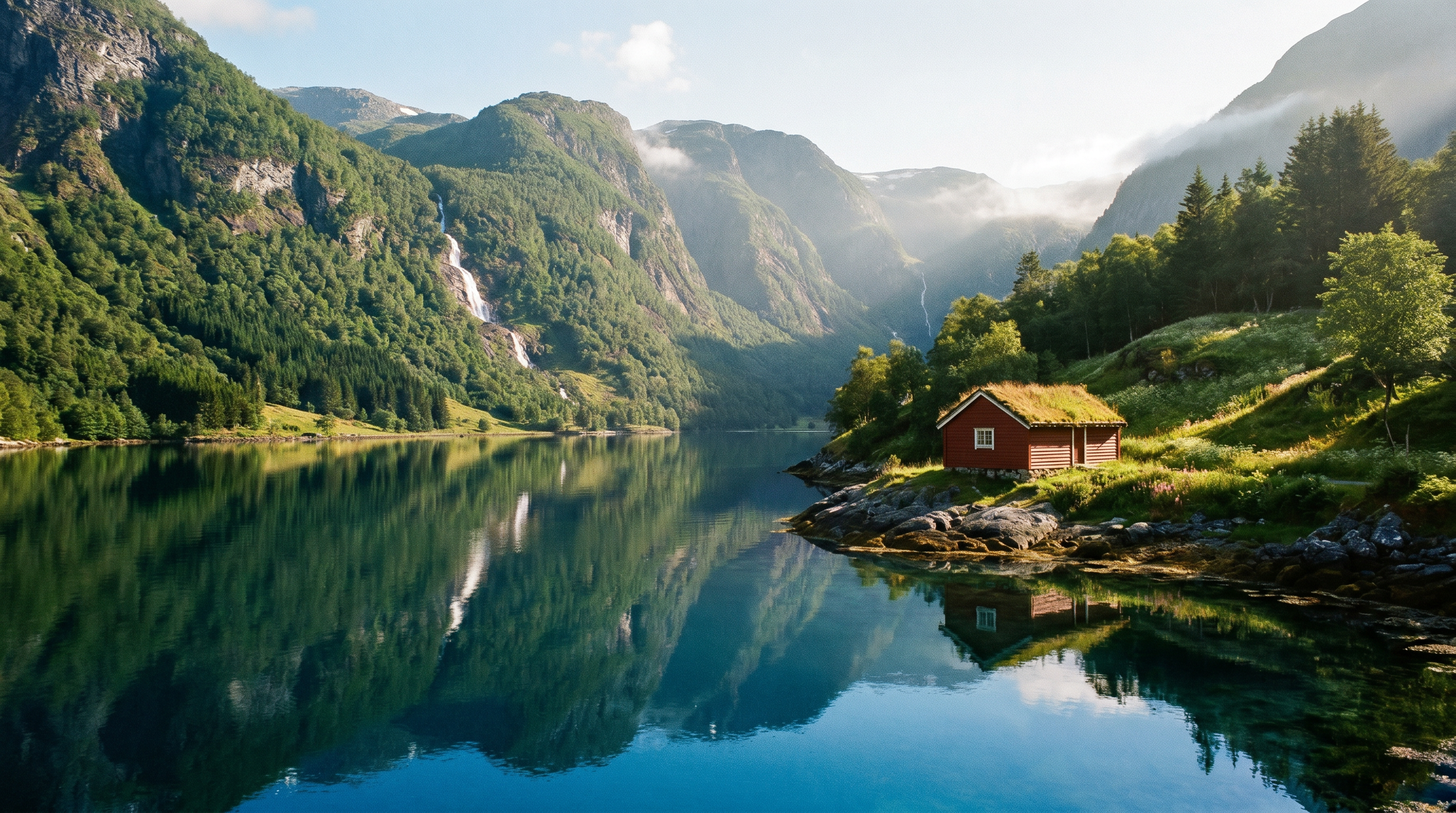
For decades, the blueprint for the perfect European summer holiday was virtually undisputed: pack a swimsuit, fly south, and secure a sun lounger on a Mediterranean beach. But as the global climate shifts, that traditional model is undergoing a profound structural reallocation. Prolonged summer heatwaves across southern Europe have transformed the pursuit of endless sun into a grueling test of endurance. In response, a massive demographic of travelers is packing light jackets instead of beach umbrellas and heading north.[8]
This migration has given rise to the "coolcation"—a deliberate strategy to select northern latitudinal or high-altitude destinations with temperate summer climates. What began as a clever marketing buzzword in 2023 has rapidly solidified into the defining travel philosophy of 2026. Travelers are systematically prioritizing clean air, uncrowded spaces, and predictable weather over high-temperature beach resorts.[3][8]
The catalyst for this shift is written in the meteorological record. Recent summers have seen temperatures in parts of Spain, Greece, and Italy regularly top 40 degrees Celsius, with Sicily recording a staggering 48.2 degrees Celsius (118.8 degrees Fahrenheit) during a historic heatwave. These extremes have led to wildfires, strained infrastructure, and a fundamental rethinking of what constitutes a relaxing vacation. When stepping outside at noon becomes a health hazard, the appeal of the Mediterranean summer begins to fracture.[4][8]
The data tracking this northward flight is striking. According to the Trip.com Group's 2026 Industry Report, global booking searches for designated cooler destinations have escalated by 74 percent year-over-year. The European Travel Commission corroborates this trend, noting that 28 percent of European travelers now actively seek out milder climates specifically to avoid extreme heat during the peak months of July and August.[4][6]

Airlines are rapidly adjusting their routes to capture this demand. Scandinavian airline SAS reported that summer flight bookings from France to Norway surged by 22 percent, while the coastal city of Stavanger saw a 38 percent increase in arrivals from Spain, Italy, and France. For many southern Europeans, the cool climate of Scandinavia is no longer viewed as a disadvantage, but as a premium commodity.[1]
The economic windfall for northern destinations has been historic. Statistics Norway reported a record 40.6 million total guest nights in 2025, with foreign demand jumping 14 percent to reach 14.2 million. Sweden and Denmark have seen similar surges, with Denmark recording over 65 million overnight stays, more than half of which were generated by international visitors. The luxury sector is also pivoting; the Virtuoso travel network reports that 82 percent of its high-end clients are now factoring milder weather into their destination choices.[5][7]
The economic windfall for northern destinations has been historic.
But the appeal of a coolcation extends far beyond the thermometer. Destinations in Scandinavia, Iceland, the Baltics, and the Scottish Highlands offer a potent combination of long daylight hours, pristine natural landscapes, and relatively low population density. For travelers escaping densely packed, heat-stressed urban centers, the sheer volume of physical space in the north is a luxury in itself.[2][3]

This environment unlocks a different kind of itinerary. Instead of retreating to air-conditioned hotel rooms during the afternoon peak, coolcationers are engaging in active, nature-based tourism. The comfortable 15 to 22 degree Celsius (59 to 72 degree Fahrenheit) averages make glacier hiking, fjord kayaking, and extensive city walking tours viable throughout the day. It is a shift from passive leisure to active exploration.[1][8]
The trend is also reshaping the traditional tourism calendar. For decades, Scandinavia's tourism model was highly seasonal, heavily reliant on a short summer window. Now, the influx of climate-conscious travelers is blurring the lines between seasons. This is further amplified by the "Northern Lights effect"—a peak in solar activity between 2024 and 2026 that has supercharged autumn and winter travel to the Arctic Circle, effectively turning the Nordic region into a year-round powerhouse.[3][8]
However, this rapid influx is not without friction. While major cities like Copenhagen and Stockholm possess the infrastructure to absorb millions of new visitors, remote natural sites are feeling the strain. In Norway's Lofoten Islands and the Geirangerfjord, local communities have raised alarms about traffic congestion, waste management, and the environmental footprint of massive cruise ships navigating delicate ecosystems.[1][3]
This highlights a central paradox of the coolcation movement: travelers flying longer distances to escape the effects of climate change are inadvertently contributing to the carbon emissions that drive it. Recognizing this tension, northern destinations are pioneering sustainable tourism models. There is a growing emphasis on high-value, low-volume tourism, encouraging visitors to stay longer, utilize electric vehicle rentals, and engage with local communities rather than passing through on day trips.[2][8]

Meanwhile, the traditional powerhouses of southern Europe are far from obsolete, but they are being forced to adapt. Rather than losing their tourism industry entirely, countries like Italy and Spain are experiencing a pronounced "shoulder season" shift. May, June, September, and October are increasingly replacing July and August as the most desirable times to visit the Mediterranean, smoothing out the revenue curve for local businesses.[4][8]
Southern destinations are also pivoting their peak-summer marketing. Tourism boards are shifting focus away from midday beach activities, instead highlighting shaded inland retreats, high-altitude mountain villages, and experiences that take place in the cooler hours of the early morning or late evening. The sunset hike and the twilight architectural tour are becoming the new staples of the southern itinerary.[8]

Ultimately, the rise of the coolcation represents a maturation of the global traveler. Driven by a mix of baby boomers seeking comfort and younger generations prioritizing eco-conscious exploration, the market is proving highly adaptable. As the climate continues to evolve, the definition of a perfect summer holiday will increasingly be measured not by the intensity of the sun, but by the quality of the air and the comfort of the breeze.[2][8]
How we got here
Summer 2023
Record-breaking heatwaves strike southern Europe, with Sicily reaching a historic 48.2°C, prompting the initial surge in 'coolcation' interest.
2024
The term 'coolcation' enters mainstream travel vernacular as booking platforms note a marked shift in consumer search behavior.
2025
Norway records a historic 14.2 million foreign guest nights, cementing the structural shift in European travel patterns.
Early 2026
Industry reports confirm a 74% year-over-year increase in searches for temperate destinations, establishing climate-adaptive travel as the new market standard.
Viewpoints in depth
The Northern Destinations' View
Balancing a historic economic boom with the urgent need for sustainable infrastructure.
For tourism boards across Scandinavia and the Baltics, the coolcation trend is a double-edged sword. On one hand, the influx of international visitors has provided a massive economic boost, filling hotels and creating year-round employment in regions that previously relied on a short summer window. On the other hand, local municipalities are acutely aware of the dangers of overtourism. Remote fjord villages and delicate Arctic ecosystems were not designed to handle millions of annual visitors. In response, these regions are pivoting toward a 'high value, low volume' model—encouraging longer stays, investing heavily in electric transport infrastructure, and occasionally capping cruise ship arrivals to preserve the very pristine nature that tourists are traveling to see.
The Southern European View
Pivoting away from peak summer reliance to embrace the lucrative 'shoulder seasons.'
The narrative that southern Europe is losing its tourism industry is fundamentally flawed; rather, the industry is redistributing. Hospitality leaders in Italy, Spain, and Greece recognize that July and August are becoming too hot for traditional leisure travel. Instead of fighting the climate, they are adapting to it. Marketing budgets are being reallocated to promote May, June, September, and October as the ideal times to visit. For the peak summer months that remain, the focus has shifted from midday beach culture to shaded inland retreats, high-altitude mountain resorts, and vibrant night-time economies, ensuring that the Mediterranean remains a powerhouse, albeit on a modified calendar.
What we don't know
- Whether the aviation industry can scale low-emission flight options fast enough to offset the increased carbon footprint of travelers flying further north.
- How quickly southern European destinations can fully adapt their infrastructure to maintain economic stability during the increasingly extreme peak summer months.
Key terms
- Coolcationing
- The practice of deliberately selecting northern or high-altitude destinations with cooler summer climates to avoid extreme heatwaves.
- Climate Tourism
- Travel decisions and destination choices driven primarily by changing global weather patterns and the desire for predictable, comfortable conditions.
- Shoulder Season
- The travel periods between peak and off-peak seasons, traditionally spring and autumn, which are now seeing increased demand as peak summers become too hot.
- Overtourism
- A phenomenon where the volume of visitors to a destination exceeds its environmental, infrastructural, or social capacity to host them sustainably.
Frequently asked
What exactly is a coolcation?
A coolcation is a vacation planned specifically around finding cooler, more temperate weather—often in places like Scandinavia, Iceland, or Scotland—to escape extreme summer heat.
Why is Scandinavia seeing a tourism boom?
Rising global temperatures have made traditional Mediterranean summers uncomfortably hot, pushing travelers north for milder 15°C to 22°C weather, fresh air, and outdoor space.
Will southern Europe lose its tourism industry?
No. While peak summer demand is softening, southern destinations are seeing increased travel during the spring and autumn 'shoulder seasons' when temperatures are more manageable.
Are northern destinations prepared for the influx?
It is a mixed picture. While cities are adapting well, remote areas like Norway's fjords are already experiencing infrastructure strain and are implementing sustainability measures to manage crowds.
Sources
Source coverage
8 outlets
4 viewpoints surfaced







[1]ForbesSouthern Hospitality Sector
Data Proves Coolcation Trend Is Real
Read on Forbes →[2]TravelPulse CanadaEnvironmental Conservationists
Coolcations Heat Up as Climate Concerns Reshape Travel Demand: New Data
Read on TravelPulse Canada →[3]Life in NorwayNorthern Tourism Boards
A Hotter North: The Climate Paradox and the Coolcation Trend
Read on Life in Norway →[4]European Travel CommissionSouthern Hospitality Sector
European Tourism Trends: Climate and Destination Shifts
Read on European Travel Commission →[5]Statistics NorwayNorthern Tourism Boards
Accommodation statistics: Record foreign guest nights in 2025
Read on Statistics Norway →[6]Trip.com GroupClimate-Conscious Travelers
2026 Industry Report: The Rise of Climate-Adaptive Travel
Read on Trip.com Group →[7]Virtuoso Travel NetworkClimate-Conscious Travelers
Luxury Travel Trends 2025-2026: The Shift to Milder Climates
Read on Virtuoso Travel Network →[8]Factlen Editorial TeamEnvironmental Conservationists
Synthesis by Factlen editorial team
Read on Factlen Editorial Team →

More in travel
See all 23 stories →Astrotourism
The Billion-Dollar Business of Darkness: How Astrotourism is Reshaping Travel
7 sources
Astrotourism
The Astrotourism Boom: Why Destinations Are Racing to Protect the Dark
6 sources
Altitude Science
The Science of Acclimatization: How Everyday Hikers Conquer 5,000-Meter Peaks
7 sources
Japan Transit
Beyond the Golden Route: How the Hokuriku Shinkansen Extension is Reshaping Travel in Japan
7 sources
Every angle. Every day.
Get travel stories with full source coverage and perspective breakdowns delivered to your inbox.